


Executive Overview
While nations across the globe are aggressively capitalizing on wind energy to drive industrial growth, energy security, and export revenue, the United States remains ensnared in a domestic political tug-of-war over offshore wind development. A prime example of international momentum is Denmark, whose domestic wind sector recently achieved an astounding 140% generation mark, satisfying 100% of the nation’s electricity demand while leaving a massive surplus to export to neighboring grids.
Conversely, the United States—sitting on an estimated 35,000 megawatts of offshore wind potential along its extensive Atlantic, Pacific, and Gulf coasts—faces a uniquely personalized regulatory blockade. Driven by executive actions, leasing halts, and a long-standing personal grievance rooted in a Scottish golf course dispute, the current U.S. administration has systematically sought to curtail offshore wind energy. Despite these hurdles, the broader energy transition marches forward through unexpected legal loopholes, technological advancements in energy storage, and a surprising administrative embrace of nascent marine and wave energy technologies.
Detailed Chronology: The Escalation of the U.S. Offshore Wind Conflict
The friction between federal executive power and the U.S. offshore wind sector has evolved rapidly through a series of administrative maneuvers, judicial interventions, and policy pivots.
Early 2000s–2021: The Genesis of the Grudge and Untapped Potential
The roots of the current U.S. executive opposition to offshore wind trace back decades, intersecting with a well-documented personal vendetta. Decades ago, Donald Trump waged a high-profile, ultimately unsuccessful legal and public relations campaign to block the construction of an offshore wind farm in Scotland because it infringed upon the unobstructed sea views from his Aberdeen golf resort. This defeat left a lasting impression.
Fast forward to 2021, when the U.S. Department of Energy (DOE) released comprehensive assessments placing the nation’s offshore wind resource potential at over 35,000 megawatts. This positioned the U.S. as a sleeping giant in the global renewable energy economy, ready to rival or eclipse European pioneers.
The 2025–2026 Executive Offensive
Upon taking office, the administration declared a sweeping "energy emergency," promising to overhaul national energy priorities through the "American Energy Dominance" policy. While framing this policy around baseload reliability, the administration explicitly excluded wind and solar power.
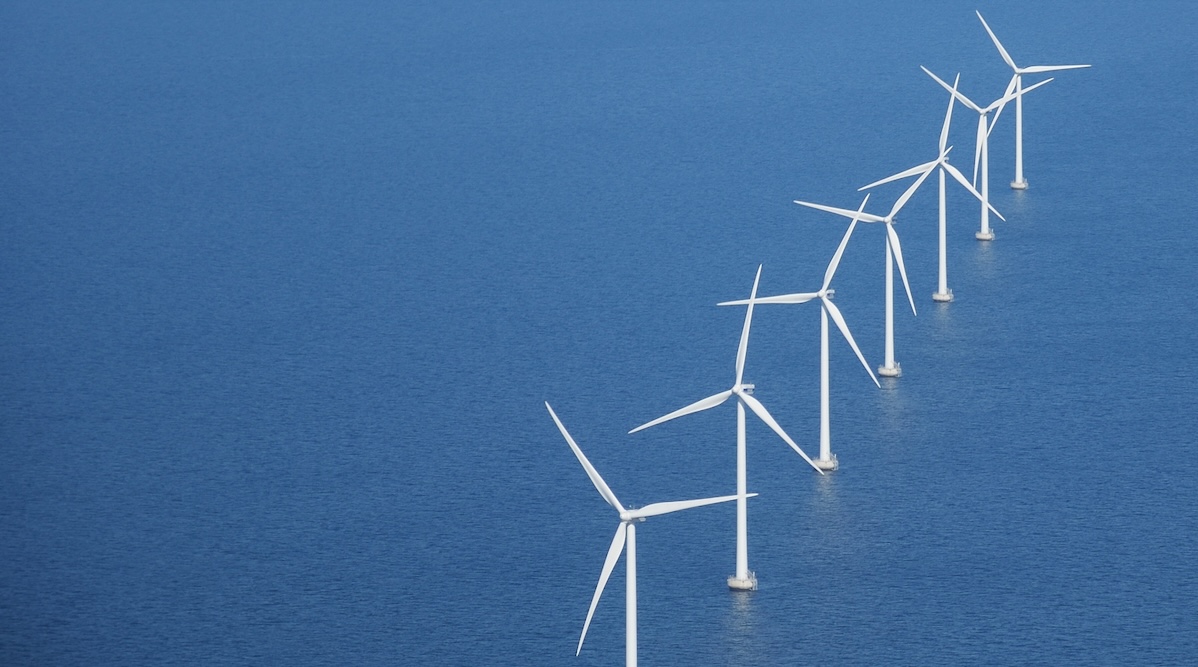
The executive branch swiftly ordered the Department of the Interior to halt the issuance of new offshore wind leases. Although federal courts subsequently reviewed these sweeping emergency declarations—striking down serial attempts to halt projects already progressing through the regulatory pipeline—the administration pivoted to a legally questionable fallback strategy: using federal funds to buy out existing leases. By neutralizing developers directly, the administration successfully stalled multi-gigawatt pipelines, particularly impacting blue states that had integrated offshore wind into their long-term decarbonization strategies.
Supporting Context & Metrics: Denmark’s Triumph vs. America’s Potential
Denmark’s 140% Milestone
To fully understand the global momentum of wind power, one must look to Denmark. Last Friday at 3:00 AM, during a combination of high wind speeds and low overnight domestic demand, Denmark’s wind fleet hit a remarkable 140% generation mark. This meant wind turbines were producing 40% more electricity than the entire country required at that moment, instantly pivoting the nation from a consumer into a major regional exporter.
The Danish Energy Agency (DEA) is not resting on these laurels. Denmark is spearheading the construction of revolutionary "energy islands" in the North and Baltic seas. Operating as industrial green power plants at sea, these hubs will:
- Aggregate wind power equivalent to the energy consumption of 5 million households.
- Transmit electricity directly to coastal European grids.
- Power large-scale offshore green hydrogen production facilities to decarbonize sectors that are difficult to electrify.
- Scale North Sea infrastructure from an initial 3–4 gigawatts up to a staggering 10 gigawatts, supplemented by another 3 gigawatts from the Baltic Sea facility.
The U.S. Geographic Advantage
The United States possesses a geographical canvas ideally suited for a similar renewable transformation:
- The Atlantic Seaboard: Dominated by shallow coastal waters from the Mid-Atlantic down to the Southeast (with the notable exception of Maine), creating ideal conditions for traditional, cost-effective monopile turbine construction.
- Deepwater and Floating Platforms: Maine researchers and West Coast developers have pioneered deepwater floating offshore wind platforms tethered securely to the seabed by high-tensile cables—technology that is already being exported to international markets like Norway and Japan.
- The Gulf of Mexico: Despite lower average wind speeds, a newly formed consortium of Gulf stakeholders is actively planning to repurpose defunct offshore oil and gas rigs into renewable energy hubs, focusing heavily on green hydrogen production to replace stranded fossil fuel assets.
Official Statements and Policy Paradoxes
The official justification for freezing wind and solar development rests on a rigid "reliability standard" championed by top administration officials. Interior Secretary Doug Burgum has repeatedly argued that solar and wind power fail to provide continuous baseload power, famously claiming that solar energy systems experience "catastrophic failure" every evening—completely overlooking the exponential growth and reliability of modern grid-scale energy storage.
This hardline stance has created strange contradictions within the federal government. While the Department of the Interior blocks wind leases, the Department of Energy (DOE)—under Energy Secretary Chris Wright—has continued to fund and authorize grid modernization and energy storage projects. Recent federal approvals for long-duration energy storage systems, such as advanced sodium-ion salt batteries and mobile storage solutions in states like Vermont, directly support the integration of intermittent renewables, undercutting the administration’s own anti-wind narrative.

The Accidental Pivot to Marine Energy
Perhaps the most ironic twist in current U.S. energy policy is the unintended consequence of the administration’s 24/7 reliability standard. Because marine energy—power harnessed from ocean waves, tidal flows, and river currents—is inherently predictable and steady compared to surface wind, it managed to slip past the executive chopping block.
The DOE estimates that the kinetic energy coursing through U.S. oceans and rivers could theoretically meet nearly 60% of the nation’s total electricity demand. Capitalizing on this loophole, federal agencies have dusted off historical clean energy data, reaffirmed support for marine renewables, and celebrated milestones like the opening of PacWave South, a cutting-edge wave energy test facility off the coast of Oregon.
While wave energy technologies are still years or decades away from matching the mature, highly industrialized supply chains of commercial wind power, the administration’s allowance of marine energy highlights the absurdity of targeting wind while ignoring parallel marine hydrokinetic solutions.
Future Outlook: Navigating the Headwinds of the Energy Transition
The divergence between U.S. and international energy policy underscores a critical economic reality: the global energy transition will continue to move forward, driven by market forces, international competition, and technological innovation, regardless of localized political interference.
While Denmark and other European nations cement their status as clean energy exporters through massive infrastructure projects like the North Sea energy islands, the U.S. risks falling behind in the industrial race for offshore manufacturing, marine engineering, and green hydrogen supply chains.
State-level resistance, private sector ingenuity, and the relentless advancement of battery storage technology will continue to pressure federal policy makers. Whether through the eventual unfreezing of Atlantic lease sales, the repurposing of Gulf oil rigs, or the slow maturation of marine hydrokinetics, the underlying economics of renewable energy point to a singular conclusion: the wind and water resources of the world are simply too abundant to be permanently locked away by political friction or personal vendettas.



