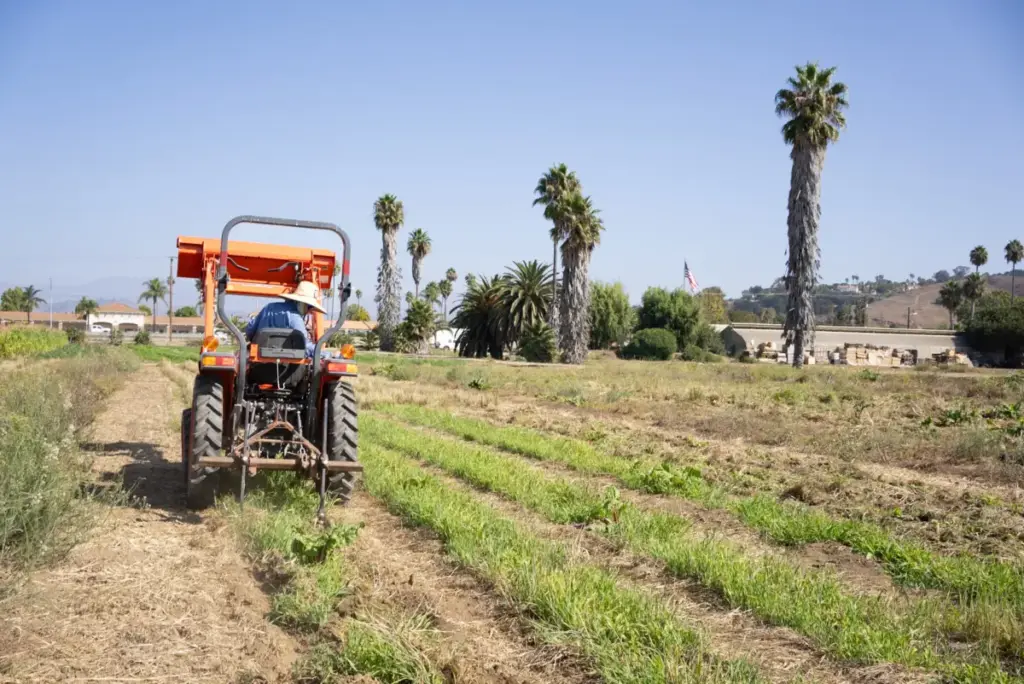
By: Environmental and Agricultural Desk
Published: April 23, 2026
Location: Camarillo, California
Executive Overview
In an era defined by intensifying climate volatility, degraded soils, and systemic ecological challenges, a quiet revolution is taking root in one of California’s most chemically intense agricultural regions. The Rodale Institute has officially announced that the Holdfast Collective—the nonprofit shareholder of outdoor apparel giant Patagonia—has approved a substantial $1.55 million, three-year grant renewal. This funding is dedicated to expanding the ambitious Regenerate Ventura project, a regional initiative designed to catalyze a county-wide systemic transformation from conventional, chemical-heavy farming to organic and regenerative organic agriculture.
The renewed funding arrives at a critical juncture. Ventura County, renowned worldwide for its picturesque valleys and microclimates capable of producing a vast array of high-value crops, has historically relied on intensive pesticide and synthetic fertilizer applications. While this conventional approach has yielded short-term economic productivity, it has simultaneously contributed to topsoil erosion, water table contamination, and a decline in regional biodiversity.
The Regenerate Ventura initiative, spearheaded by the Rodale Institute in close partnership with local and regional stakeholders, aims to prove that a different path is possible. By offering boots-on-the-ground technical assistance, financial stipends, and comprehensive business planning, the project is dismantling the barriers that traditionally prevent farmers from transitioning away from conventional practices. With Year One metrics successfully validating the hyper-local, farmer-first model, this $1.55 million infusion sets the stage for an even more aggressive expansion. However, project leaders note that realizing the full, county-wide vision of transforming over 300,000 acres will require a collective, $10 million investment from aligned philanthropic, private, and public partners. This initiative represents far more than a localized farming project; it is rapidly emerging as a scalable blueprint for agricultural resilience across the United States.
Detailed Chronology: From Concept to County-Wide Momentum
To understand the weight of the recent funding announcement, it is necessary to examine the deliberate trajectory of the Regenerate Ventura project, tracing its origins, early milestones, and the strategic milestones that led to this pivotal multi-year renewal.
The Genesis of Regenerate Ventura (2024)
The initiative was officially set into motion in 2024, backed by an initial $1 million investment from the Holdfast Collective. From its inception, the project was designed to tackle the unique vulnerabilities of Ventura County’s agricultural sector. Rather than employing a top-down, purely academic approach, Rodale Institute structured the program around direct, localized engagement with the farming community.
In its foundational year, the project focused on building trust, identifying early adopters, and establishing a baseline of support for growers willing to take the leap into regenerative organic methods—a transition frequently viewed by risk-averse farmers as financially precarious. By embedding agronomists directly within the region, the project immediately began addressing day-to-day operational hurdles, proving that environmental stewardship and farm profitability do not have to be mutually exclusive.
Year One Validation and Strategic Pivot (2025)
Throughout 2025, the initiative graduated from a pilot concept to a proven methodology. Agronomists worked shoulder-to-shoulder with growers, navigating the complex bureaucracy of organic certification, experimenting with diverse cover-cropping strategies, and refining soil-health protocols tailored to Ventura County’s specific soil types and climatic pressures.
The success of these early efforts earned the Rodale Institute widespread recognition, including a nod as one of Fast Company’s Most Innovative Companies. The empirical successes recorded during this period—such as rapidly building an active pipeline of transitioning farms and engaging diverse demographic groups—provided the Holdfast Collective with the confidence needed to greenlight the $1.55 million renewal in April 2026. This new funding cycle secures the project’s operational runway through the decade, allowing agronomists to deepen their engagement with existing participants while scaling up recruitment across the county.
Supporting Context & Metrics: Data Behind the Transformation
The success of Regenerate Ventura cannot be measured merely by abstract environmental ideals; it is grounded in hard data, measurable acreage, and profound demographic shifts within the farming community.
Acreage and Transition Pipeline
Ventura County boasts roughly 316,000 agricultural acres, a massive expanse dominated by conventional paradigms. Scaling regenerative practices across this footprint is a monumental undertaking. Yet, the metrics generated since 2024 indicate a surprisingly rapid adoption rate:
- Total Acreage in Transition: The initiative has successfully expanded its footprint to encompass more than 10,000 acres actively transitioning toward regenerative organic standards.
- The Farm Pipeline: A robust pipeline of 57 farms is now engaged in active transition protocols.
- Certification Milestones: Out of this active cohort, 12 farms have progressed to the stage of filing formal organic certification applications, while an additional 40 farms have made binding commitments to initiate their transition within an 18-month window.
Cultivating Diversity and Equity
One of the most noteworthy achievements of the Regenerate Ventura project is its intentional focus on equity and inclusion. Historically, access to resources, capital, and technical assistance for organic transitions has favored large-scale operations, often leaving smallholder farmers and Black, Indigenous, and People of Color (BIPOC) growers underserved by traditional university extension programs.
The initiative has shattered these historical barriers, achieving a remarkable 39% engagement rate among BIPOC farmers. By ensuring that minority and historically marginalized growers have equal access to capital equipment, mentorship, and market networks, the project is actively fostering a more equitable agricultural economy in Southern California.
Comprehensive, Wraparound Support
Transitioning a farm from conventional to organic is rarely as simple as deciding to stop using synthetic fertilizers. It requires a complete redesign of farm management systems. Traditional agricultural extension offices often focus narrowly on agronomic advice, overlooking the broader business realities farmers face.
Rodale Institute has bridged this gap by offering holistic, wraparound support that addresses:
- Agronomic Consulting: Direct, hands-on guidance regarding crop selection, rotational diversity, cover cropping, and natural pest management.
- Business Planning: Helping farmers navigate the financial implications of the transition period, during which yields can occasionally fluctuate while soil biology resets.
- Equipment Stipends: Providing direct financial assistance to acquire specialized tools required for regenerative management (such as no-till drills and mechanical weeders).
- Legal and Regulatory Guidance: Demystifying the rigorous documentation and compliance standards required by the USDA National Organic Program (NOP).
- Market Access: Coordinating regional supply chains and connecting newly transitioned growers with buyers willing to pay a fair, premium price for regeneratively grown crops.
Official Statements and Industry Perspectives
The partnership between the Rodale Institute and the Holdfast Collective represents a powerful convergence of rigorous agricultural science and corporate environmental activism. Leaders from both organizations emphasize that this project is a model for how systemic change must be funded and executed in the 21st century.
"This renewal reflects what we’ve proven in Year One, that hyperlocal, farmer-first support works," stated Jeff Tkach, CEO of Rodale Institute. "With Holdfast’s partnership, we’re not just funding transition, we’re funding a systems shift. The full vision for county-wide transformation requires $10 million in total investment. We’re calling on others who are committed to this work to join us in making Ventura County a regenerative organic model for the nation."
The urgency of this mission is echoed by leadership at the Holdfast Collective, which was established by Patagonia founder Yvon Chouinard to utilize corporate profits to combat the environmental crisis and protect global biodiversity.
"Rodale Institute is filling a void," noted Greg Curtis, Executive Director of the Holdfast Collective. "They’ve shown up with rigor, trust and results. Their model proves that organic and regenerative organic agriculture is essential to climate resilience and farm viability in our own backyard and beyond."
Behind the scenes, the initiative’s momentum is also propelled by an intricate network of regional partners. Organizations such as Leap Lab, Project MILPA, the Saticoy Food Hub, and various Ventura County civic institutions and community-based groups form the connective tissue of the project. These local entities ensure that the transition initiatives remain deeply attuned to the cultural, economic, and logistical realities of the local communities they serve.
Future Outlook: Building a National Blueprint
As the Regenerate Ventura initiative enters its next three-year phase, its implications extend far beyond the borders of Ventura County. American agriculture stands at a crossroads. Decades of intensive tillage, synthetic chemical reliance, and monocropping have left vast portions of the nation’s breadbasket vulnerable to severe droughts, nutrient depletion, and economic instability.
By demonstrating that a county historically dominated by high-input, conventional farming can successfully pivot toward regenerative organic practices, the Rodale Institute and the Holdfast Collective are providing a masterclass in regional transformation.
However, scaling this model nationwide will require overcoming significant financial and institutional hurdles. CEO Jeff Tkach’s call for a total $10 million investment to complete the Ventura County transformation highlights the reality that systemic change requires serious capital. Traditional venture capital often seeks rapid financial returns that are fundamentally incompatible with the biological timelines of soil restoration. Philanthropic partnerships, mission-driven corporate structures like Patagonia’s, and public-private alliances must step up to fill this void.
If Regenerate Ventura achieves its ultimate goal of transforming the county’s 316,000 agricultural acres, it will serve as irrefutable proof that regenerative agriculture is not merely an idealistic niche for small-scale hobby farms, but a viable, scalable, and essential economic engine for the future of global food production. In the fertile valleys of California, the seeds of a new agricultural paradigm have been planted—and with renewed backing, they are finally beginning to bear fruit.