Executive Overview
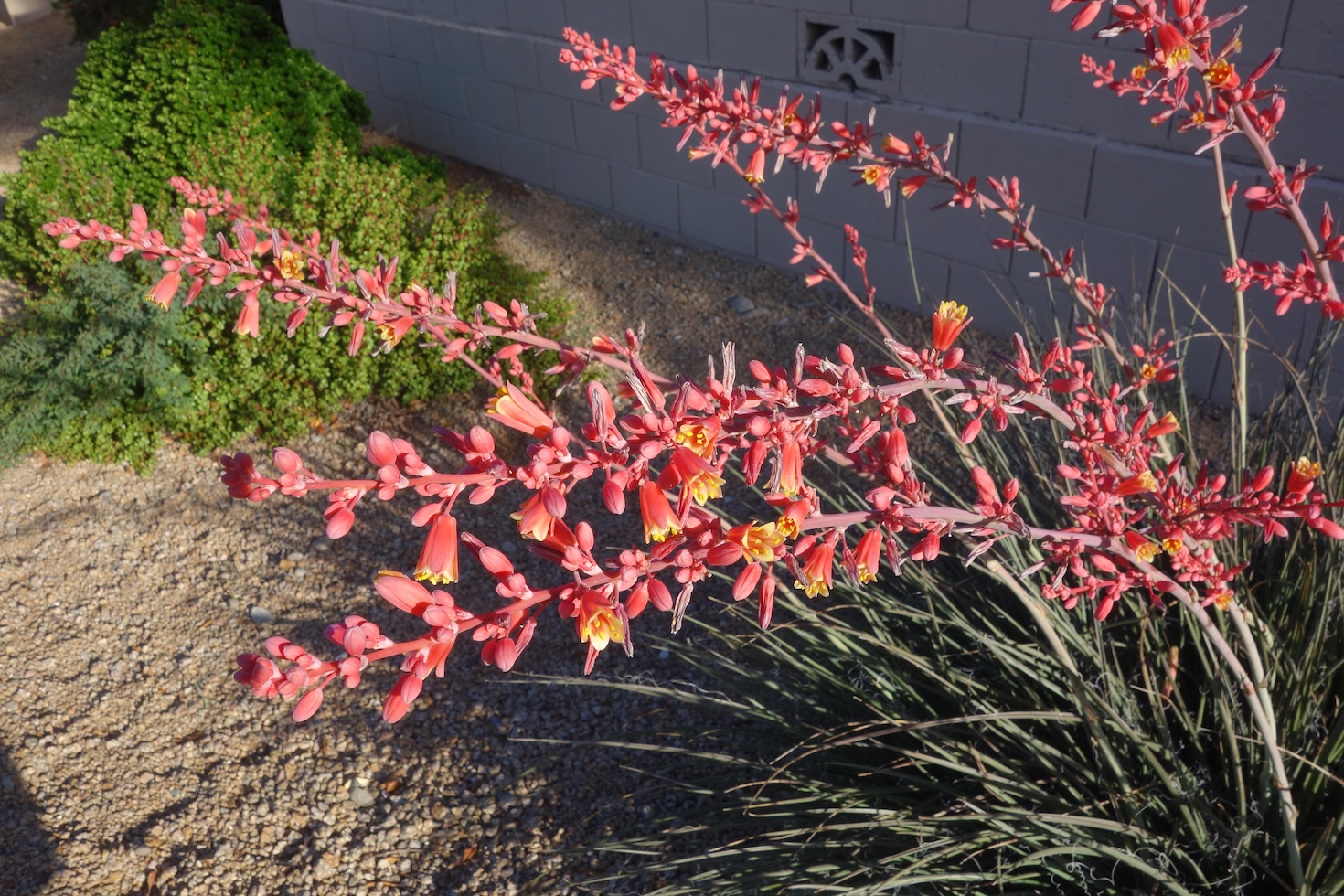
Two years after making a watershed commitment to phase out paper sourcing from natural forests, consumer products giant Kimberly-Clark is breaking ground on a specialized manufacturing facility in Yuma, Arizona. The strategic move is designed to scale up the processing of hesperaloe—a resilient, low-water succulent native to the American Southwest—marking a significant escalation in the corporate race to find viable, non-wood alternatives to traditional wood pulp.
The initiative is part of a broader, multi-decade pivot away from ancient and naturally regenerating boreal and temperate forests. While the company has not yet established a hard calendar deadline for its "natural forest-free" pledge—specifying only that the milestone will be reached sometime after 2030—its latest sustainability disclosures reveal tangible progress. Kimberly-Clark successfully reduced its reliance on fiber from natural forests by 50 percent in 2025, using a 2011 baseline.
As global demand for everyday essentials like toilet paper, facial tissues, diapers, and feminine hygiene products continues to surge, the environmental toll of traditional forestry has become a flashpoint for investors, regulators, and consumers alike. Kimberly-Clark’s investment in hesperaloe, alongside ongoing experimentation with agricultural residues such as wheat straw, sugar cane, and sorghum, underscores a fundamental evolution in how multinational corporations conceptualize supply chain resilience.
Yet, transitioning a global manufacturing colossus away from centuries-old timber supply chains is an intricate, capital-intensive undertaking. While agile startups have experimented with alternative fibers for years, major conglomerates like Kimberly-Clark, Procter & Gamble (P&G), and Georgia-Pacific are only now beginning to pivot their massive industrial infrastructures. With over a quarter of a billion dollars funneled into alternative fiber research over the past decade, the Yuma plant represents a critical stress test: can alternative, regenerative fibers be scaled to meet mass-market demand without disrupting native ecosystems or compromising product performance?
Detailed Chronology: The Road to the "Natural Forest-Free" Mandate
To understand the weight of Kimberly-Clark’s current infrastructural investments, one must trace the timeline of accountability, advocacy, and corporate policy shifts that brought the hygiene sector to this juncture.
The Foundation and Baseline (2011–2015)
For decades, the paper and pulp industry relied heavily on clear-cutting and virgin timber harvesting, positioning boreal and temperate forests as endless reservoirs of cheap cellulose. In 2011, Kimberly-Clark established a baseline for its environmental metrics, unaware of the immense regulatory and consumer pressures that would materialize over the subsequent decade. During this period, sustainability efforts were largely defensive, focusing on responsible logging certifications like the Forest Stewardship Council (FSC) rather than fundamental material innovation.
The R&D Push and Small-Start Disruption (2015–2022)
Recognizing the long-term volatility of virgin wood pulp prices and the escalating climate crisis, Kimberly-Clark quietly initiated a dedicated research and development program focused on alternative fiber sourcing. Over the ten-year span from the mid-2010s to the mid-2020s, the company invested roughly $250 million into material science.
Parallel to this corporate R&D push, nimble direct-to-consumer startups began disrupting the market. Companies like Paddy Paper and various bamboo-based tissue brands demonstrated that consumers were increasingly willing to pay a premium for eco-friendly alternatives. Meanwhile, agricultural waste—such as rice straw, which sees an estimated 220 billion pounds burned annually—began to emerge as a largely untapped, circular economy resource.
The Pledge and the 2025 Milestone (2023–2025)
A major inflection point occurred in the early 2020s when Kimberly-Clark formally committed to a "natural forest-free" paper sourcing policy. The company defined "natural forests" to encompass old-growth trees and those that regenerate naturally, predominantly within boreal and temperate biomes.
By 2025, this commitment bore measurable fruit. According to its sustainability report released that year, the company achieved a 50 percent reduction in its reliance on fiber sourced from natural forests compared to its 2011 baseline. While approximately 77 percent of its virgin fiber purchases still relied on FSC-certified sources, the groundwork was laid for a systemic transition toward regenerative, non-wood inputs.
The Yuma Breakthrough (Present Day)
The announcement of the Yuma, Arizona manufacturing plant marks the transition from theoretical research to industrial-scale application. By targeting a regional, drought-tolerant desert succulent like hesperaloe, Kimberly-Clark is pioneering a localized supply chain model that divorces paper production from traditional forestry entirely.
Supporting Context & Metrics: Evaluating the Supply Chain Shift
The transformation of the hygiene product sector cannot be analyzed in a vacuum. It is driven by a convergence of ecological necessity, supply chain vulnerability, and evolving consumer sentiment.
Defining the Materials: Hesperaloe and Agricultural Residues
Kimberly-Clark’s focus on hesperaloe represents a calculated bet on biomimicry and regional botany. As a succulent native to the arid American Southwest, hesperaloe thrives in arid conditions that require minimal irrigation, starkly contrasting with the immense water footprints of industrial tree farms or even agricultural crops like cotton.
Beyond hesperaloe, the company’s R&D portfolio includes:
- Wheat straw: A byproduct of grain harvesting that is frequently discarded or burned, contributing to localized air pollution.
- Sugar cane bagasse: The fibrous matter that remains after sugarcane stalks are crushed to extract their juice.
- Sorghum: A drought-resistant cereal grain whose stalks offer robust cellulosic fibers.
Industry Comparisons: How Competitors Are Reacting
The broader consumer goods landscape has been historically conservative regarding alternative fibers, largely due to the sunk costs of machinery calibrated specifically for wood pulp processing. However, competitive pressures are forcing a hand:
- Procter & Gamble (P&G): P&G has leaned heavily into forest certification programs while cautiously testing bamboo variants for brands like Charmin. Demonstrating a growing acknowledgment of the shift, P&G recently committed an additional $20 million toward non-wood fiber alternative research.
- Georgia-Pacific: Georgia-Pacific has integrated bast fibers—including hemp and jute—into specific product categories, though these have not yet been fully mainstreamed into its flagship bathroom tissue lines.
- Emerging Startups: Smaller market entrants are moving with greater agility. For instance, brands utilizing agricultural residues like rice straw bypass the multi-year maturation cycles of timber entirely, offering a blueprint for circular manufacturing that large conglomerates are closely monitoring.
Carbon Accounting: Scope 1, 2, and 3 Emissions
In tandem with its fiber sourcing transformations, Kimberly-Clark’s 2025 sustainability disclosures highlight notable progress across its broader carbon accounting framework:
| Emissions Scope | Target / Baseline Metric | Current Performance Status |
|---|---|---|
| Scope 1 & 2 (Operations & Purchased Electricity) | 50% reduction by 2030 (vs. 2015 baseline) | 46% reduction achieved, putting the company well ahead of schedule. (Accounts for ~30% of total emissions). |
| Scope 3 (Purchased Goods & End-of-Life) | 20% reduction by 2030 | 16% reduction achieved across targeted categories, reflecting early success in supply chain decarbonization. |
Official Statements and Industry Perspectives
The convergence of corporate ambition, environmental advocacy, and material science has generated cautious optimism among environmental watchdogs, alongside pragmatic assessments from corporate leadership.
Craig Slavtcheff, Chief Research and Development Officer at Kimberly-Clark, emphasized the transformative potential of the company’s material science initiatives:
"While testing continues, we are optimistic about early results and believe this material will provide curve-bending performance in our products while strengthening our long-term growth and supply chain resilience and accelerating our journey toward a future less dependent on traditional fiber sources."
External stakeholders have taken note of the shift, viewing the Yuma facility as a critical stress test for the entire hygiene industry. Shelley Vinyard, Director of Global Nature at the Natural Resources Defense Council (NRDC), offered an authoritative perspective on the implications of the move:
"This is just the beginning but signals a potentially market-shifting breakthrough. If Kimberly-Clark can scale up production of this fiber sustainably and without displacing other native ecosystems, this could alleviate significant pressure on the forests currently used to make tissue products."
Vinyard’s caveat touches upon a central tension in sustainable agriculture: the risk of unintended consequences. As corporations race to secure alternative biomass, ensuring that land-use changes do not inadvertently result in habitat destruction, soil depletion, or the displacement of food crops remains paramount.
Future Outlook: The Horizon of Non-Wood Cellulose
As Kimberly-Clark breaks ground in Yuma and continues to refine its agricultural residue pipeline, the next decade will determine whether non-wood pulping can graduate from a niche sustainability initiative to the dominant paradigm of personal care manufacturing.
Technological and Economic Hurdles
Scaling alternative fibers is not without formidable challenges. Industrial manufacturing plants optimized for decades to process softwood and hardwood timber cannot be retooled overnight. The chemical and mechanical pulping processes required for succulents like hesperaloe or agricultural stalks like wheat straw differ significantly from wood processing, necessitating heavy capital expenditures in new machinery, enzyme treatments, and refining protocols. Furthermore, supply chain consistency—ensuring year-round availability of regional crops or wild-harvested succulents—requires sophisticated agricultural partnerships and robust logistics networks.
The Regulatory and Consumer Horizon
Consumer expectations are shifting rapidly. A generation of shoppers entering the market views sustainability not as a corporate value-add, but as a baseline expectation. Concurrently, international regulatory bodies—particularly within the European Union—are tightening due diligence laws regarding deforestation, making continued reliance on natural forests a legal and financial liability.
If Kimberly-Clark successfully operationalizes its Yuma facility and proves the commercial viability of hesperaloe at scale, it will likely trigger a domino effect across the fast-moving consumer goods (FMCG) sector. Competitors who lag in alternative fiber research risk finding themselves saddled with stranded assets, antiquated supply chains, and regulatory penalties.
Ultimately, the humble toilet paper roll and diaper—long symbols of linear, disposable consumption—may soon serve as archetypes for a new era of circular, regenerative manufacturing. By looking away from the forest canopy and toward the arid desert floor and agricultural fields, the hygiene industry is slowly rewriting the blueprint for modern industrial production.