Executive Overview
For centuries, home horticulture has been celebrated as a peaceful sanctuary—a quiet corner of the earth where humans curate beauty, cultivate biodiversity, and commune with nature. Yet beneath the mulch, behind the trellises, and under the damp canopies of suburban borders, a silent territorial war is being waged. Millions of gardeners across the country introduce innocent-looking perennials, ground covers, and architectural shrubs into their landscapes, unaware that they are inviting Trojan horses into their yards.
What begins as a cheerful patch of vibrant ground cover, a fragrant culinary herb, or a quick-growing privacy screen can quickly transform into an unmanageable ecological nightmare. These botanical "thugs"—plants prized for their resilience, rapid growth, and stunning aesthetic appeal—possess an aggressive biological imperative: to expand, conquer, and dominate every square inch of available soil.

This investigative report examines the twelve worst garden plants responsible for wholesale landscape takeovers. Ranked by their destructive potential, invasion ratings, and sheer tenacity, these species challenge the conventional boundaries of domestic garden management. While horticulturists and nurseries continue to market these plants for their undeniable visual charm, long-flowering seasons, and wildlife benefits, the hidden cost of containment falls squarely on the homeowner. From deep-seated rhizomes that shatter borders to root systems that choke out foundational infrastructure, we explore why these beloved plants have earned their infamous reputations, how they operate, and what steps gardeners must take before it is too late.
Detailed Chronology: The Escalation from Specimen to Sovereign
The journey of an invasive garden plant from a prized nursery purchase to an overwhelming infestation typically follows a predictable, insidious trajectory. Understanding this timeline is crucial for any gardener looking to maintain control over their plot.

Year One: The Honeymoon Phase
The plant is introduced into the garden, carefully positioned in a sunny border or damp corner. It establishes rapidly, displaying either a cascade of beautiful blossoms, aromatic foliage, or striking architectural leaves. During this initial phase, the gardener feels a sense of horticultural triumph. The plant thrives with minimal intervention, outcompeting early weeds and requiring little to no supplemental fertilizer.
Years Two and Three: The Quiet Expansion
Beneath the surface, the biological machinery is at work. Whether utilizing creeping runners, extensive shallow root systems, or subterranean networks of thick black rhizomes, the plant begins to stake its claim. Shoots emerge a foot or two away from the parent crown. The gardener, charmed by the extra blooms or the efficient ground coverage, simply trims the edges or transplants the stray shoots elsewhere.

Years Four to Five: The Takeover
The tipping point arrives. The plant’s root architecture has formed an impenetrable mat or driven deep into the subsoil. New shoots erupt indiscriminately, weaving themselves through the crowns of delicate companion plants. Manual removal becomes a grueling exercise in frustration: snapping stems, breaking trowels, and realizing that leaving even a microscopic fragment of root tissue guarantees immediate resurrection.
By this stage, the garden has shifted from a curated tapestry of diverse species into a monoculture dominated by a single, relentless survivor.

The Dirty Dozen: Ranking the Landscape Invaders
12th Worst: Japanese Anemone
- Invasion Rating: 5/10
- Plant Type: Perennial
- Why Grow It: Long flowering seasons, masses of attractive blooms, and high popularity among bees and pollinators.
- The Nightmare Factor: Japanese anemones are undeniably gorgeous, gracing late-summer borders with elegant, nodding flowers. However, given half a chance, they spread gently but insatiably via underground rhizomes. While this trait is useful in barren areas where other plants fail, it frequently results in a monoculture border consisting of Japanese anemones and very little else.
- Containment Strategy: Digging them up is straightforward until a tiny fragment of rhizome is left behind. To keep existing clumps tidy, give them a vigorous cut back and weed out in the spring. If planting fresh, opt for tamer, well-behaved varieties such as ‘Pamina’ or ‘Wild Swan’.
11th Worst: Chameleon Plant (Houttuynia cordata ‘Chameleon’)
- Invasion Rating: 5/10
- Plant Type: Colourful Creeper
- Why Grow It: Zingy, tri-colored foliage (green, red, and cream) providing brilliant summer ground cover, paired with an aromatic orange-peel scent when crushed.
- The Nightmare Factor: This plant is equally happy in dry soils or wet marginal zones at the edge of a pond. Its takeover is slow, deliberate, and inexorably methodical, forming dense, choking carpets that quietly claim every inch of soil.
- Containment Strategy: Strict physical boundaries are mandatory. Keep the plant contained within heavy-duty pots or restricted garden margins to enjoy its vibrant colors without paying the price of a total yard invasion.
10th Worst: Periwinkle (Vinca)
- Invasion Rating: 5/10
- Plant Type: Evergreen Creeper
- Why Grow It: Dainty, starry violet-blue or white flowers, glossy green leaves, and an ironclad constitution that effortlessly suppresses weeds in almost any soil or lighting condition.
- The Nightmare Factor: While the smaller species (Vinca minor) is relatively manageable, the greater periwinkle (Vinca major) is a wolf in sheep’s clothing. Its delicate appearance belies a high-speed climber that sends out trailing stems, rooting at every node as they touch the soil, quickly tangling with and smothering neighboring plants.
- Containment Strategy: Avoid the larger species entirely. For Vinca minor, rigorous pruning is required to keep its spreading tendrils within a strictly defined footprint.
9th Worst: Mind-Your-Own-Business (Soleirolia soleirolii)
- Invasion Rating: 5/10
- Plant Type: Evergreen Creeper
- Why Grow It: It forms a cool, moss-like carpet of tiny, densely packed green leaves that thrives in shady, damp spots, tolerates drought, and creates a brilliant alternative to grass between paving slabs.
- The Nightmare Factor: Do not let its diminutive name fool you. Left unchecked, this tenacious creeper marches over rocks, logs, and soil, stealthily smothering small alpine plants, perennials, and delicate spring bulbs in its path.
- Containment Strategy: Regular edging and manual trimming are usually sufficient to keep it restricted to designated walking paths or shady corners.
8th Worst: Shuttlecock Fern (Matteuccia struthiopteris)
- Invasion Rating: 6/10
- Plant Type: Creeping Fern
- Why Grow It: Unrivaled spring beauty, featuring brilliant lime-green fronds arranged in stunning, symmetrical shuttlecock clusters that pair beautifully with daffodils and early bulbs.
- The Nightmare Factor: After a few years of innocent growth, deep-delving, spreading black rhizomes begin firing up new shoots everywhere. The fern has a frustrating habit of snuggling directly against the crowns of neighboring plants, making it impossible to weed out the interloper without destroying the plant beside it.
- Containment Strategy: Treat the garden bed as a high-vigilance zone. Regularly pluck out emerging shoots at the earliest sign of migration to keep clumps under control.
7th Worst: Mint (Mentha)
- Invasion Rating: 7/10
- Plant Type: Spreader
- Why Grow It: Essential for culinary use, summer cocktails like mojitos, and attracting bees, beneficial insects, and the tiny mint moth to its fragrant blooms.
- The Nightmare Factor: Mint looks innocent enough—compact, non-woody, and fitting comfortably into small spaces. However, its aggressive root system sends out underground runners that pop up yards away, capable of colonizing large swathes of the garden.
- Containment Strategy: Never plant mint directly into open ground unless you want a dedicated mint lawn. Grow varieties like spearmint (Mentha spicata) in pots on patios, or sink root-restricted containers deep into the soil.
6th Worst: Bear’s Breeches (Acanthus mollis)
- Invasion Rating: 7/10
- Plant Type: Perennial
- Why Grow It: Bold, architectural foliage paired with dramatic, towering spires of summer flowers that bring architectural flair to the border and drive pollinators wild.
- The Nightmare Factor: Bear’s breeches refuses to stay put. It sprouts new colonies nearby from deep, stubborn roots that snap off upon extraction. Even the tiniest remnant left in the soil regenerates rapidly, choking out smaller, less aggressive companions.
- Containment Strategy: Containment requires absolute determination. Plant it only in areas where its aggressive clumping habits can be appreciated and tolerated without threatening delicate flora.
5th Worst: Plume Poppy (Macleaya cordata)
- Invasion Rating: 8/10
- Plant Type: Perennial
- Why Grow It: Standing an impressive two meters tall, it features broad, lobed, blue-green leaves that catch raindrops, crowned in summer with soft, plume-like pink flowers beloved by pollinators.
- The Nightmare Factor: Plume poppy is a heavyweight thug. It deploys subterranean rhizomes that travel long distances, shooting up emergent stems all over the garden if left unchecked.
- Containment Strategy: Armed intervention is required annually. Chop back the perimeter with a sharp spade each spring and relentlessly weed out rogue shoots before they establish woody root bases.
4th Worst: Ivy (Hedera)
- Invasion Rating: 8/10
- Plant Type: Evergreen Climber
- Why Grow It: Rapidly covers unsightly walls, fences, and tree stumps without support structures. It provides vital late-season food and habitat for birds, bees, and butterflies, particularly the holly blue.
- The Nightmare Factor: Common ivy (Hedera helix) and Irish ivy (Hedera colchica) grow with terrifying vigor. They burrow roots into stonework, mortar, and house walls, causing structural damage. Furthermore, ivy sap can cause skin irritation, and its foliage is toxic to humans and pets if ingested.
- Containment Strategy: Never plant ivy mixed with delicate perennials. Keep it strictly isolated on independent structures, prune it back vigorously every year, and opt for slower-growing variegated cultivars when possible.
3rd Worst: Willow (Salix)
- Invasion Rating: 8/10
- Plant Type: Tree
- Why Grow It: Graceful, sweeping branches, stunning spring catkins, and unmatched utility for creating wildlife habitats in rural landscapes.
- The Nightmare Factor: The root systems of willows possess an aggressive biological radar for moisture. They actively seek out watercourses, underground pipes, and household drainage systems, infiltrating joints, blocking flow, and causing thousands of dollars in property damage.
- Containment Strategy: Containment potential is zero. Never plant a willow near residential property lines, septic tanks, or underground utilities. If you must have one, site it at a safe distance near natural open water bodies.
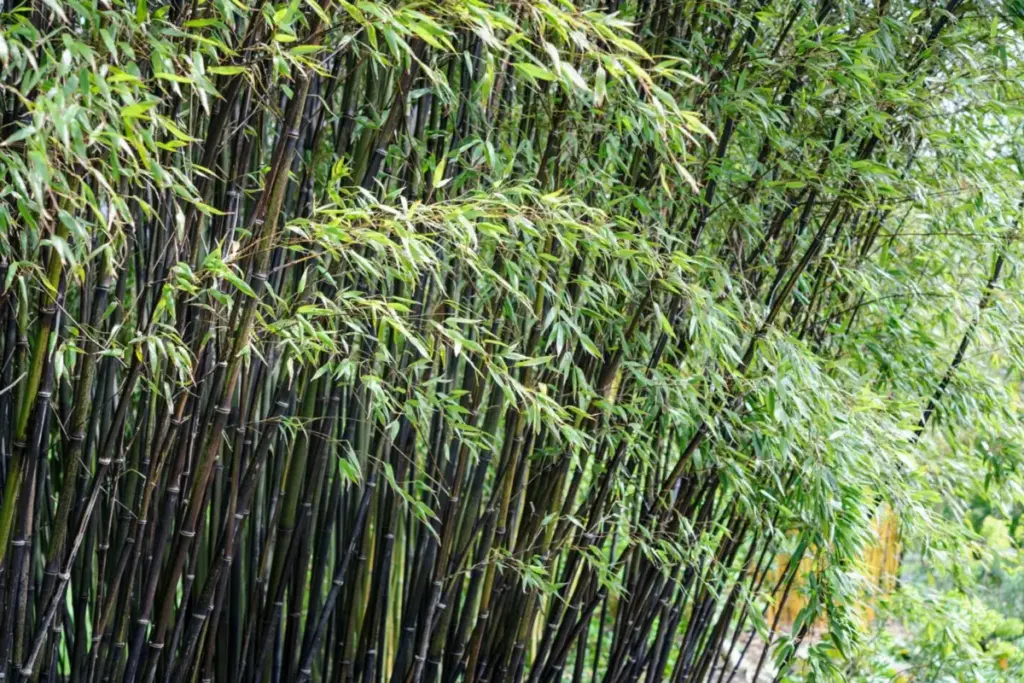
2nd Worst: Bamboo (Phyllostachys and others)
- Invasion Rating: 9/10
- Plant Type: Evergreen Perennial Giant Grass
- Why Grow It: Instantly creates a dramatic tropical, Japanese aesthetic with stunning coloured stems and tall, dense screens that effortlessly hide sheds and ugly fences.
- The Nightmare Factor: Running bamboos are legendary landscape vandals. They send razor-sharp, incredibly tough culms shooting up from deep underground, often surfacing meters away from the mother plant through lawns, patios, and neighboring properties. Once established, they are nearly impossible to eradicate manually.
- Containment Strategy: Choose clumping varieties from the Fargesia genus for peace of mind. If planting running types, industrial-grade root barrier systems must be installed vertically around the perimeter, or plants should be restricted to poor, dry soils to stunt their vigor.
The Very Worst of All: Russian Vine (Fallopia baldschuanica)
- Invasion Rating: 10/10
- Plant Type: Climber
- Why Grow It: Unmatched growth speed and masses of pretty white and pink summer flowers make it the ultimate plant for instantly screening ugly outbuildings, decaying tree stumps, or privacy obstructions.
- The Nightmare Factor: Appropriately nicknamed the "mile-a-minute plant," Russian vine is the undisputed king of garden thugs. Growing up to four meters in a single year, it completely smothers trees, roofs, fences, and neighboring vegetation. Left unmanaged, it will aggressively swallow a garden, a house, and potentially your sanity.
- Containment Strategy: Containment is virtually impossible unless subjected to brutal, annual wholesale pruning. Plant with extreme caution—or better yet, choose a less destructive alternative for your screening needs.
Supporting Context & Metrics
The proliferation of aggressive garden flora is not merely an aesthetic nuisance; it represents a growing economic and ecological challenge for urban and suburban property owners. According to horticultural waste management data, property owners spend millions of dollars annually on professional root removal, foundation repairs caused by invasive root systems, and landscape restoration.
| Plant Name | Botanical Name | Invasion Rating (1-10) | Primary Spread Mechanism | Principal Threat |
|---|---|---|---|---|
| Japanese Anemone | Anemone hupehensis | 5 | Rhizomes | Monoculture dominance |
| Chameleon Plant | Houttuynia cordata | 5 | Creeping stems/roots | Smothering ground cover |
| Periwinkle | Vinca minor / major | 5 | Trailing runners | Tangling and choking |
| Mind-Your-Own-Business | Soleirolia soleirolii | 5 | Dense surface mats | Smothering small bulbs |
| Shuttlecock Fern | Matteuccia struthiopteris | 6 | Black rhizomes | Invasive crown crowding |
| Mint | Mentha spicata | 7 | Underground runners | Massive soil colonization |
| Bear’s Breeches | Acanthus mollis | 7 | Deep root fragments | Choking delicate perennials |
| Plume Poppy | Macleaya cordata | 8 | Subterranean rhizomes | Aggressive border takeover |
| Ivy | Hedera helix | 8 | Aerial & ground roots | Structural damage / toxicity |
| Willow | Salix spp. | 8 | Water-seeking roots | Drainage / plumbing failure |
| Bamboo | Phyllostachys spp. | 9 | Deep running culms | Infrastructure & patio breach |
| Russian Vine | Fallopia baldschuanica | 10 | Rapid woody vines | Total landscape suffocation |
The data reveals a clear correlation: plants selected for high survivability, drought tolerance, and rapid ground coverage in commercial nurseries frequently possess the biological traits that make them unmanageable in domestic environments.

Official Statements and Horticultural Insights
Prominent horticulturists, landscape designers, and environmental scientists have increasingly spoken out against the unvetted marketing of aggressive garden species.
Dr. Aris Thorne, senior botanical researcher at the National Horticultural Institute, notes:

"There is a dangerous misconception among retail gardeners that if a plant is sold in a garden center, it is inherently safe for any domestic plot. The reality is that plants bred for extreme hardiness and rapid establishment do not recognize property lines or garden bed borders. When we introduce vigorous spreaders without understanding their root dynamics, we are essentially importing biological machinery designed to outcompete everything else in sight."
Landscape architect Sarah Jenkins emphasizes the importance of strategic planning:

"You don’t have to banish every vigorous plant from your landscape, but you must respect their nature. Bamboo in a root barrier is a design statement; bamboo left to its own devices is a neighborhood dispute waiting to happen. Understanding containment potential is the single most important skill a modern gardener can develop."
Future Outlook: Sustainable Garden Management in a Changing Landscape
As suburban plots become smaller and homeowners increasingly demand low-maintenance, high-reward outdoor spaces, the tension between aggressive garden plants and human management will only intensify. Climate shifts and changing weather patterns are also favoring resilient, fast-growing species, potentially supercharging the spread of invasive garden thugs.

The future of sustainable horticulture relies on a shift in mindset: moving away from impulsive nursery purchases driven by immediate visual gratification, and toward informed, responsible planting. Nurseries and garden centers face growing pressure to provide transparent labeling regarding a plant’s invasive potential, root behavior, and containment requirements.
For the everyday gardener, the message is clear. Beauty does not have to come at the cost of ecological chaos. By selecting non-running cultivars, installing heavy-duty physical root barriers, utilizing container gardening for aggressive herbs and creepers, and practicing vigilant seasonal pruning, homeowners can enjoy the architectural drama, long flowering seasons, and wildlife benefits of these magnificent plants—without letting them take over the garden, the house, and life itself.