In an era defined by accelerating climate volatility, rapid urbanization, and the relentless expansion of impermeable surfaces, cities worldwide face an escalating crisis regarding stormwater management. Traditional civil engineering approaches—largely reliant on subterranean concrete culverts, massive drainage pipes, and centralized treatment plants—have repeatedly proven inadequate, financially burdensome, and ecologically disruptive. These grey-infrastructure paradigms frequently fail during intense precipitation events, resulting in severe urban flooding, sewer overflows, and the severe degradation of local aquatic ecosystems.
Entering this high-stakes landscape of urban design and ecological engineering is Yaku, an inventive, modular sustainable urban runoff management system designed by the Ecuadorian architectural practice El Sindicato Arquitectura. Derived from Yaku, the Kichwa word for water, this prototype merges the functional requirements of civil infrastructure with the social aspirations of public architecture.
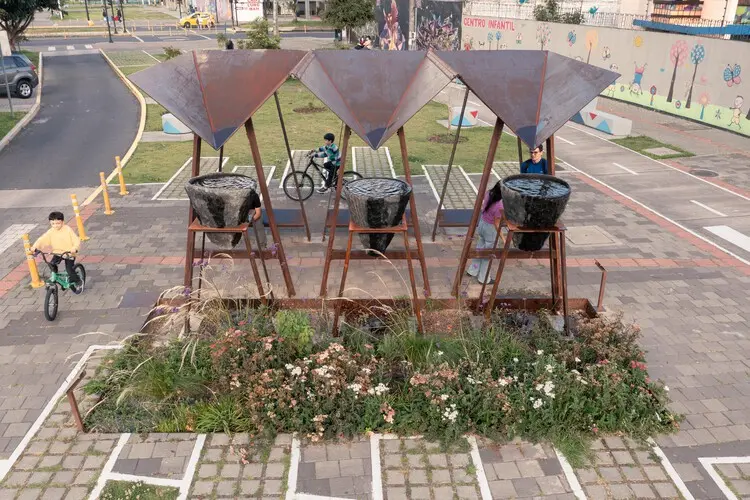
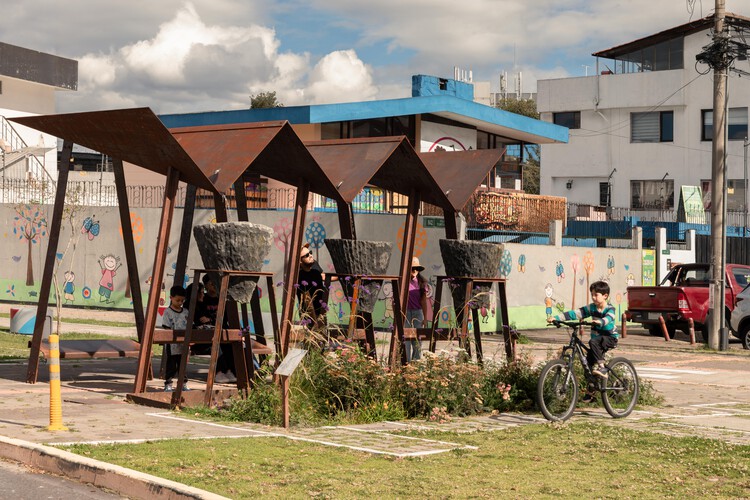
Recently unveiled at Isla Tortuga Park in northern Quito, Ecuador, the Yaku module serves as a physical and symbolic bridge between human communities and natural hydrological systems. Rather than viewing stormwater merely as a hazard to be swiftly evacuated from the built environment, Yaku treats precipitation as a vital resource. The project captures, stores, filters, and safely infiltrates urban runoff back into the subterranean water table, actively mimicking the pre-development natural water cycle.
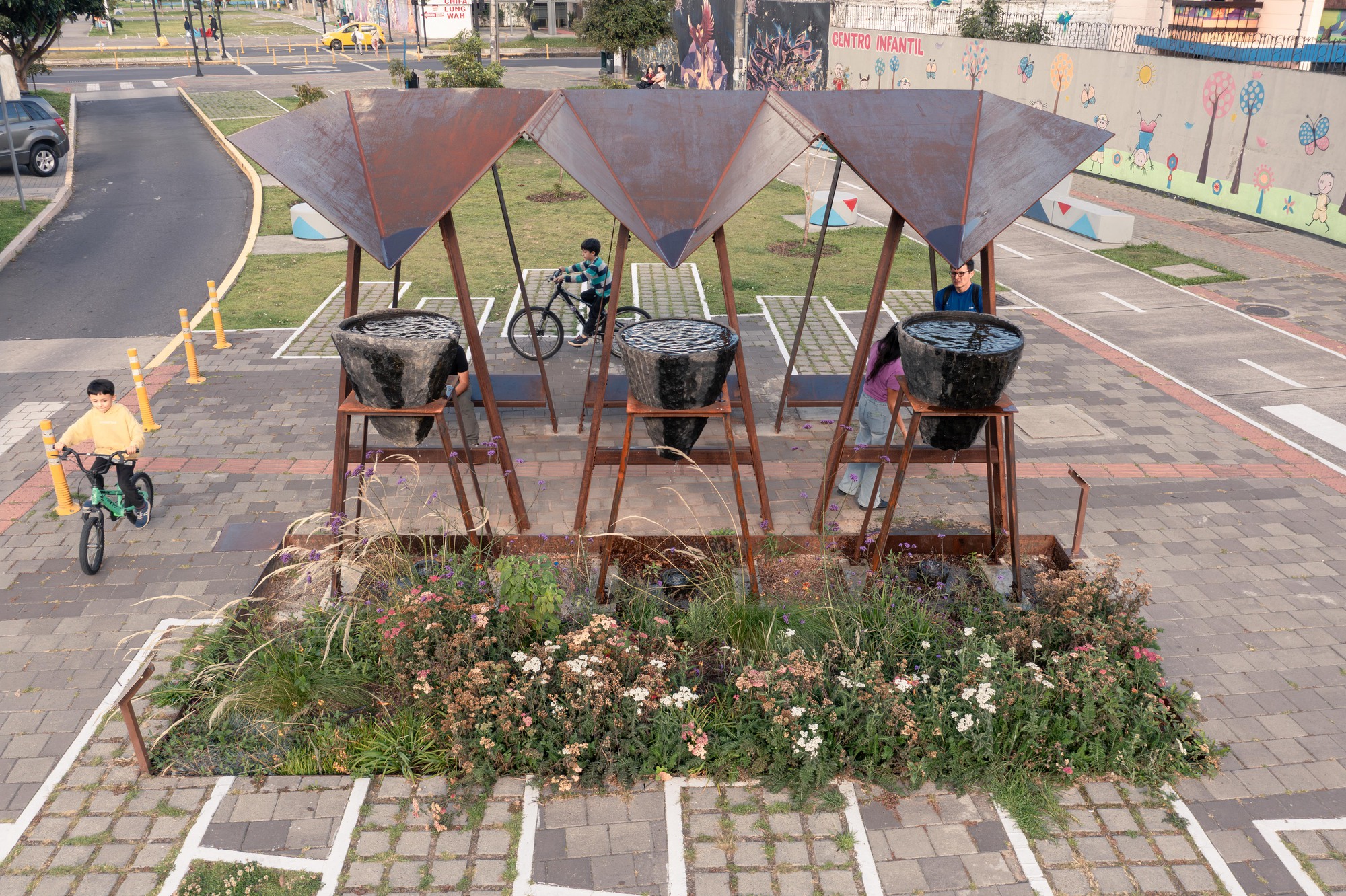
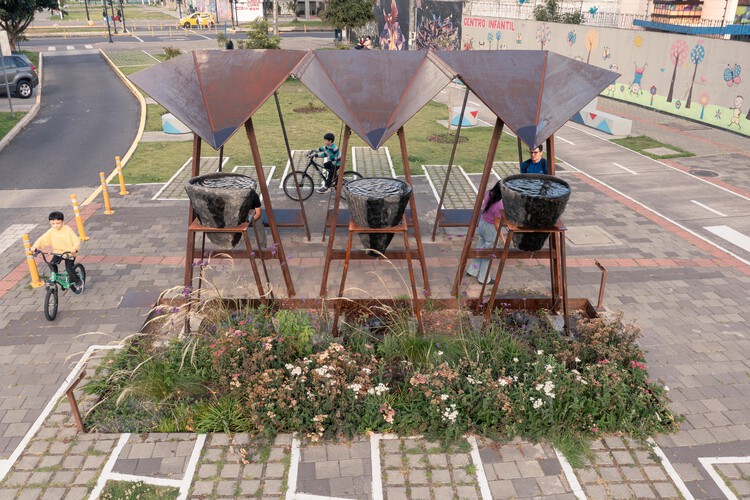
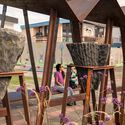
Beyond its technical hydrological capabilities, Yaku functions as dynamic urban furniture. Built to be surface-mounted and adaptable to virtually any paved or hardened urban fabric without the need for destructive subterranean excavation, the module doubles as an inviting public gathering space. It transforms abstract environmental data into a tangible, participatory experience, inviting citizens to sit, converse, and directly engage with the visible rhythms of water management in their neighborhoods.
Detailed Chronology: The Conception, Design, and Realization of the Yaku Prototype
The realization of the Yaku module in northern Quito is the culmination of years of iterative design research, contextual analysis, and cross-disciplinary collaboration by El Sindicato Arquitectura. To understand the significance of the project, one must trace its development across distinct phases from conceptualization to public integration.
Phase 1: Conceptualization and Hydrological Research
Long before physical fabrication began, the design team at El Sindicato Arquitectura engaged in extensive field research regarding Quito’s unique geographical and climatic profile. Situated high in the Andes mountains along the equatorial line, Quito experiences distinct wet and dry seasons, marked by sudden, high-intensity downpours.
Urbanization across the city has drastically reduced permeable green space, transforming steep streets into channels for destructive runoff. The architects recognized that traditional centralized interventions were too slow and costly to address hyper-local flooding and groundwater depletion. The foundational concept for Yaku emerged from a desire to decentralize stormwater management—pushing retention and infiltration down to the neighborhood and park scale.
Phase 2: Materiality, Modularity, and Prototyping
The design team prioritized a kit-of-parts approach, ensuring the module could be manufactured efficiently, transported easily, and installed with minimal heavy machinery. Wood, corrosion-resistant metals, and durable engineering components were selected to withstand Quito’s intense high-altitude ultraviolet radiation and heavy rainfall.
During the prototyping phase, engineers and architects ran rigorous simulations to optimize rainwater capture efficiency, storage capacity, and controlled release rates. The internal architecture of the module was mapped out to include distinct chambers for initial debris filtration, sedimentation, temporary storage, and gradual subterranean infiltration.
Phase 3: Site Selection at Isla Tortuga Park
Following the successful testing of structural and hydraulic models, El Sindicato Arquitectura selected Isla Tortuga Park in northern Quito as the inaugural pilot site. The park offered an ideal testing ground: a well-frequented public amenity surrounded by dense urban neighborhoods with high rates of surface runoff.
Installing the prototype within a public park deliberately prioritized civic engagement. Rather than hiding infrastructure behind chain-link fences and warning signs, the team integrated the mechanisms of water treatment directly into a public seating and gathering pavilion.
Phase 4: Installation and Public Unveiling
The physical deployment of the Yaku module took place under the careful coordination of the architectural team and local municipal stakeholders. Because of its modular, surface-mounted design, installation was completed rapidly without the disruptive trenching typically associated with municipal utility projects.
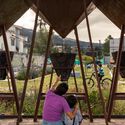
Upon its official unveiling, the installation immediately drew the attention of urban planners, environmental scientists, and local residents. By transforming an ordinary park amenity into an interactive hydrological classroom, Yaku established a new benchmark for public space design in the Andean region and beyond.
Supporting Context & Metrics: The Science and Spatial Impact of Decentralized Runoff Management
To fully appreciate the architectural and engineering achievement of the Yaku module, it is essential to examine the broader environmental metrics and urban dynamics that necessitated its creation.
[ Urban Precipitation ]
         │
         ▼
[ Yaku Surface Module ] ──► (Debris Filtration & Sedimentation)
         │
         ├──► [ Temporary Storage Chamber ] ──► (Controlled Public Access / Use)
         │
         └──► [ Slow Infiltration System ]   ──► (Subterranean Water Table Recharge)
The Urban Hydrology Crisis in High-Altitude Cities
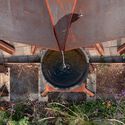
Cities located in complex topography, such as Quito, face compounded stormwater challenges. When rain falls on traditional asphalt and concrete, it cannot infiltrate the earth. Instead, it gathers momentum down slopes, picking up heavy metals, oils, litter, and organic pollutants before overwhelming municipal storm sewers.
According to urban water resource studies, conventional urban development can increase surface runoff volumes by up to five times compared to natural forested land. This sudden surge leads to:
- Flash Flooding: Inundating low-lying intersections, basements, and pedestrian walkways.
- Aquifer Depletion: Preventing natural rainwater from replenishing underlying aquifers, leading to long-term groundwater deficits.
- Water Pollution: Discharging untreated urban toxins directly into local rivers and streams.
How Yaku Responds: Technical Specifications and Mechanics
The Yaku module addresses these systemic failures through a tightly integrated mechanical and biological sequence:
- Capture Efficiency: Designed with optimized surface catchment zones, the module intercepts rainwater directly from localized micro-catchments or directed run-off channels.
- Multi-Stage Filtration: Before water enters storage or infiltration chambers, physical screens and sedimentation traps capture suspended solids, litter, and coarse particulates, preventing system clogs.
- Controlled Infiltration: Rather than discharging water instantaneously into overloaded storm drains, Yaku utilizes calibrated release mechanisms that slowly bleed water back into the soil, protecting local ecosystems from erosive peak flows while actively recharging the water table.
- Public Interface and Ergonomics: The outer shell of the module is crafted with human-centric dimensions, providing integrated seating, shaded overhangs, and educational surfaces that explain the water cycle to park visitors.
Comparative Infrastructure Performance Matrix
| Metric / Parameter | Traditional Grey Infrastructure | Yaku Modular System |
|---|---|---|
| Installation Impact | High disruption (heavy excavation, street trenching) | Low disruption (surface-mounted, modular assembly) |
| Hydrological Goal | Rapid evacuation of water away from the city | Retention, localized filtration, and groundwater recharge |
| Public Value | None (purely utilitarian, often hidden or fenced off) | High (serves as public furniture, seating, and education) |
| Scalability | Rigid, centralized, highly expensive to expand | Highly flexible, decentralized, infinitely replicable |
| Carbon Footprint | Heavy concrete and steel manufacturing | Optimized use of sustainable timber and durable metals |
Official Statements and Design Philosophy
The philosophy driving El Sindicato Arquitectura is rooted in the belief that contemporary architecture must actively heal urban ecosystems rather than merely occupy space. In statements accompanying the release of the Yaku prototype, the design team elaborated on the deep cultural and ecological intent behind the project.
"We chose the name Yaku because water is the lifeblood of our territories, yet our modern cities treat it as an enemy to be banished down concrete pipes," notes the design team at El Sindicato Arquitectura. "Yaku is an invitation to rethink our relationship with natural cycles. By bringing water management out of subterranean obscurity and into the public park, we make the invisible visible. Citizens can sit next to it, listen to it, and understand that every drop captured here is a step toward ecological healing."
The curation of the project by Valentina Díaz further emphasizes the growing shift in Latin American architecture toward localized, climate-responsive interventions. Rather than importing generic, high-tech Western smart-city solutions, practices like El Sindicato Arquitectura are looking deeply into regional geography, indigenous nomenclature (such as the Kichwa term Yaku), and participatory public space design to solve urgent planetary crises.
Furthermore, municipal authorities in Quito have expressed keen interest in the scalability of the prototype. Urban planners note that decentralized interventions like Yaku can be deployed incrementally across parks, plazas, and school yards throughout the city, creating a distributed network of sponge-city infrastructure that relieves pressure on aging municipal networks without requiring billions of dollars in capital expenditure for underground tunneling.
Future Outlook: Scaling the Sponge City Model Across the Global South
As global climate change intensifies weather patterns—bringing unprecedented droughts punctuated by violent, torrential downpours—cities must transition from rigid defense mechanisms to flexible, adaptive resilience strategies. The successful deployment of the Yaku module in Isla Tortuga Park marks a significant milestone, but its true value lies in its potential for replication and evolution.
Potential Avenues for Future Development
- IoT Integration: Future iterations of the Yaku module could incorporate low-power sensors to monitor water storage levels, soil saturation, and local rainfall data in real time. This data could be fed into municipal open-data networks to help city planners map neighborhood-level hydrological performance.
- Phyto-remediation Expansion: Integrating specific aquatic and terrestrial plant species into future modules could allow the system to actively filter heavy metals and hydrocarbons through biological uptake, elevating the quality of water returning to the aquifer.
- Cross-City Replication: The modular blueprint developed by El Sindicato Arquitectura can be adapted to other Andean and Latin American cities facing similar topographical and climatic challenges, from Bogotá to La Paz.
Conclusion
The Yaku Sustainable Urban Runoff Management Module transcends its identity as a simple piece of urban furniture or a technical drainage device. It represents a profound philosophical shift in how architects and urban designers approach the built environment. By harmonizing ecological restoration, hydrological engineering, and civic architecture into a single, elegant package, El Sindicato Arquitectura has provided a compelling blueprint for the resilient cities of tomorrow. As municipal leaders search for actionable, cost-effective ways to combat climate change at the street level, innovations like Yaku light a clear path forward—proving that sustainable infrastructure can be both profoundly functional and deeply human.