Executive Overview
For decades, the global nuclear energy sector has been synonymous with astronomical costs, multi-year delays, and labyrinthine regulatory hurdles. Massive light-water reactors—the foundational bedrock of commercial nuclear power grids today—routinely take over a decade to plan, fund, and construct, often blowing past initial budgets by billions of dollars.
However, a radical shift in philosophy is currently sweeping through the American energy landscape. The U.S. government, driven by an urgent, dual imperative to rapidly scale up emissions-free electricity and satisfy the soaring power demands of modern infrastructure like artificial intelligence data centers, has turned its sights toward a different scale entirely: microreactors.
In a dramatic display of administrative ambition, the Trump administration established a high-profile, symbolic deadline last year. The goal: see at least three new microreactor projects achieve "criticality"—the technical milestone confirming that a reactor can successfully and independently sustain a nuclear fission chain reaction—by the United States’ 250th anniversary on July 4.
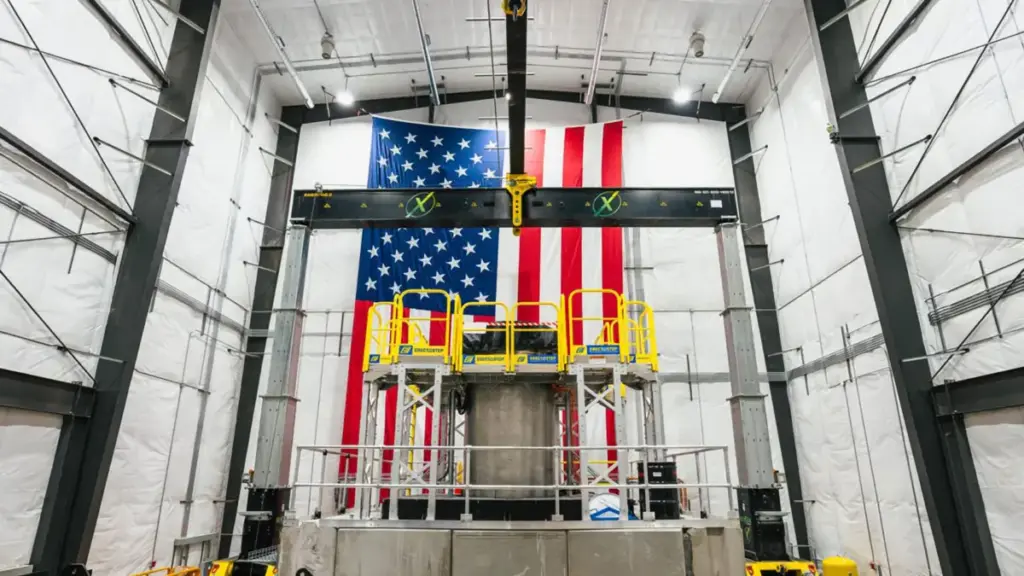
As the holiday fireworks lit up the sky, the nuclear industry blew past that target. Four separate companies successfully achieved criticality within the designated window. Antares Nuclear led the charge in June with its Mark-0 test reactor, quickly followed by Valar Atomics, Deployable Energy, and, fittingly, Aalo Atomics, which clinched the milestone in the early morning hours of July 4 itself.
While this achievement has injected a much-needed dose of optimism and momentum into the nascent advanced nuclear sector, it also demands rigorous analytical scrutiny. Achieving zero-power criticality is a momentous foundational step, but it is a far cry from transmitting commercial electricity to the national grid. These startups must now navigate formidable engineering hurdles, complex cooling system installations, rigorous Nuclear Regulatory Commission (NRC) oversight, and ambitious commercial timelines that many industry veterans view with cautious skepticism.
This article explores the technical reality behind the recent microreactor successes, examines the structural mechanics of the Department of Energy’s Reactor Pilot Program, weighs the commercial ambitions of the participating startups against regulatory hurdles, and assesses whether these pint-sized power generators represent a genuine revolution in clean energy or a brief, high-profile distraction from the hard work of deep decarbonization.
Detailed Chronology: The Race to the 250th Birthday
The path to the July 4 milestone began in earnest in August of the previous year, when the U.S. Department of Energy (DOE) launched an aggressive initiative designed to cut through bureaucratic red tape. Through the newly minted Reactor Pilot Program, federal authorities selected 11 promising advanced reactor projects. Rather than forcing startups to secure remote land and shoulder the immense upfront capital costs of facility construction independently, the program offered participating developers targeted access to federal land alongside invaluable, hands-on engineering support from the U.S. national laboratory system.
Crucially, the program focused entirely on microreactors—decentralized, factory-built, and potentially transportable units that are a fraction of the size of conventional, utility-scale nuclear reactors. By lowering the barriers to entry, the DOE effectively created a fast-track ecosystem for experimental reactor designs.
The compressed timelines of the companies participating in this sprint are nothing short of astonishing within the context of traditional nuclear development:
- Valar Atomics, Antares Nuclear, and Aalo Atomics were all founded as recently as 2023.
- Deployable Energy entered the fray even more recently, officially launching in 2025.
Despite their infancy, these companies moved with unprecedented velocity through the national lab ecosystem. In June, Antares Nuclear crossed the finish line first, successfully achieving criticality with its Mark-0 test reactor at a federal site. Valar Atomics and Deployable Energy quickly matched the feat.
The most dramatic moment of the campaign belonged to Aalo Atomics. In the early hours of July 4—right as the nation’s semiquincentennial celebrations were officially kicking off—Aalo’s prototype achieved criticality. It was a textbook execution of a high-pressure deadline, transforming a government-imposed symbolic target into a masterclass in startup urgency.
Yet, this rapid sprint raises critical questions regarding long-term reliability and safety. To fully comprehend what these companies accomplished, one must understand the exact nature of the scientific milestone they reached.
Supporting Context & Metrics: Unpacking "Zero-Power Criticality"
To the layperson, achieving criticality sounds synonymous with a working power plant. In reality, the milestone achieved by Antares, Valar, Deployable, and Aalo is known technically as zero-power criticality.
Zero-power criticality simply establishes that a reactor’s core can initiate and sustain a controlled, self-sustaining nuclear fission chain reaction. It proves that the physics of the design work as intended on paper. However, it is conducted at negligible thermal output, meaning virtually no electricity is generated, and the extreme thermal management systems required for continuous power generation are not yet fully stressed.
Dr. Kathryn Huff, a former assistant secretary for nuclear energy and currently chair of the Department of Nuclear Engineering and Engineering Physics at the University of Wisconsin–Madison, unpacked this distinction during an appearance on the Catalyst podcast:
"A zero-power-criticality test can be achieved without making real engineering progress on fuel or design."
Dr. Huff’s assessment is not meant to diminish the accomplishment of the startups, but rather to contextualize the massive engineering chasm that lies between proving basic nuclear physics and commercializing a reliable grid asset.
The Engineering Challenges Ahead
Now that the Reactor Pilot Program’s initial phase has concluded, these four companies—and their peers in the pilot cohort—face the grueling phase of moving from physics experiments to power generation. This transition requires solving complex mechanical and thermodynamic challenges:
- Thermal Transfer Systems: Microreactors concentrate immense thermal energy into a very small volume. Developing and integrating advanced cooling systems—often utilizing liquid metals, molten salts, or high-pressure gas loops—to safely transfer heat out of the core without triggering material degradation is a monumental engineering feat.
- Advanced Fuel Fabrication: Many advanced microreactor designs rely on High-Assay Low-Enriched Uranium (HALEU), a specialized fuel enriched up to 20% in uranium-235. The global supply chain for HALEU remains severely constrained, posing a potential bottleneck for scaling operations beyond initial prototypes.
- Balance of Plant Integration: Converting thermal energy into electrical power requires turbines, generators, and grid-interconnection hardware that must be miniaturized and ruggedized to match the footprint of the microreactor itself.
Despite these hurdles, the companies involved are projecting timelines that defy historical precedent. Aalo Atomics has already broken ground on its second-generation reactor, with public statements indicating an ambition to generate 10 megawatts of electricity to power an on-site data center by 2027. Similarly, Deployable Energy has announced plans to deploy fully commercial units by 2028.
Official Statements and Industry Perspectives
The aggressive pace and government-backed acceleration of these microreactors have polarized the energy and policy communities. Proponents view the program as a vital disruption of a calcified regulatory and industrial status quo. They argue that if the United States is to meet soaring electricity demands driven by electric vehicle adoption, industrial electrification, and the voracious power appetite of data centers powering artificial intelligence, traditional 10-year development cycles are completely untenable.
However, critics and public policy analysts offer a much more cautious—and at times deeply critical—assessment.
A prominent policy analysis published by the public policy think tank Third Way characterized the federal obsession with rapid microreactor milestones as an "unhelpful diversion" from the core mission of substantially expanding the nation’s baseline nuclear generation capacity. The memo bluntly noted:
"Artificially accelerating project timelines is a short-term solution, not a long-term fix."
Skeptics argue that microreactors, by their very definition, are too small to single-handedly solve the structural capacity deficits facing the American power grid. While a 10-megawatt microreactor is ideal for localized off-grid applications—such as powering remote military bases, isolated industrial sites, or individual corporate data centers—they cannot replace the gigawatt-scale output of conventional nuclear plants that sustain entire metropolitan regions.
Furthermore, regulatory experts have raised alarms regarding the potential erosion of safety standards. The U.S. Nuclear Regulatory Commission (NRC) bears the immense legal responsibility of licensing civilian and commercial nuclear infrastructure. Historically, the NRC’s exhaustive, multi-layered review process has been the primary factor behind the multi-year delays plaguing American nuclear projects.
Earlier this year, the NRC proposed a modernized, streamlined regulatory framework specifically designed to expedite microreactor approvals. While welcomed by industry boosters eager to slash red tape, critics have questioned whether political pressure under successive administrations might compromise rigorous safety evaluations. Ensuring that speed does not outpace safety remains the NRC’s most delicate tightrope walk.
Future Outlook: Can Startups Deliver on the Hype?
As the initial euphoria surrounding the July 4 milestones settles, the true test for these four nuclear startups begins. Venture-backed hardware companies frequently encounter harsh realities when transitioning from controlled laboratory conditions to real-world deployment, and the nuclear sector is arguably the most unforgiving hardware arena on Earth.
1. Regulatory Navigation
The primary obstacle facing Aalo, Antares, Valar, and Deployable is not the physics of the atom, but the bureaucracy of Washington. Even with the NRC’s proposed microreactor frameworks, navigating the licensing process for commercial deployment will require navigating strict environmental, seismic, and operational reviews. Any unexpected safety finding during these reviews could instantly shatter startup timelines.
2. Market Fit and Commercialization
Microreactors are carving out a unique niche distinct from traditional baseload power plants. Their greatest economic potential lies in behind-the-meter applications:
- Data Centers: With tech giants desperate for zero-carbon, round-the-clock power to fuel energy-hungry AI data centers without straining local utility grids, microreactors offer an attractive, dedicated power source.
- Remote Communities & Heavy Industry: Mines, remote Arctic settlements, and heavy manufacturing facilities currently reliant on diesel generators represent immediate, high-value commercial targets.
3. Investor Confidence and Capital Burn
Nuclear startups are extraordinarily capital-intensive. Unlike software firms that can iterate rapidly through code deployment, building physical nuclear reactors requires massive cash reserves. Maintaining investor confidence through multi-year regulatory reviews without generating immediate revenue will test the financial staying power of these 2023-vintage startups.
Conclusion
The achievement of zero-power criticality by four American microreactor companies ahead of the nation’s 250th birthday is an undeniably impressive engineering feat. It demonstrates that lean, agile startups can leverage national laboratory infrastructure to design, build, and test complex nuclear systems at speeds previously thought impossible.
Yet, as industry veterans frequently remind observers, achieving criticality is merely the opening chapter of a much longer, more arduous book. Moving from a zero-power physics experiment to a commercially viable, grid-connected power plant requires overcoming monumental thermal, material, and regulatory challenges.
Whether these microreactors herald a genuine renaissance in American nuclear power or merely serve as an energetic flash-in-the-pan will depend entirely on how these startups navigate the treacherous waters of commercialization, regulation, and engineering over the next three to five years. For now, the world is watching closely as a new generation of nuclear pioneers attempts to rewrite the rules of atomic energy.