Executive Overview
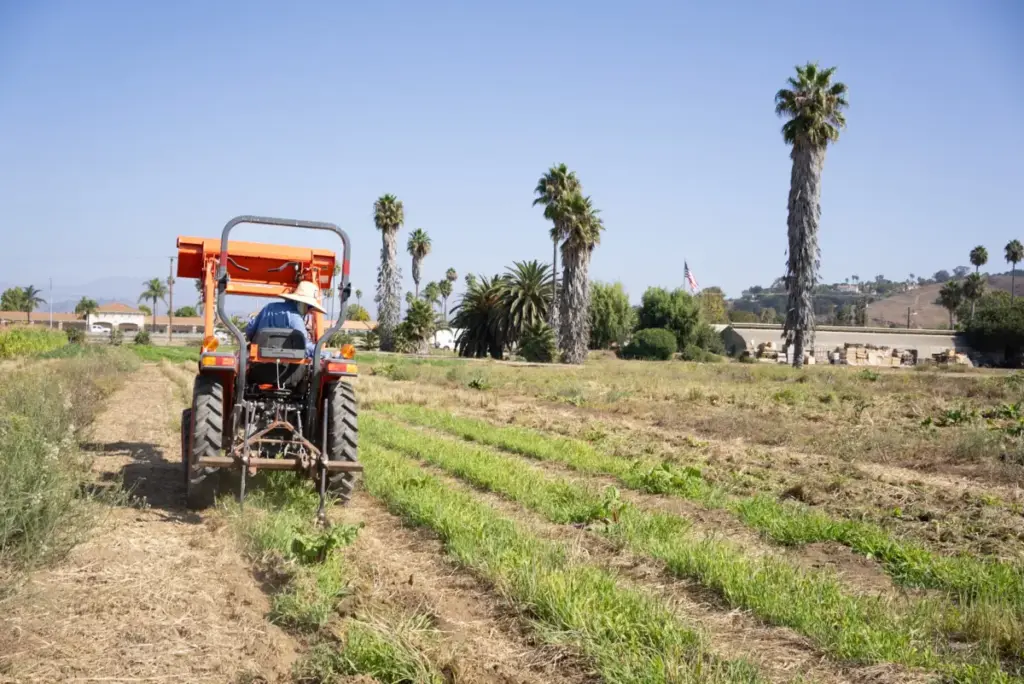
In an era defined by intensifying climate volatility, degraded soils, and systemic ecological degradation, the future of food production hangs in the balance. Nowhere is this tension more acute than in California’s Ventura County. Renowned globally for its Mediterranean climate and agricultural productivity, the region is simultaneously one of the most chemically and pesticide-intensive farming hubs in the United States.
Enter a bold, systemic intervention: a renewed partnership between the Rodale Institute and Holdfast Collective, the non-profit shareholder of iconic outdoor apparel brand Patagonia.
Announced in Camarillo, California, this multi-million-dollar initiative centers on a $1.55 million, three-year grant renewal dedicated to scaling the Rodale Institute Regenerate Ventura project. This capital injection follows a highly successful inaugural year that proved hyperlocal, farmer-centric support can effectively dismantle barriers to regenerative organic farming.
The stakes are enormous. The Regenerate Ventura project is not merely an isolated pilot program; it is a blueprint for an ambitious, county-wide transformation. With an ultimate vision requiring a $10 million total investment, the initiative aims to transition a staggering 316,000 acres of conventional farmland into a thriving, resilient engine for regenerative organic agriculture. By combining rigorous agronomic science with unprecedented financial, legal, and operational wrap-around support, Rodale Institute and Holdfast Collective are offering a national model for how American agriculture can pivot away from synthetic inputs toward a sustainable, climate-resilient future.
Detailed Chronology: From Concept to County-Wide Catalyst
The Genesis: Launching Regenerate Ventura (2024)
When the Regenerate Ventura project officially broke ground in 2024, it arrived with a clear mandate: tackle the environmental and economic pressures facing Ventura County farmers head-on. Backed by an initial $1 million investment from Holdfast Collective, the initiative set out to address a glaring gap in modern agricultural extension services. Traditional academic and governmental institutions often offered generalized advice on organic transitions, but they consistently failed to address the complex financial, operational, and bureaucratic realities that discourage conventional farmers from making the switch.
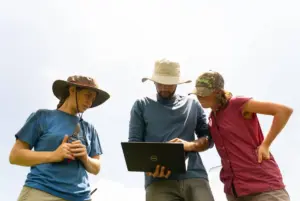
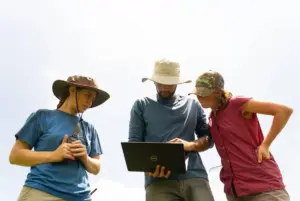
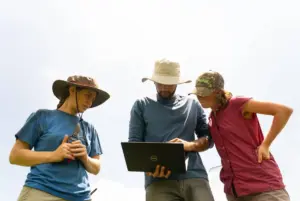
Rodale Institute deployed agronomists directly to the field to work shoulder-to-shoulder with local growers. From day one, the program focused on practical, ground-level hurdles—navigating the labyrinth of organic certification, optimizing crop selections for local microclimates, and securing viable B2B markets for newly transitioned yields.
Proof of Concept and Momentum (2025–Early 2026)
By the end of its first full year of operation, Regenerate Ventura had achieved milestones that surprised even seasoned agricultural experts. Rather than remaining an exclusive club for large-scale corporate farms, the initiative built deep roots within historically marginalized communities. Notably, the project achieved a nearly 39% engagement rate among Black, Indigenous, and People of Color (BIPOC) farmers—a demographic frequently left out of mainstream agricultural subsidies and technological support systems.
Furthermore, the program’s physical footprint expanded rapidly. By early 2026, over 10,000 acres of Ventura County farmland were actively in transition toward regenerative organic management. A robust pipeline of 57 farms was established, with 12 of those operations officially deep into their organic certification applications, and another 40 legally or operationally committed to beginning their transition within an 18-month window.
The Next Frontier: The $1.55 Million Grant Renewal (April 2026)
Building on this undeniable momentum, Holdfast Collective approved a $1.55 million, three-year grant renewal on April 8, 2026. This funding guarantees the long-term operational runway necessary to guide farmers through the most vulnerable phase of agricultural transition: the three-year statutory window required for organic certification, during which yields can fluctuate while input costs shift.
With this new capital, Rodale Institute is scaling its infrastructure, deepening its community partnerships, and moving closer to its ultimate target of transforming Ventura County into a living, breathing laboratory for regional food system reform.
Supporting Context & Metrics: Breaking Down the Numbers
To truly appreciate the scope of the Regenerate Ventura initiative, one must examine the metrics driving the project and the systemic challenges it seeks to overcome.
The Scale of Ambition
- Total Acreage Target: 316,000 acres across Ventura County.
- Current Acreage in Transition: Over 10,000 acres (achieved within roughly two years).
- Active Farm Pipeline: 57 farms enrolled.
- Certification Milestones: 12 farms actively undergoing organic certification application; 40 committed to transition within 18 months.
- Demographic Reach: Approximately 39% BIPOC farmer engagement.
- Financial Investment: $1 million initial grant (2024); $1.55 million renewal grant (2026); $10 million total estimated investment required for full county transformation.
Bridging the Gap: Comprehensive Support Systems
Why do so many conventional farmers hesitate to adopt organic practices, despite personal misgivings about synthetic pesticides and degraded soils? The answers are structural. Transitioning to organic farming requires navigating a complex gauntlet of financial, legal, and operational hurdles that traditional university extension offices are rarely equipped to solve.
Rodale Institute’s model addresses these obstacles directly through a multi-pronged support system:
- Agronomic Consulting: Hands-on guidance regarding soil health, cover cropping, crop rotation, and natural pest management tailored to California’s unique Mediterranean ecosystems.
- Business and Marketing Strategy: Direct assistance in realigning farm business plans to ensure profitability during the delicate transition period, coupled with marketing coordination to secure premium buyers for regenerative crops.
- Equipment Stipends and Capital Access: Direct financial relief to offset the high costs of specialized machinery required for mechanical weed control and diversified planting.
- Legal and Regulatory Navigation: Expert guidance through the bureaucratic intricacies of the USDA National Organic Program (NOP) standards.
A Collaborative Ecosystem
Transforming a county’s agricultural identity cannot be achieved in a vacuum. Regenerate Ventura operates through an interconnected network of regional partners that ground the initiative in local communities:
- Leap Lab: Providing technical and innovative agricultural insights.
- Project MILPA: Fostering community-centric food sovereignty and supporting diverse farming populations.
- Saticoy Food Hub: Creating localized aggregation, storage, and distribution channels to keep regionally grown food within regional markets.
- Ventura County Institutions and Stakeholders: Aligning local government policy, public health initiatives, and institutional procurement (such as schools and hospitals) with regenerative agricultural output.
Official Statements: Voices from the Frontlines
The partnership between Rodale Institute and Holdfast Collective represents a powerful convergence of ecological science and corporate activism. Leaders from both organizations emphasize that this project is about much more than farming—it is about economic survival and climate mitigation.
"This renewal reflects what we’ve proven in Year One, that hyperlocal, farmer-first support works," said Jeff Tkach, CEO of Rodale Institute. "With Holdfast’s partnership, we’re not just funding transition, we’re funding a systems shift. The full vision for county-wide transformation requires $10 million in total investment. We’re calling on others who are committed to this work to join us in making Ventura County a regenerative organic model for the nation."
The enthusiasm is reciprocated by Patagonia’s philanthropic arm, which evaluates grant applications based on their potential to yield measurable, systemic environmental change.
"Rodale Institute is filling a void," stated Greg Curtis, Executive Director of Holdfast Collective. "They’ve shown up with rigor, trust and results. Their model proves that organic and regenerative organic agriculture is essential to climate resilience and farm viability in our own backyard and beyond."
Future Outlook: A National Blueprint for Agricultural Reform
As the Regenerate Ventura project enters its next three-year chapter, its implications extend far beyond the borders of Southern California. American agriculture stands at a critical crossroads. Industrial farming models, reliant on synthetic nitrogen fertilizers, heavy tillage, and chemical pesticides, have increasingly proven unsustainable over the long term, contributing to topsoil erosion, water contamination, biodiversity loss, and significant greenhouse gas emissions.
Conversely, regenerative organic agriculture—championed by Rodale Institute for over seven decades—actively sequesters carbon in the soil, restores hydrological cycles, enhances local biodiversity, and produces nutrient-dense food while insulating farmers from the volatile pricing of petrochemical inputs.
The Path to 2030 and Beyond
The immediate goal for Rodale Institute and Holdfast Collective is clear: systematically scale the Ventura County model until thousands of additional acres are pulled out of the conventional chemical treadmill and integrated into the regenerative economy. However, the broader horizon is even more compelling.
If a $10 million investment can fundamentally alter the agricultural trajectory of a high-stakes, pesticide-intensive region like Ventura County, the framework can be replicated across the United States and globally. By demonstrating that organic transitions can be executed smoothly, equitably, and profitably with localized wrap-around support, the project provides a scalable template for government agencies, private foundations, and corporate ESG (Environmental, Social, and Governance) initiatives worldwide.
An Open Invitation to Change
Achieving the full $10 million vision for county-wide transformation in Ventura County will require a coalition of the willing. Rodale Institute has issued an open call to philanthropists, impact investors, corporate partners, and policy makers to step forward and join the effort.
In the words of Patagonia founder Yvon Chouinard, whose company’s unique ownership structure designates Earth as its sole shareholder, businesses must actively participate in saving our home planet. Through initiatives like Regenerate Ventura, that philosophy is moving out of the corporate boardroom and directly into the rich, sun-drenched soils of California—planting the seeds for a sustainable, resilient agricultural future.
About the Partner Organizations
- Rodale Institute: A 501(c)(3) nonprofit dedicated to growing the regenerative organic movement through rigorous research, farmer training, and education. Named one of Fast Company’s Most Innovative Companies in 2025, the Institute leverages 78 years of groundbreaking science to prove that organic farming is essential to humanity’s survival.
- Holdfast Collective: A 501(c)(4) nonprofit organization that owns 100% of Patagonia’s non-voting stock, dedicated to combating the environmental crisis, protecting nature and biodiversity, and supporting thriving communities.
- Patagonia: Founded by Yvon Chouinard in 1973, this Ventura, California-based outdoor apparel company is a certified B Corporation and founding member of 1% for the Planet. With a unique ownership structure where Earth is its only shareholder, profits not reinvested into the business are directed to the Holdfast Collective to fund environmental activism and conservation.