By Environmental Policy and Investigative Desk
Published: August 2026
Executive Overview
In a watershed moment for environmental justice, constitutional democracy, and Indigenous rights across the African continent, South Africa’s Constitutional Court delivered a definitive legal defeat to corporate extractivism. On August 14, 2026, the nation’s apex court permanently halted oil and gas exploration plans by global energy titan Shell and its partner, Impact Africa, off the pristine shores of South Africa’s Wild Coast.
The ruling brings a definitive close to a grueling, years-long legal battle that pitted coastal fishing communities, Indigenous groups, and civil society organizations against the immense financial might of multinational oil conglomerates. By upholding the foundational principles of procedural fairness and constitutional integrity, the court ruled that speculative economic benefits and corporate investments can never supersede human rights, cultural heritage, or ecological preservation.
Legal scholars and climate activists alike are hailing the judgment as a global blueprint for people-powered resistance against neocolonial industrial exploitation. Furthermore, the decision intensifies pressure on African governments to pivot away from an outdated economic dependence on fossil fuels, accelerating the transition toward decentralized, reliable renewable energy systems and sustainable green employment.
Detailed Chronology: Anatomy of a Landmark Legal Battle
The road to the Constitutional Court was paved by grassroots mobilization, bureaucratic oversights, and a protracted judicial ping-pong match that tested the resilience of South Africa’s post-apartheid legal framework.
The Origins of the Conflict (2021)
The controversy ignited when Shell and Impact Africa secured exploration rights to conduct seismic surveys across thousands of square kilometers of the Indian Ocean off the Wild Coast. The operation relied on the Amazon Warrior, a specialized seismic vessel deploying high-powered airguns that discharged deafening acoustic shockwaves into the seabed every ten seconds. These blasts were designed to map subterranean oil and gas reserves.
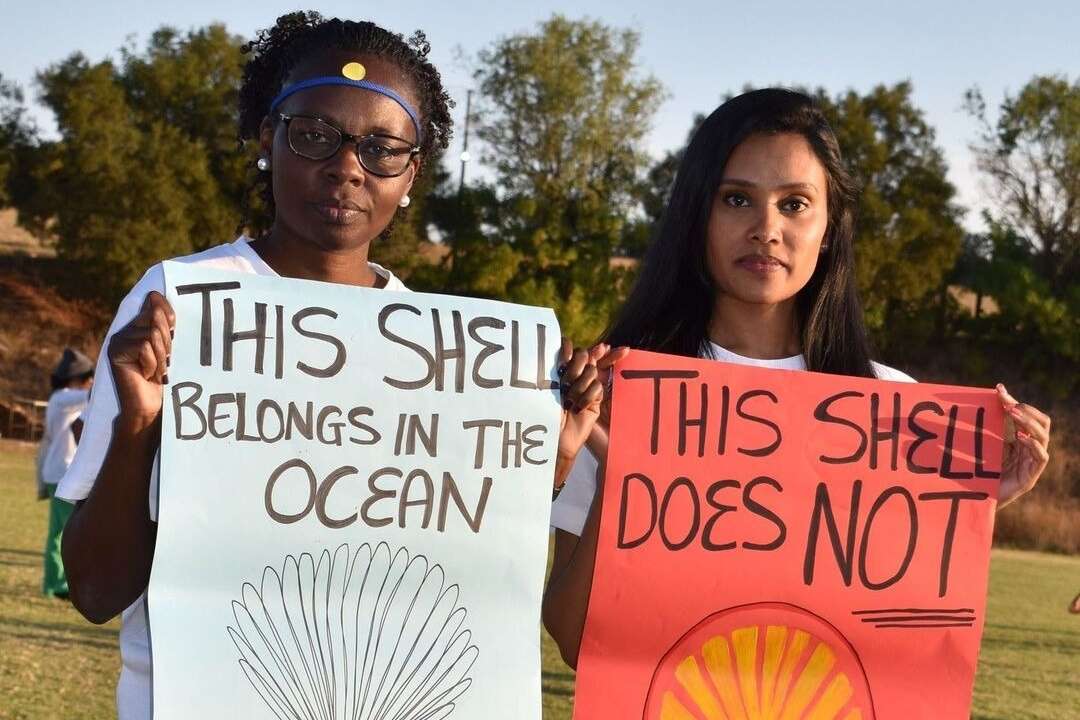
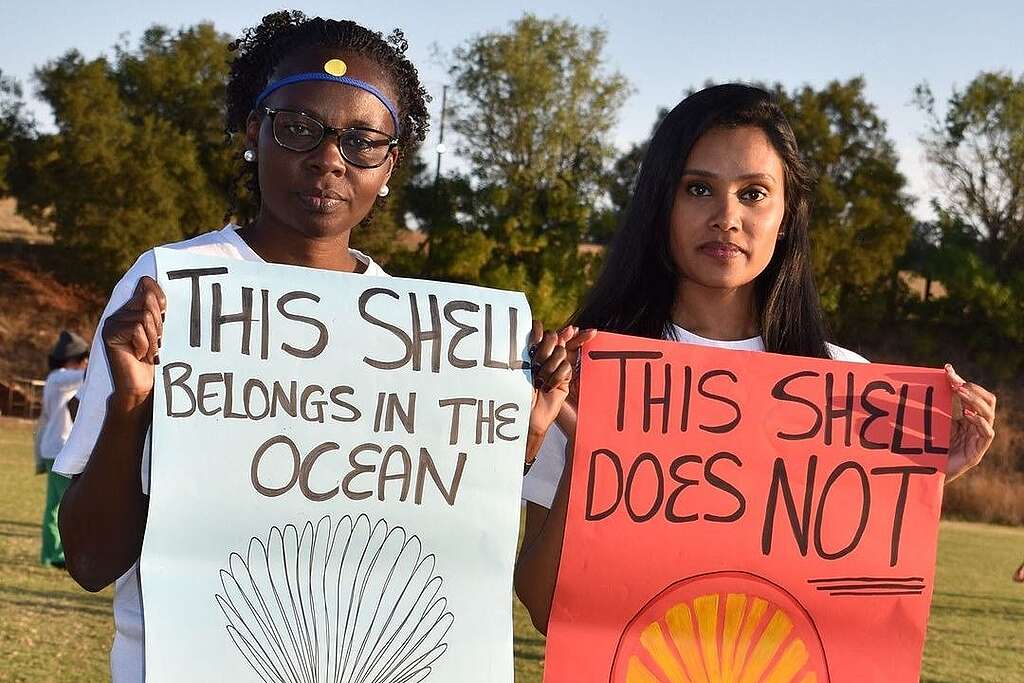
Local fisherfolk, Indigenous custodians, and environmental NGOs immediately raised alarms. Citing profound threats to marine ecosystems, local livelihoods, and sacred ancestral connections to the ocean, communities mobilized. In December 2021, a coalition of coastal residents and civil society groups—backed by organizations such as Natural Justice and the Legal Resources Centre—filed an urgent application in the Makhanda High Court. The court granted an interim interdict halting the seismic blasts, marking the first major hurdle for Shell’s timeline.
Judicial Escalation (2022–2024)
Subsequent legal reviews in the Makhanda High Court ruled decisively in favor of the communities. The court found that the original exploration right had been unlawfully granted because the Department of Mineral Resources and Energy (DMRE) had failed to conduct meaningful public consultations with affected populations.
Undeterred, Shell escalated the dispute to the Supreme Court of Appeal (SCA). In 2024, the SCA delivered a mixed judgment: while it upheld the finding that the original consultation process was deeply flawed and unlawful, it carved out a controversial legal backdoor. The SCA ruled that Shell should be given an opportunity to remedy its initial omissions retrospectively through a subsequent consultation phase.
Refusing to accept a compromise that treated constitutional rights as administrative boxes to be checked after the fact, the communities took their fight to South Africa’s highest judicial authority: the Constitutional Court.
The Apex Court Verdict (August 14, 2026)
In its definitive ruling, the Constitutional Court set aside the original exploration right alongside its subsequent renewals. The court firmly rejected the SCA’s remediation logic, issuing a stern warning that permitting retrospective fixes would establish a dangerous precedent where financial investments could routinely eclipse grave constitutional violations. The judgment reaffirmed that public participation must precede decision-making, cementing the legal supremacy of human and environmental rights over corporate agendas.
Supporting Context & Metrics: Ecological Risks and Historical Precedents
To fully grasp the magnitude of the Constitutional Court’s decision, one must examine the severe environmental threats posed by seismic exploration and the grim historical legacy of fossil fuel extraction on the African continent.
The Threat of Seismic Blasting
Marine experts and conservationists repeatedly warned that the acoustic shockwaves generated by seismic surveys pose catastrophic risks to marine life. The blasts can disorient, injure, or kill cetaceans—including endangered southern right whales—and critically threaten ancient, scientifically invaluable species such as the West Indian Ocean coelacanth.
Beyond immediate marine trauma, seismic testing acts as the gateway drug to full-scale drilling, extraction, and maritime transport. Had the exploration succeeded, the likelihood of commercial extraction would have exposed the Wild Coast to the perennial threat of catastrophic oil spills. This danger directly jeopardizes a thriving local economy built on sustainable artisanal fishing and eco-tourism.
The Shadow of the Niger Delta
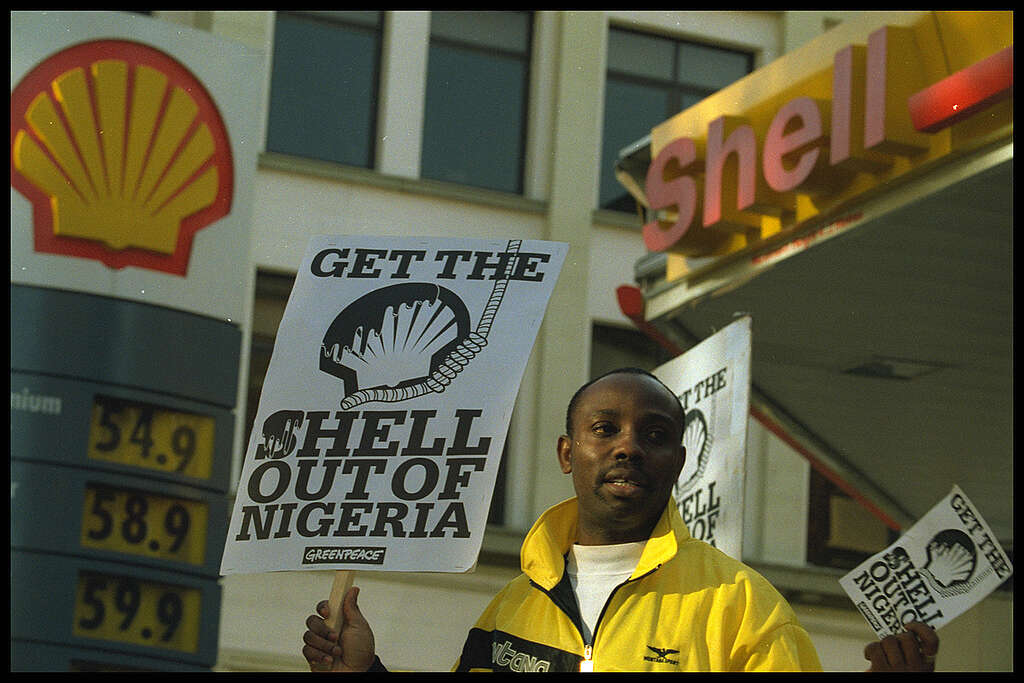
For South African activists, the resistance against Shell was profoundly informed by the multinational’s devastating track record in Nigeria’s Niger Delta. Since 1958, oil extraction in the Delta has yielded widespread ecological devastation, poisoned river systems, and decimated local farming and fishing communities.
The struggle also carries profound historical weight due to the violent suppression of environmental dissent in Nigeria—exemplified by the tragic execution of activist Ken Saro-Wiwa and the Ogoni Nine, who protested Shell’s environmental degradation. Communities along the Wild Coast recognized that allowing Shell a foothold in South African waters risked importing a generational curse of pollution, poverty, and human rights abuses.
Economic Realities and Neocolonial Extractivism
Proponents of fossil fuel projects frequently argue that oil and gas exploration is essential for job creation and poverty alleviation. However, empirical data from across Africa tells a starkly different story. South Africa remains one of the most unequal societies globally, suffering from chronic structural unemployment exceeding 33%.
Decades of proximity to heavy fossil fuel infrastructure—such as the oil refineries in Wentworth, Durban—have trapped local populations in downward cycles of poverty and respiratory illness, rather than delivering shared prosperity. Furthermore, global tax avoidance mechanisms allow multinational extractive corporations to siphon an estimated 12% to 20% of their global windfall profits into tax havens. This systemic capital flight deprives African governments of the domestic revenues desperately needed to fund healthcare, education, and climate resilience.
Official Statements: Voices of the Movement
The historic judgment elicited powerful reactions from community leaders, legal experts, and environmental advocates who spearheaded the multi-year litigation.
-
Sinegugu Zukulu, Sustaining the Wild Coast:
"For centuries, colonialism and capitalism have enabled a system that ignores the rights of Indigenous people on their own land. At last, we have been able to assert the rights of Indigenous people over the profits of global corporations. We went to court for the future and for future generations."

-
Nonhle Mbuthuma, Amadiba Crisis Committee:
"True development must come from people deciding their own future. We spent decades opposing mining on our land; now we have successfully defended the mining of our ocean."
-
Delme Cupido, Natural Justice:
"This case demonstrates that public participation is not simply about ticking administrative boxes, but about placing people’s dignity and cultural practices at the centre of decisions that affect their lives."
-
Eugene Perumal, Greenpeace Africa:
"The message from the highest court in the land is crystal clear: people and their constitutional rights come before corporate profits. This judgment sets an inspiring precedent for the entire African continent."
Future Outlook: Paving the Way for a Just Transition
The implications of the Constitutional Court’s ruling extend far beyond the borders of South Africa. As nations within the Southern African Development Community (SADC) grapple with pressures from foreign extractive industries, this precedent arms local populations with a potent legal tool to demand consent and accountability.
The Imperative of Renewable Energy
With the viability of new offshore fossil fuel projects severely diminished in South Africa, policymakers face a clear imperative: accelerate the transition toward renewable energy. South Africa possesses world-class solar and wind resources. Capitalizing on these natural advantages through utility-scale and decentralized rooftop installations can resolve the country’s chronic electricity deficits (historically manifesting as debilitating load-shedding) while creating stable, long-term green employment.
Global market trends strongly support this pivot. In 2025, approximately 85% of all newly added global power capacity was derived from renewable sources, primarily solar and wind. By embracing modern smart grids, advanced battery storage, and localized energy generation, African nations can insulate themselves from the volatile price shocks of imported fossil fuels driven by geopolitical conflicts.
Financing the Transition: The Polluter Pays Principle
A critical challenge in executing a just energy transition is securing adequate financing. Civil society organizations and environmental economists are increasingly rallying behind bold fiscal measures, such as a global polluter tax. Implementing a progressive 20% tax on the excess profits of multinational oil and gas giants could generate upwards of $100 billion annually.
These revenues would be directly channeled into addressing climate loss and damage, funding adaptation strategies, and underwriting investments in clean renewable infrastructure. South Africa’s active participation in ongoing international frameworks, such as the United Nations Tax Convention negotiations, positions the nation to champion global tax justice and hold extractive corporations financially accountable for the crises they generate.
Conclusion
The permanent halt of Shell’s oil exploration off the Wild Coast is much more than a localized legal victory; it is a profound validation of community resilience and constitutional democracy. By drawing a hard line against corporate overreach and environmental degradation, South Africa’s Constitutional Court has sent an unmistakable signal to multinational extractivists: human rights, cultural heritage, and ecological preservation are non-negotiable.
As South Africa and the broader African continent look toward the horizon, this watershed moment opens the door to a more equitable, sustainable, and prosperous future—one powered not by the finite, volatile fossil fuels of the past, but by the clean, limitless potential of renewable energy and people-powered governance.