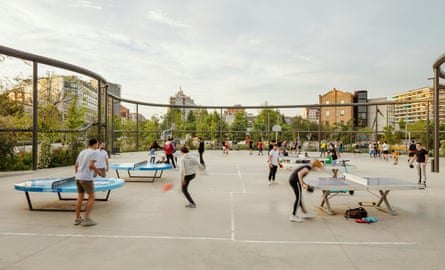
For decades, the blueprint for modern urban development across the globe has been unyielding in its prioritization of the automobile. Echoing Joni Mitchell’s timeless lament that planners “paved paradise and put up a parking lot,” municipalities spent the latter half of the 20th century carving up historic neighborhoods, erecting sprawling multi-lane thoroughfares, and paving over fertile ground to appease the insatiable demands of the automotive age. Today, however, that paradigm is facing an existential reckoning.
As the climate crisis accelerates—bringing with it lethal urban heat islands and erratic, torrential downpours—cities are being forced to rethink the very nature of public space. The European Prize for Urban Public Space, a prestigious biennial award organized by Barcelona’s Centre de Cultura Contemporània de Barcelona (CCCB) alongside six other esteemed European architectural institutions, stands at the vanguard of this movement.
The prize’s latest shortlist offers a radical vision of the future: a blueprint where infrastructure built for cars is aggressively dismantled, repurposed, and returned to human beings. From roundabouts converted into public splash pools and steam baths to multi-lane highway interchanges buried underground to make way for vast urban parks, these architectural interventions demonstrate that cities do not have to remain locked in the automotive era forever. Instead, they can become climate-resilient sanctuaries capable of protecting and nurturing their inhabitants.
Detailed Chronology of the Transformation Projects
The journey from a car-dominated urban grid to a human-centric green haven is rarely straightforward. The projects featured on the European Prize shortlist illustrate the vast spectrum of approaches—ranging from temporary, guerrilla-style architectural experiments to multi-year, heavy-engineering overhauls.
1. The Logroño Roundabout Experiment (June 2025)
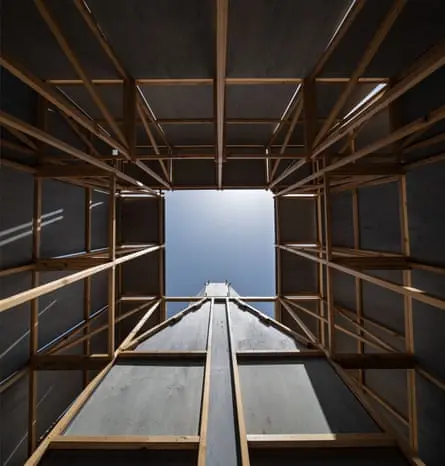
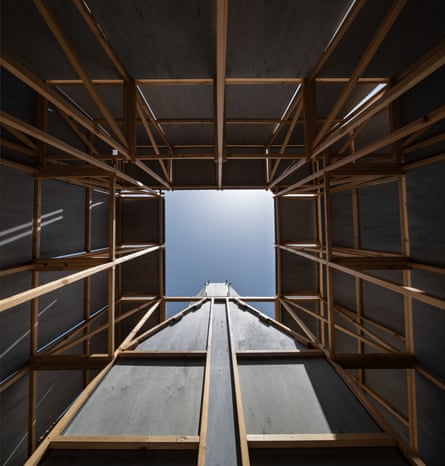
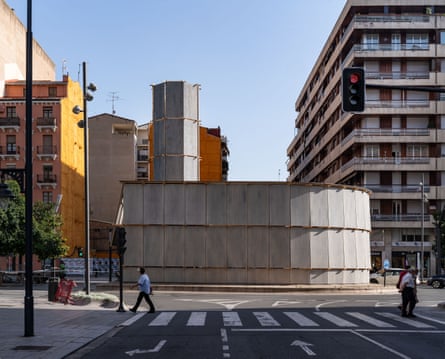
In northern Spain, Swiss architect Leopold Banchini sought to challenge the spatial tyranny of the automobile through a bold, albeit fleeting, intervention known as Round About Baths. Located in Logroño, Banchini’s studio targeted a concrete island on a major urban thoroughfare—a classic example of a “lost space” rendered completely inaccessible and hostile to anyone not encased in a motor vehicle.
Inspired by 19th-century public baths, Banchini used uncut timber panels to construct a functional wellness structure directly on top of a broken, derelict fountain. The existing water basin was transformed into a shallow communal wading pool, while cast-iron flower pots were repurposed as fire bowls to heat an adjacent steam room.
However, the project’s timeline revealed the deep structural inertia governing modern city planning. Erected for a mere week in June 2025 as part of the city’s Concéntrico architecture festival, the structure was intentionally ephemeral. According to Banchini, building anything permanent would have triggered an insurmountable bureaucratic labyrinth regarding pedestrian safety and traffic regulations. Because bathers could only access the roundabout via a single zebra crossing, the project served as an accidental case study highlighting just how rigidly protected car infrastructure remains.
2. The Metamorphosis of Plaça de les Glòries Catalanes (Barcelona)
Moving from the ephemeral to the monumental, Barcelona’s Plaça de les Glòries Catalanes represents a triumphant example of large-scale infrastructural reclamation. Historically, Glòries was a nightmarish cloverleaf interchange and a convergence of three major high-speed thoroughfares that pumped heavy vehicular traffic deep into the heart of the Catalan capital.
Rather than abandoning the area to congestion, urban planners and architects executed a massive civil engineering feat: they pushed the traffic lanes underground into subterranean tunnels. This freed up the surface level entirely, allowing for the creation of an expansive, interconnected open green space, complete with recreational facilities, play areas, and lush planting that invites citizens to reclaim the sunlit public realm.
3. Antwerp’s Zuidpark (2015–2024)
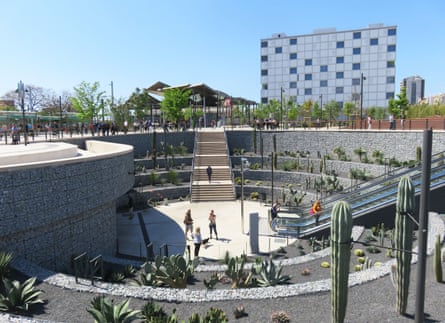
In Belgium, the southern district of Antwerp underwent a similarly profound spatial revolution. For decades, the site of the current Zuidpark was occupied by a sprawling, free surface-level car park—a vast expanse of heat-absorbing asphalt sitting right in the middle of a dense urban zone.
In 2015, municipal authorities launched an international design competition to radically reimagine the site. The commission was won by Tractebel, an urban architecture firm tasked with building a park designed specifically for the climate era. Construction culminated in the park’s opening in 2024, followed by two years of rapid ecological maturation.
To achieve this, engineers excavated 70% of the park’s footprint, laying down a robust 1.5-metre top layer of specialized soil. This deep substrate allowed hundreds of trees and shrubs to root and grow at an unprecedented rate. Today, Zuidpark is framed by double rows of 500 newly planted trees, creating a dense canopy that drastically lowers ambient temperatures during severe summer heatwaves.
Supporting Context & Metrics: The Science of Urban Cooling
The urgency driving these architectural transformations is rooted in hard data. Urban areas are warming at rates significantly higher than rural surroundings, largely driven by the "urban heat island" (UHI) effect. Asphalt, concrete, and brick absorb shortwave radiation from the sun during the day and re-emit it as thermal energy long after dark, preventing cities from cooling down at night.
Recent empirical research conducted by the University of Antwerp has quantified the cooling impact of replacing asphalt with living infrastructure at Zuidpark. Comparative measurements taken during peak summer months revealed significantly lower ambient temperatures inside the park compared to adjacent, traffic-heavy paved zones in the city center. The combination of deep soil layers, extensive tree canopies, and strategic shading has created a microclimate that offers tangible thermal relief to local residents.
Managing Extreme Precipitation
Climate breakdown, however, does not manifest solely as intense heat; it also brings violent, erratic downpours that overwhelm conventional municipal drainage systems. Traditional concrete surfaces prevent rainwater infiltration, leading to flash floods.
Antwerp’s Zuidpark anticipated this challenge by integrating engineered depressions known as “rain gardens.” These wilder, sunken landscape features are filled with porous vegetation capable of thriving in waterlogged conditions and are anchored by old bluestone blocks unearthed during the park’s construction phase. Rather than acting as sterile drainage pipes, these rain gardens double as biodiverse play areas for children while safely absorbing and filtering thousands of liters of storm runoff.
Official Statements and Architectural Perspectives
The architects and urban designers spearheading these projects are vocal about the psychological and political barriers that stand in the way of a post-car society.
Leopold Banchini does not mince words when describing the spatial compromise modern cities have made with the automobile:
"We have given up so much public space to cars, and if you live in a city with kids, you live in constant fear that they will be hit by a passing vehicle. It restricts our movement so much that we almost can’t see it anymore."
Banchini points out that municipal hesitation is rarely about a lack of imagination among designers; rather, it is anchored in electoral calculus:
"The rules around car traffic are hard to modify, and any requests usually go all the way up to municipal authorities. And politicians are really scared to touch anything with cars, because they fear it will cost them in votes."
Bart Van Gassen of Tractebel, reflecting on his 25-year career in urban architecture, emphasizes that the climate crisis has completely rewritten the rulebook for public park design:
"I have done projects like this for 25 years, but this park had to be completely different to anything we’ve done before, and that’s because of the climate issue."
Van Gassen also addresses the complex compromises required in contemporary urban planning. Even as Zuidpark eliminated a sprawling surface parking lot, economic and logistical realities dictated that vehicular storage could not be entirely banished from the district:
"You could be critical because it’s still a car park with 2,000 spaces that is very close to the city. If you’re thinking sustainably, maybe it should have been built more outside of the city. But then, maybe if there was no parking, we wouldn’t have been able to build a park at all."
Underneath the northern and southern wings of Zuidpark lies a four-storey, subterranean parking structure accessible via external entry points—a pragmatic compromise that highlights the transitional phase in which modern cities currently find themselves.
Future Outlook: The Road Ahead for European Public Space
As the architectural world awaits the final verdict of the European Prize for Urban Public Space, the broader conversation has shifted from whether cars should be removed from city centers to how cities can manage the political, financial, and ecological complexities of doing so.
The 2025 shortlist—which also features ambitious projects such as the Leça Green Corridor in northwest Portugal and the Peace Park in Vicenza, Italy—demonstrates a growing pan-European consensus. Urban centers are increasingly viewing asphalt infrastructure not as a permanent monument to progress, but as a flexible, revisable canvas.
When the winner of the prize is officially announced on October 15, the spotlight will shine on a specific municipality, but the underlying victory belongs to a broader philosophical shift. By reclaiming roundabouts, burying highways, and replacing parking lots with deep-soil forests and splash pools, European architects are proving that cities can heal.
The transition away from the automotive age will not happen overnight—as Banchini’s week-long roundabout installation vividly demonstrated. Yet, as heatwaves intensify and climate pressures mount, the political cost of inaction will soon outweigh the fear of losing votes. The pavement is being peeled back, and beneath it, a greener, more resilient urban future is finally beginning to take root.