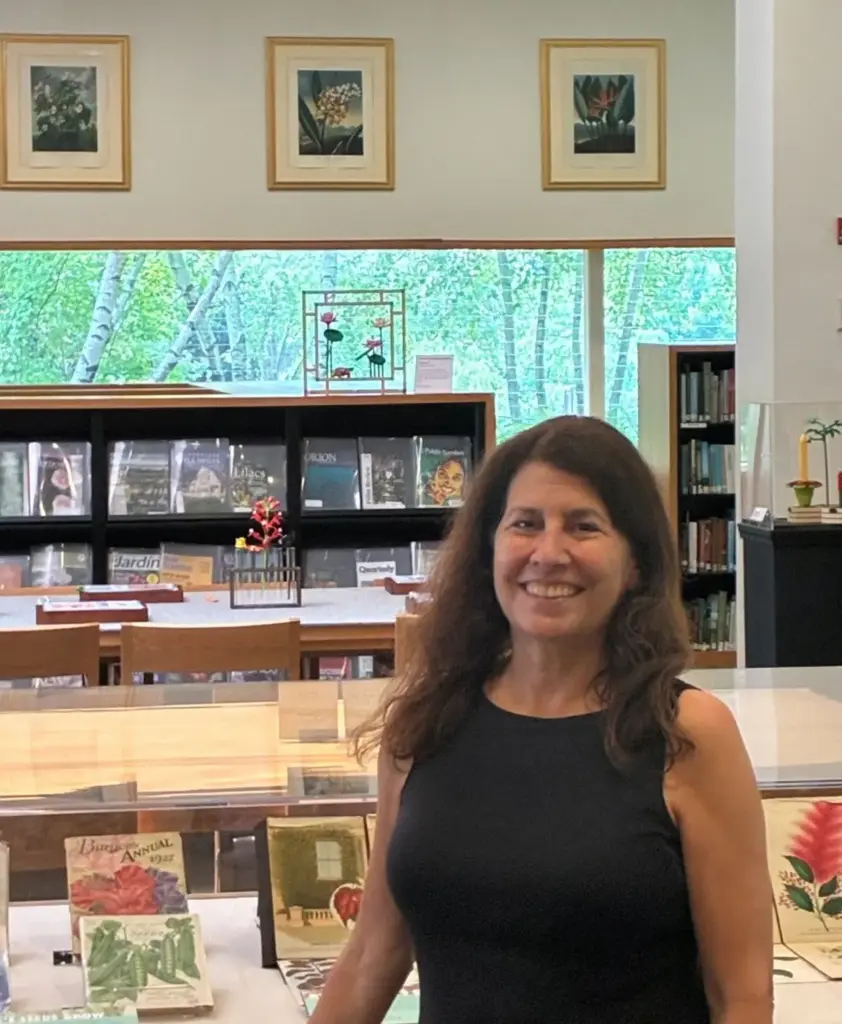
As the digital landscape of biodiversity research undergoes a profound structural shift, the Biodiversity Heritage Library (BHL)—the world’s largest open-access repository for literature on biodiversity—is actively fortifying its leadership infrastructure. In a decisive move to secure its long-term financial stability, operational resilience, and global representation, the BHL Members’ Council has officially welcomed Amanda Boczar and Leora Siegel to two newly created positions on its Executive Committee.
Formally approved by BHL members in June 2026 and stepping into their roles in July, Boczar takes the helm as the consortium’s inaugural Strategic Development Officer, while Siegel assumes the newly minted role of Member-at-Large. These appointments arrive at a critical junction in the consortium’s history. Having recently transitioned into an independent, community-governed global consortium under a new distributed operational model hosted administratively by the Council on Library and Information Resources (CLIR), BHL is actively charting its next strategic roadmap.
By injecting fresh perspectives, deep financial and digital expertise, and expanded channels for community-wide representation, these newly established governance roles are engineered to safeguard the future of open-access ecological literature. This article examines the institutional catalysts behind these appointments, the professional backgrounds of the new leaders, the operational framework of BHL’s evolving governance, and what this milestone portends for the global scientific community.
Detailed Chronology: From Distributed Roots to Autonomous Governance
To understand the weight of these new appointments, one must trace the institutional evolution of the Biodiversity Heritage Library. Founded as a cooperative effort among major natural history and botanical libraries to digitize and make freely available the foundational literature of biodiversity, BHL has scaled into a colossal international network. For years, its administrative anchor was tied to legacy models, but the accelerating demand for decentralized, agile, and globally representative governance spurred a radical re-imagining of the consortium’s operational DNA.
January 2026: The University of South Florida (USF) Libraries officially joined BHL as both a member institution and a strategic technical infrastructure partner, signaling an era of deep digital integration.
June 2026: Recognizing the expanding operational complexities of an independent consortium, BHL members voted overwhelmingly to approve the creation of two provisional governance roles on the Executive Committee: the Strategic Development Officer and the Member-at-Large. Because formal structural changes to BHL Bylaws legally require ratification at an Annual Meeting, these roles operate provisionally pending final adoption at the 2027 BHL Annual Meeting.
July 2026: Amanda Boczar and Leora Siegel officially assumed their posts on the Executive Committee, instantly widening the leadership bench during a crucial phase of strategic planning.
August 2026: BHL highlighted the appointments publicly, emphasizing how the new committee members directly support the consortium’s migration to its new administrative home under CLIR and its ongoing drafting of a comprehensive long-term strategic plan.
This chronology underscores a deliberate institutional design: BHL is not merely reacting to growth; it is methodically engineering a distributed, self-sustaining framework capable of weathering shifting economic and technological landscapes.
Supporting Context & Metrics: The Imperative of Financial Sustainability and Inclusive Governance
The expansion of the BHL Executive Committee is underpinned by hard realities facing digital cultural heritage repositories worldwide. As reliance on traditional institutional funding models fluctuates, open-access resources like BHL must diversify their revenue streams, secure robust grant funding, and optimize resource allocation without compromising their core mission of universal, barrier-free access.
The Financial Sustainability Mandate
The creation of the Strategic Development Officer role directly addresses the need for specialized fiscal oversight. BHL serves an extraordinarily broad global constituency—spanning taxonomists, evolutionary biologists, conservationists, historians, and the public—who rely on millions of pages of legacy and contemporary literature. Maintaining the underlying digital architecture, scanning fragile historical texts, and updating persistent identifier frameworks require sustainable, multi-tiered funding.
By embedding dedicated fundraising and grant-acquisition leadership directly into the Executive Committee, BHL is positioning itself to aggressively target philanthropic gifts, federal and private foundation grants, and consortium-driven revenue models.
Bridging the Member-Affiliate Divide
Concurrently, the creation of the Member-at-Large position rectifies a historical structural gap in BHL governance. Prior to this addition, Executive Committee pathways were largely restricted to specific institutional tiers. The Member-at-Large position uniquely bridges this divide by remaining open to staff from both BHL Member and Affiliate institutions.
This inclusion is vital. BHL’s vast network relies heavily on the grassroots contributions of affiliate organizations—such as specialized botanical gardens and independent research centers—that hold irreplaceable physical collections. By opening a direct pipeline for affiliate staff to shape high-level executive strategy, BHL is democratizing its governance, ensuring that the diverse operational scales of its partners are fully reflected in executive decision-making.
Official Profiles: Meet the Leaders Shaping BHL’s Future
Amanda Boczar: Inaugural Strategic Development Officer
Amanda Boczar brings a robust background in digital asset management and institutional development to her new role. Professionally, she serves as the Associate Director of Digital Initiatives at the University of South Florida Libraries. Since 2020, Boczar has immersed herself in digital collections centering on Florida’s unique ecosystems, environmental history, and natural heritage.
Her journey with BHL accelerated rapidly following USF’s formal accession to the consortium in early 2026. Recognizing BHL as the definitive global gold standard for open-access outreach and collaborative infrastructure, Boczar wasted no time diving into core consortium work. Beyond her new Executive Committee duties, she is co-leading the Collection Development and Discovery strategic planning writing group alongside Emily Benton, Prairie Research Institute Librarian at the University of Illinois Urbana-Champaign.
As Strategic Development Officer, Boczar will spearhead financial oversight, coordinate high-level development activities, and collaborate closely with the BHL Secretariat. Her mandate is clear: identify, assess, and secure diverse funding streams to ensure BHL remains economically viable for generations to come.
Leora Siegel: Inaugural Member-at-Large
Leora Siegel brings decades of specialized leadership in botanical librarianship and digital collaboration to the Executive Committee. As the Senior Director of the Lenhardt Library at the Chicago Botanic Garden—a long-standing and deeply committed BHL Affiliate—Siegel is exceptionally well-regarded across the international biodiversity information community.
Siegel’s institutional footprint within BHL is substantial. In 2024, she successfully co-hosted the BHL Annual Meeting in Chicago, welcoming global colleagues to the Chicago Botanic Garden and actively steering the program’s core themes. Her ongoing commitment to the consortium is further demonstrated by her participation in BHL’s Operational Sustainability strategic planning writing group.
As Member-at-Large, Siegel will provide cross-cutting support across Executive Committee initiatives, execute special projects, and provide a critical representative voice for BHL Affiliate institutions. Her appointment serves as an inspiring precedent, demonstrating that deep institutional dedication from affiliate organizations can directly translate into executive-tier governance influence.
Official Statements and Institutional Perspectives
The leadership transition has been met with widespread enthusiasm across the international library and biodiversity sectors. Speaking on behalf of the consortium, Richard Wragg, Vice Chair of the BHL Executive Committee and Head of Library and Archives at the Natural History Museum in London, emphasized the strategic necessity of these appointments:
"We are delighted to welcome Amanda and Leora to the Executive Committee. Leora will be well known to many in the BHL community and, coming from an Affiliate institution, brings both extensive experience and new perspectives to the Committee. Amanda joins us with a wealth of ideas and previous successes in a role that is vital to BHL’s long-term sustainability.
With the expansion of the Executive Committee complete, and the addition of two such capable colleagues, we are now well placed to secure a bright and stable future for BHL."
Reflecting on her appointment and her alignment with BHL’s mission, Amanda Boczar noted:
"I have been working with digital collections related to Florida’s environment and natural history since 2020 and have always looked to BHL as a model for global outreach and community. After USF joined BHL as both a member and a strategic partner for its technical infrastructure in January 2026, I knew I wanted to really dive in and make the most of the opportunity.
It has been such a privilege to engage with the other members and affiliates, and I am very honored to have been selected for this new role to help sustain the organization for many more years to come."
Adding to this sentiment, Leora Siegel reflected on her decade-long engagement with the network:
"Through collaborations with BHL colleagues over the past 10 years as an Affiliate member, and witnessing BHL’s amazing growth and development, I’m honored to serve on the Executive Committee and contribute as BHL becomes fully independent."
Future Outlook: A Collaborative, Open Horizon for Biodiversity Knowledge
As the Biodiversity Heritage Library looks toward the 2027 Annual Meeting—where these provisional executive roles will face formal ratification under updated bylaws—the organization stands on exceptionally solid ground.
The successful integration of the Council on Library and Information Resources (CLIR) administrative framework, combined with the strategic acumen brought by Amanda Boczar and Leora Siegel, positions BHL to tackle the complex ecological and informational challenges of the coming decade. By reinforcing financial pipelines, expanding membership representation, and maintaining an unwavering commitment to open-access principles, BHL ensures that researchers, policymakers, and educators worldwide will continue to enjoy unrestricted access to the historical and contemporary bedrock of earth science literature.
The global conservation and scientific communities watch expectantly as BHL pioneers this next chapter—proving that collaborative, community-governed digital infrastructure can successfully scale to meet the monumental preservation demands of our planet’s shared natural heritage.