

Executive Overview
As long-term meteorological trends continue to elevate average seasonal temperatures across the United Kingdom, the ecological landscape of the West Midlands is undergoing a profound and visible transformation. Once defined by a stable, temperate assemblage of native flora and fauna, the region is increasingly becoming a staging ground for a wide array of southern European and North African species. Driven by successive summers of heightened warmth and prolonged heatwaves, insects and arachnids traditionally associated with Mediterranean climates or southern England are establishing permanent footholds hundreds of miles north of their historical ranges.
Recent ecological surveys and citizen science initiatives highlight a landmark year for sightings of exotic and migratory invertebrates. Species such as the hummingbird hawk-moth (Macroglossum stellatarum), the striking wasp spider (Argiope bruennichi), the ivy bee (Colletes hederae), and the hornet hoverfly (Volucella zonaria) are no longer mere biological anomalies. Instead, they are emblematic of a broader climatic and ecological realignment. While conservationists celebrate the arrival of these charismatic arrivals—many of which showcase remarkable evolutionary adaptations—this northward migration underscores an urgent narrative of environmental change.
At the same time, this ecological turnover is not occurring without loss. While sun-loving migrants and warm-adapted generalists thrive, long-standing native specialists face mounting pressures, and once-common local species experience stark population declines. The West Midlands, therefore, serves as a vital microcosm for the wider ecological pressures confronting modern Britain, offering a clear window into how a changing climate is systematically rewriting the geographical distribution of wildlife.
Detailed Chronology: Mapping the Invertebrate Influx
The shifting baseline of the West Midlands’ entomological makeup has not occurred overnight, but rather through a gradual, punctuated series of colonizations and migratory surges over the past two decades. Understanding this timeline is crucial to appreciating the speed at which climate-driven ecological shifts are unfolding.
The Early Pioneers (2001–2010)
The early years of the twenty-first century marked the initial wave of notable insect migrations into British shores. Most notably, the ivy bee (Colletes hederae) was first recorded in the United Kingdom in 2001. As its common name suggests, this solitary bee relies heavily on the nectar and pollen of ivy flowers, which bloom late in the year. Capitalizing on warming autumns, the species began its steady creep northward from the southern coast. By 2015, the ivy bee had firmly established its presence in the West Midlands, with localized populations identified in areas such as Stourbridge.

Concurrently, other species began crossing regional boundaries. In 2004, the hornet hoverfly—a large, striking insect whose yellow and black markings mimic a stinging hornet to deter predators, despite being entirely harmless—was first documented in Birmingham and the Black Country. What was initially treated as a rare vagrant quickly transitioned into a regular resident, capitalizing on local wooded areas and gardens.
The Mid-Decade Expansion (2011–2019)
As global temperature records continued to tumble through the 2010s, the frequency of exotic arrivals accelerated. The latter half of the decade witnessed a diversifying array of arachnids and insects making their way into the Midlands’ grasslands and woodlands.
In 2019, conservationists and local naturalists recorded the first notable sightings of the cricket bat spider within the region. Favoured by warming grasslands and shifting agricultural practices, this arachnid joined a growing roster of southern species expanding their territories. Meanwhile, migratory butterflies such as the clouded yellow (Colleeias croceus) began experiencing increasingly dramatic "peak" years, appearing in high numbers during exceptionally hot summers. Although these butterflies historically struggled to survive the bitter British winters, consecutive mild seasons have begun to blur the line between temporary visitors and permanent settlers.
The Record-Breaking Season (2026)
The current year has marked a watershed moment for regional ecology. According to experts from wildlife trusts across the region, 2026 has yielded unprecedented numbers of migratory and colonizing species. The hummingbird hawk-moth, in particular, has shattered historical observation records. While traditionally observed in small, isolated quantities during particularly warm weeks, the summer of 2026 saw an abundance of sightings across Birmingham, the Black Country, Worcestershire, and Warwickshire.
Concurrently, the wasp spider—one of the largest and most visually arresting arachnids found in the UK—pushed more than 100 miles north from its traditional southern strongholds, establishing stable populations across Worcestershire and neighboring counties.

Supporting Context & Metrics: Biological Mechanics and Climate Drivers
The biological success of these colonizing species relies on specialized physiological traits and behavioral adaptations, which are uniquely suited to the changing environmental conditions of the UK.
The Aerodynamics and Physiology of the Hummingbird Hawk-Moth
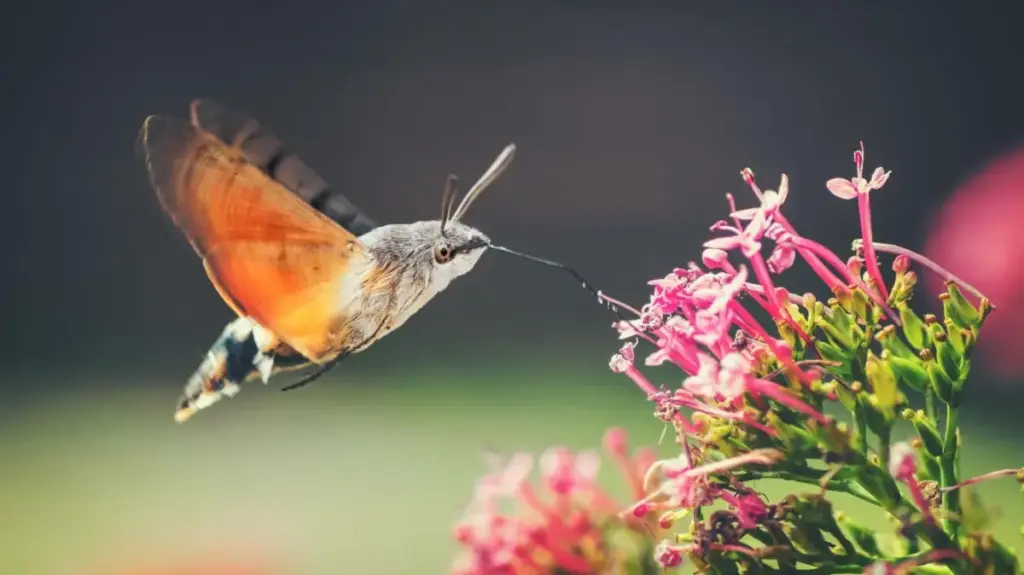
The hummingbird hawk-moth is one of nature’s most specialized diurnal pollinators. Its common name is derived not from taxonomic relation, but from convergent evolution: the moth hovers in front of flowers with rapid wingbeats—reaching speeds of approximately 80 beats per second—while uncoiling a long, slender proboscis to drink nectar.
[Southern Europe / North Africa]
              │
              ▼ (Summer Migration via Thermal Air currents)
    [The United Kingdom]
              │
              ▼ (Rapid Wingbeat: ~80 beats/sec)
     [Target: Deep-Throated Flowers]
Weighing very little and possessing a furry grey body and brilliant orange hindwings, the moth is capable of sustained, high-speed flight across thousands of miles, migrating from southern Europe and North Africa as summer temperatures peak. Its ability to process high-energy nectar rapidly allows it to maintain the immense metabolic output required for its hummingbird-like hovering behavior.
Arachnid Expansion: The Wasp Spider (Argiope bruennichi)
The wasp spider is instantly recognizable by its vivid yellow, black, and white transverse stripes, which mimic the coloration of a wasp to discourage avian predators. Historically restricted to the southern counties of England due to its sensitivity to cold, damp winters, the spider has benefited significantly from rising ambient temperatures and the expansion of suitable tall-grass habitats.
Female wasp spiders construct intricate orb webs close to the ground, marked by a zig-zag silk structure known as a stabilimentum. As winters have grown milder and summers increasingly arid, egg sacs—which are wrapped tightly in silken cocoons—have experienced higher survival rates through the colder months, allowing successive generations to hatch further north than ever before.

A Spectrum of New Arrivals
Beyond moths, bees, and spiders, the Wyre Forest Study Group and other regional ecological bodies have cataloged a diverse suite of invertebrates that were entirely absent from the West Midlands two decades ago. These include:
- The Willow Emerald Damselfly: A striking metallic-green insect expanding rapidly along river corridors.
- The Southern Oak Bush Cricket: A canopy-dwelling orthopteran thriving in extended warm periods.
- The Purple Emperor Butterfly: A majestic woodland butterfly once confined to deep southern strongholds.
- The Western Conifer Seed Bug and Box Bug: Large, sap-feeding true bugs that have successfully colonized gardens and commercial green spaces.
Official Statements and Expert Perspectives
Local conservation experts and wildlife authorities have been vocal about the implications of these rapid shifts, emphasizing both the wonder of these new arrivals and the subtle warnings they convey.
James Benwell of the Birmingham and Black Country Wildlife Trust reflected on the extraordinary scale of the recent wildlife movements:
"They’ve had a really good year this year. Normally they would come in small numbers. We’d normally hear of a few maybe. But this year, we’ve seen loads of records of them. They’re absolutely amazing, but I somehow haven’t seen one this year, so I’m jealous of anybody else that has."
Commenting on the broader trend of insect colonization driven by shifting weather patterns, Benwell added:

"Most individuals are unable to survive the British winter, but if temperatures continue to rise as a result of climate change, we may well see them becoming permanent residents. There’s numerous species that we could point out that weren’t here twenty years ago… and now they’re quite abundant."
Rosemary Winnall of the Wyre Forest Study Group—an organization dedicated to mapping the intricate ecology of Worcestershire’s ancient woodlands—noted that while the influx of southern species is scientifically fascinating, it must be viewed within the context of a changing ecosystem. Commenting on the arrival of the wasp spider, Winnall stated that such milestones are to be celebrated by naturalists, yet they are mirrored by quieter, more concerning losses.
Winnall highlighted the plight of long-standing native species that are struggling to cope with shifting climatic baselines:
"The once-common small tortoiseshell butterfly is now rarely seen for example, and there are far fewer records of the two-spot ladybird. We are encouraging folk to record the common species of today as they may be the rarities of the future."
Future Outlook: Managing the New Ecosystem
As the West Midlands looks toward the coming decades, the trajectory of its local biodiversity appears inextricably linked to global climate trajectories. The ecological boundaries that once maintained a clear distinction between Mediterranean, continental, and British fauna are dissolving.

Conservation Challenges and Citizen Science
The transition from a stable native ecosystem to a dynamic, hyper-mobile assemblage of species presents unique challenges for conservation managers. Traditional conservation frameworks—which often focus on preserving static habitats for historical species rosters—must evolve to accommodate ecological flux. Managing nature reserves now requires anticipating which species will arrive next, rather than merely protecting what is already present.
In this endeavor, public engagement has become an invaluable tool. Regional wildlife trusts are increasingly relying on citizen science platforms and public reporting to track fast-moving insects and arachnids. By encouraging residents to document sightings of everything from hummingbird hawk-moths on red valerian flowers to ivy bees nesting on brickwork, researchers can build high-resolution maps of species distribution in real time.
The Balance Between Gain and Loss
While the arrival of vibrant pollinators like the clouded yellow butterfly and the architectural brilliance of the wasp spider enrich the daily experience of nature for local residents, they serve as biological indicators of a warming world. The decline of cold-adapted specialists—such as the small tortoiseshell and the two-spot ladybird—serves as a stark reminder that ecological displacement is a two-way street.
Ultimately, the West Midlands is pioneering a new normal. As thermal barriers continue to fall, the region’s green spaces will likely host an even wider array of southern migrants, forever altering the acoustic, visual, and ecological character of the British countryside. Whether these new arrivals integrate successfully without triggering cascading collapses in native food webs remains the defining question for the region’s environmental stewards in the years to come.



