

Executive Overview
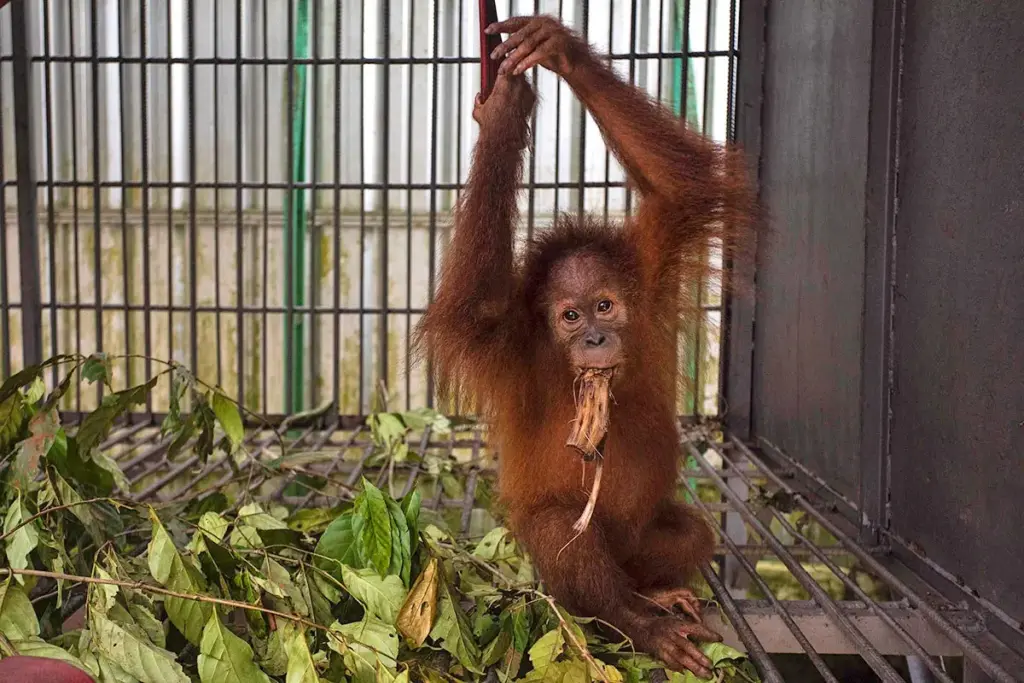
The discovery of five infant orangutans wandering near a remote woodland in India’s eastern coastal state of Odisha on September 8 has laid bare the insidious reach of transnational wildlife trafficking. Separated from their mothers at a heartbreakingly young age, these primates represent more than just a localized animal rescue effort; they are the living evidence of a complex, highly lucrative, and deeply entrenched illicit smuggling network. Spanning thousands of kilometers across international borders—potentially crossing from Indonesia through Malaysia, Thailand, Myanmar, and Bangladesh before arriving in India—this case highlights systemic vulnerabilities in cross-border law enforcement.
Conservationists, legal experts, and wildlife authorities are now confronting a monumental challenge: navigating the intricate bureaucratic and legal hurdles required to repatriate the traumatized infants back to their native Indonesia. Furthermore, this incident is not an isolated anomaly. It underscores an alarming trend of Indonesian orangutans turning up in distant Indian states like Mizoram and Odisha, signaling a shift in how criminal syndicates exploit regional trade routes. As experts call for a pivot from mere "rescue operations" to "crime network-oriented conservation," the fate of these five infants highlights the urgent need for robust, international cooperation to dismantle the machinery of global wildlife trafficking before critically endangered species are wiped out completely.
Detailed Chronology and the Anatomy of a Smuggling Route
The timeline of this unfolding crisis began in the early days of September, culminating on September 8 when local villagers near the Bichitrapur forest area in Odisha’s Balasore district stumbled upon five infant orangutans. Roaming unsecured and showing clear signs of distress and human habituation, the babies were quickly reported to local forestry and wildlife authorities. Following preliminary health assessments by veterinary teams, the primates were safely transferred to the Nandankanan Zoological Park in Bhubaneswar, the state capital, where they are currently receiving specialized care.
However, the physical presence of these animals in India raises a baffling and deeply concerning geographical question: how did arboreal apes native exclusively to the tropical rainforests of Southeast Asia—separated from Odisha by the vast expanse of the Indian Ocean—wind up on the eastern coast of the Indian subcontinent?

Conservation organizations specializing in wildlife trade monitoring, such as SCENTS, have pieced together a working theory regarding the smuggling route. The infants are believed to have been initially poached from their natural habitat in the Aceh Tamiang district of Indonesia’s Aceh province. From there, traffickers are suspected of utilizing a multi-country transit corridor. This route typically snakes through Malaysia, Thailand, Myanmar, and Bangladesh before utilizing porous land borders or maritime pathways to slip into India.
Dwi Nugroho Adhiasto, a wildlife trade expert and senior adviser at SCENTS, notes that states like Odisha and Mizoram frequently function as strategic transit hubs rather than final consumer destinations. "Odisha or Mizoram generally serve as transit points before animals are shipped to final buyers or international markets," Adhiasto explains.
This hypothesis is bolstered by a trail of similar historical incidents in India’s recent records:
- The 2022 Mizoram Case: Indian authorities recovered two juvenile Sumatran orangutans in the northern reaches of Mizoram, a state sharing a porous border with Myanmar. Forestry officials at the time concluded that the animals had likely been smuggled across the Myanmar border when they were under a year old.
- The 2023 Seling Interception: Just a year later, in October 2023, law enforcement officers intercepted a vehicle in Seling, a village in Mizoram located a mere 55 kilometers (34 miles) from the Myanmar border, successfully rescuing a single Sumatran orangutan.
These recurring interceptions prove that a well-established trafficking pipeline exists between Sumatra and the Indian subcontinent, capitalizing on gaps in maritime and overland border security.

Supporting Context & Metrics: The Plight of Critically Endangered Populations
To fully grasp the gravity of the Odisha discovery, one must examine the perilous baseline status of the species involved. All three recognized species of orangutans—the Bornean, the Sumatran, and the Tapanuli—are classified as critically endangered by the International Union for Conservation of Nature (IUCN), facing precipitous population declines driven by habitat fragmentation, industrial deforestation, illegal pet trade poaching, and an inherently slow reproductive rate.
The numbers paint a harrowing picture of survival:
- Bornean Orangutans (Pongo pygmaeus): The last comprehensive range-wide estimate placed the population at approximately 104,700 individuals. However, this data dates back to 2016, and demographic models project an astonishing 86% population collapse between 1950 and 2025.
- Sumatran Orangutans (Pongo abelii): According to a comprehensive 2026 study, an estimated 11,694 Sumatran orangutans remain in the wild. This represents a devastating 19.5% drop in population numbers between 2011 and 2023 alone.
- Tapanuli Orangutans (Pongo tapanuliensis): Discovered and formally described as a distinct species relatively recently, this fragile population is restricted to the Batang Toru ecosystem in Sumatra and is teetering on the absolute brink of extinction, with an estimated count of just 716 individuals remaining.
When poachers target infant orangutans, the ecological damage extends far beyond the removal of a single animal. In the vast majority of cases, an infant can only be captured by violently killing its mother, who will fiercely defend her offspring to the death. Thus, the removal of five infants from the wild in Aceh Tamiang signifies not only the direct loss of the five rescued juveniles but almost certainly the death of five breeding-age mothers, delivering a severe blow to the genetic resilience of an already fragile local population.
Official Statements and Bilateral Diplomatic Challenges
Following the discovery in Odisha, the state government formally requested India’s Wildlife Crime Control Bureau (WCCB) to launch an exhaustive investigation into the provenance of the primates. Concurrently, Indonesian conservationists and government bodies have mobilized, sparking a complex diplomatic and logistical dialogue regarding the repatriation of the animals.

However, returning wildlife across international borders is notoriously fraught with bureaucratic friction. Panut Hadisiswoyo, director of the Indonesian conservation nonprofit Green Justice Indonesia, points out that past attempts to repatriate smuggled wildlife have frequently hit brick walls. "When the Indonesian authorities attempted to repatriate or return [wildlife], the process often hit a dead end," Hadisiswoyo notes, citing institutional resistance and divergent legal frameworks. "They refused for various reasons."
Despite these hurdles, channels of communication are active. Indonesia’s Ministry of Forestry has confirmed that its officials are actively coordinating with Indian counterparts, as well as representatives from CITES (the Convention on International Trade in Endangered Species of Wild Fauna and Flora), to map out a legally compliant repatriation framework.
Domestically, the Indonesian government is partnering with a coalition of prominent wildlife conservation organizations to prepare for the eventual return and rehabilitation of the infants. These partners include:
- Yayasan Ekosistem Lestari (YEL)
- Jaringan Satwa Indonesia (JSI)
- Center for Orangutan Protection (COP)
- Forum Orangutan Indonesia (Forina)
- Sumatran Orangutan Lestari Foundation–Orangutan Information Center (YOSL-OIC)
Ristianto Pribadi, a spokesperson for Indonesia’s forestry ministry, struck a stern note regarding accountability. "If any Indonesian citizen is found to be involved, we will take firm legal action commensurate with the prevailing laws," Pribadi stated.

Future Outlook: A Shift Toward Network-Oriented Conservation
As conservationists and bureaucrats work through the legal labyrinth of repatriation, experts argue that the Odisha incident must serve as a watershed moment for how international wildlife crime is investigated and prosecuted.
M. Indra Kurnia, director of conservation at YOSL-OIC, stresses that a paradigm shift is desperately needed. "This starts with hunting in the wild, separating babies from their mothers, and transporting them across various regions, then selling them or keeping them as exotic pets," Indra explains. "The approach to orangutan trafficking must evolve from being rescue-oriented to being crime network-oriented conservation."
To achieve this, investigations must transcend local jurisdiction. Experts advocate for a multi-pronged scientific and forensic approach to definitively trace the lineage and journey of the five infants:
- Morphological and Physical Examination: Initial veterinary assessments of physical features, body size, coat coloring, and skeletal structure help preliminary classifications—strongly suggesting, in this case, that the primates are Sumatran rather than Bornean.
- Comprehensive Health Screenings: Ensuring the animals are free of zoonotic diseases before any international transit is authorized is vital for both animal welfare and biosecurity protocols.
- Genetic and DNA Profiling: This represents the gold standard of modern wildlife forensics. By comparing the genetic profiles of the five young orangutans against an established database of reference samples from known wild populations across Sumatra, scientists can pinpoint their geographic origins down to specific forest blocks. This hard scientific data can then be used by law enforcement to dismantle the exact poaching rings operating in Aceh.
Ultimately, the plight of these five infant orangutans serves as a poignant reminder of the borderless nature of illegal wildlife trade. Whether they will successfully navigate the legal red tape and walk the forest floors of their Sumatran homeland once more remains to be seen. What is clear, however, is that until international intelligence-sharing, DNA tracking, and transnational enforcement are harmonized between nations like Indonesia and India, the shadow of the illegal pet trade will continue to threaten the remaining strongholds of our planet’s most vulnerable great apes.



