

By Floodlight News Investigative Desk
In collaboration with regional reporting partners
Executive Overview
Across vast swaths of the United States, the air that millions of Americans breathe every day remains an invisible, unmeasured unknown. For decades, the nation relied on a federal framework designed to safeguard public health—a network of monitors born out of the 1963 Clean Air Act. Today, however, that early-warning system is deeply frayed, starved of sustained federal funding, aging rapidly, and increasingly detached from the sprawling industrial emitters operating in its backyard.
Compounding these structural gaps are acute systemic threats: climate-driven heat waves that exacerbate ozone levels, encroaching wildfire smoke blanketing unexpected regions, and a shifting federal landscape under the Trump administration that has delayed and rolled back critical emissions accountability requirements.
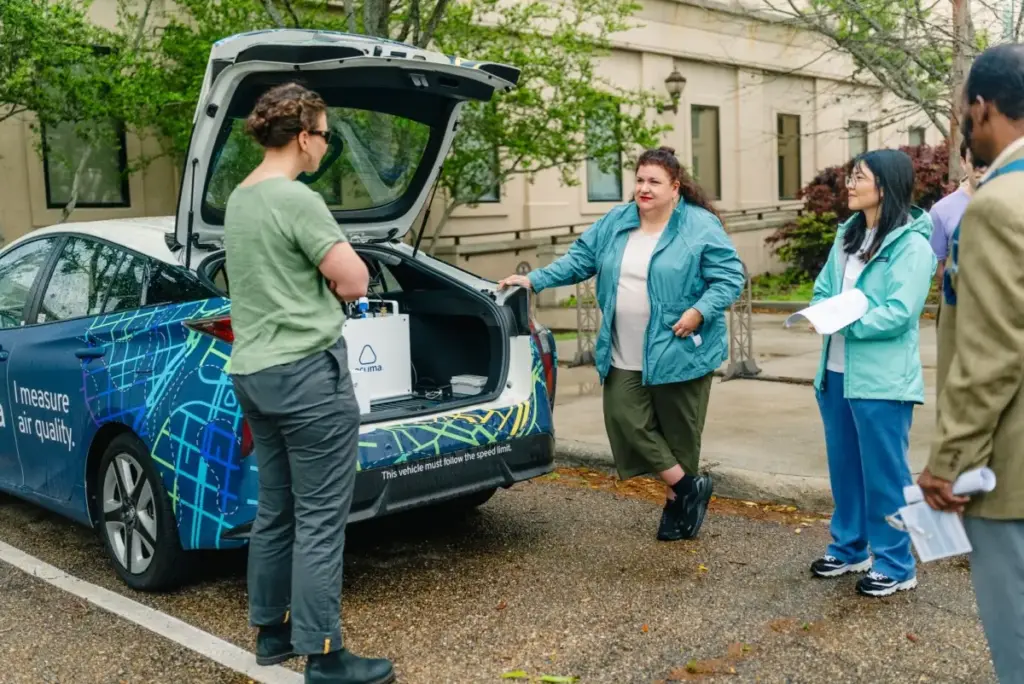
As public monitoring infrastructure shrinks, a grassroots alternative has emerged. Empowered by affordable technology, local communities, frontline residents, and environmental watchdogs have begun deploying low-cost sensors to track dangerous localized toxins. Yet, rather than embracing this democratization of data, major industrial trade groups and corporate polluters have launched a sweeping, coordinated counter-offensive.
A meticulous investigation by Floodlight reveals that since 2024, lawmakers in states such as Louisiana, Ohio, and Kentucky have passed nearly identical legislation—drafted alongside powerful manufacturing and chemical lobbies—effectively barring state regulators from using community-collected data in enforcement or regulatory actions. In case after case, industry proponents argue that grassroots monitors lack the strict reliability of federal instruments. Yet when reform-minded lawmakers attempt to establish validation standards to bridge this gap, industry resists even those compromises, exposing a strategy aimed not at quality control, but at shutting down public oversight entirely.
Detailed Chronology: The Legislative Rollback
The systematic push to restrict community-collected air data did not happen in a vacuum. It represents a calculated legislative blitz coordinated across America’s industrial heartland and petrochemical corridors.
2024: The Louisiana Precedent and West Virginia Stalls
- Spring 2024: Louisiana sets a controversial national precedent by becoming the first state to pass the Community Air Monitoring Reliability Act (CAMRA). Drafted with heavy input from the Louisiana Chemistry Association (LCA), the statute outlaws the use of non-EPA-approved air monitoring data in state regulatory enforcement or legal proceedings, demanding expensive, multi-thousand-dollar compliance standards that price out ordinary citizens.
- Early 2024: In West Virginia, a parallel bill backed by the West Virginia Manufacturers Association clears the House before ultimately dying in the Senate. The collapse comes after intense internal industry divisions over compromise amendments. Internal emails later obtained and published reveal that representatives from corporate giants like Chemours rejected compromise drafts that would have accepted verified community monitors, with one executive complaining that the bill "essentially codifies what we are trying to prevent."
2025: Expanding the Playbook in Kentucky and Ohio
- March 2025: Emboldened by Louisiana’s blueprint, Kentucky lawmakers pass House Bill 137. Backed by heavyweight lobbyists including the American Chemistry Council (ACC), the American Petroleum Institute, Dow Chemical, and Chemours, the law successfully restricts the admissibility of community-level air testing.
- Mid-2025: Ohio tucks a sweeping air-monitoring restriction directly into its biennial state budget bill with no named primary sponsor. The measure bars regulators from acting on grassroots data and targets Ohio’s historic "air nuisance rule," which previously allowed ordinary citizens to pursue legal remedies against enterprises emitting hazardous, health-threatening pollutants.
- Late 2025: Legal pushback materializes. Environmental groups, represented by organizations such as the Ohio Environmental Council, file a formal lawsuit challenging the state’s budget-bill restrictions. Plaintiffs include residents like Donna Ballinger, whose front-yard air monitor is legally sidelined from capturing chemical fallout from a nearby steel manufacturing facility.
- Late 2025 to Early 2026: Federal rollbacks accelerate. The Trump administration’s Environmental Protection Agency begins granting extensive individual exemptions from Biden-era chemical plant emission rules, sparing roughly 60 petrochemical facilities from requirements designed to slash toxic carcinogenic emissions by up to 80 percent. Additional bills aimed at restricting community monitoring continue to circle statehouses in West Virginia, keeping local advocates on constant defensive footing.
Supporting Context & Metrics: The Shrinking Public Grid
To fully understand why communities are fighting for the right to monitor their own air, one must examine the catastrophic retreat of the official public infrastructure.
According to Chet Wayland, who directed the EPA’s Air Quality Assessment Division for nearly two decades, the nation’s air monitoring network is visibly aging and shrinking. A 2025 study co-authored by Penn State assistant professor Nelson Roque revealed a staggering statistic: nearly 6 out of every 10 U.S. counties lack a single public air monitor.
The decline is particularly pronounced among toxic chemical networks designed to track known human carcinogens:
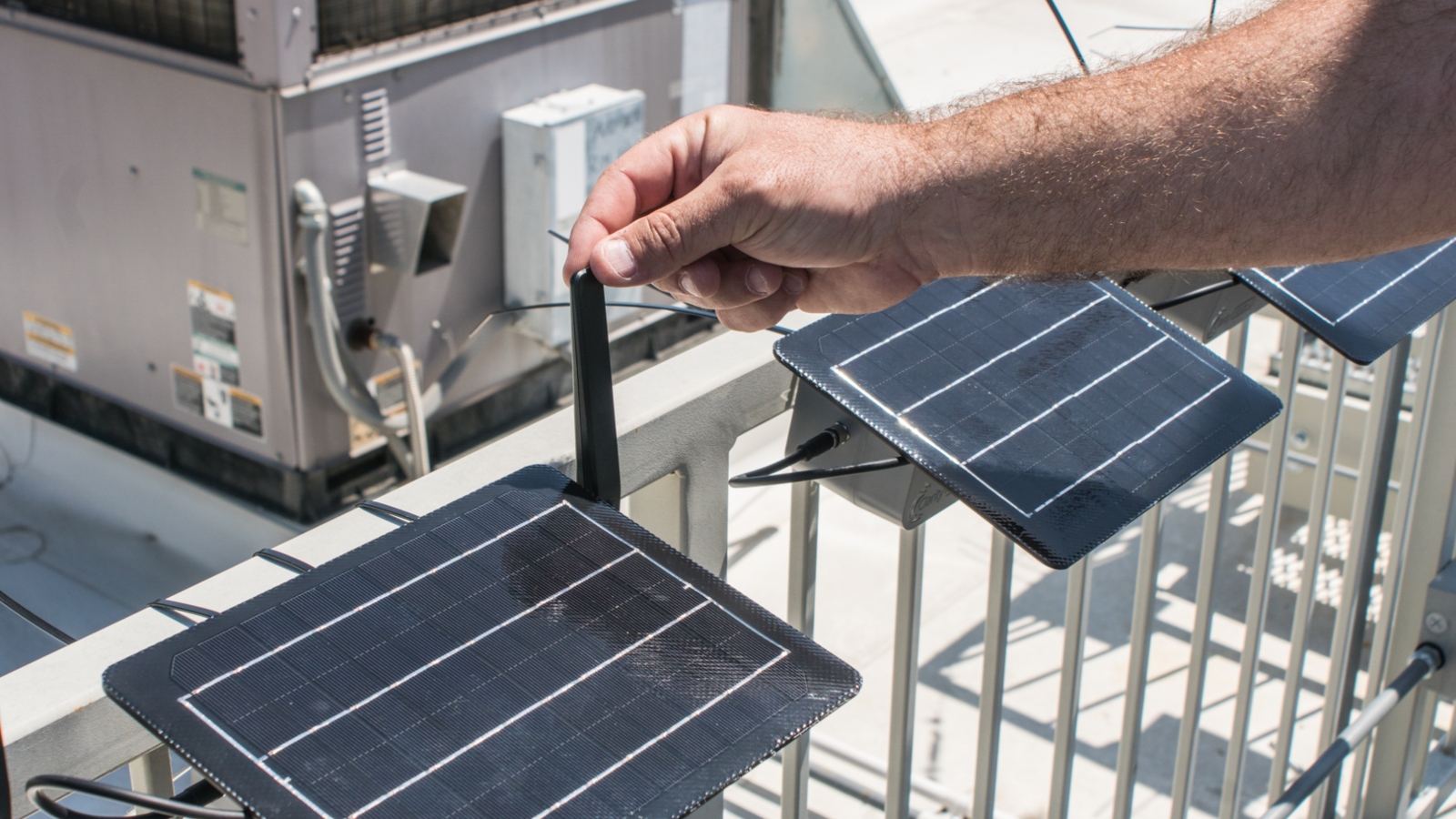
- Between 2004 and 2025, public monitoring networks tracking vinyl chloride—the dangerous chemical at the heart of the catastrophic 2023 derailment in East Palestine, Ohio—shrank by more than 50 percent.
- Similar reductions crippled public networks tracking chloroprene and benzene.
- An analytical review by Floodlight of top industrial air polluters in Kentucky, Louisiana, Ohio, and West Virginia exposed profound blind spots: for 71 out of 100 major facilities examined, the primary chemical pollutant they release is entirely unmonitored by any state or federal equipment in the region.
- Highly dangerous substances such as hydrochloric acid, sulfuric acid, and methanol are left entirely off the radar of standard EPA-reporting air monitors across entire states.
These surveillance gaps disproportionately impact marginalized populations. Federal demographic analyses confirm that low-income communities and people of color bear a disproportionate burden of cumulative cancer risks stemming from unchecked industrial air toxics.
"We’ve realized the value of other critical public infrastructure, and yet not this one," Dr. Roque noted. "Last I checked, we all breathe air."
Official Statements and Industry Arguments
The political and legal battle lines are drawn sharply between corporate lobbying coalitions and environmental justice advocates.
The Industry Perspective: Guardrails Against Misinformation
Industry trade organizations and chemical manufacturers defend these legislative actions as necessary measures to maintain legal integrity and scientific rigor.
- Tony Long, General Counsel for the Ohio Chamber of Commerce: Defending Ohio’s restrictions, Long argued that uncalibrated consumer monitors risk spreading panic and unfounded legal actions. "Given our litigious nature in this state, we think that the guardrails make sense," he explained. "You don’t want to be stopped for speeding on an uncalibrated speed gun."
- David Cresson, President of the Louisiana Chemistry Association: Defending the CAMRA statute, Cresson asserted that the law merely ensures that data driving state enforcement complies with baseline U.S. EPA standards, emphasizing that the law does not stop residents from monitoring air for personal awareness—only from leveraging unregulated methods for regulatory penalization.
- Jess Loizeaux, Spokesperson for Chemours: Echoing this sentiment, Loizeaux stated, "We object to community air monitoring results being used for enforcement decisions without first verifying the validity and accuracy of the data through official tests performed by trained technicians at the appropriate regulatory authority."
The Community and Advocacy Perspective: Stripping Away the Last Defense
Environmental attorneys and grassroots leaders view these industry-backed bills as an authoritarian effort to legally blind the public.
- Miranda Leppla, Environmental Attorney: Speaking on the Ohio legal challenge, Leppla remarked, "When we take away the ability for those folks to have a reasonably priced monitor… for their own protection, we’ve just taken any tool they had right out of their hands."
- Marylee Orr, Executive Director of the Louisiana Environmental Action Network (LEAN): Describing the compounding setbacks—including the cancellation of a vital $500,000 federal air-monitoring grant under the Trump administration—Orr stated, "It’s like having your legs knocked out from under you."
- Donna Ballinger, Middletown, Ohio Resident and Litigant: Living within feet of heavy industrial fallout that routinely coats her property in dark particulate matter and causes burning physical sensations, Ballinger captured the human toll of the information vacuum: "My fear is cancer. Without information, we don’t know."
Future Outlook: The Path Forward for Air Quality
The systematic dismantling of community-led data rights occurs at a precarious crossroads for American environmental health. On one hand, historical data proves that targeted, rigorous monitoring works. Following the EPA’s implementation of mandatory fenceline benzene monitoring at refineries in 2018, facilities exceeding federal safety thresholds dropped by half within five years, according to the Environmental Integrity Project. Proactive states that invest heavily in robust sensor networks demonstrate that transparency fosters accountability and measurable public health gains.
On the other hand, the current trajectory points toward increased friction. With federal oversight facing rollbacks, EPA exemptions proliferating for petrochemical plants, and state legislatures actively criminalizing the use of grassroots data in regulatory enforcement, residents living in the shadow of major industrial corridors face an uphill battle.
The fundamental question remains whether the American regulatory apparatus will adapt to modern, decentralized technology to protect vulnerable populations, or whether corporate lobbies will succeed in legally locking down the airwaves—leaving communities to breathe blind in an era of mounting climate and industrial hazards.



