

Executive Overview
During the high-stakes momentum of Climate Week NYC 2026, a transformative alliance was formally unveiled that promises to reshape the landscape of global marine conservation. Mission Blue®, the renowned ocean advocacy organization founded by legendary oceanographer Dr. Sylvia Earle, and the International Union for Conservation of Nature (IUCN), the world’s largest and most diverse environmental network, announced a groundbreaking collaboration to advance the One Ocean Partnership.
This strategic union is designed to address one of the most persistent bottlenecks in marine conservation: the gap between high-level international environmental commitments and localized, boots-on-the-ground execution. By bridging the divide between grassroots coastal communities and global networks of science, policy expertise, strategic partnerships, and climate finance, the One Ocean Partnership aims to accelerate locally led ocean conservation at an unprecedented scale.
At its core, the collaboration merges the IUCN’s visionary “regenerative seascape” approach—pioneered under its successful Great Blue Wall initiative—with Mission Blue’s celebrated global network of Hope Spots. These Hope Spots represent ecologically critical areas of the ocean championed by local leaders who understand the nuances of their marine environments better than anyone else. Together, these two environmental powerhouses are setting out to turn isolated pockets of local conservation success into a globally connected, financially viable, and ecologically resilient network of marine protection.
The stakes could not be higher. Covering more than 70 percent of the Earth’s surface, the ocean is the ultimate life-support system of the planet. It regulates global climate patterns, absorbs vast quantities of anthropogenic carbon dioxide, and directly sustains the food security, livelihoods, and economies of billions of people. Yet, cumulative anthropogenic stressors—ranging from relentless ocean warming and acidification to rampant overfishing, chemical and plastic pollution, and catastrophic habitat loss—are pushing marine ecosystems toward a tipping point.
The One Ocean Partnership arrives as an urgent, highly strategic intervention designed to meet international biodiversity targets, foster a thriving regenerative blue economy, and safeguard the future of life on Earth.
Detailed Chronology and Announcement
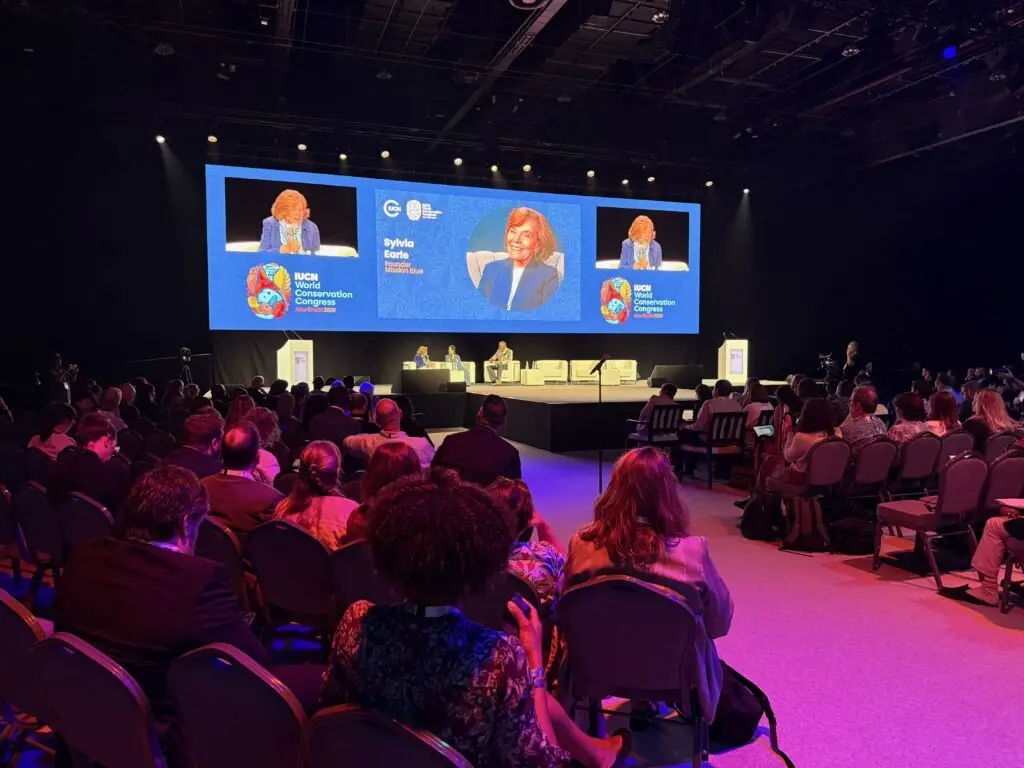
The formal unveiling of the collaboration during Climate Week NYC 2026 represents the culmination of years of collaborative momentum within the global conservation community. The announcement was jointly made by two of the most influential figures in modern environmentalism: Dr. Sylvia Earle, CEO and Founder of Mission Blue and IUCN Patron of Nature, and Razan Al Mubarak, President of IUCN.
The genesis of this partnership traces back to the growing recognition that isolated conservation efforts, while valuable, lack the systemic scale required to combat planetary-scale threats like climate change and biodiversity collapse. Over recent years, IUCN’s Great Blue Wall initiative demonstrated the profound efficacy of scaling up regional coastal protection, particularly in the Western Indian Ocean, by marrying community stewardship with sustainable financial models. Concurrently, Mission Blue’s Hope Spot network grew into a vibrant, global tapestry of grassroots campaigns, identifying marine areas vital to the health of the ocean and empowering local "Hope Spot Champions" to fight for their protection.
Recognizing the complementary nature of their work, leadership from both organizations began laying the groundwork for a unified framework. The discussions focused on how to leverage IUCN’s institutional reach, scientific rigor, and financial networks alongside Mission Blue’s unmatched ability to inspire public engagement and elevate local marine stewards.
The official announcement at Climate Week NYC 2026 crystallized these efforts into a formal pact. By positioning the launch within the framework of Climate Week, the founders underscored an inescapable truth: there is no effective climate strategy that does not place the ocean at its absolute center. The event served not only as a platform for unveiling the partnership but as a call to action for governments, financial institutions, and civil society to rally behind community-led marine recovery.
Supporting Context, Metrics, and Strategic Vision
To understand the transformative potential of the One Ocean Partnership, one must examine the ambitious quantitative targets it has established for the decade leading up to 2030. The initiative aims to catalyze at least $2 billion USD in investments directed specifically toward the regenerative blue economy. This capital injection is designed to achieve three staggering milestones by 2030:
- The conservation of at least 2 million square kilometers ($textkm^2$) of coastal and marine area.
- The active protection and restoration of at least 2 million hectares of critical blue ecosystems—including mangroves, seagrass meadows, and coral reefs, which act as vital carbon sinks and nurseries for marine life.
- The creation of at least 2 million sustainable blue jobs, proving that environmental restoration can be a powerful engine for local economic prosperity.
These targets are deeply intertwined with overarching global frameworks, most notably the Kunming-Montreal Global Biodiversity Framework, which mandates the effective conservation and management of at least 30 percent of the world’s terrestrial, inland water, and coastal and marine areas by 2030 (frequently referred to as "30×30"). Furthermore, the initiative directly supports Sustainable Development Goal 14 (SDG 14), which calls for the conservation and sustainable use of the oceans, seas, and marine resources for sustainable development.
The Regenerative Blue Economy
A foundational pillar of the One Ocean Partnership is the concept of a regenerative blue economy. Traditional economic models in coastal regions have historically extracted value from marine environments until collapse occurs—whether through overfishing, unchecked coastal development, or pollution.
In stark contrast, a regenerative blue economy ensures that economic activities actively restore, rather than deplete, ocean health. The partnership will systematically connect marine protection and restoration with sustainable enterprise, local value creation, green technology innovation, and targeted investment. By demonstrating that healthy marine ecosystems directly translate into resilient coastal economies and long-term financial security, the initiative aims to shift the paradigm from exploitation to stewardship.
Overcoming Transboundary Challenges
Marine ecosystems are fluid, dynamic, and entirely indifferent to human political boundaries. Ocean currents carry larvae, pollutants, and heat across vast distances, meaning that localized conservation efforts can easily be undermined by external pressures.
To combat this, the One Ocean Partnership will connect Hope Spot Champions and local ocean leaders directly with IUCN’s extensive regional networks and scientific task forces. This structural linkage enables communities to identify shared regional priorities, harmonize management strategies, cross-pollinate successful local solutions, and translate high-level global ocean goals into concrete, on-the-ground action.
Official Statements
The gravity and optimism surrounding the partnership were eloquently captured by the leaders steering the initiative.
"There is only one ocean, and every breath we take, every drop of water we drink and every life on Earth depends upon it," declared Dr. Sylvia Earle, CEO and Founder of Mission Blue and IUCN Patron of Nature.
"Hope Spots show what becomes possible when science, local knowledge and courageous leadership come together. Through this collaboration with IUCN and the One Ocean Partnership, we can give local champions the recognition and support they deserve, create an effective network of action, and turn hope into lasting protection and recovery of the ocean at the scale needed for enduring security for life on Earth, humans very much included."
Echoing this sentiment, Razan Al Mubarak, President of IUCN, emphasized the pragmatic architecture of the alliance:
"Sylvia Earle and Mission Blue have shown the power of local leadership through Hope Spots. Through this partnership, we want to build on that foundation, connecting locally led conservation with the science, expertise, partnerships, and investment needed to sustain it and expand its impact.
"By linking Hope Spots with wider regenerative seascapes, we can help turn successful local action into lasting progress for the Ocean and the communities that depend on it."
Future Outlook: A Roadmap to 2030 and Beyond
As the international community marches toward the critical 2030 deadlines for global biodiversity and climate stabilization, the Mission Blue and IUCN collaboration offers a beacon of hope and a masterclass in strategic execution.
The immediate roadmap for the One Ocean Partnership involves rolling out participatory, inclusive governance frameworks across pilot regions, establishing bankable project pipelines for regenerative blue investments, and scaling up community-based monitoring of marine ecosystems. By institutionalizing support for local champions, the partnership ensures that conservation is not imposed from the top down, but rather cultivated from the ground up, respecting the traditional knowledge and sovereignty of coastal and indigenous peoples.
Ultimately, the alliance between Mission Blue and the IUCN represents a vital evolution in environmental conservation. By fusing the emotional resonance and grassroots energy of Hope Spots with the institutional authority, scientific depth, and financial mobilization capacity of the world’s largest environmental union, the One Ocean Partnership is well-equipped to heal the marine realm. In doing so, it secures not only the health of our blue planet, but the long-term prosperity and survival of humanity itself.



