Executive Overview
The landscape of American packaging policy and corporate environmental compliance is undergoing a profound judicial stress test. At the center of this turbulence is the National Association of Wholesaler-Distributors (NAW), an influential trade association orchestrating a coordinated, multistate legal offensive against Extended Producer Responsibility (EPR) programs. As state legislatures increasingly pass aggressive frameworks designed to shift the financial and operational burden of waste management from municipalities to producers, the commercial supply chain is fighting back through the federal courts.
The conflict has evolved from isolated policy pushback into an interconnected, highly complex web of litigation. NAW’s legal campaign targets the core architecture of sustainable packaging laws across multiple states, most notably Oregon, California, and Colorado. By leveraging constitutional doctrines—such as the Dormant Commerce Clause and the Due Process Clause—the trade group argues that state-level EPR mandates are unconstitutionally vague, overly burdensome, and fundamentally discriminatory against out-of-state economic actors.
With an eagerly awaited ruling looming in Oregon—the acknowledged bellwether of the movement—and a high-stakes, multi-pronged assault unfolding in California, the outcomes of these legal battles threaten to reshape national supply chain dynamics. Because consumer packaging and distribution networks operate on a seamless, cross-border scale, judicial decisions rendered in these regional courts will inevitably reverberate across boardrooms, manufacturing facilities, and legislative chambers nationwide.
Detailed Chronology of the Legal Offensive
The systematic challenge mounted by NAW and its coalition partners did not materialize overnight; rather, it represents a methodical escalation of legal maneuvers tracking the rapid rollout of state packaging laws over recent years.
The Oregon Vanguard: From Preliminary Injunction to Landmark Trial
Oregon served as the initial proving ground for this legal strategy. Following the passage of landmark legislation establishing the state’s packaging EPR program, NAW filed an initial lawsuit challenging its implementation. The trade group secured an early and critical victory when a federal court granted a preliminary injunction, halting certain aspects of the law’s enforcement while the core arguments were weighed.
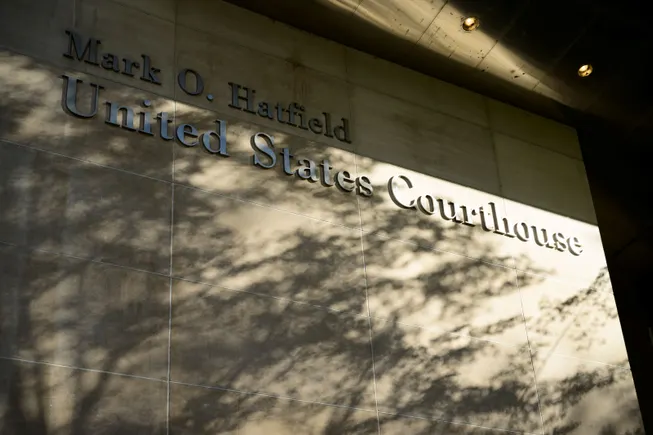
This legal confrontation culminated in a rigorous five-day bench trial before U.S. District Judge Michael H. Simon, which concluded on July 17. Rather than issuing an immediate ruling, Judge Simon requested extensive post-trial briefings. By August 4, the Oregon District Court announced it had reviewed the arguments and determined that no further oral argument was necessary. However, the judge issued an order requiring Leah Feldon, Director of the Oregon Department of Environmental Quality (DEQ), to file a concise brief addressing a nuanced argument introduced by NAW: that the law’s small-producer exemption for Oregon public bodies is facially discriminatory and violates the Dormant Commerce Clause.
Subsequent response and reply filings from both sides exposed deep fissures between the litigants. While NAW argued that the statutory text inherently creates a divide between in-state and out-of-state public bodies—establishing facial discrimination without needing real-world economic proof—the state countered that NAW lacked legal standing and that any perceived statutory defect would not warrant invalidating the broader regulatory regime.
Expanding the Battleground: Colorado and California
While Oregon acts as the judicial bellwether, the conflict has rapidly expanded to other jurisdictions. NAW recently initiated a direct legal challenge against Colorado’s packaging EPR framework, signaling that trade groups intend to contest these policies wherever they take root.
Concurrently, the frontlines have shifted dramatically toward the nation’s most economically consequential market: California. On a single Thursday, NAW announced it was aggressively seeking a preliminary injunction to block the enforcement of California’s sweeping EPR and source reduction law, Senate Bill 54 (SB 54). This move forms part of a broader, high-profile lawsuit spearheaded by 17 Republican state attorneys general—a case whose filings have largely remained sealed from public view.
To strengthen its hand in the California litigation, the NAW-backed plaintiffs amended their complaint, integrating lessons learned from the Oregon trial and drawing explicit parallels to a separate, highly successful lawsuit brought by distinct trade groups. That separate action temporarily blocked the enforcement of California’s strict recyclability labeling law, Senate Bill 343 (SB 343), which governs the use of the "chasing arrows" recycling symbol. By establishing that SB 54 relies on the identical statutory definition of recyclability struck down in the SB 343 case, NAW is urging the federal court to apply the same logic and enjoin SB 54 under the Due Process Clause for being unconstitutionally vague.
Supporting Context & Metrics: The Anatomy of the EPR Challenge
To fully grasp the gravity of these lawsuits, one must understand the economic and structural mechanisms of Extended Producer Responsibility. Traditionally, municipal governments fund and manage the sorting, collection, and processing of municipal solid waste (MSW), financed primarily through local taxpayer revenues and commercial tipping fees. EPR programs upend this traditional model by legally compelling brand owners, importers, and wholesale-distributors to finance and organize the end-of-life management of their packaging materials.
The Economic Stakes of Market Scale
The stakes are exceptionally high. As legal and industry experts frequently emphasize, while Oregon acts as the experimental proving ground, California represents the main event. California is the world’s fourth-largest economy; its regulatory mandates cannot easily be "ring-fenced" or isolated by multinational corporations. Supply chains are integrated; a packaging mandate enacted in Sacramento inevitably alters the manufacturing, labeling, and distribution strategies for goods sold from Maine to Hawaii.
When state-level EPR programs institute producer fee obligations, tiered fee structures based on recyclability, and strict material reduction targets, compliance costs scale into the billions. Trade associations like NAW argue that these costs disproportionately harm mid-sized distributors and wholesalers who operate on thin margins and possess limited leverage over upstream packaging design choices made by foreign or out-of-state manufacturers.
Core Legal Doctrines at Play
The litigation centers on three foundational pillars of American constitutional law:
- The Dormant Commerce Clause: Plaintiffs argue that exemptions built into state laws—such as Oregon’s carve-outs for local public bodies or specific small producers—discriminate against out-of-state commercial participants. By shielding local entities from the financial burdens of the recycling fee base, the laws allegedly place an unconstitutional burden on interstate commerce.
- The Due Process Clause: Focusing heavily on terms like "recyclable" or "compostable," challengers assert that statutory definitions are unconstitutionally vague. When state laws impose severe penalties for non-compliance based on nebulous criteria—such as whether a material is deemed "routinely collected and recycled" in practice—regulated parties argue they are deprived of fair notice, violating constitutional due process.
- Standing and Speculative Injury: A persistent point of contention in the courtroom is whether trade associations possess the legal standing to sue on behalf of members. State defendants routinely argue that economic injury stemming from increased compliance costs or shared fee burdens is too speculative to justify striking down state environmental statutes.
Official Statements and Expert Analysis
The complexity of the ongoing litigation has drawn intense scrutiny from legal scholars, corporate counsel, and trade association leaders alike. Their commentary sheds light on the likely trajectory of these cases and the strategic calculations driving both plaintiffs and defendants.
Perspectives from Association Leadership
NAW’s legal strategy is rooted in the conviction that state environmental laws are improperly encroaching upon federal commercial domains and imposing impossible regulatory hurdles.
Highlighting the interconnected nature of California’s legislative ecosystem, Brian Wild, NAW’s chief government relations officer, articulated the core argument linking SB 54 to the previous victory over SB 343:
"Earlier this summer, a federal judge blocked California from enforcing SB 343, the ‘chasing arrows’ recycling labeling law. SB 54 relies on the same definition of recyclability, so we are asking the court to come to the same conclusion and enjoin SB 54 as well."
Legal Experts Decipher the Oregon Tea Leaves
As legal observers await Judge Simon’s imminent decision in the Oregon bench trial, specialized attorneys have parsed the court’s recent procedural orders for vital clues regarding the final outcome.
Betsy Stone, senior counsel with Foley & Lardner, pointed out the significance of what the court chose not to ask for during the post-trial briefing phase:
"Judge Simon closed the book on additional briefing about the Dormant Commerce Clause, NAW’s headline claim. A court that declines supplemental briefing on a party’s lead theory has, in effect, reached a conclusion on that theory. That is a material development regardless of which direction the conclusion runs."
Stone also offered an insightful prognosis on the procedural due process and structural integrity of the Oregon law:
"The architecture of Judge Simon’s questions suggests a high probability of a partial outcome—one that preserves the core EPR framework while surgically excising discrete provisions."
Regarding the narrow briefing order on the small-producer exemption, Stone believes it signals a favorable outcome for NAW on that specific issue, noting that an ultimate ruling will likely leave "the RMA’s basic regulatory architecture, such as DEQ oversight, PRO implementation, and producer fee obligations, intact."
Other legal professionals emphasize the diligence and pacing of the judiciary. Alexandra Ward, an associate at Holland & Knight, observed that the targeted scope of the court’s post-trial inquiries reflects deep judicial engagement:
"It also signals that we likely are close to a decision because he’s narrowing in on the things that he feels still need to be briefed before he can render a decision."
Looking beyond the Pacific Northwest, Halley Townsend, also an associate at Holland & Knight, noted the broader national implications for legislative drafting:
"Legislators are probably watching this to see how they can craft their own laws in a way that might withstand constitutional scrutiny better after this decision."
Summarizing the macro-economic reality of the litigation, Betsy Stone encapsulated the overarching sentiment of the business community:
"While Oregon is the bellwether, California is the main event. As the world’s fourth-largest economy, its EPR program cannot be ring-fenced. A California-scale mandate resets national and multinational supply chain dynamics because the requirements impact every market that touches California commerce."
Future Outlook: What Lies Ahead for Sustainable Packaging and EPR
As the legal battles waged by the National Association of Wholesaler-Distributors approach critical junctures, the future of Extended Producer Responsibility in the United States hangs in the balance. The upcoming decisions from federal courts in Oregon and California will do far more than resolve local statutory disputes; they will establish a definitive judicial roadmap for the intersection of state environmental regulation and interstate commerce.
Anticipated Judicial Scenarios
- Surgical Injunctions vs. Broad Struck-Downs: Legal experts largely anticipate that federal judges will hesitate to completely dismantle state environmental frameworks. Instead, courts may opt for surgical remedies—striking down discrete, unconstitutional provisions (such as flawed exemptions or vague labeling definitions) while preserving the core regulatory machinery of Producer Responsibility Organizations (PROs) and state environmental oversight agencies.
- The Dormant Commerce Clause Precedent: If a federal court rules definitively that state-level carve-outs for local public bodies or specific in-state producers violate the Dormant Commerce Clause, state legislatures across the country will be forced to rapidly redraft pending and enacted EPR bills to ensure parity between in-state and out-of-state entities.
Implications for Lawmakers and Industry Stakeholders
For state lawmakers currently drafting or considering packaging EPR policies—such as those in states watching the Pacific coast precedents closely—the message is clear: future laws must be drafted with meticulous constitutional precision. Vaguely defined metrics regarding recyclability and preferential treatment for local entities invite immediate, aggressive litigation from well-funded trade coalitions.
For wholesale-distributors, manufacturers, and brand owners, the immediate future demands operational agility. Even if courts issue preliminary injunctions or partial strikes against specific provisions, the overarching trend toward producer accountability is unlikely to reverse entirely. Corporations must continue investing in sustainable packaging redesign, data-tracking infrastructure, and compliance readiness, knowing that the legal terrain will remain volatile for years to come.
Ultimately, the NAW-led legal offensive has transformed the debate over packaging policy from a legislative lobbying effort into a constitutional showdown. Whether the courts ultimately validate, modify, or dismantle these state programs, the resulting jurisprudence will permanently define the boundaries of corporate environmental responsibility in the American marketplace.