

Executive Overview
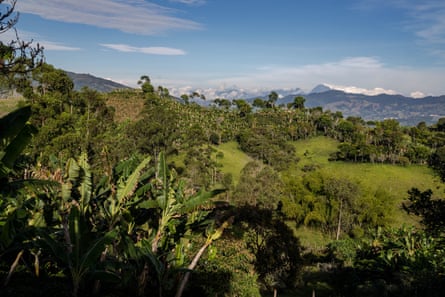
High in the western Andes of Colombia, where the mountain mist kisses a rich patchwork of coffee, plantains, and towering cloud forests, an 87-year-old farmer named Porfirio Garcés tends meticulously to his anthuriums. On the main porch of his small home in the rural hamlet of Palo Cabildo hangs a sign that captures the existential dread—and fierce resolve—of an entire community: “Yes to water.”
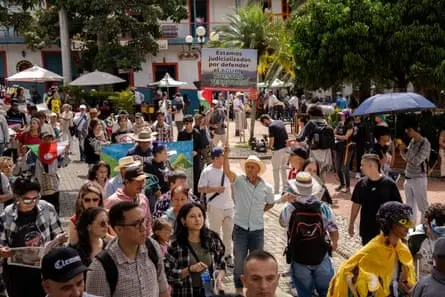
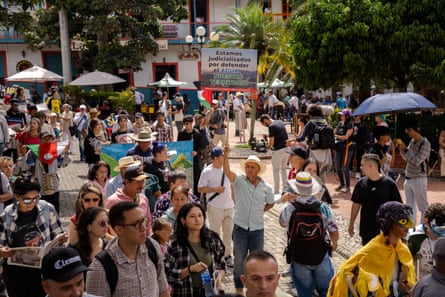
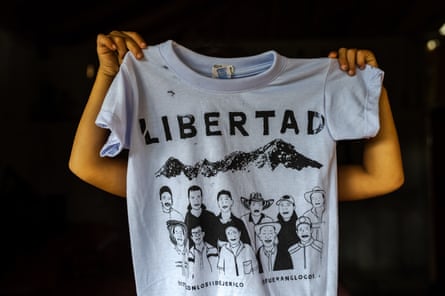
For Garcés and ten other local farmers, collectively known as the "Jericó 11," daily life is no longer confined to the rhythms of agriculture. Instead, they find themselves caught in an intense David-and-Goliath legal struggle. They are facing formal criminal charges—including simple kidnapping, aggravated theft, and assault—stemming from their peaceful actions to block unauthorized exploratory drilling by Minera de Cobre Quebradona, a subsidiary of the global mining giant AngloGold Ashanti.
This high-stakes rural standoff encapsulates a much broader national conflict in Colombia. As the country navigates a changing political landscape under a government aggressively prioritizing resource extraction, communities in the Antioquia region are drawing a hard line in the soil. At stake is not merely local property rights, but the preservation of vital Andean watersheds that supply water to hundreds of thousands of residents, and the survival of a deeply rooted agrarian economy that has sustained generations without ever knowing the machinery of large-scale industrial mining.
Detailed Chronology: Fifteen Years of Friction in Jericó
The conflict between the residents of Jericó and AngloGold Ashanti did not materialize overnight; it is the culmination of a fifteen-year escalation characterized by shifting corporate strategies, community mistrust, and protracted legal battles.

1. The Foot in the Door (2007–2018)
AngloGold Ashanti first arrived in the Antioquia region in the mid-2000s, eyeing the mineral-rich geological formations beneath the traditional farming communities. In 2007, the corporation secured its initial exploration licence, which covered nearly 8,000 hectares (approximately 19,800 acres). According to local community leaders, the multinational did not initially reveal its intentions to establish a massive industrial copper extraction operation. Instead, residents report that company representatives entered the area under the guise of conducting general soil studies to evaluate regional agricultural potential.
Over the next decade, this initial exploration phase was extended iteratively, ultimately maxing out the 11-year limit permitted under Colombia’s mining code. During this period, the company consolidated land holdings, preparing the groundwork for a transition from exploration to industrial exploitation.
2. Regulatory Stalls and Judicial Hurdles (2019–2024)
By 2019, the friction between local inhabitants and the mining firm reached a critical juncture. AngloGold Ashanti formally applied for an exploitation licence, but the National Environmental Licensing Authority (ANLA) dealt the project a significant setback. ANLA archived the application, citing a lack of essential technical information and demanding that the company conduct comprehensive new baseline studies before any industrial extraction could be authorized.
Despite the regulatory roadblocks, tensions on the ground continued to mount. The turning point for the criminal charges occurred in 2023 on public municipal land in Jericó—property expressly designated for the safeguarding of underground water reserves.
According to community testimonies, mining employees entered the protected public land without authorization to initiate excavations near vital water sources. Alarmed, local farmers mobilized to halt the work, immediately notifying the local police, the ombudsperson’s office, and the mayor’s office to demand the workers’ removal. Rather than resolving the dispute amicably, company employees subsequently filed criminal complaints alleging they had been held against their will—giving rise to the contentious "kidnapping" charges leveled against Garcés and his peers.
3. The Criminalization of Dissent and Current Legal Status (2025–2027)
By mid-2025, the legal pressure on the local population intensified. Initial court hearings on May 13, 2025, saw the presiding judge reject prosecutors’ requests to place the 11 farmers under house arrest, recognizing the peaceful community standing of the accused. Nevertheless, the formal charges of simple kidnapping, aggravated theft, and assault remain active.
As the defendants await trial, the judicial timeline has been pushed out significantly, with final sentencing hearings now formally postponed until March 2027. Meanwhile, in August, Colombia’s National Mining Agency granted AngloGold Ashanti a formal extension of its exploration phase at Quebradona through December 8, 2027, ensuring that the legal cloud over the Jericó 11 will loom large for years to come.
Supporting Context & Metrics: Ecology, Economy, and Politics
To understand why the community’s resistance is so uncompromising, one must examine the unique environmental and socioeconomic landscape of Jericó and the broader Antioquia region.
+--------------------------------------------------------------------------+
|                       KEY METRICS AT A GLANCE                            |
+--------------------------+-----------------------------------------------+
| Initial Concession Area  | ~8,000 hectares (~19,800 acres)               |
| Proposed Biodiversity    | 2,500+ hectares (6,000 acres) of restoration  |
| Target Extraction Metal  | Copper (Quebradona Project)                   |
| Key Local Water Source   | La Fea stream & local Andean watersheds       |
| Mobilized Opposition     | 281 local organizations ("entidad no grata")  |
| Legal Timeline           | Trial pending; Sentencing postponed to 2027   |
+--------------------------+-----------------------------------------------+
The Hydrological Heartland
The rural hamlets threatened by the Quebradona project—including Palo Cabildo and La Soledad—sit perched on mountain slopes that form the headwaters for numerous vital water sources. These streams do not merely sustain Jericó; they feed the broader Cauca River basin, one of Colombia’s most critical hydrological systems, and supply drinking water to several neighboring towns.
For residents like 62-year-old Gustavo Arboleda, whose family farm sits directly above the planned subterranean mining tunnels, the threat to local streams is existential. The installation of an exploration drilling platform near the La Fea stream served as the catalyst for the community’s organized resistance, convincing farmers that industrial operations would irreversibly poison or deplete their water tables.
A Thriving Agricultural Tradition
Unlike regions with a historical footprint of heavy industry, Jericó has historically been defined by rich, diverse agriculture. Local farmers cultivate robust harvests of coffee, plantains, cassava, beans, and corn, supplying regional markets and ensuring food sovereignty.
Rodolfo Tobón, a 44-year-old farmer and president of the La Soledad community action board who is also facing criminal charges, emphasizes the fertility of the soil: "This land is very fertile; whatever is planted grows. This is life—not just for us, but for many more people." The local economy relies entirely on this clean, self-sustaining ecosystem, creating an inherent clash with large-scale subsurface mining, which residents argue will permanently alter the landscape and disrupt agricultural productivity.
The Macro-Political Shift
The local struggle is unfolding against a shifting national political backdrop. Following the rise of far-right President Abelardo de la Espriella, who assumed office in August, the federal government has aggressively prioritized the expansion of national mineral, gas, and oil extraction—including the re-embracing of controversial techniques like fracking—as a central pillar of economic recovery. This top-down push for resource extraction has emboldened multinational mining corporations while putting frontline environmental defenders in an increasingly precarious position.
Official Statements & Corporate Defense
Faced with mounting public outcry and fierce local resistance, corporate stakeholders and community organizers have articulated starkly contrasting narratives regarding the legitimacy and impact of the Quebradona project.
AngloGold Ashanti’s Position
In a comprehensive three-page statement provided to investigative journalists, AngloGold Ashanti and its subsidiary, Minera de Cobre Quebradona, maintained that the project is fully compliant with Colombian environmental and mining regulations. The company asserts that its activities pose zero threat to local water sources, pointing to technical environmental studies authorized by Colombian authorities which it claims show no adverse impact on either groundwater or surface water systems.
Furthermore, the corporation firmly denounces the actions of local activists, characterizing their blockades and protests as illegal and disruptive. The decision to pursue criminal complaints—including charges of kidnapping, theft, and personal injury—is defended as a necessary legal response to protect company personnel and property from unlawful interference.
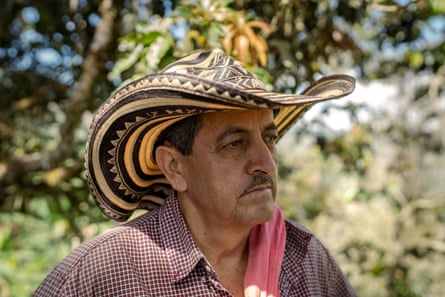
"We believe in frank, open dialogue, free from clandestine or malicious methods, and regret narratives that unfairly affect our reputation and that of our employees," the company stated. As part of its social license strategy, AngloGold Ashanti also highlighted the 2025 launch of the Quebradona Biodiversity Initiative, a pledge to regenerate more than 2,500 hectares (6,000 acres) of Indigenous tropical dry forest and high-mountain ecosystems across Antioquia.
The Community Counter-Offensive
The residents and grassroots organizations of Antioquia have met these corporate assurances with profound skepticism. Last month, in an unprecedented display of solidarity, 281 local organizations signed an open formal declaration declaring AngloGold Ashanti and Minera de Cobre Quebradona as entidad no grata (unwelcome entities).
Community leaders argue that corporate sustainability initiatives and biodiversity pledges are little more than "greenwashing" designed to obscure the permanent damage that underground copper extraction will inflict on fragile Andean aquifers. Many campaigners view the ongoing criminal prosecution of the Jericó 11 not as a legitimate matter of criminal justice, but as an orchestrated attempt to silence dissent, bankrupt local leaders, and intimidate anyone daring to question corporate hegemony.
Future Outlook: A Precarious Crossroads
As the legal proceedings against Porfirio Garcés, Gustavo Arboleda, Rodolfo Tobón, and their eight co-defendants drag on toward the March 2027 sentencing milestone, the valley of Jericó remains locked in a tense, uneasy equilibrium.
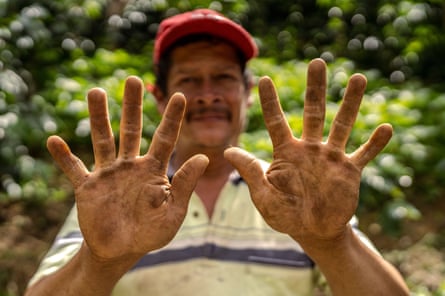
On one side stands a deeply entrenched multinational corporation backed by favorable national policies and capital-intensive exploration rights extending through late 2027. On the other stands a resilient, multigenerational farming community armed with little more than hand tools, an intimate knowledge of their native soil, and a shared conviction that water is more precious than copper.
The outcome of the Jericó 11 trial will reverberate far beyond the borders of Antioquia. It will serve as a bellwether for environmental justice in Colombia, signaling whether rural communities can legally protect their ancestral watersheds against the relentless tide of global resource extraction, or whether the legal system will ultimately pave the way for the machinery of industry to silence the poetry of the Andean landscape.



