

Executive Overview
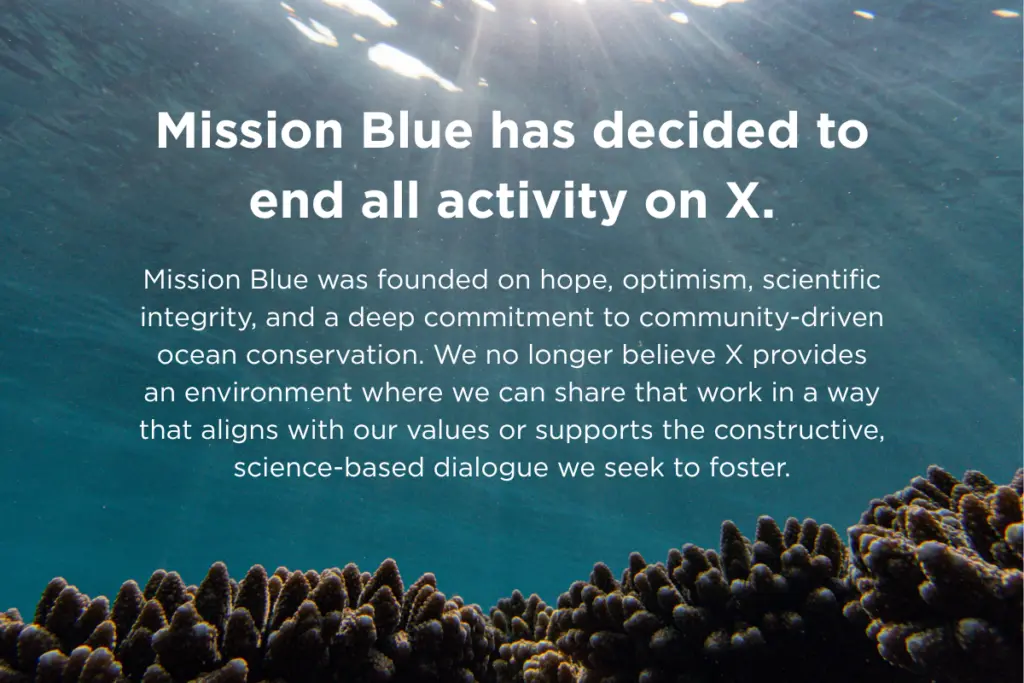
In an era where digital platforms serve as the primary lifeblood for global advocacy, non-governmental organizations face an increasingly complex calculus regarding where and how they expend their limited resources. For Mission Blue—the globally renowned marine conservation initiative founded by legendary oceanographer Dr. Sylvia Earle—the tipping point has finally been reached. In a decisive move that underscores a broader industry-wide reckoning, the organization officially announced that it is ending its active participation on X, the platform formerly known as Twitter.
Citing a deteriorating digital landscape marked by escalating hostility, pervasive misinformation, and a concerted undermining of scientific consensus, Mission Blue’s leadership has chosen to redirect its outreach efforts toward alternative channels. While the organization’s historical archive on X will remain accessible in a static state, no new content will be published to the handle. Instead, the foundation is doubling down on platforms it believes better reflect its foundational ethos of hope, optimism, and constructive dialogue: Instagram, Facebook, LinkedIn, YouTube, and its proprietary newsletter network.
This development is far more than a routine public relations update; it serves as a powerful case study in the modern intersection of environmental advocacy and social media governance. As digital town squares become increasingly polarized, organizations dedicated to empirical science and planetary preservation are being forced to evaluate the hidden costs of engagement. By walking away from one of the world’s largest microblogging networks, Mission Blue has ignited a critical conversation about the stewardship of digital spaces, the protection of scientific integrity online, and the lengths to which mission-driven groups will go to safeguard their core values in an increasingly fractured media ecosystem.
Detailed Chronology: The Evolution and Exit of an Advocate
The Early Days: Building a Digital Armada for the Sea
When Mission Blue first established its presence on the platform then known as Twitter, the digital landscape for environmental nonprofits was vastly different. Founded with the ambitious goal of sparking public awareness and support for a global network of marine protected areas—known as "Hope Spots"—the organization viewed the microblogging site as a dynamic tool for democratization.
In its formative years, the platform offered Mission Blue an unprecedented, direct line of communication to a diverse global constituency. Marine scientists conducting field research in remote archipelagos, policymakers in urban capitals, and passionate ocean advocates could converge in real time. Threads detailing coral bleaching events, illegal overfishing, and heroic conservation victories could be shared instantly, cutting through traditional bureaucratic and media gatekeepers. For a foundation dedicated to spreading "ocean hope," the platform was initially a fertile ground for community building, rapid-fire mobilization, and intellectual exchange.
The Turning Point: Shifting Tides and Rising Toxicity
Over time, however, the cultural and structural architecture of the platform underwent a profound transformation. Following high-profile ownership changes, corporate restructuring, and alterations to content moderation policies, the day-to-day user experience on X shifted dramatically.
For Mission Blue, the warning signs accumulated steadily. The organization observed a marked uptick in vitriolic discourse, coordinated harassment campaigns, and the unfettered proliferation of unverified claims. More alarmingly for a science-driven entity, the platform increasingly became a vector for climate denialism, anti-science rhetoric, and the systematic discrediting of empirical research. What was once a space for robust, evidence-based dialogue began to resemble an arena optimized for outrage, division, and sensationalism.
Internal discussions among Mission Blue’s leadership weighed the diminishing returns of community engagement against the escalating reputational and operational risks of maintaining a presence in a hostile ecosystem. The calculus became clear: the foundational ethos of the organization—rooted in optimism, inclusivity, and constructive, solutions-oriented collaboration—was fundamentally incompatible with the prevailing culture of X.
The Definitive Break: Archiving the Past to Protect the Future
The culmination of these deliberations led to the formal decision to sever active ties with the platform. Rather than continuing to pour time, capital, and creative energy into an environment perceived as actively hostile to scientific inquiry, Mission Blue opted for a clean break.
By choosing to freeze rather than delete its account, the organization preserves a historical record of its past campaigns, milestones, and communications. Yet, by shuttering the pipeline for new content, Mission Blue has sent an unmistakable message to its donor base, scientific partners, and the tech industry at large. The digital migration away from X marks the end of an era for the foundation—and signals the beginning of a more deliberate, values-aligned strategy for digital engagement in the 21st century.
Supporting Context & Metrics: The Mass Exodus of Science from X
The Broader Flight of Scientific and Academic Institutions
Mission Blue is far from an isolated outlier. Over the past two years, a quiet yet significant migration has been underway across the global scientific, academic, and non-profit sectors. Universities, meteorological societies, public health organizations, and environmental watchdogs have increasingly re-evaluated their footprint on X.
The structural changes implemented under the platform’s current leadership—including the dismantling of legacy verification systems, the reduction of trust-and-safety teams, and alterations to algorithmic amplification—have created a climate where fringe perspectives frequently drown out peer-reviewed consensus. For institutions whose entire brand equity relies on trust, accuracy, and empirical validity, the risk of association with unchecked misinformation has become unacceptably high. When climate scientists find their field updates besieged by coordinated bot networks and bad-faith actors, the utility of the platform as an educational tool plummets.
Quantifying the Digital Shift: Where Conservation Dollars Flow
To understand Mission Blue’s strategic pivot, one must examine where digital engagement yields the highest return on investment for mission-driven entities. Modern conservation organizations operate with lean budgets, meaning every hour spent managing social media channels must be justified by tangible outcomes—whether through community building, educational reach, or donor conversion.
+------------------------+-------------------------------------------------------+
| Digital Channel        | Strategic Advantage for Conservation Advocacy         |
+------------------------+-------------------------------------------------------+
| Instagram              | High-impact visual storytelling; deep engagement with |
|                        | younger, aesthetically driven demographics.           |
+------------------------+-------------------------------------------------------+
| Facebook               | Broad demographic reach; highly effective for local   |
|                        | community mobilization and targeted fundraising.      |
+------------------------+-------------------------------------------------------+
| LinkedIn               | Professional networking; vital for B2B partnerships,  |
|                        | institutional grant-making, and corporate alliances.  |
+------------------------+-------------------------------------------------------+
| YouTube                | Long-form documentary content; immersive educational  |
|                        | deep dives into Hope Spot expeditions.                |
+------------------------+-------------------------------------------------------+
| Proprietary Newsletter | Unfiltered, direct-to-audience communication free     |
|                        | from algorithmic manipulation or platform volatility. |
+------------------------+-------------------------------------------------------+
As detailed above, Mission Blue’s destination platforms offer specialized advantages that X’s increasingly chaotic microblogging format can no longer reliably deliver. Visual storytelling on Instagram captures the breathtaking beauty of coral reefs and marine life; YouTube accommodates the rich, narrative-driven documentaries required to explain complex oceanographic phenomena; LinkedIn facilitates high-level partnerships with corporate sponsors and policymakers; and the proprietary newsletter establishes an unbreakable, algorithm-free bond with the most dedicated supporters.
Official Statements and Institutional Rationale
The formal announcements issued by Mission Blue offer a masterclass in transparent, values-driven corporate communication. Rather than engaging in petty platform politics, the foundation grounded its rationale entirely in its core mission: the defense of the global ocean and the promotion of collaborative, science-backed solutions.
The Philosophy of Hope Versus the Economy of Outrage
In its public statements, Mission Blue explicitly contrasted its foundational ethos with the prevailing mechanics of X. The organization noted:
"Mission Blue was founded with a spirit of hope, optimism, and dedication to community-driven ocean conservation… Over time, however, the environment on X has changed significantly. We have become increasingly concerned about the prevalence of misinformation, hostility, and divisive content on the platform, including content that undermines science and constructive dialogue around environmental issues."
This framing is crucial. By emphasizing "hope" and "optimism," Mission Blue distinguishes itself from doomsday environmentalism while simultaneously rejecting the toxic cynicism that frequently dominates social media discourse. Environmental advocacy, particularly in the realm of marine conservation, requires long-term patience, empirical rigor, and collaborative bridge-building. Platforms that incentivize instantaneous outrage and polarization are antithetical to these goals.
The Imperative of Safe, Inclusive Digital Communities
Another cornerstone of Mission Blue’s rationale is its commitment to inclusivity. The ocean covers over seventy percent of the Earth’s surface and sustains all life on the planet; consequently, the constituency for ocean protection must be as diverse and interconnected as the marine ecosystem itself.
The foundation noted:
"We are all connected to the same ocean. Through our digital strategy, we seek to build a curious, welcoming online community. We cannot, in good faith, continue to use the X platform."
By acknowledging that digital spaces are not neutral tools, but rather active shapers of community culture, Mission Blue has established a high ethical standard for non-profit communications. When a platform ceases to be welcoming to those who champion empirical science, institutional self-respect demands withdrawal.
Future Outlook: Charting a Course for Independent Advocacy
Diversifying Digital Infrastructure
As Mission Blue completes its transition away from X, the organization is actively optimizing its presence across its retained channels. The focus moving forward is on deepening engagement rather than merely chasing vanity metrics like follower counts.
On Instagram and Facebook, community managers are rolling out interactive storytelling campaigns that highlight individual Hope Spots around the world—from the Galapagos Islands to the coral reefs of the Mediterranean. These platforms allow for rich visual narratives that evoke the emotional resonance necessary to inspire conservation action. Simultaneously, YouTube is slated to become a primary repository for high-definition expedition footage, expert interviews, and educational mini-documentaries that bring the wonders of the deep sea directly into classrooms and living rooms globally.
The Rise of Zero-Algorithm Strategies: The Power of Direct Ownership
Perhaps the most significant long-term takeaway from Mission Blue’s departure from X is the renewed emphasis on direct-to-audience communication tools, specifically the organizational newsletter.
In an era where tech monopolies can alter algorithms overnight, throttle organic reach, or permit toxic environments to alienate users, relying solely on rented digital land is an inherently precarious strategy. By driving supporters toward their proprietary email subscription lists, Mission Blue is insulating itself from the whims of third-party platform executives.
A newsletter is owned media. It cannot be shadow-banned by an algorithm designed to maximize ad revenue through controversy; it cannot be rendered toxic by a sudden influx of bad-faith actors; and its delivery relies on a direct, consensual handshake between the organization and the supporter. As more nonprofits observe the volatility of social media networks governed by capricious billionaires, the return to direct, email-based community building is poised to become an industry-wide trend.
A Precedent for the Environmental Movement
Mission Blue’s bold exit from X marks a watershed moment for the environmental movement. It demonstrates that mission-driven organizations do not have to compromise their values, subject their communities to toxicity, or legitimize anti-science platforms simply for the sake of digital presence.
By drawing a firm ethical line in the sand, Dr. Sylvia Earle’s foundation has reminded the world that the fight to protect our blue planet requires integrity not only in the field, but in every single sphere of communication. As Mission Blue steers its digital ship toward calmer, more constructive waters, it leaves behind a clear challenge to the rest of the non-profit sector: true advocacy demands that we practice what we preach, choosing hope, science, and community over the hollow metrics of a broken digital town square.



