

Executive Overview
The historic market town of Monmouth, nestled in the picturesque Wye Valley where multiple waterways converge, is accustomed to the shifting moods of nature. Yet, the cataclysmic flooding that tore through its streets in November 2025 has left an indelible mark on the community. Described by lifelong residents as "harrowing" and "dreadful," the disaster caught the town off guard not merely because of its suddenness, but due to a ferocious intensity that obliterated local benchmarks for high water.
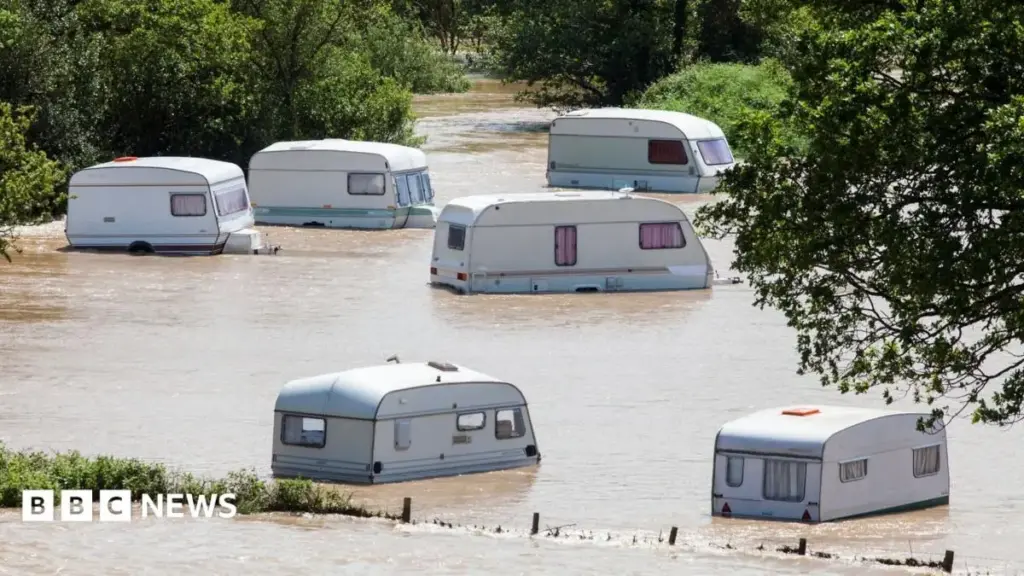
In the dead of night, torrents of water surged through commercial districts and residential neighborhoods alike, transforming familiar thoroughfares into raging rivers. While miraculous timing prevented tragic loss of human life, the material toll was staggering: dozens of vehicles were swallowed by the currents, local businesses were devastated, and homes were inundated with feet of murky, debris-laden water.
Beyond the immediate human and economic costs, the Monmouth disaster serves as an ominous case study in modern climate vulnerability. Experts warn that towns situated at river confluences are facing an increasingly perilous future driven by shifting global weather patterns, intensified winters, and rising atmospheric temperatures. Compounding these environmental pressures is a startling complacency or lack of preparedness among the public, highlighted by shockingly low sign-up rates for official early warning systems.
This in-depth report examines the harrowing night of the November 2025 floods, contextualizes the event within broader meteorological trends—including the formidable El Niño cycle—and investigates the urgent calls from authorities for a fundamental reassessment of how British communities prepare for the water extremes of the twenty-first century.
Detailed Chronology: The Night the River Came Calling
To understand the sheer shock of the November 2025 floods in Monmouth, one must look to the accounts of those who lived through its darkest hours. For a group of octogenarian friends—Malcolm Butcher (82), Jim Tyler (81), Brian Churches (82), and Dave Blake (82)—Monmouth is more than just a home; it is a repository of a lifetime of memories. Having resided in the town since their youth, the quartet prided themselves on knowing the rhythms of the local rivers. Until that fateful night, they believed they had seen every meteorological trick the valley could muster.
They were wrong.
"At 2:30 in the morning when it hit, it was unbelievable… absolutely raging," Malcolm recalled, capturing the sheer terror of an assault delivered while the town slept. The timing, local officials and residents later agreed, was the slender margin that separated a property disaster from an unmitigated human tragedy. Had the torrent unleashed itself during the bustling daylight hours—when pedestrians crowded the high street, shoppers frequented local supermarkets, and children walked to school—the outcomes would have been catastrophic. "If it had happened in the daytime, people would have died," Malcolm asserted with chilling conviction.
The physical devastation unfolded with breathtaking speed. On Malcolm’s residential street alone, eighteen vehicles were swallowed and effectively written off by the relentless floodwaters, including his own. The water did not merely pool; it surged with enough kinetic energy to displace heavy machinery, batter structural foundations, and render ground floors uninhabitable within minutes. Directly behind his street, neighboring residential blocks were entirely flooded out, leaving families marooned in upper stories or forced into emergency evacuation.
As dawn broke over Monmouth, it revealed a landscape akin to a war zone. Imogen Elliot, another 82-year-old resident surveying the aftermath, noted the surreal scale of the inundation. "Waitrose was four feet in water, and it went right up the street," she remarked. "We’ve had flooding before, but not like that."
While emergency services, local authorities, and community volunteers mobilized swiftly in the cold light of day to begin the monumental task of pumping, cleaning, and assessing the damage, the psychological wounds proved slower to heal. "It’s not back to normal yet, but we’re getting there," Imogen added, a sentiment echoed by hundreds of local business owners and homeowners whose lives had been upended overnight.
Supporting Context & Metrics: A Convergence of Climate Pressures
The inundation of Monmouth cannot be dismissed as a mere statistical anomaly. It is part of an alarming, macro-level shift in weather patterns across the United Kingdom and the broader globe. According to climatologists and meteorological agencies, human-driven climate change is supercharging the hydrological cycle, leading to more frequent, volatile, and intense weather extremes. For Wales, this manifests in the sobering prospect of winters that are not only wetter but wilder, occurring with escalating regularity.
Compounding these long-term anthropogenic trends are cyclical natural phenomena that amplify planetary volatility. During this period, scientists have been closely monitoring a formidable El Niño event unfolding over the Pacific Ocean. Projected by climatologists to be among the "strongest in living memory," this massive natural climate oscillation releases vast amounts of heat from the ocean into the atmosphere, driving up global temperatures and significantly elevating the probability of extreme weather anomalies worldwide.
While meteorologists emphasize that a Pacific El Niño does not automatically translate into a direct, predictable template for severe weather in the United Kingdom, it undoubtedly forms a critical component of the broader atmospheric picture. Jeremy Parr of Natural Resources Wales (NRW) describes El Niño and associated climatic indicators as vital context underpinning official concerns for the coming seasons. The convergence of a warming planet, shifting jet streams, and powerful oceanic cycles means that the traditional boundaries of seasonal weather forecasting are breaking down.
Compounding this environmental volatility is Monmouth’s unique geographical layout. As Malcolm Butcher astutely observed, "It is a worry; we have three rivers running into Monmouth… and the winters are changing." The confluence of major river systems creates a natural hydraulic bottleneck during periods of sustained, heavy upland rainfall. When saturated catchments can no longer absorb moisture, excess water rushes simultaneously down these tributaries, transforming peaceful valleys into high-speed funnels of destruction.
Despite these escalating risks, structural engineering alone cannot offer absolute immunity. As Jeremy Parr candidly noted, "We do invest in flood defences… but you can’t stop all of the flooding all of the time." The sheer volume of water generated by extreme precipitation events routinely overwhelms even state-of-the-art barriers, concrete embankments, and diversion channels. This physical limitation shifts the burden of resilience from civic infrastructure down to individual property owners and local communities.
Official Statements and Institutional Challenges
The disaster in Monmouth has triggered intensive soul-searching within public bodies tasked with environmental protection and emergency management. Natural Resources Wales has found itself under intense scrutiny regarding both its infrastructural readiness and its public communication strategies.
Jeremy Parr’s assessment of public preparedness points to a psychological hurdle that emergency planners face globally: human optimism bias. "Time and time again," Parr revealed, NRW personnel conducting post-flood investigations are met with the same disquieting refrain from devastated victims: "They’d never flooded before, and didn’t think it would happen to them." This pervasive sense of invulnerability often prevents households from taking proactive, preventative measures until it is far too late.
To combat this psychological barrier, NRW operates a dedicated flood warning service designed to give residents vital hours of lead time to secure their properties. The mechanisms are straightforward: citizens are encouraged to check their specific flood risk using an online postcode tool, sign up for automated telephone or email warnings, and consult comprehensive safety guides outlining precise steps to take when a flood is forecast.
However, utilization metrics released in the wake of the Monmouth disaster reveal a deeply concerning deficit in public engagement. While NRW’s advanced flood warning service has the technical capacity to reach 181,158 properties across Wales, current figures show that a mere 48,844 properties are actually signed up to receive alerts.
At just 27%, this subscription rate represents a critical vulnerability in the nation’s civil defense architecture. When nearly three-quarters of properties at potential risk are blind to incoming automated warnings, the efficacy of institutional forecasting is severely undermined.
Parr shed light on one of the primary drivers behind this low uptake: persistent public myths and misinformation. Chief among these is the unfounded fear that registering for official flood warnings or contacting agencies regarding local risk profiles could negatively impact home insurance premiums or complicate future property sales. In reality, insurance providers increasingly reward proactive risk management and engagement with official warning systems, making the persistence of this myth a self-fulfilling prophecy of unpreparedness.
Future Outlook: Rethinking Resilience for a Volatile Era
As Monmouth continues its slow, arduous journey toward recovery, the town stands as a microcosm of a national—and global—dilemma. The traditional blueprint for living alongside rivers is no longer fit for purpose. As the climate baseline shifts, communities that once enjoyed centuries of relative safety find themselves on the front lines of an ecological transition.
Residents like Malcolm Butcher offer pragmatic, hard-earned wisdom born from disaster. Beyond structural defenses, he advocates for grassroots resilience: moving valuable belongings to upper floors ahead of predicted storms and maintaining a ready stock of sandbags. Yet, relying solely on reactive measures is no longer sufficient.
Experts agree that preparing for the future requires a cultural shift in how society conceptualizes risk. As Jeremy Parr articulated, individuals must "think the unthinkable really—or the unpleasant—and [consider] if it were to flood around where I live, what would I do?" This counter-intuitive mental exercise—visualizing disaster before it strikes—is essential for short-circuiting the paralysis of disbelief that characterizes so many flood events.
Looking ahead, policymakers, environmental agencies, and local municipalities face a multi-layered mandate:
- Infrastructure Modernization: Upgrading and maintaining river dredging protocols, earthen embankments, and urban drainage systems to handle higher capacity loads.
- Public Awareness Campaigns: Aggressively dismantling insurance myths and boosting sign-up rates for early warning systems well beyond the current 27% baseline.
- Land-Use Planning: Implementing stricter zoning laws that restrict new residential and commercial developments within historical floodplains and natural water retention zones.
- Community Cohesion: Empowering local networks—such as neighborhood flood warden schemes—to ensure vulnerable and elderly residents, who are often disproportionately affected, receive timely assistance during nocturnal emergencies.
The November 2025 floods in Monmouth were a brutal reminder of the raw power of the natural world. Whether the town—and the wider United Kingdom—can adapt quickly enough to meet the escalating challenges of a warming planet depends entirely on closing the gap between institutional warnings and public action. In an era where extreme weather is rapidly becoming the new normal, ignorance and optimism can no longer serve as adequate shelters against the rising tide.



