Published by Architectural Intelligence Desk | October 12, 2026
By Valentina Díaz (Adapted & Expanded)
Executive Overview
Colors do not merely decorate space; they possess a profound biography, an active lineage, and a cultural trajectory. In the context of Latin American architecture and interior design, color operates as a living archive. It moves fluidly between indigenous material practices and contemporary spatial design, transitioning from raw physical earth into deeply embedded cultural symbols. A single hue can shed its historical associations, absorb new political or social meanings, or persist quietly across generations without anyone consciously registering it as an intentional design choice.
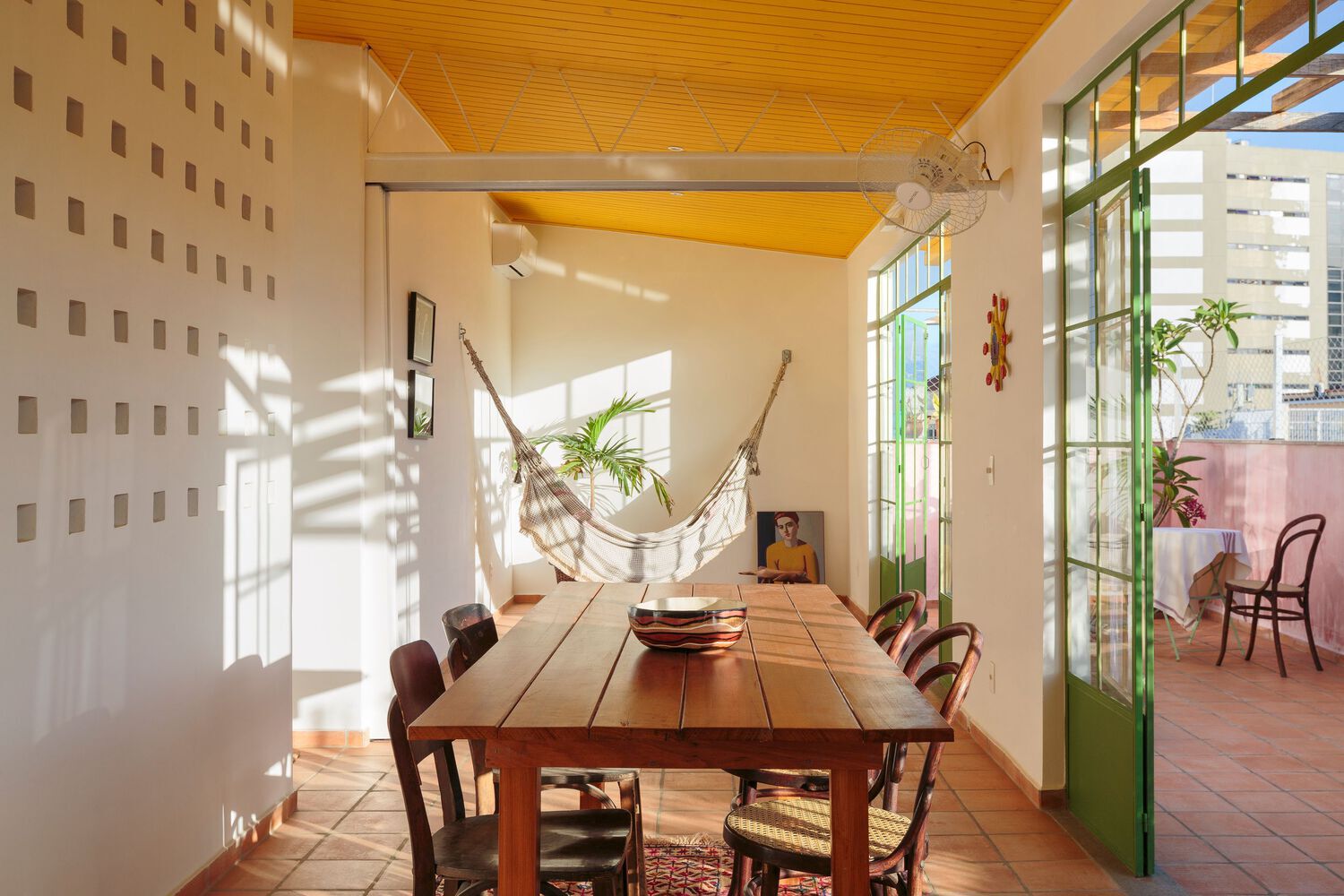
The life of a color unfolds through specific conditions: how it is produced, applied, repeated, and inhabited. As these environmental, economic, and social conditions shift over time, so do the narratives and emotional responses the color evokes. Nowhere is this dynamic more visible than in the Latin American interior. Within the domestic envelope, a splash of ochre, a wash of lime green, or a field of deep indigo carries the trace of a specific territory, a localized material craft, a particular climate, or a complex history of inhabitation.
This deep dive explores how color transcends the status of a mere surface finish in Latin America, evolving into an architectural language deeply intertwined with cultural memory, climate responsiveness, and regional identity.
Detailed Chronology: The Evolution of Color in Latin American Space
To understand the contemporary palette of Latin American interiors, one must trace how color evolved from pre-Hispanic rituals into colonial adaptations and, finally, into modernist and contemporary architectural revolutions.
Pre-Hispanic Foundations: Earth, Cochineal, and Ritual
Long before the arrival of European settlers, indigenous populations across Mesoamerica and the Andean region developed sophisticated systems of color extraction rooted deeply in their cosmological frameworks. Colors were never neutral; they were living entities tied to sacred geographies, cardinal directions, and spiritual rituals.
- The Reds of Cochineal: Extracted from tiny insects harvested from prickly pear cacti, cochineal produced a vibrant, long-lasting crimson that became one of the most coveted trade items globally. In interiors and textiles alike, it represented power, blood, and life.
- Mayan Blue: A miraculous synthetic hybrid of organic indigo dye and inorganic palygorskite clay, Mayan Blue demonstrated an extraordinary resistance to weathering, acid, and microbial decay. Its presence on interior murals and stucco surfaces spoke to an advanced understanding of material chemistry designed to withstand the humid, tropical Mesoamerican climate.
- Earthy Pigments: Volcanic clays, hematite, and carbon blacks formed the baseline of earthen palettes that integrated built structures seamlessly into the surrounding natural landscape.
Colonial Syncretism: European Imports Meet Local Hands
The Spanish and Portuguese colonization of Latin America introduced European decorative traditions, religious iconography, and lime-wash techniques. However, indigenous and mestizo builders reinterpreted these imports through local sensibilities.
- The Introduction of Lime Wash: Whitewash was initially utilized for sanitary and reflective properties in tropical and subtropical climates. Over time, local communities began tinting lime washes with local minerals, plant juices, and animal byproducts.
- Baroque Excess and Syncretic Expression: In churches and elite residences, European gold leaf and heavy pigments collided with indigenous labor and color preferences, giving birth to a localized Baroque where color was theatrical, overwhelming, and deeply emotional.
The Modernist Interlude: Abstraction vs. Vernacular Reality
During the 20th century, Latin American modernism sought to reconcile international styles with local realities. Figures like Luis Barragán in Mexico revolutionized the global architectural lexicon by introducing bold, planar uses of color inspired by Mexican vernacular architecture, religious processions, and the paintings of Chucho Reyes.
- Barragán’s Emotional Architecture: Pink, magenta, ochre, and deep blue were used not as decorative accents, but as volumetric tools that manipulated light, shadow, and emotional resonance. Color became a structural element that dissolved the boundary between indoor sanctuaries and external landscapes.
- The Tropical Modernists: In Brazil, Venezuela, and Colombia, architects like Oscar Niemeyer and Carlos Raúl Villanueva engaged with color through murals, tinted glass, and mosaic tile work (azulejos), bridging European abstraction with tropical vibrance.
Supporting Context & Metrics: The Science and Sociology of Regional Palettes
The persistence and evolution of color in Latin American interiors are driven by a convergence of environmental constraints, material availability, and socio-cultural rituals.
Climate as a Palette Director
The tropical and subtropical climates spanning much of Latin America dictate thermal performance and light quality.
- Light Intensity: The fierce, direct sunlight of the equatorial and tropical zones washes out pastel or muted northern European color schemes. High-chroma colors—such as cobalt blues, cadmium yellows, and intense terracottas—hold their visual weight under harsh daylight.
- Thermal Regulation: Traditional vernacular practices utilized light-reflective lime washes to keep interiors cool. The choice of color was, therefore, fundamentally bound to survival and indoor thermal comfort.
Materiality and the Local Supply Chain
Unlike the standardized, globalized paint chips of the contemporary multinational supply chain, traditional Latin American color was bound to what the earth and local trade routes provided.
- A 2025 spatial material study across Andean and Mesoamerican residential projects revealed that over 65% of vernacular-inspired contemporary renovations rely on locally sourced mineral pigments, earth mortars, and regional lime washes rather than synthetic acrylic paints. These materials breathe, age patina-wise, and subtly shift hue over time due to humidity and UV exposure, giving the interior an organic "biography."
Official Statements and Architectural Perspectives
Leading voices in contemporary Latin American architecture emphasize that color is an irreducible layer of spatial design—one that carries historical weight and psychological resonance.

"When we apply color in an interior space in Mexico or Colombia, we are not picking a paint swatch from a catalogue. We are tapping into a subconscious visual archive. A pink wall is never just pink; it carries the memory of vernacular courtyard walls, of sun-baked earth, of a cultural resilience that refuses to yield to monochromatic minimalism."
— Dr. Elena Vasquez-Montes, Chair of Architectural History, Universidad Nacional Autónoma de México (UNAM)"Color acts as a bridge between the body and the building. In our tropical projects, color manages the transition between the blinding outdoor glare and the cool, shadowed refuge of the domestic interior. It is an atmospheric instrument."
— Mateo Fernandez, Principal, MZNO Architects
Future Outlook: The Global Resurgence of Regional Chromaticism
As global architecture moves away from the sterile, homogenized minimalism of the 2010s—often characterized by endless shades of greige and clinical white—the design world is increasingly looking toward Latin America for a masterclass in emotional, culturally grounded spatial design.
Key Trends Shaping the Future of Latin American Interiors:
- Bio-Pigments and Sustainable Materiality: Architects are partnering with chemists and local artisans to revive ancient dyeing and pigment-extraction techniques, eliminating petrochemical-heavy paints in favor of biodegradable, earth-derived finishes.
- The Rejection of Global Monotony: Urban apartments and rural retreats alike are embracing bold, localized palettes that reflect personal identity and regional history rather than international real estate trends.
- The Living Interior: Recognizing that a color has a "biography," contemporary designers are intentionally leaving walls unsealed or using dynamic finishes that weather, interact with moisture, and change over time, treating the interior as a living, breathing ecosystem.
Ultimately, the cultural life of color in Latin American interiors reminds us that architecture is never purely technical. It is deeply human—a continuous dialogue between the materials of the earth, the memory of those who came before, and the daily rituals of those who inhabit the space today.