

Executive Overview
Industrial hemp is experiencing a profound agricultural renaissance. Since the landmark 2018 Farm Bill catalyzed its re-emergence as a mainstream commodity, producers across Pennsylvania and the broader Mid-Atlantic have increasingly diversified their operations to embrace the crop. While historical attention largely focused on fiber production and cannabidiol (CBD) extraction, a new frontier has rapidly taken shape: hemp grain. Packed densely with plant-based protein, essential fatty acids, dietary fiber, and vital micronutrients, hemp grain is capturing the intense interest of both forward-thinking farmers and commercial food product developers.
However, scaling the production of grain-type industrial hemp within regenerative organic systems remains a complex frontier. Yield consistency, environmental variability, and fertility management pose continuous challenges for agriculturalists seeking reliable economic returns. To address these systemic hurdles, the renowned Rodale Institute—a global leader in regenerative organic agriculture—has joined forces with the U.S. Department of Agriculture’s Agricultural Research Service (USDA-ARS) based in Wyndmoor, Pennsylvania.
Currently spanning a multi-year timeline from 2024 to 2027, this collaborative research initiative is systematically investigating how cover crops and underground soil microbiomes can transform hemp grain production. By evaluating distinct combinations of cover crops ahead of two prominent hemp grain varieties—CFX-2 and Indigo—researchers are charting a science-backed pathway toward higher yields, enhanced nutritional profiles, and long-term soil health. Funded by the USDA and administered through the Commonwealth Specialty Crop Block Grant Program by the Pennsylvania Department of Agriculture, this work promises to lay a resilient foundation for a booming specialty crop market, from the soil up.
Detailed Chronology: The Evolution of the 2024–2027 Research Trial
To understand the scope of the current investigations at the Rodale Institute’s Kutztown, Pennsylvania campus, one must examine the methodical, chronological progression of the multi-year study.
Phase I: Groundwork and Plot Establishment (2024)
As the project kicked off, researchers established meticulously controlled field trials to test four distinct cover crop treatments. Cover crops represent a cornerstone of regenerative organic agriculture, prized for their ability to armor soils against erosion, sequester atmospheric carbon, suppress invasive weeds, and cultivate robust biological communities.
The trial was designed around four specific management strategies deployed ahead of hemp planting:
- No Cover Crop (Control): Bare soil management reflecting conventional fallow periods.
- Triticale Alone: A high-biomass grass known for capturing residual soil nitrogen and generating substantial surface mulch.
- Hairy Vetch Alone: A nitrogen-fixing legume capable of scavenging atmospheric nitrogen and depositing it into the soil profile.
- Triticale-Hairy Vetch Mix: A synergistic combination engineered to balance carbon-to-nitrogen ratios while maximizing both weed suppression and nutrient availability.
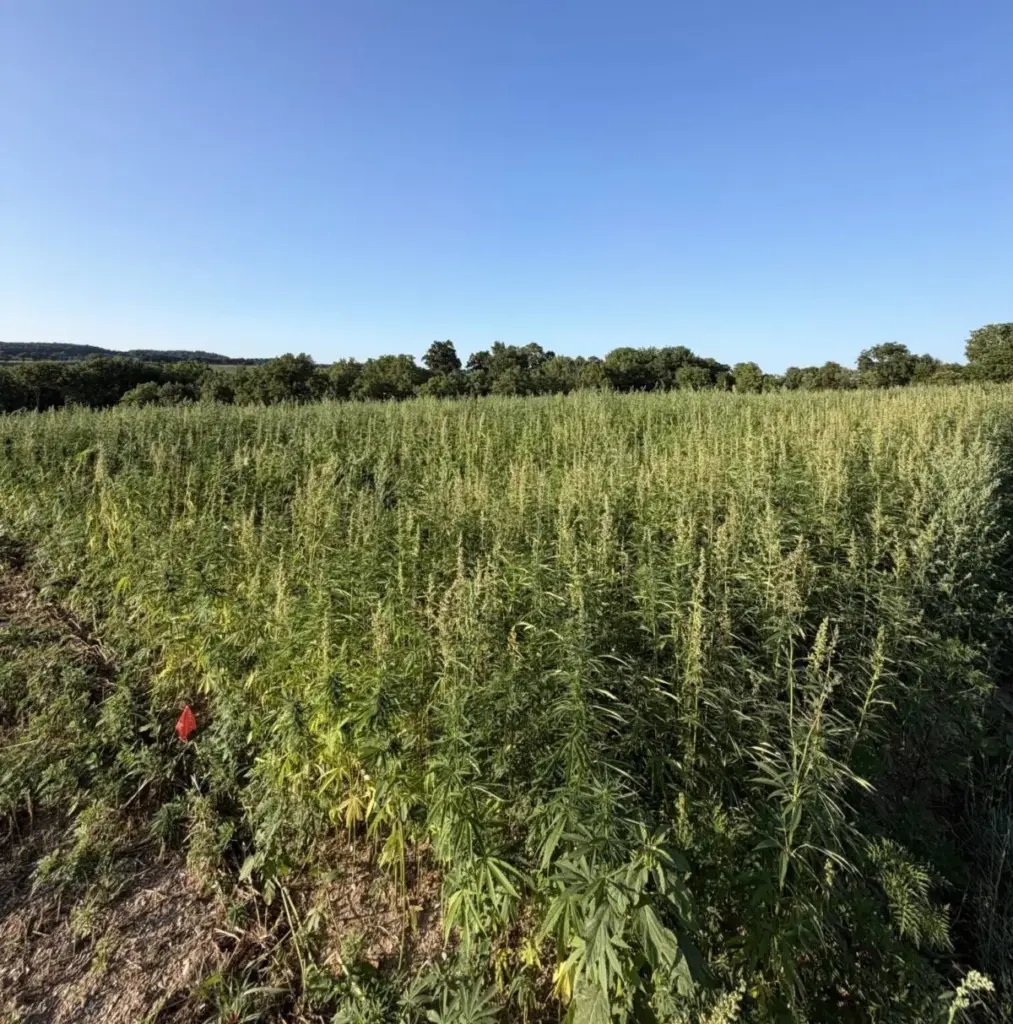
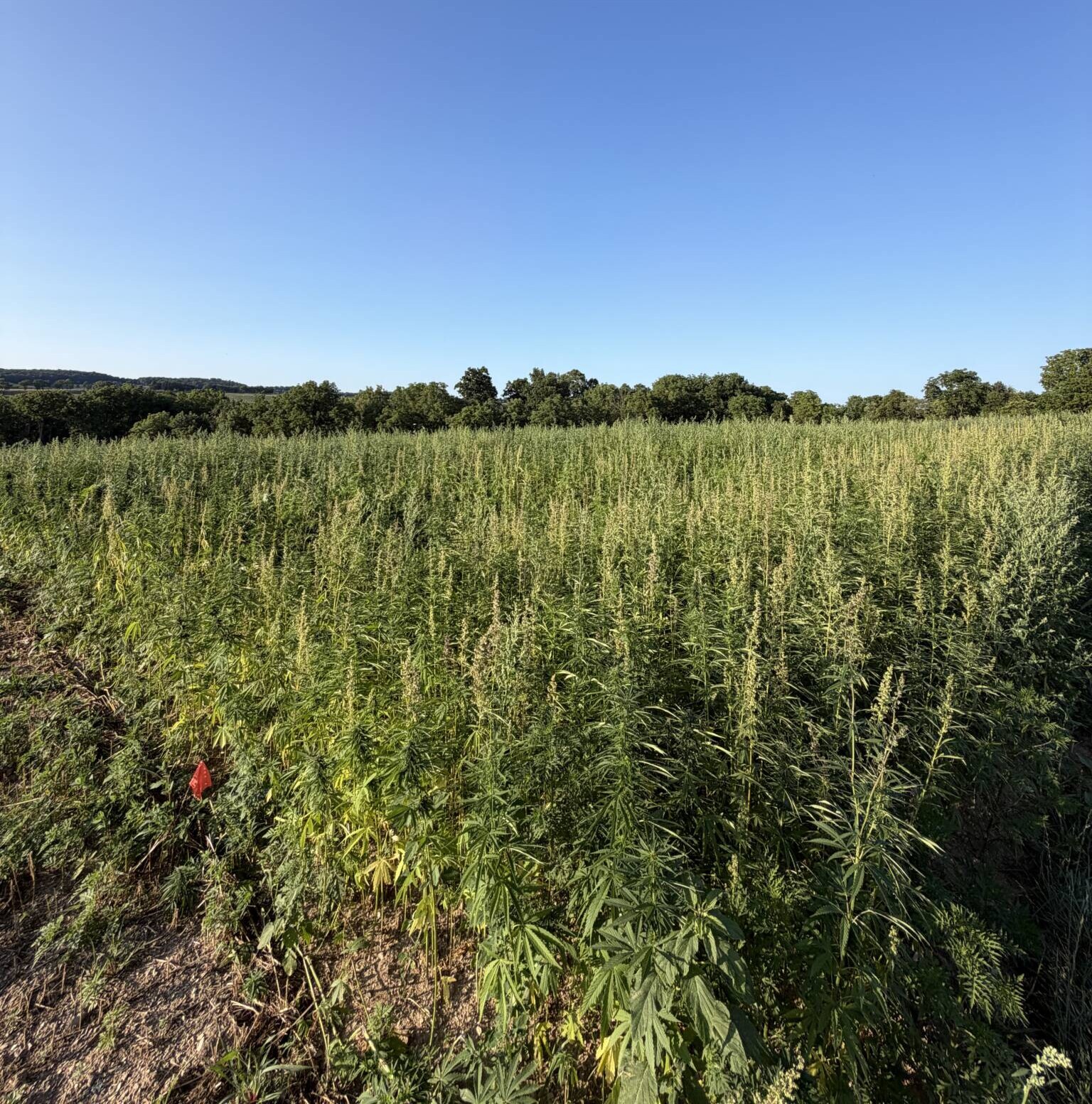
Following the termination of these cover crops at their peak biomass, two specialized industrial hemp grain varieties—CFX-2 and Indigo—were direct-drilled into the plots at a standardized seeding rate of 40 pounds per acre. The experimental design utilizes a randomized complete block layout with four replications for each of the eight treatment combinations, deployed across precise 20-foot by 60-foot plots to ensure statistical validity.
Phase II: Deep Root Analysis and Mid-Stream Evaluations (2025–2026)
As the project progressed into its second and third years, the research team expanded its scope from surface-level agronomy to subterranean ecology. Partnering closely with the USDA-ARS, scientists began tracking the presence and activity of arbuscular mycorrhizal fungi (AMF). These beneficial soil microorganisms form symbiotic relationships with plant roots, extending the plant’s effective surface area to scavenge water and mineral nutrients far more efficiently than roots could manage alone.
While previous studies on fiber hemp varieties conducted by the Rodale Institute revealed strong fungal root colonization rates ranging from 37% to 54%—with varieties like MS 77 showing exceptional potential—the interaction between AMF and grain hemp remained largely unmapped territory. Throughout the 2025 growing season, researchers systematically extracted root and soil samples to evaluate colonization percentages and correlate them with overall plant health.
By July 17, 2026, the research plots reached a critical public milestone. Showcased prominently during the institute’s annual Organic Field Day, the hemp plots served as a living laboratory for roughly 500 visiting farmers, agronomists, and industry stakeholders. Researchers demonstrated real-time management practices, shared preliminary data on cover crop efficacy, and provided hands-on walkthroughs of the trial parameters.
Phase III: Comprehensive Laboratory Analysis and Synthesis (2026–2027)
As the project moves toward its ultimate conclusion, the analytical focus shifts from the field to the laboratory. Harvested hemp grain samples are undergoing exhaustive biochemical assays to quantify:
- Total crude protein percentages and complete amino acid profiles (evaluating all eight essential amino acids).
- Fatty-acid distributions within the seed oil matrix.
- Essential mineral and vitamin concentrations.
- Levels of ergothioneine—a rare, naturally occurring antioxidant amino acid historically linked to cellular protection and neurological health, which has never before been systematically measured in commercial industrial hemp grain.
Supporting Context & Metrics: The Nutritional and Ecological Case for Hemp Grain
The Nutritional Powerhouse
Hemp grain is far more than an agricultural commodity; it is a nutritional powerhouse capable of addressing modern dietary demands for sustainable, nutrient-dense foods. Scientifically, industrial hemp seeds boast an extraordinary biochemical composition:
- Lipids (approx. 25%): Dominated by heart-healthy polyunsaturated fatty acids, including an optimal ratio of omega-6 to omega-3 essential fatty acids.
- Protein (approx. 27%): Exceptionally digestible plant protein containing all eight essential amino acids required by the human body, positioning hemp alongside soy as a complete plant protein source.
- Dietary Fiber (approx. 22%): Primarily concentrated in the seed hull, supporting gastrointestinal health and metabolic regulation.
- Carbohydrates (approx. 20%): Providing complex energy alongside a rich spectrum of minerals (such as magnesium, phosphorus, potassium, and zinc) and fat-soluble vitamins.
Despite this stellar profile, agricultural yields vary wildly across commercial farms, swinging anywhere from a few hundred pounds to well over 1,000 pounds per acre. This variance depends heavily on genetic selection, regional weather patterns, soil fertility, and management practices. Pinpointing how regenerative practices like cover cropping can stabilize and elevate these yields is the central economic imperative of the Rodale-USDA partnership.
Unlocking the Rhizosphere: The Role of Mycorrhizal Fungi
The symbiotic relationship between crops and arbuscular mycorrhizal fungi is a primary driver of agroecosystem resilience. In many mainstream agricultural systems, heavy synthetic fertilizer applications and intense tillage disrupt fungal networks, forcing plants to rely entirely on soluble artificial inputs.
In contrast, organic regenerative systems nurture these native fungal populations. Previous agricultural trials across diverse crops indicate that robust AMF colonization can boost crop yields by roughly 15% on average, while simultaneously enhancing the biosynthesis of beneficial phytochemicals. By utilizing cover crops like triticale and hairy vetch, farmers maintain living roots in the soil year-round, serving as an uninterrupted food source for the soil microbiome. The current study aims to prove that these thriving subterranean ecosystems directly translate into heavier, more nutrient-dense hemp grains without requiring costly synthetic chemical inputs.
Official Statements & Expert Perspectives
The urgency and promise of this research are underscored by the scientists leading the charge on the ground in Kutztown.
"There is a real need for practical guidance on how to grow hemp grain successfully in organic systems," noted Dr. Dinesh Panday, Industrial Hemp Researcher and Soil Scientist at the Rodale Institute.
Dr. Panday emphasizes that modern agricultural producers are searching for economically viable alternatives that do not rely on expensive, carbon-intensive synthetic fertilizers. By rigorously testing accessible management tools like cover crop integration, the research team aims to deliver actionable, science-backed protocols directly to the farming community.
Furthermore, project organizers underscore that the initiative was deliberately structured to uplift specialty crop producers, beginning farmers, and underserved growers seeking entry into the hemp market. By directly engaging an estimated 500 growers and industry stakeholders through field days, published extension articles, and technical workshops, the institute ensures that empirical discoveries do not remain locked in academic journals, but actively transform working farms.
Future Outlook: Building a Resilient Supply Chain From Soil to Plate
As the 2024–2027 project cycle races toward its final evaluations, the implications for the agricultural and food processing sectors are profound. Industrial hemp is rapidly shedding its historical regulatory stigma to claim its rightful place as a cornerstone of sustainable agronomy.
However, the long-term viability of hemp grain as a mainstream food ingredient depends entirely on supply chain predictability, consistent nutritional quality, and ecological sustainability. By demonstrating that cover crops can simultaneously enhance soil structure, protect against climate volatility, boost grain yields, and enrich the nutritional and antioxidant profile of the harvested seed, the Rodale Institute and USDA-ARS are charting a sustainable roadmap for the future.
Ultimately, the overarching objective of this collaborative endeavor remains refreshingly straightforward: empower farmers to harvest more resilient, nutrient-dense hemp grain while actively regenerating the soil resources upon which all agriculture depends. As these research findings are published and disseminated through regional and global scientific conferences, they will lay the groundwork for a healthier, more transparent supply chain—delivering tangible benefits all the way from the Pennsylvania topsoil to the food on consumer plates.



