As the global imperative to transition toward a low-carbon economy intensifies, the financial hurdles associated with green infrastructure can often feel insurmountable. Mega-projects requiring billions in capital dominate headlines, creating a narrative that the energy transition is the exclusive domain of federal budgets, multinational corporations, and institutional venture capitalists. However, a quiet revolution is taking place across Canada—one that proves the most resilient, localized solutions may be much closer to home than we think.
From solar arrays in rural Ontario to net-zero affordable housing in British Columbia, community-owned renewable energy initiatives are redefining how Canadians engage with climate action. Through the strategic use of community bonds, renewable energy cooperatives, and grassroots financing, everyday citizens are pooling their resources to construct the physical building blocks of a sustainable future.
This model of decentralized energy finance not only circumvents traditional, risk-averse banking roadblocks but also fosters deep community engagement, ensuring that the economic dividends of green energy remain in the hands of the people. While challenges and financial growing pains exist—as demonstrated by some cooperative restructuring—the overarching movement points to a powerful paradigm shift. Grassroots funding is no longer just a supplementary alternative to traditional capital; it is a vital frontier in the democratization of Canada’s energy grid.
Detailed Chronology and Evolution of Canadian Community Power
The journey of community-owned green energy in Canada has evolved over the past two decades, transforming from a radical concept into a proven, replicable model of infrastructure development.
The Pioneeering Era: Early 2000s
The movement found its Canadian footing in the early 2000s with the launch of WindShare in Toronto. Co-owned by 825 local residents in partnership with Toronto Hydro, WindShare erected a commercial wind turbine, marking the first time everyday Canadians could directly own a stake in clean energy generation. This milestone shattered the psychological barrier that renewable energy projects were solely the purview of massive utilities.
Growth and Diversification: 2010s
Building on the success of early wind and solar initiatives, the decade of the 2010s saw community power expand both geographically and technologically.
2010: The Ontario Renewable Energy Cooperative (OREC) was founded, eventually securing partial ownership of two massive wind turbines on the shores of Lake Huron. These turbines generate roughly 3.3 million kWh annually—enough electricity to power more than 400 homes every year.
The Solar Boom: Organizations like SolarShare emerged to become Canada’s leading renewable-energy cooperative, developing assets such as the Wintergreen solar array outside Kingston, Ontario, which successfully generates clean power for 100 homes. Concurrently, urban initiatives like Regina’s Wascana cooperative installed 400 solar panels, explicitly designed to grant apartment-dwellers—who are traditionally locked out of the solar market due to lack of roof access—collective ownership.
Expanding Horizons: The model quickly outgrew pure electricity generation. ZooShare innovated by turning organic animal and food waste into baseload electricity for Ontario’s grid. Meanwhile, initiatives like Faithfully Green applied the cooperative model to sacred spaces, launching a revolving fund through community bonds to help churches, temples, and mosques finance critical green energy retrofits.
Modern Innovation: 2020s to Present
In recent years, community financing has transcended power generation to encompass sustainable infrastructure and housing.
EcoCharge launched a groundbreaking electric vehicle (3EV) charging community bond campaign, enabling members to collectively own approximately 100 charging stations spread across Quebec and New Brunswick.
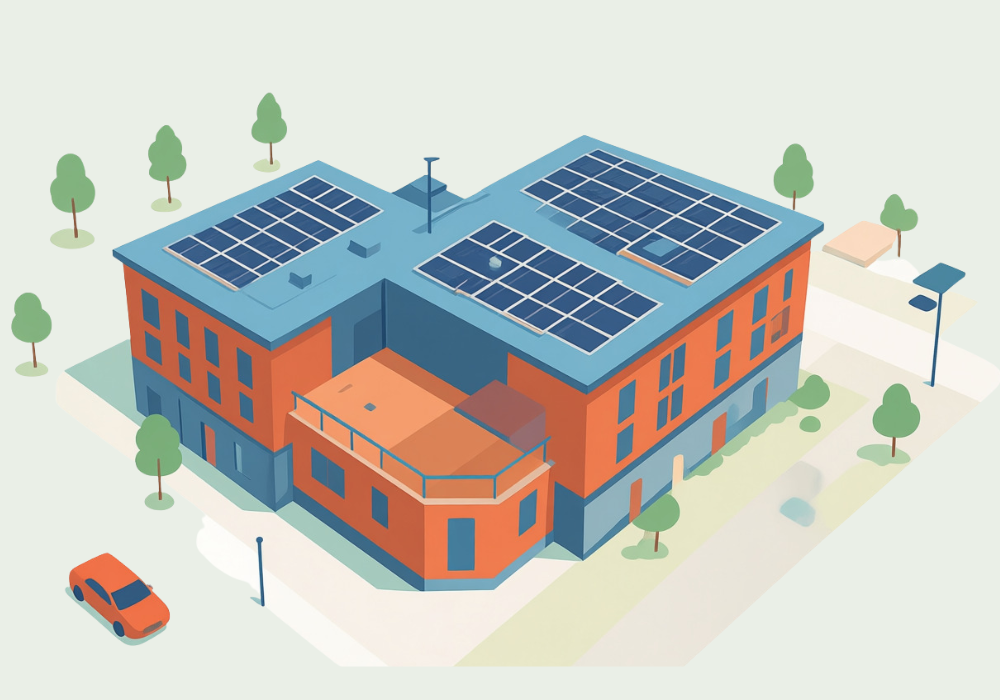
In Western Canada, Propolis utilized community bonds to raise $1 million from roughly 100 investors, successfully constructing a 53-unit affordable and net-zero apartment building in Kamloops, British Columbia. This proved that grassroots financing could simultaneously tackle the housing crisis and carbon reduction goals.
Supporting Context & Metrics: The Mechanics of Community Bonds
To fully understand the potential and the limitations of this movement, one must examine the financial vehicle driving it: the community bond.
What is a Community Bond?
A community bond is a fixed-income retail investment product issued by a non-profit, charity, or cooperative to finance a specific local project with a clear environmental or social benefit. Unlike municipal or corporate bonds traded on public stock exchanges, community bonds are localized, direct investments.
Key Metrics and Economic Impact
Democratized Capital Pools: Projects like Propolis and Wascana typically mobilize pools of roughly 100 to 800 investors per project, proving that substantial capital can be raised without relying on Wall Street or Bay Street institutions.
Scale of Generation: OREC’s Lake Huron wind assets alone demonstrate high-yield efficiency at a regional level, churning out 3.3 million kWh annually. At the smaller end, localized arrays like Wintergreen service hyper-local needs, powering approximately 100 residential properties.
The Risk-Reward Balance: While community bonds offer citizens a tangible way to align their savings portfolio with their environmental values, they are not without financial complexities. For instance, ZooShare—despite its innovative biogas model backed by 800 cooperative members—voted in 2023 to temporarily halt interest payments and restructure its bond repayments, committing to return principal investments as cash flow permits. This highlights the operational and market vulnerabilities that early-stage green cooperatives can face when navigating shifting regulatory and economic landscapes.
Official Statements and Perspectives
The rise of decentralized, community-funded green energy has drawn commentary from financial analysts, cooperative leaders, and urban planners alike.
Industry advocates emphasize that community bonds bridge a crucial financing gap. Traditional commercial lenders often view early-stage renewable or net-zero housing projects as high-risk ventures due to unfamiliar technologies or unproven revenue streams. By turning to the community, project developers tap into an investor base motivated by social and environmental returns alongside financial ones.
"When a citizen owns a share of a local solar array, a wind turbine, or an affordable net-zero building, their relationship with energy fundamentally changes," notes a senior sustainable finance researcher. "They stop viewing climate action as a top-down government mandate and start seeing it as a tangible, community-owned asset that they helped build."
At the same time, cooperative governance experts stress transparency and realistic financial forecasting. The restructuring events experienced by initiatives like ZooShare serve as a cautionary tale for the sector, underscoring the necessity of robust risk management, adaptable business models, and clear communication between project developers and retail bondholders.
Future Outlook: The Road Ahead for Grassroots Green Energy
As Canada charts its course toward net-zero carbon emissions by 2050, the role of community-scale energy projects is poised for critical evolution. While utility-scale solar farms and massive hydroelectric projects will remain the backbone of the national grid, they cannot fulfill the localized, decentralized needs of modern communities on their own.
Key Trends Shaping the Future:
Integration with Smart Grids: Future community energy projects will likely leverage advanced microgrid technologies, allowing localized solar and wind assets—coupled with community-owned battery storage—to enhance grid resilience against extreme weather events.
Expansion of Sustainable Transport and Housing: Following the trailblazing success of EcoCharge and Propolis, expect to see a surge in multi-family net-zero housing developments and regional EV infrastructure funded through localized debt instruments.
Regulatory and Institutional Support: For the community bond market to scale from a niche alternative to a mainstream pillar of the green transition, provincial regulators will need to streamline securities exemptions while maintaining investor protection standards. Furthermore, pairing community bonds with federal green infrastructure grants could significantly lower the cost of capital.
Ultimately, the green transition is as much a social challenge as it is an engineering one. By putting the tools of financing directly into the hands of citizens—whether through a solar cooperative in Kingston, an EV network spanning the Maritimes, or a net-zero housing project in Kamloops—communities are demonstrating that the power to build a low-carbon future rests right in their own backyards.