

Executive Overview
For generations, humanity has treated the global ocean through a lens of infinite extraction and bottomless assimilation. We have regarded the marine environment as an inexhaustible larder capable of withstanding unending industrial harvests, while simultaneously serving as a convenient, out-of-sight sink for our industrial, municipal, and plastic waste. Today, the cumulative toll of this historic myopia is laid bare across the globe’s coastlines, coral reefs, and pelagic ecosystems.
Yet, this narrative of degradation is not the entirety of the story. Beneath the sobering statistics of systemic collapse lies a powerful, countervailing truth: the ocean possesses an astonishing, almost miraculous capacity for self-repair. When humanity steps back, halts destructive practices, and grants marine ecosystems the breathing room they require, nature responds with swift and undeniable resilience.
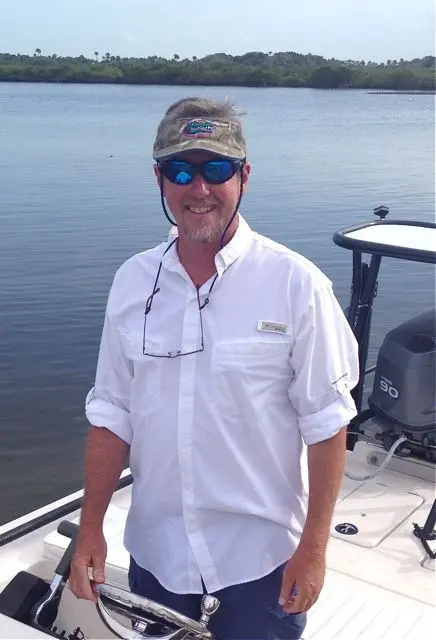
This comprehensive report examines the shifting landscape of our marine ecosystems through the firsthand lens of a lifelong ocean observer, Bob Wallace. Having spent decades traversing, studying, and immersing himself in the waters of the American Southeast, the Caribbean, and Southeast Asia, Wallace’s reflections provide a deeply personal baseline against which the modern ecological crisis can be measured. By pairing these generational observations with the structural solutions offered by pioneering marine conservation organizations like Dr. Sylvia Earle’s Mission Blue—and its signature "Hope Spots" initiative—this article explores how rigorous science, targeted protection, and public awareness can halt the unraveling of our blue planet and restore ecological balance before it is too late.
Detailed Chronology: A Lifetime Witnessing the Sea
The Golden Age of Discovery: Early Encounters on Florida’s Coast
The trajectory of a conservationist is rarely born in a sterile laboratory; more often, it is forged in the shallows of childhood memory, salt in the air, and sand beneath bare feet. For Wallace, the relationship with the marine world began in the mid-20th century at a modest family summer house situated on a beach along Florida’s vibrant east coast.
This era represented a different world—one where the coastal fringe of the United States was less heavily urbanized, and the ocean’s bounty felt immediate and boundless. Days were defined by the rhythm of the tides. Long hours were spent swimming, surfing, and casting lines alongside his father in pursuit of coastal gamefish. These were not merely recreational outings; they were immersive marine biology field studies conducted under the guise of play.
Every walk along the high-tide line yielded natural treasures: intricate seashells, the frantic scuttle of shore crabs destined for the evening pot, and the quiet, awe-inspiring spectacle of sea turtles laboring ashore under the cover of moonlight to excavate their nests and deposit leathery eggs. Perhaps most formative were the hours spent scooping clumps of Sargassum weed—the floating brown macroalgae islands of the Atlantic—and placing them into buckets of seawater. Within those miniature golden jungles swam an entire micro-universe: embryonic filefish, tiny juvenile crabs, translucent shrimp, and larval predators that revealed the breathtaking complexity of marine biodiversity to a young, impressionable mind.
Academic Immersion and the Influence of Giants
This intimate, tactile fascination was soon reinforced by academic rigor. Fortune placed the young Wallace in the orbit of marine science royalty. His father’s closest friend served as the head of the marine biology department at the University of Florida, granting the boy an unorthodox, backstage pass to the upper echelons of academic oceanography long before he entered college.
Surrounded by scholars who treated the sea not just as a resource, but as a living system worthy of profound reverence, Wallace naturally gravitated toward a formal education in zoology at the University of Florida. It was during these formative university years that he crossed paths with the legendary Dr. Archie Carr, the pioneering ecologist and herpetologist whose foundational research on sea turtles revolutionized marine conservation biology.
Interacting with figures like Carr cemented a fundamental realization: the ocean was not merely a backdrop to human life, but a dynamic, interconnected life-support system. Over the decades that followed, this lifelong immersion would allow Wallace to occupy a rare and sobering vantage point—that of a generational witness to the rapid, systemic unraveling of the marine environment.
Supporting Context & Metrics: Witnessing What We Have Lost
The Local Unraveling: Florida Keys and Mosquito Lagoon
To understand the magnitude of contemporary marine degradation, one must listen to those who remember what the water looked like before industrial tourism, coastal overdevelopment, and agricultural runoff fundamentally altered the chemistry and clarity of the shallows.
Wallace remembers the Florida Keys when the shallow reefs were dominated by majestic, sprawling colonies of staghorn coral (Acropora cervicornis), creating complex thickets that sheltered myriad reef fish, lobsters, and rays. Today, those same reefs have been reduced in many areas to algal-smothered skeletons, decimated by rising sea temperatures, disease outbreaks, and chronic water quality degradation.
Similarly, the waters of Mosquito Lagoon, situated near Cape Canaveral on Florida’s east coast, live on in memory as crystal-clear aquatic gardens. In decades past, lush meadows of seagrass swayed beneath the surface, filtering the water and providing essential nursery grounds for spotted seatseatrout, redfish, and manatees. Over the years, repeated algal blooms—fueled by nitrogen and phosphorus loading from residential fertilizers and septic systems—have repeatedly plunged the lagoon into ecological crisis, wiping out vast tracts of seagrass and leading to devastating fish kills.
Offshore fishing has undergone an equally dramatic metamorphosis. Deep-sea excursions targeting pelagic predators such as king mackerel, yellowfin tuna, mahi-mahi, and large grouper yield a fraction of the biomass and individual size that were routine during Wallace’s youth. The apex predators that once signaled a robust, fully functioning marine food web have been systematically fished down the marine food web. This phenomenon, well-documented by fisheries scientists worldwide, has played out with identical grief in the crystal-clear waters of the Bahamas, where historical bonefish flats and reef tracts face unprecedented anthropogenic pressures.
A Global Scale of Degradation
The ecological tragedy observed in the American Southeast is not an isolated anomaly; it is the diagnostic symptom of a planetary crisis. Recent expeditions underscore the ubiquity of this decline:
- Indonesia’s Plastic Crisis: A three-month sojourn through the sprawling archipelagos of Indonesia revealed a staggering reality. The sheer volume of single-use plastics—choking pristine coral atolls, washing up on remote beaches, and suspending in the water column like an artificial snowstorm—boggles the human imagination. This visual pollution is a direct indicator of inadequate global waste management infrastructures colliding with relentless consumer packaging trends.
- The Grenadines: A sailing voyage through the Windward Islands of the Caribbean exposed another common pathology of modern marine stress. At popular anchorages, once-vibrant coral ecosystems were found smothered in dense carpets of macroalgae, driven by untreated greywater and sewage discharge from recreational vessels and coastal settlements. Meanwhile, local fishers—facing the depletion of larger, commercially viable fish stocks—were observed offering tiny, juvenile parrotfish and snapper for sale, capturing individuals that had never had the chance to reach sexual maturity or contribute to the spawning biomass.
- Global Fishery Collapses: The devastation is not confined to reef systems. Industrial scale extraction has systematically battered pelagic and benthic fisheries globally. Historic cod stocks in the North Atlantic, bluefin tuna populations across the Mediterranean and Pacific, salmon runs along the Pacific Rim, and king crab fisheries in frigid northern waters have all experienced catastrophic population crashes. The underlying driver remains stubbornly consistent: humanity’s relentless technological capacity to harvest wild marine life outpaces the biological replacement rate, continuing heedlessly until commercial extinction is reached.
Official Statements and Conservation Insights: The Power of Recovery
Nature’s Resilience: Proof That Conservation Works
Despite the heavy catalog of loss, Wallace’s decades of observation do not culminate in fatalism. Instead, they pivot toward a profound and empirically supported optimism. There is a second, brighter side to the marine ledger—one that proves the ocean is not a fragile artifact, but a dynamic, resilient living system equipped with phenomenal powers of self-healing.
When humans intervene with intelligent, science-based management policies, the recovery of marine life can be remarkably swift. Wallace points to clear regulatory victories in his home state of Florida as textbook examples. Following the implementation of strict restrictions on commercial gill-net fishing for striped mullet—a practice that indiscriminately swept up millions of juvenile gamefish alongside the target species—the ecological response was immediate.
Populations of prized sportfish that depend on mullet as a critical forage base, including redfish (Sciaenops ocellatus), common snook (Centropomus undecimalis), and tarpon (Megalops atlanticus), staged dramatic rebounds. In tandem with the recovery of these fish stocks, avian predators such as ospreys and brown pelicans—which rely on the same forage fish webs—saw their breeding success rates soar.
Similar success stories have played out across different geographies and species lines:
- Red Snapper Management: Following the enforcement of strict catch limits, seasonal closures, and allocation reforms in the Gulf of Mexico, red snapper populations have rebounded significantly, proving that science-based quotas work when enforced.
- Cetacean Comebacks: Baleen whales, once brought to the precipice of biological annihilation by commercial whaling fleets in the 19th and 20th centuries, are staging inspiring comebacks in many global sanctuaries now that international moratoriums and protections are in place.
These victories point to a singular, undeniable biological reality: when we give nature a chance, nature responds. This empirical truth forms the philosophical bedrock of modern marine conservation. It underscores why establishing protected marine environments is not a luxury, but an absolute imperative for human survival.
Mission Blue and the Promise of Hope Spots
To scale these localized victories to a planetary level requires strategic vision, institutional muscle, and uncompromising advocacy. This is precisely the void filled by Dr. Sylvia Earle and her global marine conservation initiative, Mission Blue.
Dr. Earle, legendary oceanographer, author, and former Chief Scientist of NOAA, has long championed the concept that the ocean is the blue heart of our planet—and that its health is non-negotiable. Mission Blue operationalizes this vision through the establishment of Hope Spots: geographically specific areas of the ocean that are scientifically identified as being critical to the health of marine biodiversity, unique ecological communities, or culturally significant marine resources.
Unlike traditional marine protected areas that often exist merely on paper, Hope Spots are designed to build active, grassroots public support, marshal scientific resources, and engage local stakeholders to secure legal protection. To Wallace, Mission Blue represents one of the most potent organizational forces on Earth because it successfully bridges the gap between hard scientific data, visionary conservation strategy, public advocacy, and community-level engagement.
However, Dr. Earle and conservationists worldwide emphasize that designating a boundary on a map is only half the battle. Protecting these ecological sanctuaries requires an accompanying cultural shift—one that helps ordinary citizens understand precisely why these submerged tracts matter to their daily lives on land.
Future Outlook: Awareness, Education, and the Power of the Individual
Breaking Through the Modern Noise
As human populations become increasingly urbanized, direct, experiential contact with the natural world diminishes. For millions of people living far from the coast, the ocean is reduced to an abstraction—a vacation backdrop, a distant source of seafood, or a cinematic image on a screen.
Compounding this physical and psychological detachment is the modern information ecosystem. Humanity is currently drowning in an endless, hyper-accelerated stream of digital media, targeted advertisements, algorithmic entertainment, and sensationalized news feeds. In this relentless battle for human attention, ecological degradation and environmental stewardship are too often crowded out, treated as secondary concerns or niche interests.
This is a dangerous miscalculation. Conservation cannot remain an optional sideline in the modern conversation; it must become a central pillar of global discourse. People must be educated not merely about the grim reality of ocean decline, but about tangible, actionable solutions that empower them to participate in the repair of marine life.
The Ripple Effect of Individual Agency
It is easy for the individual citizen to look at the staggering scale of marine degradation—macro-plastic gyres, industrial overfishing, ocean acidification, and coral bleaching events—and succumb to paralyzing eco-anxiety. The problems appear too vast, too systemic for any single person to influence.
Yet history demonstrates that profound global transformations always begin with individual agency. Dr. Sylvia Earle herself stands as a living testament to the monumental impact that a single dedicated human being can have on the collective consciousness of the world. Through tireless exploration, eloquent communication, and unwavering moral clarity, she has fundamentally shifted how humanity views the deep sea.
Every single person possesses that same capacity for influence. As Wallace eloquently notes, we are all part of the greater school of fish. Change does not require monumental institutional resources on day one; it begins with local awareness, introspection, and a fundamental shift in personal perception.
The path forward relies on an interconnected network of informed individuals who take responsibility for educating those within their immediate spheres of influence:
- The Family Unit: Introducing children to the wonders of local aquatic ecosystems, teaching them to respect tide pools, and fostering a sense of innate biophilia.
- Social Circles and Communities: Engaging friends, neighbors, and colleagues in discussions about sustainable seafood choices, plastic reduction, and coastal watershed health.
- Civic Engagement: Supporting science-based marine policies, voting for candidates who prioritize environmental protection, and amplifying the work of grassroots organizations like Mission Blue.
Conclusion: A Shared Horizon
The trajectory of the global ocean over the coming century remains unwritten. It will be determined not by the immutable laws of ecological collapse, but by the choices humanity makes today.
By honoring the wisdom of those who have witnessed the sea across generations—listening to their warnings of loss while embracing their proof of resilience—we can chart a new course. Through targeted conservation frameworks like Hope Spots, uncompromising scientific advocacy, and a grassroots awakening of public consciousness, we possess the tools necessary to restore balance to the blue heart of our planet. The ocean has shown us time and again that it is ready to heal. The question is no longer whether nature can recover, but whether humanity has the collective will to let it.



