In response to mounting scientific evidence regarding the spread of avian diseases at residential feeding stations, the Royal Society for the Protection of Birds (RSPB) issued critical updated guidance earlier this year. Centered around the core ethos "Feed Seasonally. Feed Safely," the directive aims to curtail the transmission of trichomonosis—a highly contagious, often fatal parasite passed easily between birds congregating in high numbers around artificial food sources.
While supplementary feeding has long been a staple of backyard wildlife conservation across the United Kingdom, researchers have underscored the hidden dangers of poorly managed, year-round feeding stations. The RSPB’s modern framework pivots away from constant human intervention toward a more sustainable, ecologically balanced approach. By restricting heavy supplementary feeding during the spring and summer months and emphasizing rigorous hygiene practices year-round, conservationists hope to curb outbreaks among vulnerable populations of finches, tits, and sparrows.
Crucially, this shift does not mean turning our backs on garden wildlife. Instead, the RSPB is aggressively encouraging property owners to cultivate natural food webs by integrating wildlife-friendly flora into their landscapes. By shifting from plastic tube feeders to living, breathing borders packed with nectar-rich flowers, seed-bearing grasses, berry-laden shrubs, and indigenous trees, gardeners can provide a safer, more resilient food supply. To help enthusiasts transition to this sustainable paradigm, we have curated a comprehensive guide to 26 of the best plants for feeding garden birds, bridging the gap between horticultural beauty and crucial avian conservation.
Detailed Chronology and Scientific Context
The path toward the RSPB’s updated guidance is rooted in decades of ornithological observation and emerging epidemiological data regarding wild bird health.
The Rise of Trichomonosis
Historically, trichomonosis was primarily known as a disease affecting pigeons and doves. However, in the mid-2000s, researchers documented a dramatic host-shift as the parasite Trichomonas gallinae jumped to passerine species, most notably greenfinches and chaffinches. The disease causes lesions in the upper digestive tract, making it difficult or impossible for infected birds to swallow. Consequently, high-density feeding stations—where birds crowd tightly together and food or water can become contaminated with saliva and regurgitated matter—became ground zero for transmission.
Throughout the late 2000s and 2010s, British greenfinch populations experienced catastrophic declines directly linked to the spread of this pathogen. Conservation scientists continually monitored garden feeding habits, realizing that unhygienic feeders and continuous, unrestricted high-fat feeding were inadvertently accelerating contagion.
The Evolution of RSPB Policy
Recognizing that traditional advice to "feed the birds all year round" required nuance, the RSPB synthesized ongoing epidemiological studies to draft its revised protocols. Released earlier this year, the updated strategy dismantles blanket feeding habits in favor of targeted interventions:
Seasonal Restraint: Acknowledging that natural food peaks between May and October, the guidance calls for a drastic reduction in supplementary suet, fat balls, and mealworms during these warmer months.
Strict Biosecurity: For periods when feeding is recommended (such as winter), the protocol establishes uncompromising hygiene standards—mandating protective equipment, meticulous cleaning routines, and the complete elimination of flat-surface tables where fecal contamination is rampant.
The Botanical Alternative: The final pillar of the strategy emphasizes natural foraging habitats. Rather than relying solely on hanging feeders, the RSPB advocates for garden borders designed to supply organic seeds, berries, and insect prey throughout the biological calendar.
Supporting Context & Metrics: The "Feed Seasonally, Feed Safely" Framework
To understand the mechanics of the RSPB’s initiative, it is vital to examine its two core pillars in detail, alongside the quantitative realities of garden bird maintenance.
1. Feed Seasonally
Between 1 May and 31 October, the British countryside and suburban gardens experience a natural bounty. Invertebrates—caterpillars, aphids, flies, and beetles—abound, providing the high-protein diet essential for adult birds rearing hungry chicks.
The Danger: Offering large quantities of high-calorie suet, fat balls, or mealworms during this window can lead parent birds to feed an unbalanced diet to nestlings, while also drawing unnaturally large concentrations of birds to localized feeding spots.
The Prescription: Restrict supplementary suet, fat balls, and mealworms to token amounts between May and October. Save peanuts and high-energy seed mixes for the leaner months of late autumn and winter (1 November to 30 April), when natural foraging is severely depleted.
2. Feed Safely
When artificial feeding is appropriate, hygiene and layout are paramount:
Eradicate Flat Surfaces: Avoid flat-surface feeders and traditional bird tables. These structures allow birds to walk directly through their own waste, exponentially increasing the risk of pathogen transmission.
Relocation and Clearing: Move hanging feeders around the garden regularly to prevent the accumulation of toxic layers of spilt food and droppings underneath. Clear away all waste food promptly.
Strict Hygiene Protocols: When cleaning feeders, treat the task with clinical seriousness. Wear dedicated rubber gloves and protective clothing; wash equipment strictly outdoors; and restrict cleaning implements—such as long-handled brushes—solely to this duty. Conclude by washing hands and forearms thoroughly with antibacterial soap.
Official Statements
Conservation leaders have been vocal about the necessity of this paradigm shift. Dr. Anne Harrison, an avian epidemiologist consulting on garden wildlife health, noted:
"For too long, we viewed garden feeding through a lens of human benevolence without fully accounting for the ecological consequences. High-density feeding stations can act as epidemiological amplifiers. By moving toward a seasonal feeding model and heavily investing in native and wildlife-friendly planting, we take the pressure off artificial hubs and let nature do what it does best: provide a varied, hygienic, and self-sustaining larder."
An RSPB spokesperson further emphasized the holistic vision of the campaign:
"Our ‘Feed Seasonally. Feed Safely’ advice is not about abandoning our garden birds; it’s about protecting them from invisible threats like trichomonosis. By coupling responsible feeding with wildlife-friendly garden design—incorporating everything from towering sunflowers to native hedges—we can transform every backyard into a safe, thriving sanctuary for British wildlife."
The 26 Best Plants for Feeding Garden Birds
To help you put the RSPB’s natural feeding recommendations into practice, here is our curated directory of 26 exceptional plants that combine horticultural elegance with outstanding wildlife value.
Details: Dwarf varieties like ‘Choco Sun’ fit neatly at the front of borders without staking. They provide dazzling summer displays before their seedheads mature into an autumn feast for blue tits and greenfinches. Note: Ensure you select pollen-bearing varieties rather than sterile, pollenless cultivars.
Details: Standing 90cm tall, this arching grass features deep purple linear leaves and feathery summer spikes that contrast brilliantly with hot-toned perennials. Once spent, seed-eating birds descend in droves to harvest the grain.
Details: Airy annuals offering blue, pink, and purple highlights. Compact cultivars like ‘Polka Dot Mixed’ thrive in containers. Their blossoms attract pollinating insects—a vital food source for brooding birds—while goldfinches favor their mature seeds.
Details: A statuesque biennial with white or lavender bristly flowerheads. Outstanding for pollinators in summer, they transition into striking winter silhouettes that invite goldfinches to extract tiny seeds using their specialized, pointed beaks.
Details: Boasting thistle-like purple blooms that act as magnets for bumblebees and beneficial insects. Insectivorous birds like dunnocks frequent the foliage, while goldfinches relish the half-ripe seeds.
Details: A grassland stalwart producing delicate blue flower heads on 1.5m stems. Thriving in wildlife meadows, it hosts moth and butterfly caterpillars before its seedheads are plundered by sparrows and finches.
Details: Essential for late-season color when other flowers fade. Their white, blue, pink, and purple daisy-like blooms support late pollinators and yield abundant seeds for goldfinches.
Details: A low-growing, highly adaptable wildflower featuring violet flower clusters from June to October. It thrives in sun or partial shade, offering nectar for insects and seeds for house sparrows and dunnocks.
Details: Delivers reliable golden-yellow color from July to October. The large blooms feature prominent dark brown centers that house easily accessible seeds for finches and sparrows.
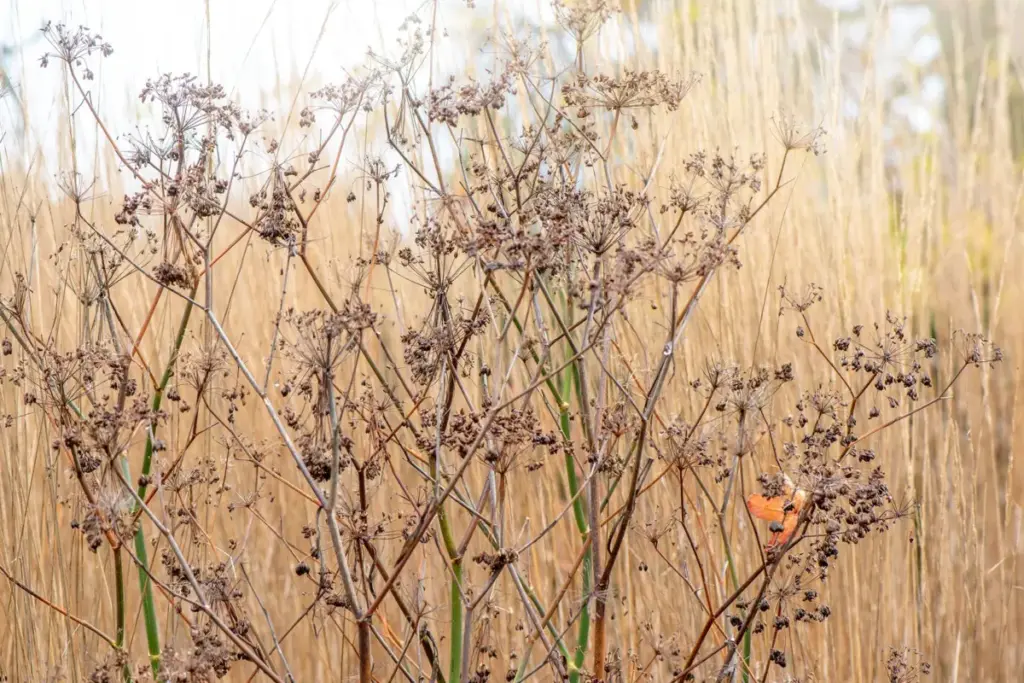
Details: With its towering stature and feathery foliage, fennel is a staple for the back of mixed borders. It routinely attracts aphids, drawing in insectivores like blue tits, while its umbels produce rich seed crops.
Details: Elegant, rigid stems topped with purple clusters. In autumn, sparrows and finches perform acrobatic feats, bouncing along the stalks to reach the ripening seeds.
Details: A drought-resistant, airy plant featuring pale cornflower-blue flowers that support mid-summer pollinators, followed by seed heads adored by finches.
Details: An exceptional wildlife shrub offering spring nectar for insects, which attracts insectivorous birds, followed by heavy clusters of red and orange berries devoured by thrushes, blackbirds, and winter migrants like redwings.
Details: Native honeysuckle hosts dozens of moth caterpillars that feed developing bird chicks. Its sweet-scented nighttime blooms give way to red berries relished by robins, blackcaps, and thrushes.
Details: A powerhouse for biodiversity. Late-season flowers swarm with hoverflies and moths, supplying insectivores, while calorie-dense winter berries sustain thrushes and wood pigeons when other food sources vanish.
Details: A hemiparasitic shrub historically linked to mist thrushes, which zealously defend fruit-bearing clumps. Overwintering blackcaps also rely heavily on its white berries.
Details: Beyond its summer nectar value for pollinators, leaving a few non-sterile plants unpruned to go to seed provides a vital late-season food source for sparrows and finches.
Details: Fragrant white spring flowers draw insects, while autumn elderberry clusters fuel starlings, song thrushes, and migrating warblers preparing for long journeys.
Details: Features lace-cap white flowers in spring and translucent red berries in autumn. Tip: Avoid sterile cultivars like ‘Roseum’ to ensure your shrubs produce berries for bullfinches and thrushes.
Details: Bright yellow winter flowers bridge the "hungry gap" for nectar-seeking tits, followed by blue-black berries that provide precisely timed nourishment for juvenile blackbirds.
Details: A cornerstone of British ecology, supporting over 500 invertebrate species. Its autumn haws feed fieldfares, redwings, and finches, making it an indispensable garden tree.
Details: Offers seasonal support: caterpillars and aphids in spring, followed by small fruits favored by waxwings and thrushes, alongside spring buds consumed by amber-listed bullfinches.
Details: Glossy winter berries sustain thrushes. Note: Plant female varieties like ‘Argentea Marginata’ alongside a male pollinator such as ‘Silver Queen’ to guarantee a berry crop.
Details: An aesthetically stunning tree hosting rich invertebrate populations. Goldfinches and siskins harvest seeds from the winter catkins, while woodpeckers excavate nesting cavities in mature trunks.
Details: Displays fiery autumn foliage and protein-rich insect life. Rowan berries are a prime favorite of waxwings—which can consume twice their body weight daily—alongside starlings and fieldfares. Compact cultivars like ‘Sheerwater Seedling’ suit smaller plots.
Future Outlook
As urban development continues to squeeze natural habitats, residential gardens represent an increasingly vital ecological network across the UK. The RSPB’s modernized guidance signals a mature, scientifically grounded evolution in how we interact with backyard wildlife.
Looking forward, the success of initiatives like "Feed Seasonally. Feed Safely" will depend on widespread public adoption. By shifting away from unhygienic, year-round artificial feeding stations and embracing biodiverse, plant-led landscaping, gardeners can break the cycle of disease transmission. Planting resilient native trees, nectar-heavy perennials, and seed-bearing grasses not only restores natural foraging behaviors but transforms our outdoor spaces into self-sustaining ecosystems capable of supporting vibrant avian populations for generations to come.