

Executive Overview
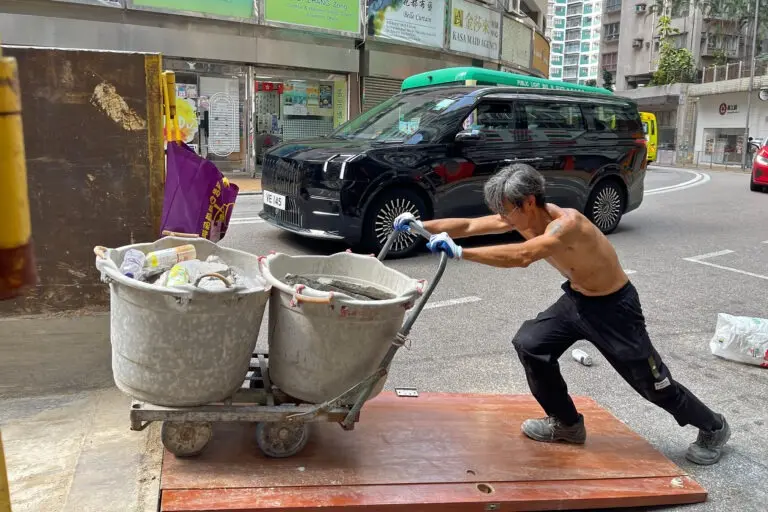
As global temperatures continue their relentless upward march, urban centers are experiencing the brunt of severe climate anomalies. Among them, Hong Kong stands out as a stark example of a hyper-dense, developed metropolis grappling with unprecedented heatwaves. On a blistering mid-September morning, 74-year-old Wong Ping-kuong and his colleagues hurried to sanitize an outdoor staircase and elevator landing. It was only mid-morning, yet the mercury had already climbed to 31°Celsius (87.8°Fahrenheit).
For Wong, who has spent half a century laboring under the open sky—first in construction and later as an outdoor cleaner—the evolution of Hong Kong’s climate is not a matter of abstract data points, but a physical reality written in sweat. "It’s gotten hotter," Wong reflected. "Before, I didn’t sweat; now my back is often covered with sweat."
While Wong and his team count themselves fortunate to have access to an air-conditioned vehicle during extreme peaks, millions of other urban laborers across the special administrative region enjoy no such reprieve. Heatstroke can set in within a devastating 10 to 15 minutes of exposure to high thermal stress. Outdoor workers face mounting, life-threatening risks: dizziness, severe headaches, nausea, acute heatstroke, and the rapid exacerbation of pre-existing chronic conditions such as cardiovascular and respiratory illnesses.
Despite these acute hazards—and in stark contrast to other developed global economies—Hong Kong lacks legally binding mandates requiring work stoppages or mandatory rest breaks during extreme heat events. Caught between compounding climate realities and a toothless regulatory framework, vulnerable workers are forced into a rigid binary: risk their lives in the stifling heat or risk their livelihoods.
Detailed Chronology: A Summer of Broken Records
The environmental pressures facing Hong Kong are historically unprecedented. According to official figures from the Hong Kong Observatory (HKO), the city is warming at a rate of nearly half a degree Celsius per decade. Summer months have grown progressively longer and more intense, with the frequency of designated "very hot days" having quadrupled since the 2000s.

The climax of this deteriorating trend arrived on August 9, when the HKO recorded a staggering 36.9°C (98.4°F) at its primary monitoring station—the highest temperature logged since continuous record-keeping began in 1884. In the city’s outlying districts, the weather service captured even more extreme thermal conditions, registering an unprecedented 39.8°C (103.6°F).
The Inadequate Response of the Warning System
To manage these mounting risks, the Hong Kong government introduced the Heat Stress at Work Warning system in 2023. Operating on a three-tier, color-coded structure—amber, red, and black—the system is designed to signify "high," "very high," and "extremely high" levels of heat stress, respectively. Under official guidelines, employers are encouraged to adjust workloads, provide adequate hydration and sun shelter, and suspend heavy duties when alerts are active.
However, the mechanism has faced severe criticism from meteorologists, labor unions, and health experts alike for being fundamentally detached from reality. During the record-shattering heatwaves of August—including the historic 36.9°C day on August 9—the system triggered only the lowest-tier amber warning. Red and black alerts remained entirely unused, leading a former HKO chief to publicly condemn the system as "decorative."
Under mounting public pressure, the government revised the framework in late August by lowering thresholds and introducing automated triggers. Yet labor rights groups maintain that the adjustments are largely cosmetic because the guidelines remain non-binding.
"The Labour Department is not moving fast enough, not doing enough," said Fay Siu, chief executive of the Association for the Rights of Industrial Accident Victims (ARIAV). "It’s just an appeal, encouragement; there’s no law. If employers say they can’t do these things, then there’s no legal violation, and there’s no stipulated punishment."

Sabrina Wan, chief executive of the Hong Kong Workers’ Health Centre, echoed these concerns. While major construction enterprises often possess the resources to implement voluntary safeguards, smaller firms and independent contractors frequently bypass them. "We hear from workers that they are scared to rest because they might be accused of being lazy," Wan noted. "It could affect their work, or they could be scolded by employers. The government will only pursue responsibility if something bad happens to workers."
Supporting Context & Metrics: The Human Toll
Hong Kong’s workforce relies heavily on tens of thousands of individuals laboring in unforgiving outdoor environments. This vulnerable population includes approximately 114,000 construction workers, 12,900 food delivery couriers, and 13,200 government street cleaners, alongside an untold number of independent gardeners, landscapers, and demolition crews.
Official Statistics vs. Ground Realities
According to data provided by the Labour Department, 76 workers suffered officially recognized cases of heatstroke or heat stress between 2022 and 2024, resulting in one confirmed fatality.
However, labor rights organizations argue that these figures represent a severe undercount. Many laborers who experience heat-related illness seek emergency medical treatment and immediately return to work without filing formal workplace reports. Furthermore, symptoms are frequently misdiagnosed or reclassified upon medical intake.
"They would call it a personal pre-existing disease or sudden illness," Siu explained, highlighting how systemic categorization obscures the true etiology of heat-induced workplace deaths.

Independent tracking by ARIAV paints a far grimmer picture: the organization recorded four deaths suspected to be linked to heatstroke in both 2024 and 2025, alongside three additional suspected fatalities in the current year. These independent assessments incorporate comprehensive family interviews, pre-existing health evaluations, job-site temperatures, and the physical demands of the labor.
A comprehensive survey published this year by the Service Industry General Union revealed that nearly two-fifths of outdoor workers were forced to labor continuously for over four hours without supplemental rest periods or heat-mitigation equipment while HKO "very hot weather" warnings were actively broadcasted. Many respondents reported severe heatstroke symptoms, with several cases necessitating emergency hospitalization.
Corporate Disparities: Big Sites vs. Small Subcontractors
While large-scale construction conglomerates frequently invest in shaded rest zones, industrial fans, iced towels, and specialized ventilation vests, marginalized workers face vastly different conditions.
K.C. Law, a contractor who manages day laborers specializing in apartment demolition and remodeling, candidly acknowledged the structural challenges small businesses face regarding mandatory downtime. "I have a fan for each worker," Law said, pointing to workers hauling heavy rubble containers under the afternoon sun. "It follows them wherever they work… If you’re tired, drink water, take a break, it’s OK. I can tell who is hardworking and who is lazy. If they’re lazy, I won’t hire them again."
Despite such individualized provisions, independent or subcontracted laborers operating within informal economies remain systematically overlooked by corporate safety nets.

Official Statements and Global Policy Comparisons
The absence of statutory worker protections in Hong Kong stands in stark contrast to legislative frameworks established across international jurisdictions and even within mainland China.
Global Benchmarks
- Mainland China: Regulations enacted in 2012 establish strict, legally mandated operational limits based on ambient temperature thresholds, ranging from mandatory reductions in continuous work hours to complete operational stoppages during peak heat events. Heatstroke is formally codified as an occupational disease, permitting disabled workers to claim statutory compensation.
- Qatar, Spain, Germany, and Japan: These nations enforce legally binding worker-protection frameworks. Measures include explicit bans on midday outdoor work during high-heat seasons, legally mandated rest-cycle structures, and guaranteed paid leave during extreme environmental hazards, backed by severe financial penalties and criminal prosecutions for non-compliant employers.
In Hong Kong, however, heatstroke remains largely unrecognized under standard occupational disease frameworks. "Right now, insurance companies won’t pay. Families have to file a lawsuit. So, this prevents workers and families from pursuing their rights," Siu emphasized. "If it’s codified as an occupational disease… then it’s easier for them to seek compensation."
Government Response
The Labour Department declined to respond directly to inquiries regarding the lack of binding statutory rules. Nevertheless, in an official press statement released on August 27 detailing the revisions to the warning system, the department reiterated its standard recommendations for employers and employees.
The administration reminded employers that they face potential prosecution "if they endanger the health of employees without providing suitable heat stroke prevention measures," adding that inspectorates would continue conducting targeted audits at high-risk sites. The department also directed workers to utilize its Occupational Safety and Health (OSH) complaint hotline or web portal in cases of employer non-compliance.
Despite these assurances, workers mired in daily economic survival remain disconnected from bureaucratic policy debates. "We only care about getting paid, having a job. We can’t think of that much more," remarked one of Wong’s younger colleagues before rushing off to service another flight of stairs.

Future Outlook
As anthropogenic climate change accelerates, Hong Kong’s thermal profile is projected to become increasingly hostile. The convergence of urban heat-island effects, rising regional temperatures, and an aging outdoor labor force creates an urgent public health crisis.
For civil society groups and labor advocates, the path forward requires a fundamental paradigm shift. Piecemeal guidelines, voluntary compliance measures, and reactive punitive investigations are no longer sufficient to safeguard human life in an era of climate extremes.
Without comprehensive legislative reform—including the codification of heatstroke as a formal occupational disease, legally enforceable midday work bans, and mandatory, compensated rest cycles—the human cost of inaction will continue to mount. Until systemic legal protections replace discretionary employer benevolence, Hong Kong’s most vulnerable laborers will remain bearing the weight of a warming world on sweat-soaked backs, forced to choose between their daily wages and their survival.



