Executive Overview
For decades, the public conversation surrounding climate change and human health has focused primarily on terrestrial phenomena. We track the deadly toll of urban heat domes, evaluate the creeping threat of vector-borne illnesses into temperate zones, and measure the psychological distress of communities displaced by rising sea levels or unprecedented wildfires. Yet, a vast, invisible crisis has been brewing beneath the waves.
Oceans cover more than 70 percent of the Earth’s surface and have absorbed an astonishing 90 percent of the excess heat trapped by greenhouse gas emissions. As global temperatures climb to record highs, this thermal burden has manifested in increasingly frequent, intense, and prolonged marine heatwaves—subsurface anomalies of blistering warm water that fundamentally disrupt marine ecosystems.
While marine biologists have meticulously documented the bleaching of coral reefs, the mass die-offs of kelp forests, and the scrambling of commercial fisheries, a critical piece of the puzzle has remained largely unexamined: the human cost.
In a groundbreaking study published this month in the Proceedings of the National Academy of Sciences (PNAS), an interdisciplinary team of social and marine scientists has shattered the boundary between oceanography and public health. The researchers revealed a sobering, undeniable correlation: as marine heatwaves multiply, the health of vulnerable children in low- and middle-income coastal countries plummets. Specifically, the data indicates that every standard deviation increase in marine heatwaves over a 24-month period correlates with a 5.4 percent spike in child mortality, alongside staggering increases in child wasting and stunting.
This deep-dive investigation explores the genesis of this landmark research, breaks down its alarming metrics, examines the elusive mechanisms connecting warming seas to frail human bodies, and outlines what this means for a rapidly warming world.
Detailed Chronology: How the Research Unfolded
The Genesis of an Unlikely Collaboration (2024)
The journey toward understanding the human health impacts of marine heatwaves began in early 2024, when a diverse collective of social scientists, human geographers, and marine researchers decided to bridge disciplines that traditionally operate in complete isolation from one another.
At the helm of the research team was Clark Gray, a human geographer and professor at the University of North Carolina at Chapel Hill, renowned for his work on the social impacts of climate change. Gray approached the project with a high degree of academic skepticism.
"I was very ready to find nothing," Gray admitted, reflecting on the initial phases of the study. The prevailing scientific consensus had long separated oceanographic phenomena from onshore human wellbeing, assuming that the buffer of the coast would insulate inland public health outcomes from the shifting dynamics of the deep blue.
However, as the interdisciplinary team began overlaying global health demographic surveys from low- and middle-income nations with high-resolution satellite datasets tracking ocean temperatures and marine heatwaves, a chilling pattern emerged. The data refused to remain compartmentalized.
Crunching the Data and Unveiling the Results
By cross-referencing multi-year demographic and health surveys with temporal and spatial mapping of marine heatwaves over rolling 24-month windows, the researchers were able to track how deviations in ocean temperature affected local communities.
When the findings were finalized and submitted for peer review, they painted a grim picture of ecological teleconnections—how disturbances in one Earth system can cascade into entirely unrelated sectors. The report revealed that marine heatwaves are not merely an environmental concern for marine life; they are a direct, measurable threat to human survival and development in vulnerable coastal zones.
By the time the report was published this month in PNAS, it had transformed from a speculative cross-disciplinary query into one of the most pressing public health alarms sounded by the scientific community this year.
Supporting Context & Metrics: The Anatomy of a Crisis
To fully grasp the gravity of the PNAS study, one must examine the precise metrics unearthed by Gray and his colleagues. The numbers tell a story of systemic disruption touching the most fragile members of the global population.
The Statistical Breakdown
- Child Mortality: For every standard deviation increase in the number of marine heatwaves experienced within a 24-month period—roughly equivalent to three additional marine heatwaves above the historical baseline—overall child mortality increases by 5.4 percent.
- Child Wasting: Acute malnutrition, or wasting (where a child is too thin for their height due to rapid weight loss or the failure to gain weight), saw an increase of 6.5 percent.
- Child Stunting: Chronic malnutrition, or stunting (where a child suffers from restricted growth and development due to long-term nutritional deprivation), jumped by 8.8 percent.
Concentrated Vulnerability in Small-Scale Fishing Economies
Recognizing that the impacts of marine heatwaves would not be felt uniformly across the globe, the research team sought to refine their analysis by categorizing countries according to their reliance on small-scale, artisanal fishing versus industrial-scale fishing operations.
The stratification of the data yielded predictable, yet deeply concerning, disparities.
"We do see that the negative effects are concentrated in the countries that depend on small-scale fishing, which is what you would expect," Gray explained.
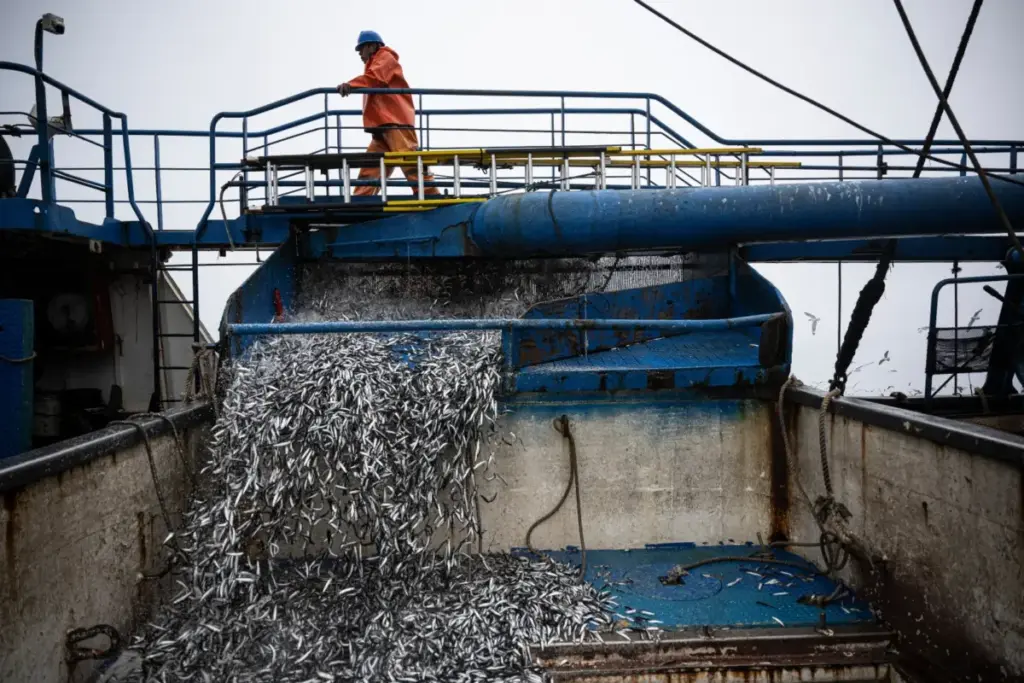
Industrial fishing operations possess the mobility, capital, and technology required to evade the impacts of localized marine heatwaves. If fish stocks migrate away from warming coastal waters, industrial trawlers can simply burn more fuel and sail further offshore or into deeper, cooler waters.
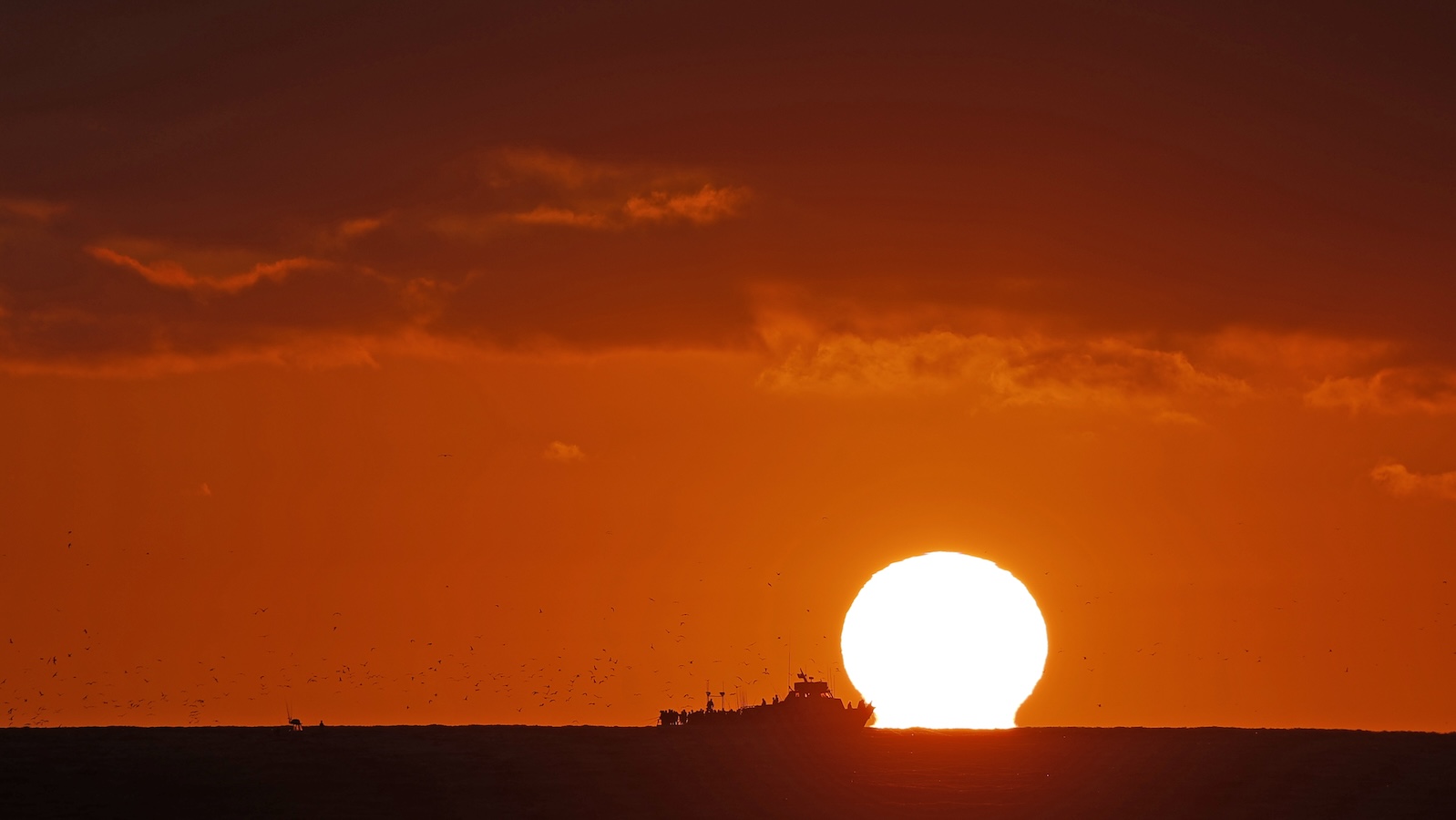
Conversely, small-scale fishers—who account for a massive share of the employment and nutritional intake in the developing world—are tethered to coastal zones. Their wooden canoes, rudimentary gear, and limited financial resources restrict their range. When a marine heatwave decimates their immediate fishing grounds, they have nowhere else to go.
The Elusive Mechanisms: Correlation vs. Causation
Despite the statistical robustness of the study, the researchers are the first to acknowledge its limitations. Most notably, the data analysis demonstrates a powerful correlation between marine heatwaves and health declines, but it does not yet definitively prove the exact causational pathways.
Scientists are still working to decode the precise chain reaction that transforms an underwater heat dome into a malnourished or deceased child in a coastal village. Several leading hypotheses are currently under investigation:
- Nutritional Collapse: Marine heatwaves disrupt oceanic food webs, triggering massive die-offs of vital fish, shellfish, and invertebrate populations. In communities where seafood is the primary source of dietary protein and essential micronutrients, a local fisheries collapse directly translates to household-level malnutrition.
- Economic Shockwaves: As Katy Seto, an associate professor of environmental studies at the University of California, Santa Cruz, points out, not every community that relies on small-scale fishing consumes its catch directly. Many coastal populations sell their harvests regionally or locally for income. When marine heatwaves destroy harvests, fishermen lose their livelihoods, collapsing household purchasing power and driving malnutrition through economic deprivation rather than direct food scarcity.
- Confounding Climate Drivers: The researchers emphasize that terrestrial heatwaves, shifting rainfall patterns, agricultural droughts, and the expanded geographic spread of mosquito-borne infectious diseases (such as malaria and dengue) often accompany or follow oceanic warming events. These overlapping environmental stressors cannot be entirely ruled out as contributing drivers of the observed health spikes.
Official Statements and Expert Perspectives
The publication of the PNAS study has sent ripples through both the climate science and public health communities, drawing praise for its methodological innovation while underscoring the urgent need for follow-up research.
Redefining Climate-Health Boundaries
Katy Seto, who was not directly involved in the study, emphasized the foundational importance of the research in charting a new course for climate adaptation science.
"It is definitely like a first pass at understanding for whom this could be a big problem and what the solutions might be," Seto noted.
She praised the study for establishing a macro-level framework that allows future researchers to zoom in on specific geographic vulnerabilities and design targeted interventions.
The Relentless March of Global Warming
For Clark Gray, the findings are part of a broader, deeply troubling trend he has observed over years of investigating the human dimensions of climate change. Rather than an isolated anomaly, the correlation between warming oceans and poor health outcomes fits into a grimly predictable global pattern.
"I’ve been doing research on the social impact of climate for a while, and I’m continuously surprised by how consistently negative the warming effect on health is," Gray reflected. "It really shows up pretty much everywhere on every outcome."
Gray’s observation highlights a foundational truth of the climate crisis: as the Earth system destabilizes, the compounding pressures rarely manifest in isolation. Instead, they converge upon the world’s most vulnerable populations, eroding the foundational pillars of human security, food systems, and public health.
Future Outlook: A Warming Ocean and an Uncertain Tomorrow
As the scientific community digests these findings, the macro-environmental outlook offers little comfort. The oceans are currently absorbing the Earth’s excess thermal energy at unprecedented rates, driving sea-surface temperatures to historic highs.
Yet, marine heatwaves—complex, three-dimensional subterranean columns of superheated water—have historically received far less scientific and public attention than surface-level temperature anomalies or ocean acidification. While phenomena like El Niño grab headlines for their visible disruption of Pacific fisheries, quiet, localized marine heatwaves are steadily undermining the biological productivity of coastlines worldwide.
What Lies Ahead?
The intersection of marine science and human health represents the new frontier of climate research. Moving forward, the scientific imperative is clear: researchers must transition from establishing broad correlations to mapping exact micro-level mechanisms. Policymakers, international aid organizations, and public health officials will need to incorporate marine temperature forecasts into early-warning systems for famine, malnutrition, and child mortality in coastal developing nations.
Without such proactive integration, vulnerable communities will remain blind to the threats brewing off their shores. As Clark Gray bluntly summarized the current reality and future trajectory of the crisis:
Marine heatwaves are "very bad in this current moment," and within the broader context of accelerating global warming, they "are going to get worse."
For the millions of children growing up along vulnerable tropical and subtropical coastlines, decoding the invisible tether between a warming ocean and a thriving future is no longer just an academic exercise—it is an urgent, life-saving necessity.