

Executive Overview
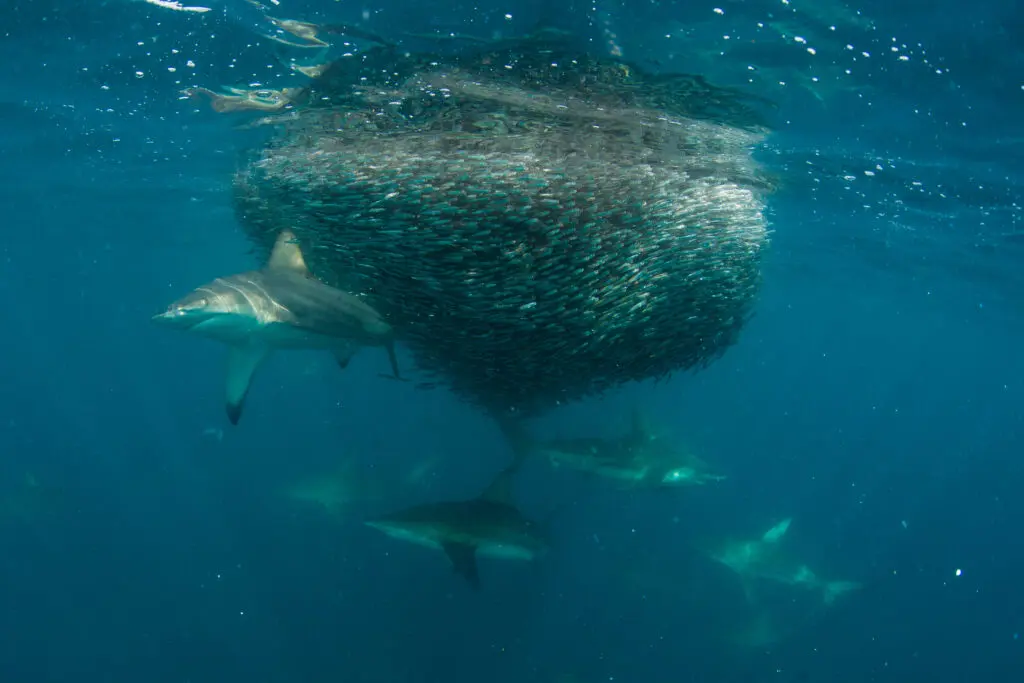
For over 400 million years, sharks have glided through the world’s oceans, wielding an iconic dorsal fin and commanding a sleek, powerful hydrodynamic form that predates trees, flowers, and even the dinosaurs. Today, more than 500 distinct species inhabit marine environments across the globe, ranging in size from the massive, speckled whale shark to the tiny, eight-inch (20 cm) dwarf lanternshark. Yet, despite their prehistoric resilience and breathtaking diversity, these apex predators face an unprecedented anthropogenic crisis.
Far from being the mindless movie villains of popular culture, sharks are graceful, elegant architects of marine biodiversity. As top-tier and meso-predators, they maintain the delicate ecological balance of underwater ecosystems, driving the behavior, abundance, and health of countless other species. However, industrial overfishing, localized habitat degradation, climate change, and outdated coastal protection policies have placed these ancient creatures in critical peril.
A landmark 2024 global status report by the International Union for Conservation of Nature (IUCN) revealed that over 300 species of sharks, rays, and chimaeras are now threatened with extinction. Compounding this industrial extraction are lethal coastal management tools—specifically traditional shark nets and drumlines—deployed extensively along popular coastlines in regions like South Africa and Australia. These outdated interventions frequently ensnare non-target marine life, with recent data showing catastrophic mortality rates for dolphins, endangered sea turtles, and vulnerable shark populations alike.
Fortunately, a growing tide of marine scientists, conservationists, local communities, and global initiatives—such as the Mission Blue Hope Spots network—are championing a paradigm shift. By moving away from lethal removal programs and embracing modern, non-lethal technologies, sustainable ecotourism, and community-driven advocacy, humanity can forge a path of peaceful coexistence. A healthy ocean needs sharks, and the survival of these remarkable animals depends on immediate, coordinated global action.
Detailed Chronology: A 400-Million-Year Legacy Meets the Anthropocene
To truly understand the value of sharks, one must look deep into the geological timeline of Earth. The evolutionary history of sharks is a testament to extraordinary biological persistence, spanning epochs that witnessed mass extinctions, continental drift, and vast climatic shifts.
The Paleozoic Dawn (Over 400 Million Years Ago)
Long before terrestrial flora evolved or the first dinosaur walked the Earth, primitive cartilaginous fish began patrolling the primordial seas. The earliest recognizable shark scales and teeth appear in the fossil record during the Late Ordovician to Early Devonian periods. Unlike bony fish, sharks possess skeletons made entirely of cartilage—a lighter, more flexible material that enables rapid acceleration, tight turning radiuses, and deep-sea diving without crushing under immense pressure. Over hundreds of millions of years, these organisms fine-tuned their anatomy, developing exceptional sensory systems, including ampullae of Lorenzini that detect electromagnetic fields generated by living prey.
The Rise of Modern Species and Ecosystem Integration
Through successive mass extinction events—including the Permian-Triassic extinction, which wiped out over 95% of marine species—sharks demonstrated remarkable resilience. Over millions of years, they diversified into more than 500 species occupying every marine niche imaginable. From the flattened angel shark hiding in coastal sand to the pink goblin shark navigating the pitch-black bathypelagic zone, and the colossal filter-feeding whale shark gliding through tropical currents, sharks became deeply integrated into the evolutionary fabric of marine food webs.
The Twentieth Century: The Onset of Exploitation
For millennia, human interaction with sharks was largely local and sustainable, restricted by primitive fishing technologies. However, the mid-to-late 20th century marked a catastrophic turning point. The industrialization of global fisheries, combined with rising commercial demand for shark meat, liver oil, gill plates, and high-value fins, triggered an unprecedented population crash. Simultaneously, mounting public fear—fueled by sensationalized media accounts and cinematic depictions—led governments in regions like South Africa, Australia, and Hawaii to implement aggressive, lethal shark-control programs involving indiscriminate gill nets and baited drumlines.
The Twenty-First Century: A Race Against Extinction
Entering the 21st century, marine researchers began to fully document the catastrophic cascading effects of shark depletion on coral reefs, kelp forests, and seagrass meadows. The establishment of global conservation networks, such as Dr. Sylvia Earle’s Mission Blue initiative designating critical "Hope Spots," brought international attention to localized destruction. The release of the 2024 IUCN global status report formalized what scientists had long warned: nearly a third of all sharks and their relatives face imminent extinction. Today, the timeline of shark history stands at a critical crossroads, where archaic lethal mitigation methods are increasingly being challenged by innovative, non-lethal technologies and grassroots community advocacy.
Supporting Context & Metrics: The Ecological Pillars and Threats
Sharks perform critical ecological functions that sustain the overall health of the marine biosphere. Removing them triggers ecological cascades that degrade habitats, diminish fish stocks, and compromise the ocean’s capacity to absorb carbon dioxide.
Ecosystem Engineers and Ocean Health
As apex predators, sharks regulate the population size, health, and spatial distribution of herbivorous and carnivorous marine species. Their mere presence—often referred to by marine ecologists as the "landscape of fear"—influences prey behavior, preventing overgrazing and habitat destruction.
- Kelp Forest Maintenance: By regulating populations of herbivorous sea urchins, sharks prevent these voracious consumers from decimating kelp forests, which serve as vital carbon sinks and nurseries for countless fish species.
- Seagrass Meadow Management: In shallow coastal habitats, sharks act much like sheepdogs in seagrass meadows. Their presence encourages grazing marine mammals, such as dugongs and sea turtles, to continuously move rather than overgraze specific patches. This dynamic prevents localized ecosystem collapse and fosters new plant growth.
The Scale of the Crisis: Industrial Overfishing and Habitat Loss
Despite their ecological importance, sharks are subjected to relentless anthropogenic pressures. Overfishing remains the single greatest driver of population declines. Millions of sharks are killed annually, driven by targeted fisheries and unregulated bycatch, where sharks are unintentionally snared in gear deployed for tuna and swordfish.
Because many shark species are K-selected—meaning they grow slowly, mature at an advanced age, and produce very few offspring over a long lifespan—their populations possess an exceptionally low resilience to overexploitation. Once depleted, recovery can take decades, if it occurs at all. This vulnerability is compounded by coastal development, which destroys critical mangrove nursery habitats, as well as marine pollution and ocean warming driven by climate change.
Lethal Control Measures and Bycatch Metrics
In several coastal jurisdictions, particularly in Australia and South Africa, traditional shark nets and drumlines have long been deployed near popular beaches to mitigate the statistical risk of human-shark encounters. However, these programs fail to create a physical barrier between swimmers and marine life; instead, they act as indiscriminate death traps.
Recent Freedom of Information (FOI) data from New South Wales, Australia, highlights the alarming inefficiency of these programs. During the 2024/2025 netting season, 89% of all animals caught in shark nets were non-target species, including dolphins, critically endangered leatherback turtles, and protected gray nurse sharks. Even more damning, more than 67% of the animals caught died either during capture or subsequent handling.
| Threat Category | Primary Driver / Mechanism | Ecological Impact / Metric |
|---|---|---|
| Industrial Overfishing | Targeted finning, meat harvesting, and unregulated bycatch | Over 300 species of sharks, rays, and chimaeras threatened with extinction (IUCN, 2024). |
| Shark Nets & Drumlines | Coastal bather protection programs (South Africa, Australia) | 89% of animals caught in NSW nets (2024/2025) were non-target species; >67% mortality rate. |
| Habitat Degradation | Coastal development, mangrove destruction, and pollution | Loss of critical nursery grounds for juvenile sharks (e.g., scalloped hammerheads). |
| Climate Change | Ocean warming, acidification, and severe storms | Alteration of migratory pathways and disruption of prey-predator dynamics. |
Official Statements and Expert Perspectives
The global scientific community and prominent conservation leaders have united in reframing the narrative surrounding sharks, emphasizing that human safety and marine conservation are not mutually exclusive goals.
"Sharks are beautiful animals, and if you’re lucky enough to see lots of them, that means that you’re in a healthy ocean. You should be afraid if you are in the ocean and don’t see sharks."
— Dr. Sylvia Earle, Founder & CEO, Mission Blue
Dr. Earle’s perspective underscores a fundamental truth of marine biology: an ocean devoid of sharks is a degraded, dying ecosystem. When top predators vanish, trophic cascades destabilize entire marine food webs, leading to algae blooms, collapsing fisheries, and hypoxic dead zones.
Leading Hope Spot Champions and researchers across the globe echo this urgency, advocating for science-backed management:
- Russel Symcox (Aliwal Shoal Hope Spot, South Africa): Emphasizes the necessity of local community engagement and grassroots advocacy through organizations like Wild Alliance Africa to protect resident ragged-tooth shark populations from localized human pressures.
- Dr. Olaf Meynecke (Gold Coast Hope Spot, Australia): Through Humpbacks & High-rises, Dr. Meynecke advances rigorous scientific research and educational programs to foster safe, sustainable coexistence between beachgoers and coastal marine wildlife.
- Ilena Zanella & Andrés López (Golfo Dulce Sanctuary, Costa Rica): Leading Misión Tiburón, these researchers focus on protecting critical mangrove estuaries that serve as irreplaceable nurseries for critically endangered juvenile scalloped hammerheads.
- Dr. James Ketchum & Alex Hearn (Eastern Tropical Pacific Hope Spots): Through initiatives like MigraMar, these scientists track the vast transboundary migrations of pelagic sharks across marine protected areas, proving that conservation requires international cooperation.
Future Outlook: A New Era of Coexistence and Conservation
The narrative surrounding sharks is experiencing a profound, long-overdue transformation. The antiquated mindset that characterized sharks as malicious predators requiring culling is rapidly giving way to an enlightened, science-based approach centered on preservation and modern risk mitigation.
Embracing Non-Lethal Technologies
Coastal communities are increasingly recognizing that protecting human life does not require sacrificing marine ecosystems. A suite of innovative, non-lethal technologies has emerged as a viable alternative to traditional nets and drumlines:
- SMART Drumlines (Shark Management Alert in Real Time): These advanced units alert marine authorities immediately when a shark is hooked, allowing researchers to tag, relocate, and release the animal safely before mortality occurs.
- Eco-Barriers and Acoustic Deterrents: Physical barriers combined with acoustic or magnetic frequency emitters successfully deter sharks from entering designated swimming zones without causing physical harm.
- Digital Surveillance: Drones, aerial spotter programs, and real-time mobile alerts provide beachgoers with up-to-the-minute safety information, fostering a culture of awareness rather than lethal extraction.
Grassroots Action and Policy Reform
True long-term protection relies on the active participation of local governments, indigenous communities, and everyday citizens. Educational campaigns spearheaded by organizations such as the Ocean Lovers Festival in Sydney, Citizens of the Great Barrier Reef, and Reef Check Australia demonstrate that public mobilization can successfully pressure policymakers to phase out destructive netting programs entirely.
What You Can Do
Safeguarding the future of sharks requires collective global responsibility. Individuals can support this vital mission through several impactful actions:
- Support Marine Protected Areas: Advocate for the expansion and strict enforcement of Mission Blue Hope Spots and global marine reserves.
- Choose Sustainable Seafood: Demand traceability and sustainable fishing practices to reduce accidental shark bycatch in commercial fisheries.
- Promote Education and Advocacy: Share science-based information regarding shark behavior and dispel sensationalized myths perpetuated by popular media.
- Engage with Local Champions: Donate to or volunteer with reputable conservation groups working directly on the front lines of shark and habitat protection.
By shifting our relationship with the ocean from one of exploitation and fear to one of respect and stewardship, we can ensure that these ancient, majestic architects of the deep continue to patrol the seas for hundreds of millions of years to come. A healthy ocean needs sharks—and sharks urgently need us.



