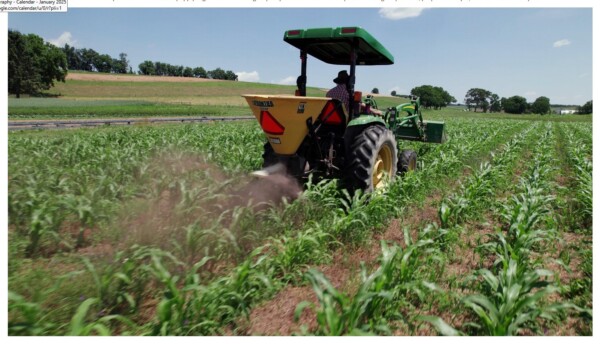
In the modern agricultural landscape, the most critical tool for an aspiring or transitioning organic producer is not a tractor, an irrigation system, or specialized tilling equipment—it is knowledge. Navigating the complex ecosystem of regenerative organic farming requires a multidisciplinary mastery of soil science, entomology, crop rotation strategies, natural pest management, cost accounting, marketing frameworks, and the rigorous compliance standards necessary to earn and maintain USDA organic certification.
For more than fifteen years, the prestigious Rodale Institute Farmer Training (RIFT) program has served as a crucible for agricultural entrepreneurs at its flagship Pennsylvania campus. However, the physical constraints of traditional, in-person agricultural education have historically limited its reach, training only a dozen or so dedicated individuals each year.
Today, a profound paradigm shift is underway. By harnessing advanced digital learning infrastructure, the Rodale Institute has officially bridged the gap between decades of rigorous scientific research and the modern farming community. The rollout of a comprehensive online education platform marks a watershed moment for sustainable agriculture in the United States. Designed to reach thousands of farmers simultaneously, this virtual campus democratizes access to elite, university-level agricultural science, ensuring that geographic isolation and the relentless demands of farm life no longer bar producers from achieving operational excellence and long-term financial viability.
Detailed Chronology: The Evolution of Rodale’s Educational Reach
To understand the magnitude of the current digital expansion, one must examine the evolutionary trajectory of the Rodale Institute’s educational philosophy over the past three-quarters of a century.
The Foundation of Research (1940s–2000s)
Since its founding by J.I. Rodale, the Institute has operated as the global epicenter for regenerative organic research. For over 75 years, scientists at the facility have conducted long-term trials—most notably the Farming Systems Trial—proving that organic methods can match or exceed conventional yields while drastically improving soil health, sequestering carbon, and withstanding extreme weather events like droughts. However, translating these peer-reviewed breakthroughs from academic journals and experimental plots into day-to-day farm management practices remained a logistical bottleneck.
The In-Person Training Era (The Past 15 Years)
To address the practical application gap, the Institute launched the Rodale Institute Farmer Training (RIFT) program at its Pennsylvania campus. This immersive, nine-month, in-person curriculum immersed aspiring farmers in hands-on field operations. While extraordinarily effective for those fortunate enough to attend, the program was constrained by physical capacity, housing limitations, and the sheer impossibility of relocating or stepping away from an active farm for nearly a year.
The Pivot to Digital (The Past Three Years)
Recognizing that the demand for regenerative organic education far outpaced physical classroom capacity, Institute leadership initiated a multi-year archival and curriculum-development project. Over the past three years, educators, researchers, and media specialists meticulously captured the core tenets of the RIFT curriculum on video, translating hands-on field demonstrations into structured, highly digestible digital modules.
The Virtual Campus Launch (Present Day)
The culmination of this multi-year effort is the launch of the Rodale Institute Farmer Training Online platform. Built on the robust Canvas learning management system, the virtual campus transitions the Institute’s rich legacy out of Pennsylvania and directly onto smartphones, tablets, and desktop computers in farm offices across the nation.
Supporting Context & Metrics: The Challenge, The Solution, and The Experience
The Challenge: The Time-Starved Modern Farmer
The modern farmer operates under intense physical, financial, and psychological pressures. Unlike corporate professionals who enjoy standardized workweeks, agricultural producers face an unrelenting schedule governed by biology, weather, and market demands.
"Farming is a unique way to make a living because farmers don’t get vacations or even weekends off when they can take time to focus on learning," explains Renée Baran, Rodale Institute Dean of Education. "But new farmers and many experienced ones have gaps in their knowledge they need to fill."
For individuals transitioning from conventional chemical-heavy farming to organic protocols, these knowledge gaps can spell financial ruin. Pest outbreaks, weed management failures, and improper soil nutrient balancing can decimate a season’s yield. Furthermore, mastering the administrative burdens—such as organic certification paperwork, crop insurance, and cash-flow management—frequently falls by the wayside when producers are consumed by daily manual labor.
The Solution: University-Level Rigor Meets Real-World Flexibility
The virtual platform was engineered specifically to alleviate these pressures. By converting decades of field-tested expertise into on-demand modules, the Institute provides a flexible lifeline.
According to Dr. Jason Slipp, Director of Education at Rodale Institute, the curriculum covers a comprehensive spectrum of operational needs:
Agronomic Fundamentals: Deep-dive modules on soil microbiology, cover cropping, sophisticated crop rotations, and non-chemical weed suppression.
Operational Safety: Detailed video lessons on the safe and effective application of approved organic fertilizers and natural soil amendments.
Business Acumen: Rigorous courses in financial recordkeeping, cost accounting, and direct-to-consumer marketing strategies.
Unlike the superficial, fragmented agricultural tips frequently found across generic internet searches, Dr. Slipp emphasizes the academic integrity of the platform: "These are university-level classes based on proven instructional principles."
The Experience: Navigating the Canvas Learning Management System
User adoption is often the primary hurdle for digital transformation in rural communities, where high-speed internet can be erratic and users may possess varying degrees of digital literacy. To mitigate this, Rodale integrated the robust Canvas learning management system (LMS).
Canvas provides an intuitive interface equipped with comprehensive pedagogical tools:
Interactive Assignments & Assessments: Quizzes and testing modules that reinforce core concepts.
Peer-to-Peer Communities: Discussion forums that allow isolated farmers to troubleshoot common challenges, share localized advice, and build a sense of professional solidarity.
Self-Paced Navigation: Complete flexibility allowing producers to study during off-season months or late at night after the livestock are tended to and the machinery is serviced.
"This is easy for everyone to use, even if they’re not too tech savvy," notes Dr. Slipp.
Official Statements and Industry Partnerships
The impact of Rodale’s virtual campus extends far beyond independent operators; it is rapidly becoming an indispensable infrastructure component for agricultural nonprofits, higher education institutions, and apprenticeship programs nationwide.
Empowering Nonprofits: The Good Roots Collaboration
One of the earliest institutional adopters of the platform is Good Roots, a nonprofit organization dedicated to helping organic farmers build lasting, sustainable businesses that benefit their families, communities, and the environment.
Rebecca Frimmer, a partner and principal consultant for Good Roots, highlights the chronic oversight of business education in traditional agricultural training:
"Farmers need training in business management and finance to ensure they are profitable and viable for the long term. The biggest challenge for farmers is finding the time to balance all that must be done. It’s essential to carve out the space to work on the farm business and not just in the business."
Frimmer points out that smaller-scale agricultural producers frequently lack the capital required to hire private consultants, specialized accountants, or marketing agencies. By integrating Rodale’s self-paced digital resources and interactive support networks into their own organizational framework, Good Roots can successfully bridge this resource gap.
"The self-paced educational resources and interactive support offered by Rodale Institute open up effective ways for Good Roots to ensure the next generation of farmers can scale up with strong financial and marketing foundations," Frimmer adds.
Scaling Up: The Vision for National Impact
The mathematical contrast between Rodale’s legacy programs and its new digital footprint illustrates a staggering leap in capacity.
"We train a dozen or so new farmers in our in-person RIFT program each year," reflects Dean Renée Baran. "Our virtual campus can serve 6,500 farmers."
Looking toward the horizon, Baran outlines an ambitious cultural goal for the platform:
"We want to be the ‘regenerative organic agriculture YouTube’ where farmers can find the information they’re looking for, but with real scientific integrity and a community of others to connect to and learn with."
Future Outlook: Learning for All and Expanding Horizons
While the core mission of the Rodale Institute’s educational programming remains firmly rooted in empowering professional and transitioning organic farmers, the digital platform also opens its virtual doors to the wider public.
In an era marked by growing consumer anxiety regarding food safety, chronic illness, and environmental degradation, the demand for holistic education regarding what we eat has never been higher. To meet this demand, the virtual campus features specialized courses tailored for conscious consumers, hobbyists, and home gardeners.
Key consumer-facing and enthusiast programs include:
"Being a Regenerative Consumer": Courses designed to help everyday shoppers understand how their purchasing power drives environmental restoration.
"Regenerative Health: The Power of the Plate": Science-backed explorations of the direct correlation between nutrient-dense, organically grown food and human physiological wellness.
Hobbyist Masterclasses: Specialized online modules covering backyard gardening, home composting, and hobby beekeeping taught directly by Rodale Institute professionals.
By engaging everyday citizens alongside professional agriculturalists, Rodale creates a virtuous cycle: individuals who enroll in consumer classes grow their personal know-how while simultaneously providing vital financial support for the Institute’s broader mission to increase the national acreage of certified organic farmland.
Conclusion and Access Information
The digitization of agricultural extension services represents a monumental leap forward for the American food system. By pairing 75 years of uncompromising scientific research with modern, accessible educational technology, the Rodale Institute is ensuring that the transition to regenerative organic farming is no longer an isolated, high-risk gamble, but a supported, scientifically guided, and economically viable enterprise for producers everywhere.
For complete details, course schedules, and registration information regarding both in-person workshops at the Pennsylvania campus and the new virtual curriculum, interested parties are encouraged to visit RodaleInstitute.org/education.