Executive Overview
The global coal industry reached a historic structural inflection point in 2025, recording the lowest amount of new coal mine capacity brought online in over a decade. According to an exhaustive report published by Global Energy Monitor (GEM), new coal mine capacity commissioned worldwide plunged by nearly 40% compared to 2024 levels. This sharp reduction marks the second consecutive year that global mine additions have fallen to a 10-year low, signaling an accelerated decline in coal expansion that originally took root in 2019.
The dramatic slowdown was predominantly driven by deep pullbacks in two of the world’s critical coal hubs: China and Australia. New additions in China contracted by 44%, while Australia experienced a near-total cessation of new operational capacity, dropping by 96%. This dual contraction reflects a broader macro-shift across East Asia, where rapid utility-scale installations of solar and wind energy, coupled with aggressive regional decarbonization policies, are progressively squeezing coal out of the electricity generation stack.
While short-term generation fluctuations—such as a temporary rebound in Chinese coal consumption during the first half of 2026—highlight ongoing grid integration challenges, the underlying momentum in upstream capacity investment points in one direction: down. As major Asian import destinations enact strict climate mandates and domestic producers enforce regulatory caps on new extraction, the project pipeline for fossil fuel expansion is rapidly contracting.
Detailed Chronology: The Decade-Long Trajectory of Global Coal Mining
GLOBAL COAL MINE CAPACITY ADDITIONS: KEY MILESTONES
┌────────────────────────────────────────────────────────────────────────┐
│ 2019: Peak expansion era begins steady structural decline.             │
│ 2024: Capacity additions drop to a then-decade low.                     │
│ 2025: Global capacity plunges nearly 40% year-over-year.               │
│       • China capacity additions down 44%                              │
│       • Australia capacity additions down 96%                          │
│ H1 2026: Brief cyclical rebound in generation, but structural upstream │
│          mine additions remain severely constrained.                   │
└────────────────────────────────────────────────────────────────────────┘
The precipitous fall in new coal mine developments in 2025 represents the culmination of a decade-long transformation in global energy economics and policy frameworks.
-
2019–2023: The Onset of Structural Decline
Following years of rapid fossil fuel expansion across developing economies, 2019 marked the initial peak and subsequent tapering of greenfield coal mining investments. Between 2019 and 2023, tightening global financial standards, escalating Environmental, Social, and Governance (ESG) investment criteria, and dropping levelized costs for renewable energy began to constrain capital allocation for large-scale mining infrastructure. -
2024: The First Decade Low
By 2024, the cumulative effect of these financial and policy headwinds resulted in the lowest volume of new operational coal capacity in ten years. Project developers increasingly struggled to secure project finance, insurance underwriting, and long-term off-take agreements, dampening development timelines worldwide. -
2025: The Acceleration Phase
In 2025, the retrenchment accelerated sharply. Global Energy Monitor tracked a nearly 40% year-over-year drop in newly commissioned mine capacity relative to 2024. For the second straight year, the global baseline established a new decade low. The drop was led by China—where new project commissioning fell 44%—and Australia, where newly operational capacity crashed by 96%, effectively bringing new mine commissioning in the country to a standstill. -
First Half of 2026: Short-Term Generation Rebound vs. Upstream Stagnation
The systemic contraction in new production capacity faced a short-term stress test in the first half of 2026. A temporary surge in power demand, coupled with localized renewable curtailment and extreme weather events in parts of East Asia, forced power utilities to temporarily ramp up coal-fired generation. However, market analysts emphasize that this uptick in burn rates has not translated into renewed upstream investment. Despite H1 2026 power sector utilization spikes, structural barriers—including strict regulatory caps on new concessions and aggressive long-term off-take shifts—continue to prevent new mine projects from reaching financial close.
Supporting Context & Regional Metrics
China: Renewable Surges and Regulatory Interventions
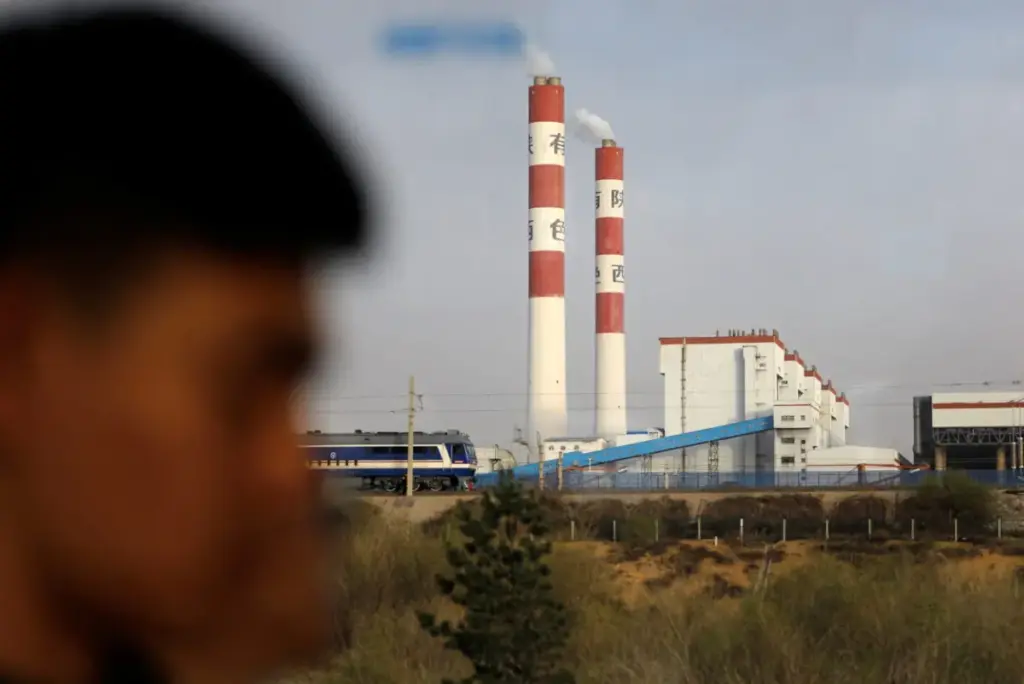
China remains the center of gravity for global coal production and consumption, making its domestic shifts pivotal to global statistics. The 44% fall in new Chinese mine capacity in 2025 reflects a dual-track strategy pursued by Beijing: massive renewable deployment combined with administrative supply-side controls.
                  CHINA CAPACITY ADDITIONS (2025)
                  ┌──────────────────────────────┐
                  │                              │
                  │   -44% New Coal Mine        │
                  │        Capacity              │
                  │                              │
                  └──────────────────────────────┘
                                  │
         ┌────────────────────────┴────────────────────────┐
         ▼                                                 ▼
Clean Energy Displacement                         Regulatory Frameworks
(Solar/wind displacing coal                       (NEA rules curbing new
in electricity generation) mine openings)- Renewable Power Displacement: Unprecedented deployment of solar photovoltaic and onshore/offshore wind assets across China’s western provinces significantly altered the grid’s dispatch economics. As clean power generation scaled up, coal’s role began shifting from a baseline load provider to a peak-shaving, balancing resource.
- Regulatory Tightening by the NEA: China’s National Energy Administration (NEA) enacted rigorous regulatory guidelines specifically designed to curb redundant supply additions and prevent overcapacity. These rules elevated environmental compliance standards, required stricter safety certifications, and systematically restricted approvals for small-to-medium greenfield extraction projects.
Despite these capacity caps, the relationship between generation and extraction remains complex. The temporary generation rebound observed in the first half of 2026 highlighted persistent structural issues, such as inter-provincial grid bottlenecks and energy storage deficits, which occasionally force regional grids to rely heavily on thermal reserves. Nonetheless, the net pipeline for new coal extraction infrastructure in China continues to shrink rapidly.
Australia and the East Asian Demand Contraction
Australia’s 96% drop in newly brought-online mine capacity in 2025 represents a dramatic collapse in export-oriented project development. Unlike China, which produces primarily for internal consumption, Australia’s thermal coal industry is tied directly to export markets across East Asia.
                  EAST ASIAN IMPORT DEMAND COLLAPSE
                  ┌──────────────────────────────┐
                  │  Australia: -96% New Mine    │
                  │           Capacity           │
                  └──────────────┬───────────────┘
                                 │
         ┌───────────────────────┼───────────────────────┐
         ▼                       ▼                       ▼
      Japan                 South Korea               Taiwan
(Nuclear Restarts)     (No Unabated Coal)      (Clean Energy Target)
The severe downturn in Australian additions stems from structural demand destruction across its core import partners:
- Japan: Tokyo’s ongoing post-Fukushima energy rebalancing has increasingly prioritized the restart of its nuclear power reactor fleet. As utility operators overcome local legal and regulatory hurdles to bring nuclear capacity back online, imported thermal coal is the primary fuel being displaced in the national generation mix.
- South Korea: Policy directives from Seoul have set clear constraints on the long-term viability of unabated thermal power. South Korea’s pledge to ban the construction of power plants lacking Carbon Capture and Storage (CCS) technologies has sent a clear demand destruction signal to Australian exporters, discouraging capital expenditure on export-dedicated mines.
- Taiwan: Parallel initiatives to boost liquefied natural gas (LNG) imports and offshore wind installations have further dampened long-term thermal coal purchase agreements across the region.
Regional Legislative & Regulatory Mandates
The structural slowdown is reinforced by state and national policy frameworks that explicitly remove land and capital from the coal development pipeline.
| Region / Country | Legislative / Regulatory Instrument | Strategic Impact on Coal Industry |
|---|---|---|
| New South Wales (Australia) | Greenfield Coal Development Ban | Prohibits new coal extraction projects on undeveloped greenfield lands, limiting miners to brownfield extensions. |
| South Korea | Unabated Coal Power Phase-out Mandate | Bans new coal-fired generation lacking CCS technology, choking off long-term import contracts. |
| Japan | Post-Fukushima Nuclear Restart Program | Reactivates idle nuclear capacity to directly displace imported thermal coal for baseload power. |
| China | NEA Mine Approval Restrictions | Imposes strict administrative limits and safety/environmental criteria on new mine openings. |
In the Australian state of New South Wales—traditionally one of the premier coal-producing regions globally—the state government introduced explicit bans on new coal mining operations targeting undeveloped greenfield land. By restricting prospective operations exclusively to brownfield expansions of existing sites, legislative authorities have effectively placed a firm cap on long-term production scaling.
Official Statements & Institutional Perspectives
The findings compiled in the Global Energy Monitor report reflect a growing consensus among international energy analysts, financial institutions, and policy bodies: the economics of upstream coal development have fundamentally broken down.
In its strategic assessment, Global Energy Monitor noted:
"The persistent, multi-year drop in new coal mine capacity demonstrates that the global energy transition is no longer just a demand-side phenomenon. Upstream capital allocation is responding directly to the rapid growth of solar, wind, and nuclear energy. What we are observing in 2025 is an acceleration of a long-term structural retrenchment that began in 2019."
Addressing the market dynamics within East Asia, energy research analysts evaluating the National Energy Administration’s recent regulatory shifts observed:
"China’s administrative controls on new mine approvals reflect a deliberate effort to avoid building stranded assets. While thermal power remains a critical secondary backup during seasonal demand spikes—as seen in early 2026—the government’s clear priority is curbing unchecked mining expansion while ramping up grid-scale storage and renewable transmission."
Furthermore, market strategists assessing the Asia-Pacific export market pointed out the risks facing export-dependent economies:
"Australian producers are coming to terms with a fundamental shift in East Asian energy security strategies. With Japan bringing nuclear capacity back online and South Korea implementing strict abatement mandates, the long-term off-take agreements required to justify multi-billion-dollar greenfield mine developments simply no longer exist."
Future Outlook & Strategic Imperatives
The sharp contraction in new mine capacity points toward a fundamental realignment of global energy markets over the coming decade. However, navigating this transition presents operational, economic, and policy challenges that demand strategic management.
                          FUTURE OUTLOOK: KEY VECTORS
                                       │
         ┌─────────────────────────────┼─────────────────────────────┐
         ▼                             ▼                             ▼
Grid Modernization &           Stranded Asset Risk           Nuclear Integration &
Storage Integration             & Capital Reallocation         Zero-Carbon Baseload
(Addressing seasonal           (Shift toward brownfield       (Japan's restarts &
 generation spikes)             only & critical minerals)      South Korea's CCS)
1. Grid Integration and Balancing Seasonal Spikes
The primary obstacle to completely phasing out coal remains grid stability. As demonstrated by the mid-2026 coal generation uptick in China, high penetrations of variable solar and wind require robust grid management strategies. To prevent temporary surges in power demand from triggering calls for renewed fossil extraction, regional authorities must accelerate investment in ultra-high voltage (UHV) transmission lines, long-duration battery storage, and demand-response infrastructure.
2. Stranded Asset Exposure and Capital Reallocation
With institutional investors and major banks exiting the thermal coal space, capital is rapidly shifting toward critical minerals required for the transition—such as lithium, copper, nickel, and cobalt. Mining conglomerates that fail to reallocate capital away from greenfield thermal coal face severe stranded asset risks. The strategy in jurisdictions like New South Wales, which forces operators into brownfield-only extensions, will likely become a global standard for managing the tail-end of fossil fuel extraction.
3. Non-Fossil Baseload Displacement in East Asia
The trajectory of coal consumption in East Asia will heavily depend on the speed of alternative baseload deployment:
- In Japan, the pace of nuclear reactor restarts will dictate how quickly utility companies can terminate long-term coal import contracts.
- In South Korea, strict enforcement of CCS mandates on remaining coal facilities will accelerate the retirement of unviable units, transferring energy burdens to offshore wind and natural gas bridges.
- In China, the institutional challenge lies in balancing national energy security with climate targets, ensuring that thermal capacity acts strictly as an emergency reserve rather than a primary growth engine.
Conclusion
The 2025 milestone—marking a decade-low in new operational coal mine capacity—confirms that the structural peak of global coal supply infrastructure is now in the past. Driven by a combination of rapid renewable adoption in East Asia, strict administrative limits in China, and collapsing export demand across key Pacific trade routes, the global coal mining pipeline is steadily shrinking. While short-term grid friction will occasionally push existing plants to burn remaining reserves, the broader economic momentum has irreversibly shifted toward clean energy infrastructure.