Executive Overview
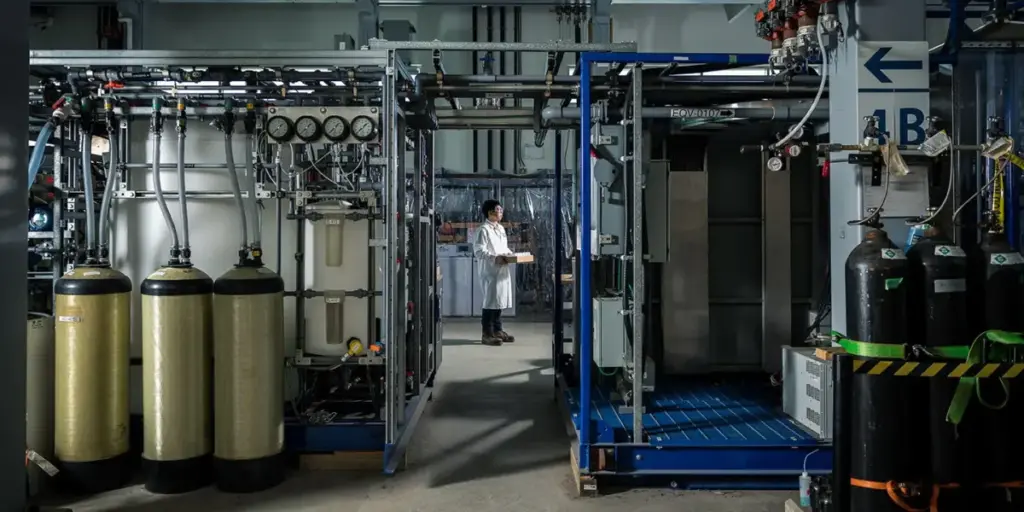
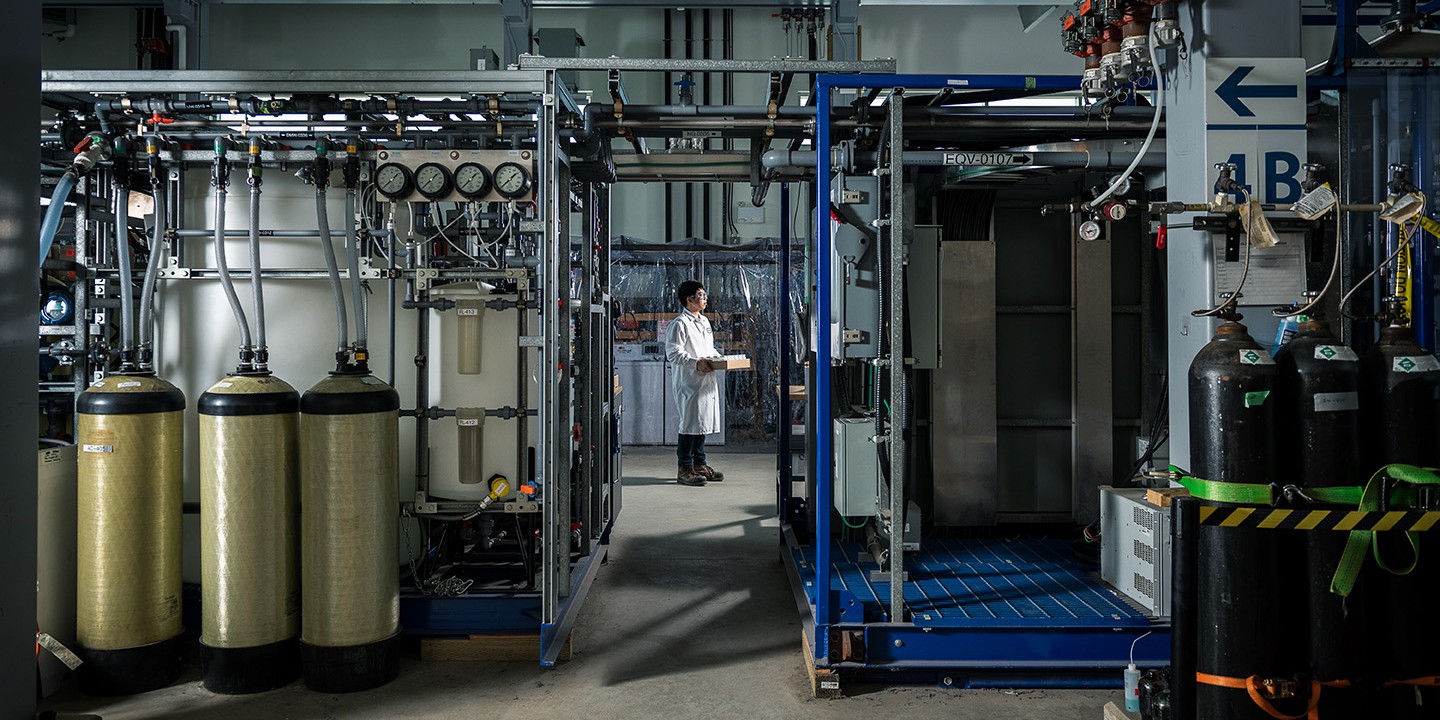
In a milestone development for the North American clean energy supply chain, clean-tech innovator Mangrove Lithium has officially inaugurated the continent’s first commercial electrochemical lithium refinery. Located in Delta, British Columbia, the state-of-the-art facility—dubbed the Single Stack Plant (SSP)—represents a major leap forward in domestic battery manufacturing capabilities. Capable of producing 1,000 tonnes of battery-grade lithium annually, the plant is designed to alleviate crippling foreign dependencies and supply chain bottlenecks that have historically plagued the electric vehicle (EV) industry.
For decades, the global lithium supply chain has suffered from extreme geographical centralization. While raw materials are extracted across the globe, the vast majority of lithium refining has traditionally occurred overseas, introducing severe price volatility, geopolitical vulnerability, and high carbon footprints associated with long-distance maritime transport. By introducing a proprietary electrochemical refining methodology, Mangrove Lithium is aiming to rewrite the rules of the critical minerals market.
The Delta facility serves as both the company’s new corporate headquarters and a proof-of-concept for scalable, regionalized processing. At full operational capacity, the 1,000-tonne facility will churn out enough battery-grade material to support approximately 25,000 electric vehicles every year. More importantly, this opening marks the foundational stepping stone for an ambitious, multi-phase expansion strategy. Backed by federal funding and strategic domestic partnerships, Mangrove is laying the groundwork for a fully integrated "mine-to-cathode" supply chain in Canada, charting a decisive course toward energy independence and industrial sovereignty.
Detailed Chronology: From Pilot Innovation to Commercial Reality
The path to inaugurating North America’s first electrochemical lithium refinery has been characterized by rigorous technological refinement, strategic federal backing, and vital industrial partnerships.
The R&D and Piloting Phase
Long before the ribbon-cutting ceremony in Delta, British Columbia, Mangrove Lithium spent years developing and validating its core technology. Traditional lithium refining relies heavily on energy-intensive chemical reagents and multi-step purification procedures that generate substantial waste and consume vast quantities of freshwater. Recognizing these environmental and economic limitations, Mangrove engineered a proprietary electrochemical process capable of converting raw lithium inputs directly into high-purity, battery-grade material with significantly fewer processing steps.

Throughout its pilot-plant phase, the company systematically de-risked its technology, proving that electrochemical conversion could match or exceed the purity standards required by tier-one battery cell manufacturers. This extensive testing phase paved the way for the engineering and construction of the Single Stack Plant (SSP).
Breaking Ground and Opening the SSP
The transition from pilot scale to commercial reality culminated with the official commissioning and ribbon-cutting ceremony of the Delta facility. By establishing the SSP in British Columbia, Mangrove not only secured a permanent home for its corporate operations but also established a strategic western foothold for Canadian critical mineral processing.
Scaling Up: The Eastern Canada Initiative and Federal Support
Even as the Delta facility began operations, Mangrove set its sights on exponential growth. The company’s next major milestone involves the development of a second, significantly larger facility slated for Eastern Canada. Designed to process spodumene—a hard-rock lithium mineral—this proposed mega-facility will scale up production to roughly 20,000 to 25,000 tonnes per year, a volume capable of supplying batteries for approximately 500,000 EVs annually.
To accelerate this capital-intensive expansion, Mangrove secured up to $21.88 million CAD in conditional funding support from Natural Resources Canada (NRCan) via the Critical Minerals Research, Development, and Demonstration (CMRDD) program. This non-dilutive capital is earmarked to drive comprehensive engineering studies and advanced spodumene piloting initiatives.
Complementing this federal support, Mangrove signed a pivotal memorandum of understanding (MOU) with Quebec-based lithium producer Élévra. This agreement establishes a direct pipeline to source raw spodumene from Quebec’s domestic mining sector, effectively bridging the gap between raw extraction and advanced refining.
Supporting Context & Metrics: The Mechanics of Electrochemical Refining
To understand the profound significance of Mangrove’s Delta facility, one must examine the structural challenges of the legacy lithium supply chain and the technical innovations that set electrochemical processing apart.
The Geopolitical and Economic Imperative
The rapid acceleration of global EV adoption has placed unprecedented pressure on battery supply chains. Historically, lithium extracted in the Americas or Australia has been shipped overseas—predominantly to East Asia—for refining into lithium hydroxide or lithium carbonate. This round-trip logistical nightmare inflates carbon emissions, exposes automakers to volatile shipping costs, and creates systemic vulnerabilities to geopolitical tensions and trade restrictions.
North American governments have responded with aggressive industrial policies, such as the United States’ Inflation Reduction Act (IRA) and Canada’s Critical Minerals Strategy, both of which incentivize domestic sourcing and regional processing. Mangrove’s Delta plant arrives precisely when automakers are desperately seeking verified, locally processed critical minerals to meet stringent tax credit and sourcing requirements.
Traditional Refining vs. Mangrove’s Electrochemical Approach
Conventional lithium conversion is notoriously dirty and complex. It typically requires large volumes of sodium hydroxide, sulfuric acid, and other chemical reagents, resulting in massive sulphate salt byproducts and high water consumption.
Mangrove’s electrochemical technology fundamentally alters this equation:

- Direct Conversion: The proprietary electrochemical system utilizes electricity to selectively separate and purify lithium ions from diverse feedstock solutions, bypassing many of the secondary chemical steps required by legacy plants.
- Cost Efficiency: By reducing reagent consumption and streamlining the purification train, the electrochemical method lowers operational expenditure (OpEx) per tonne of refined material.
- Feedstock Flexibility: The process is engineered to handle a wide variety of inputs—ranging from traditional brine solutions and recycled battery mass to hard-rock mineral derivatives like spodumene.
- Environmental Sustainability: The technology dramatically curtails chemical waste generation and water intensity, aligning with the stringent environmental, social, and governance (ESG) expectations of modern EV consumers and institutional investors.
By the Numbers: Plant Metrics & Capacity Goals
- Delta Facility (SSP) Capacity: 1,000 tonnes of battery-grade lithium per year.
- EV Equivalence (Delta): Enough material to support approximately 25,000 electric vehicles annually.
- Federal Funding Support: Up to $21.88 million CAD secured from Natural Resources Canada.
- Proposed Eastern Canada Facility Capacity: Scaled to support roughly 500,000 EVs annually (approx. 20x the capacity of the Delta plant).
Official Statements and Industry Perspective
The launch of North America’s first electrochemical lithium refinery drew enthusiastic commentary from industry leaders, technology pioneers, and government stakeholders alike.
Saad Dara, Chief Executive Officer and Founder of Mangrove Lithium, emphasized the historic nature of the achievement during the plant’s inauguration:
"This is a landmark moment not just for Mangrove, but for Canada. By commissioning the first commercial electrochemical lithium refinery in North America, we are proving that lithium can be refined domestically, sustainably, and competitively. This facility is an important step toward a fully Canadian lithium supply chain, one that strengthens our energy security, accelerates the transition to EVs, and positions Canada as a global leader in critical mineral processing."
Economic analysts and trade bodies have similarly lauded the development, pointing out that establishing midstream refining capacity is the missing link in North America’s green industrial strategy. For years, critics noted that Canada possessed abundant raw minerals in the ground (such as those in Quebec’s Abitibi region and Ontario’s Ring of Fire) but lacked the domestic processing infrastructure to capture higher-value manufacturing stages.
By forging alliances with upstream miners like Élévra and integrating advanced electrochemical techniques, Mangrove is successfully executing the elusive "mine-to-cathode" vision. This model ensures that economic value, highly skilled engineering jobs, and environmental stewardship remain rooted within Canadian borders.

Future Outlook: Building the "Mine-to-Cathode" Ecosystem
As the Single Stack Plant in Delta ramps up to its full annual output of 1,000 tonnes, Mangrove Lithium’s sights are already firmly set on the horizon. The immediate future will test the commercial scalability of the Delta operations while simultaneous engineering work proceeds on the proposed Eastern Canada facility.
Scaling Up the Eastern Footprint
The planned Eastern Canada facility represents an order-of-magnitude leap for the company. Processing spodumene sourced directly from Quebec mines at a scale capable of outfitting half a million electric vehicles per year will transform Mangrove from a niche technology innovator into a major tier-one critical mineral supplier. This facility will serve as a linchpin for North America’s automotive manufacturing heartland, offering localized, low-carbon battery-grade lithium to gigafactories across Canada and the United States.
Recycling and Circular Economy Integration
Beyond primary extraction and spodumene processing, Mangrove’s electrochemical platform holds immense promise for the lithium-ion battery recycling sector. As hundreds of thousands of first-generation EVs approach the end of their operational lifespans over the coming decade, recycling black mass (the shredded remnants of spent batteries) will become a primary source of critical minerals. Mangrove’s flexible electrochemical technology is uniquely positioned to process recycled leachates, purifying recovered lithium back to battery-grade quality without the degradation typically associated with multiple recycling loops.
The Broader Geopolitical Landscape
Looking further ahead, the successful deployment of Mangrove’s refining model could serve as a blueprint for other Western allies seeking to de-risk their supply chains from foreign monopolies. By proving that advanced electrochemical processing can be economically viable and environmentally superior on North American soil, Mangrove is helping to establish a new global standard for critical mineral extraction and refinement.
Ultimately, the opening of the Delta plant is more than just the launch of a single factory—it is the foundational cornerstone of a self-reliant, sustainable energy future. As Canada continues to develop its domestic battery ecosystem, innovations like Mangrove’s electrochemical refinery ensure that the country will remain a dominant force in the global transition to clean transportation.