

Executive Overview
Beneath the sparkling, turquoise waters of Studland Bay in Dorset lies one of the United Kingdom’s most vital, yet historically battered, marine habitats: lush, emerald-green seagrass meadows. For decades, these submerged underwater fields have faced a relentless onslaught of human pressure. As a haven for leisure boaters, the picturesque bay saw countless traditional heavy metal anchors dropped directly onto the seabed, tearing up delicate roots, fracturing the interconnected rhizomes, and leaving gaping, barren scars across the marine landscape.
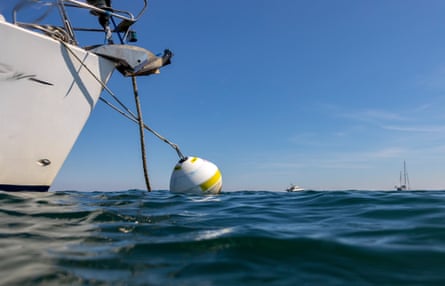
However, a remarkable transformation is underway. Groundbreaking new research has revealed that Dorset’s fragile seagrass meadows are not only staging a miraculous recovery, but are doing so at a pace that has left conservationists astonished. The catalyst for this ecological turnaround? The widespread implementation of innovative "eco-moorings"—specially engineered anchoring systems designed to secure vessels without ever scraping or ripping up the seabed.
According to a comprehensive study analyzing data collected between 2021 and 2025, scars caused by traditional anchors in targeted areas of Studland Bay have almost entirely vanished. In the zones protected by these trial eco-moorings, bare patches of seabed shrank by a staggering 94%. This dramatic physical regeneration has triggered a biological renaissance, marked by a soaring population of vulnerable marine species, most notably the protected spiny seahorse.
Spearheaded by the Studland Bay Marine Partnership—a collaborative coalition uniting conservation organizations, academic institutions, and boating enthusiasts—this success story offers a beacon of hope. As coastal ecosystems face mounting degradation globally from climate change, pollution, and coastal development, the Studland Bay project provides a scientifically proven, scalable blueprint for safeguarding busy marine environments around the British Isles and beyond.
Detailed Chronology: From Degradation to Restoration
To understand the magnitude of the recent recovery in Studland Bay, one must look back at the historical trajectory of the site and the timeline of interventions that turned the tide.

The Declining Years: A Haven Under Siege
Studland Bay, nestled along the Jurassic Coast of Dorset, has long been celebrated for its natural beauty and rich biodiversity. Designated as a Marine Conservation Zone (MCZ) in 2019, the bay houses one of the largest and most significant native seagrass (Zostera marina) meadows in the UK.
Yet, this ecological richness proved to be its Achilles’ heel. The sheltered waters made Studland an irresistible hotspot for recreational boaters, sailors, and holidaymakers. Every summer, hundreds of vessels dropped anchor. Traditional anchoring relies on heavy steel chains and anchors that drag along the seafloor, digging into the sediment to find a secure hold. In a dense seagrass meadow, this action acts like an underwater plow, shredding the vegetation, eroding the sediment, and leaving behind wide "scars" where life struggles to re-establish itself. Over time, these cumulative disruptions fractured the once-continuous meadows into fragmented patches, threatening the intricate web of life dependent on them.
2021: The Turning Point and the Trial Phase
Recognizing the escalating crisis, the Studland Bay Marine Partnership—bringing together bodies such as the National Trust, local conservationists, and marine stakeholders—took decisive action. In 2021, the partnership launched a pioneering trial, installing the first batch of 10 eco-moorings in the most heavily impacted areas of the bay.
These installations marked a philosophical shift in marine management: rather than simply banning boaters and sparking conflict with coastal communities, the partnership sought a technological compromise that allowed human recreation to co-exist with environmental protection.
2021–2025: The Academic Investigation
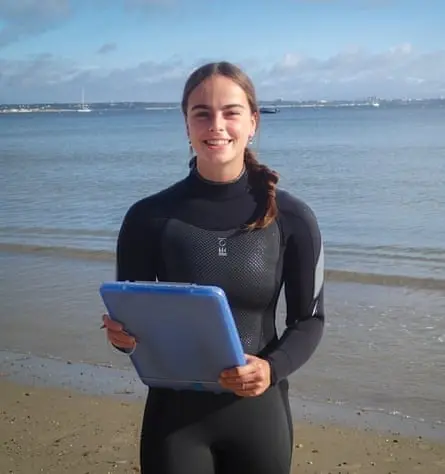
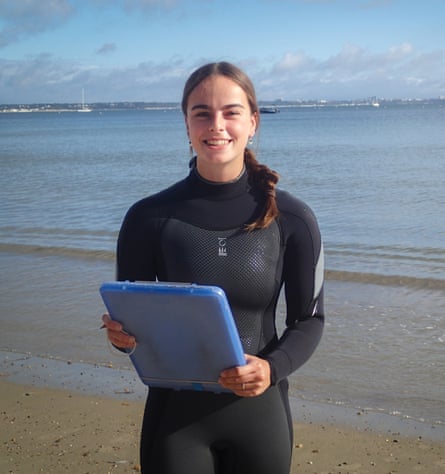
As the eco-moorings went to work, researchers began the meticulous process of monitoring their impact. The initiative formed the basis of an extensive academic study conducted by Kira Dunn as part of her master’s degree at the University of Southampton, supervised by eminent marine scientists including Ken Collins.
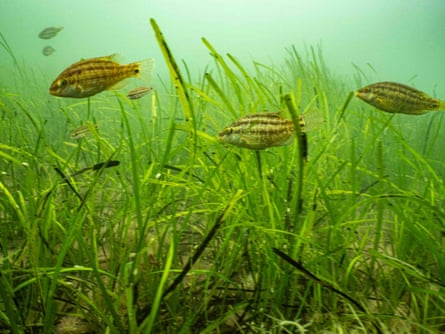
Dunn and her team analyzed high-resolution spatial and ecological data gathered continuously over the four-year period following the 2021 installation. By comparing zones equipped with eco-moorings against control areas where traditional chain moorings remained in use until 2023, the researchers were able to quantify the exact healing rate of the seabed.
The Present Day: A Surging Ecosystem
The fruits of this multi-year monitoring effort have now been fully realized. With traditional physical disturbance largely eliminated from the trial zones, the seagrass has demonstrated an extraordinary capacity for natural vegetative growth and seed recruitment. Concurrently, local volunteer divers began logging unprecedented sightings of marine wildlife, noting a "summer of surging seahorses" and a vibrant resurgence of diverse fish and crustacean populations throughout the bay.
Supporting Context & Metrics: The Science of Eco-Moorings and Ecosystem Value
Anatomy of an Eco-Mooring
To appreciate how this transformation occurred, one must examine the engineering behind the solution. Traditional moorings rely on heavy deadweight blocks or dragging anchors attached via long metal chains that swing in a wide radius with the tides, scouring everything in their path.
In contrast, an eco-mooring utilizes a low-impact design:
- The Helical Anchor: A 2-metre steel screw is drilled securely and deeply into the seabed, maintaining a rock-solid grip without displacing large volumes of sediment.
- The Elasticated Riser: Attached to the subterranean screw is a specialized 2-metre elasticated riser line that connects directly to a surface mooring buoy.
- Tidal Adaptation: As the tide rises and falls, the elasticated riser smoothly stretches and retracts. Crucially, it never sags onto the seafloor, eliminating the sweeping chain action that causes scouring. The seabed beneath the swing radius remains completely untouched.
Quantifying the Recovery: The Study’s Hard Numbers
The research led by Kira Dunn and supervised by the University of Southampton provided undeniable, data-driven proof of the system’s efficacy:
- 94% Reduction: In the primary study area where the 10 trial eco-moorings were installed in 2021, bare patches and anchor scars in the seagrass shrank by an average of 94% between 2021 and 2025.
- 65% Reduction: In a secondary study area where traditional chain moorings were left in place until a phased removal in 2023, scars were still observed to reduce by 65%, highlighting that even partial or delayed remediation yields measurable ecological improvements.
Why Seagrass Matters: More Than Just Grass
Often referred to as the "lungs of the sea" or marine rainforests, seagrasses are among the most productive and valuable ecosystems on Earth. Their importance spans multiple ecological dimensions:
- Carbon Sequestration: Though they cover less than 0.1% of the ocean floor, seagrass meadows are estimated to store up to twice as much carbon per square kilometre as terrestrial forests. They lock carbon away in the sediment for millennia—a process known as "blue carbon."
- Coastal Protection: The dense blades of seagrass attenuate wave energy, reducing coastal erosion and protecting vulnerable shorelines from severe weather and rising sea levels.
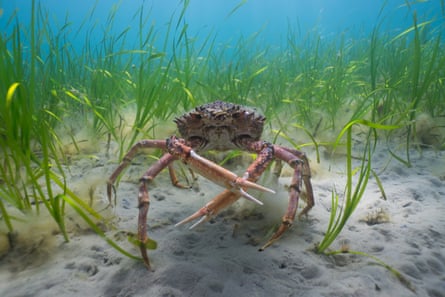
- Biodiversity Hotspots: The meadows act as essential nursery grounds for numerous commercial fish species, as well as complex habitats for rare invertebrates and vertebrates. In Studland Bay, the protected spiny seahorse (Hippocampus guttulatus) and the occasional short-snouted seahorse (Hippocampus hippocampus) rely on the vertical blades to anchor their tails against currents while hunting for small crustaceans. The bay has also seen returning populations of conger eels, spider crabs, and corkwing wrasse.
Official Statements and Perspectives
The success at Studland Bay has drawn praise from leading environmentalists, researchers, and community leaders, all of whom emphasize the broader implications of the project.
Kira Dunn, lead researcher and master’s graduate from the University of Southampton:
"The results clearly show that seagrass is recovering in areas where physical disturbance has been removed. It’s incredibly encouraging to see how quickly this important habitat can regenerate when given the opportunity. The data proves that our marine environments possess a resilient bounce-back capability if we simply stop the daily trauma we inflict upon them."
David Brown, chair of the Studland Bay Marine Partnership steering group and lead ecologist for the National Trust:
"The impact has been beyond our expectations. Thanks to robust monitoring and research, we now have the science to prove how eco-moorings directly benefit seagrass and all the microscopic and macroscopic species that rely on it. This proves that conservation does not have to come at the expense of human recreation; we can find smart ways to share our seas."
Dr. Ken Collins, emeritus research fellow and diving officer at the University of Southampton, supervisor of the study:
"This research provides robust scientific evidence that eco-moorings are an effective, highly reliable tool for seagrass conservation and restoration. The findings strongly support the continued use and expansion of eco-mooring schemes, not only here in Studland, but across other sensitive marine environments where vital seagrass habitats are currently under severe pressure from boating activity."
Future Outlook: A Blueprint for British Waters and Beyond
The triumphs recorded in Studland Bay arrive at a critical juncture for global marine conservation. Worldwide, seagrass meadows are in rapid decline, pressured relentlessly by agricultural runoff, coastal industrialization, dredging, and climate-induced marine heatwaves. In the UK alone, it is estimated that up to 90% of historic seagrass meadows have been lost over the last century.
Buoyed by the undeniable success of the Dorset trial, the Studland Bay Marine Partnership is setting its sights on the future. The roadmap ahead involves several key strategic objectives:
- Expanding the Eco-Mooring Network: Plans are underway to secure funding and regulatory approvals to replace a larger percentage of traditional swing moorings in Studland Bay with eco-friendly alternatives, ensuring comprehensive coverage across the entire marine conservation zone.
- National Knowledge Transfer: The partnership aims to share its monitoring data, logistical frameworks, and engineering insights with harbor authorities, conservation trusts, and coastal communities across England, Scotland, Wales, and Northern Ireland. Popular boating hubs facing similar degradation—such as parts of the Solent, Cornwall, and Devon—are prime candidates for adopting the model.
- Integrating Boater Communities: A core component of the future outlook is maintaining strong engagement with the recreational boating community. By demonstrating that eco-moorings protect the seabed without compromising the safety and convenience of anchoring, the project fosters a culture of stewardship among water users.
- Long-Term Ecological Tracking: Academic and volunteer monitoring will continue unabated. Conservationists are eager to observe whether the burgeoning seahorse populations will stabilize at higher densities or expand into newly recovered corridors within the bay.
As climate anxiety often dominates environmental discourse, the regeneration of Studland Bay stands as a rare, tangible victory. It demonstrates that when human ingenuity, scientific rigor, and community collaboration align, nature possesses an astonishing capacity to heal. By transforming how we anchor our boats, we can secure the future of our hidden underwater meadows—ensuring that vibrant seagrass and dancing seahorses remain a thriving part of the UK’s natural heritage for generations to come.



