

Executive Overview
As the global energy transition accelerates, the search for reliable, round-the-clock, emissions-free electricity has taken on unprecedented urgency. While wind and solar power continue to capture headlines for their rapid deployment and falling costs, they remain fundamentally intermittent, requiring massive investments in battery storage and grid infrastructure to ensure stability. Enter geothermal energy: a baseload power source that draws limitless heat directly from the earth’s crust, capable of generating clean electricity 24 hours a day, 365 days a year.
Yet, conventional geothermal development has long faced an uphill battle against geological unpredictability, high upfront capital costs, and a history of declining well performance that has frequently unnerved investors. Traditional hydrothermal plants require a delicate alignment of subsurface conditions—permeable rock, sufficient fluid flow, and high ambient temperatures—making them difficult to scale and prone to premature degradation.
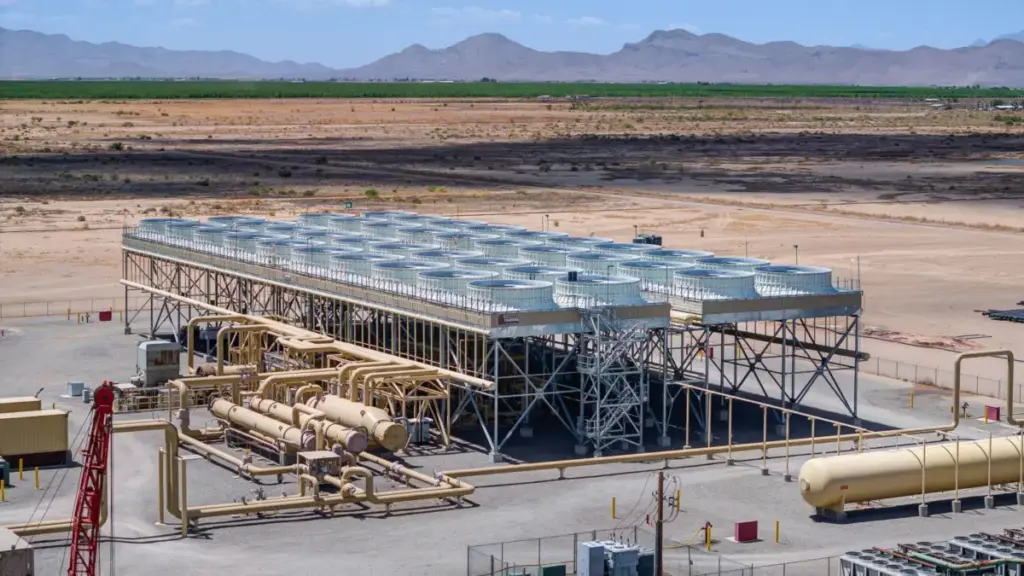
Against this backdrop, the dramatic turnaround of the Lightning Dock geothermal power plant in New Mexico offers a transformative case study for the renewable energy sector. Acquired in mid-2024 by Zanskar—a geothermal exploration and technology startup—the facility was on the brink of economic collapse. The underground reservoir feeding the plant was experiencing a catastrophic drop in water temperature, rendering the infrastructure economically unviable.
However, by leveraging cutting-edge predictive modeling and advanced subsurface imaging techniques, Zanskar achieved what many thought impossible. The company identified a deeply buried, overlooked zone of the subterranean reservoir, drilled down 8,000 feet, and completely revitalized the facility. Operating at full capacity once more, Lightning Dock is now generating more than double its historical electricity output, injecting 15 megawatts of clean power into the local grid—enough to supply approximately 11,000 U.S. homes.
More importantly, this technological success challenges long-held industry dogmas regarding depth, permeability, and resource longevity. By demonstrating that drilling deeper does not necessarily sacrifice fluid flow, Zanskar’s breakthrough signals a paradigm shift for conventional hydrothermal assets across the United States. It proves that the geothermal industry does not always need to reinvent the wheel via complex enhanced geothermal systems (EGS); sometimes, untapped subterranean potential is simply waiting for a second look through a modern technological lens.
Detailed Chronology: From Near-Collapse to Full Recovery
To understand the magnitude of Zanskar’s achievement at Lightning Dock, one must examine the timeline of the facility’s decline and its subsequent, rapid resurrection.
The Origins and Decline of Lightning Dock
Originally brought online in 2013, the Lightning Dock geothermal site in southwestern New Mexico was designed to harness subterranean heat to drive a commercial power generation facility. Historically, the plant relied on two primary production wells to feed hot water into the system. In an ideal geothermal setting, water flows continuously through naturally fractured hot rocks, absorbing thermal energy before being piped to the surface to spin turbines.
However, geothermal reservoirs are dynamic and often misunderstood systems. It is common for well sites to experience a gradual drop in temperature over time, typically at a modest rate of 1 to 2 degrees Fahrenheit per year as heat is extracted. But Lightning Dock suffered from a far more aggressive thermal decay. In the years immediately preceding Zanskar’s acquisition, the facility recorded an alarming temperature drop of 50 degrees Fahrenheit over a mere five-year span—averaging a catastrophic 10 degrees of cooling annually.
By June 2024, when Zanskar stepped in to purchase the failing plant, the situation was untenable. The water entering the power facility was registering a tepid 250 degrees Fahrenheit. The plant’s engineering design required operating temperatures of at least 310 degrees Fahrenheit to function efficiently. Without intervention, the facility was destined for permanent decommissioning.
The Zanskar Intervention: Mapping the Subsurface
Upon taking ownership, Zanskar deployed its proprietary advanced modeling techniques and subsurface mapping algorithms to diagnose the root cause of the temperature crash. Rather than accepting that the local geothermal resource was simply exhausted, the company’s analytical tools revealed a much more nuanced geological reality.
According to Joel Edwards, Zanskar’s co-founder and Chief Technology Officer (CTO), the original production wells were hitting merely the uppermost fringe of the underground thermal reservoir. Furthermore, those legacy wells were relatively shallow, bottoming out at just 2,500 feet, and were sub-optimally positioned relative to the true core of the hydrothermal plume.
Armed with high-resolution predictive modeling, Zanskar’s engineering team formulated a bold hypothesis: if the company could bypass the depleted shallow zones and drill a significantly deeper, strategically targeted well, it could tap into the heart of the reservoir and restore the plant’s economic viability.
The Drilling and Recommissioning Phase
Following months of meticulous preparation, the team executed their drilling campaign, sinking a new well to a depth of 8,000 feet into the New Mexico bedrock. The newly constructed well officially commenced commercial operations in May 2025.
The results were instantaneous and dramatic. After a full year of continuous operation, the new well has maintained an extraordinary flow rate exceeding 4,000 gallons per minute. The thermal metrics have stabilized, and the plant’s operational capacity has undergone what Edwards describes as a "complete turnaround."
Rather than treating the project as a short-term fix, Zanskar has instituted rigorous monitoring protocols to validate long-term performance. While geothermal operators know that sustained output is the true test of any asset, the initial data collected over the past twelve months suggests that Lightning Dock is poised for decades of reliable, clean energy generation.
Supporting Context & Metrics: Challenging Conventional Geothermal Wisdom
The success at Lightning Dock is more than just a localized corporate victory; it carries profound implications for the broader conventional geothermal energy sector, challenging long-standing geological assumptions.
The Depth-Permeability Trade-Off
In the conventional wisdom of geothermal engineering, developers face an inescapable geological trade-off known as the depth-permeability paradox. Geologists have long understood that geothermal heat increases with depth—the deeper you drill into the earth’s crust, the hotter the rocks become. However, this thermal gain has historically been counterbalanced by a structural penalty: as you descend deeper, lithostatic pressure compacts the surrounding rock, causing fractures to close and permeability to plummet.
In practical terms, this meant that drilling deeper wells often yielded high temperatures but insufficient water flow, making it economically impossible to extract the energy efficiently. Consequently, traditional geothermal well fields have historically clustered at relatively shallow depths of 3,000 to 5,000 feet.
Shattering Industry Dogmas
Zanskar’s discovery at Lightning Dock directly disrupts this paradigm. When the team drilled down to 8,000 feet, they discovered not a tightly sealed, impermeable wall of rock, but an environment where fluid flow actually increased relative to the shallower layers.
Ben Brenner, director of federal affairs at Zanskar, noted the paradigm-shifting nature of this discovery:
"That fundamentally changes how you think about not just Lightning Dock but all hydrothermal assets in America and what the potential can be for all of them."
By proving that deep hydrothermal systems can maintain high permeability, Zanskar has opened up vast new frontiers for conventional geothermal exploration. The company’s findings suggest that the domestic geothermal industry can mimic the evolutionary arc observed in the oil and gas sector over the past several decades. While oil and gas drilling once operated near the surface, modern hydrocarbon extraction routinely reaches depths of 20,000 feet or more. Edwards believes a similar technological maturation is coming to geothermal energy, where drilling past 5,000 feet will transition from an expensive exception to an industry standard.
Quantitative Breakdown of Lightning Dock’s Performance
To quantify the impact of Zanskar’s intervention, consider the following performance metrics:
- Temperature Recovery: Water temperature restored to operational thresholds well above the 310°F design minimum, reversing a prior cooling trend of 10°F per year.
- Flow Rate: Sustained fluid flow exceeding 4,000 gallons per minute after a full year of operation.
- Electricity Generation: The plant currently generates over twice the electricity it would have produced using the legacy shallow wells.
- Grid Contribution: A steady 15 megawatts of baseload capacity delivered directly to the local electrical grid, supplying enough emissions-free energy to power roughly 11,000 average U.S. homes.
Official Statements and Industry Perspectives
The resurrection of Lightning Dock has drawn widespread attention from renewable energy analysts, policymakers, and industry executives alike. The insights shared by Zanskar’s leadership shed light on both the technical rigor behind the project and the strategic mindset required to unlock dormant renewable energy assets.
Reflecting on the psychological and operational shift within the company, CTO Joel Edwards emphasized the dramatic nature of the recovery:
"The plant has completely turned around. It looks really exciting. Ultimately you need to run these things for long time frames to get confidence in their performance over long time frames."
Edwards’ cautious optimism underscores the empirical nature of modern renewable energy development. While initial metrics are exceptionally promising, geothermal assets require multi-year validation to satisfy institutional investors and grid operators.
Ben Brenner, Zanskar’s director of federal affairs, expanded on the macro-level regulatory and industrial implications of the breakthrough. By demonstrating that existing hydrothermal sites possess vastly underutilized depths, Zanskar’s work bridges the gap between conventional geothermal and next-generation energy systems.
Furthermore, industry experts frequently draw comparisons between Zanskar’s approach and the broader wave of investment flooding into Enhanced Geothermal Systems (EGS). Companies like Fervo Energy have pioneered advanced hydraulic fracturing techniques—borrowed heavily from the shale oil and gas industry—to artificially create permeability in hot, dry rock formations where natural water flow is absent. While EGS represents a critical frontier for expanding geothermal development to geographic areas previously deemed unsuitable, Zanskar’s success serves as a timely reminder that conventional hydrothermal assets still harbor immense untapped potential.
As Edwards aptly points out, there is still plenty of "low-hanging fruit" sitting quietly beneath the surface of existing geothermal installations. Many conventional resources do not require radical, high-risk artificial fracturing techniques to become economically viable; they simply require modern diagnostic tools, advanced machine-learning modeling, and the courage to drill deeper.
Future Outlook: The Next Phase for Lightning Dock and Geothermal Energy
With the immediate emergency at Lightning Dock successfully resolved and a full year of stable performance under its belt, Zanskar is already looking toward the horizon. The company has laid out a comprehensive roadmap for future development at the New Mexico site.
Over the next few years, Zanskar plans to execute additional drilling campaigns and implement targeted upgrades to the surface power plant infrastructure. These facility enhancements are projected to squeeze even higher electrical output out of the same geothermal footprint, further maximizing the economic efficiency of the asset.
Implications for the U.S. Clean Energy Grid
The broader implications of Zanskar’s playbook extend far beyond the borders of New Mexico. Across the western United States and in geologically active regions worldwide, dozens of legacy geothermal installations face declining reservoir pressures and thermal degradation. Historically, plant owners faced difficult choices: invest massive capital in risky exploratory drilling, scale back operations, or abandon the facilities entirely.
Zanskar’s success provides a blueprint for asset rescue. By combining artificial intelligence, advanced subsurface mapping, and deep-well engineering, failing power plants can be transformed into high-performing clean energy generators at a fraction of the cost and environmental footprint required to build entirely new greenfield projects.
As federal and state governments push aggressively toward decarbonization goals—often mandating 100% carbon-free electricity by mid-century—the demand for reliable baseload power will only intensify. Wind and solar will continue to provide the bulk of daytime generation, but geothermal energy will increasingly serve as the foundational anchor of a stable, resilient grid.
The story of Lightning Dock proves that the earth beneath our feet holds far more energy than we previously realized. By peering deeper into the subsurface and applying twenty-first-century technology to conventional geology, companies like Zanskar are proving that the future of clean energy may well lie in giving our oldest renewable assets a second chance.



