

Executive Overview
As the global population climbs past eight billion, humanity’s food systems face an unprecedented convergence of ecological crises. On land, centuries of intensive industrial farming, reliance on synthetic fossil-fuel fertilizers, and topsoil degradation have left agricultural foundations dangerously compromised. At sea, decades of overfishing, marine habitat destruction, and climate-induced ocean acidification have decimated wild fish and seafood populations.
In response to these systemic vulnerabilities, a groundbreaking alliance is taking shape. The Rodale Institute—the global pioneer of regenerative organic agriculture—has formally joined forces with GreenWave, a premier organization spearheading the regenerative aquaculture movement. This strategic research partnership seeks to bridge the gap between terrestrial and marine farming, exploring how ocean-based food production can deliver critical ecological and nutritional resources back to land-based agriculture.
At the heart of this collaboration is a shared philosophy: that humanity’s future food security depends not on competing with nature, but on working in synchronicity with natural ecosystems across both land and sea. By evaluating the efficacy of ocean-harvested kelp as a natural agricultural biostimulant, the partnership aims to validate ancient coastal wisdom using cutting-edge, rigorous science. The results of these trials, slated for release in 2027, could fundamentally alter how organic farmers nourish their crops, manage soil health, and combat climate change.
Detailed Chronology: From Deep-Sea Overfishing to Regenerative Aquaculture
The Roots of the Crisis
Long before modern agricultural practices began altering landscapes, early human societies gathered abundant sustenance from the world’s oceans and coastlines. However, the dawn of industrialization brought the extractive mentalities of land-based farming directly out to sea.
By the late 20th century, traditional fishing methods had pushed marine ecosystems to their absolute limits. Bren Smith, a native of Newfoundland, Canada, experienced this devastation firsthand. Beginning his career at age 14, Smith spent his youth working the grueling waters of the Georges Bank and Grand Banks, hunting for tuna and lobster.
By the 1990s, wild fish stocks had plummeted to unsustainable levels. Seeking a viable alternative that would provide meaningful employment—so-called "blue jobs"—Smith transitioned into finfish aquaculture. Yet, his optimism was short-lived. He quickly observed that the worst ecological mistakes of industrial land farming were being mirrored on the water: excessive applications of artificial nutrients, heavy reliance on antibiotics and pesticides, widespread water degradation, and the systematic disruption of local marine life.
The Birth of GreenWave
Realizing that commercial finfish farming was fundamentally unsustainable, Smith envisioned a radically different paradigm. He asked a simple yet revolutionary question: What if we farmed species that do not swim away and require zero external inputs?
This realization birthed GreenWave and its pioneering model for vertical underwater ocean farming. Designed to minimize environmental footprints while maximizing productivity, GreenWave’s aquaculture systems feature hurricane-proof anchors at the margins and floating horizontal lines across the water’s surface.
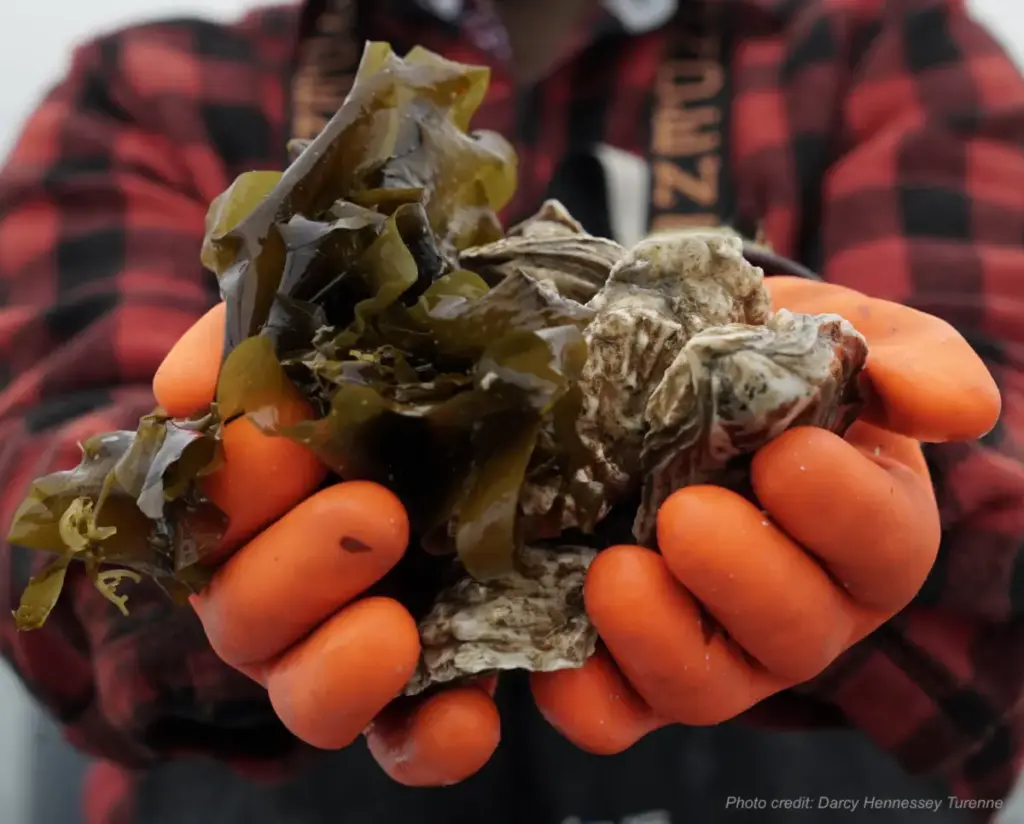
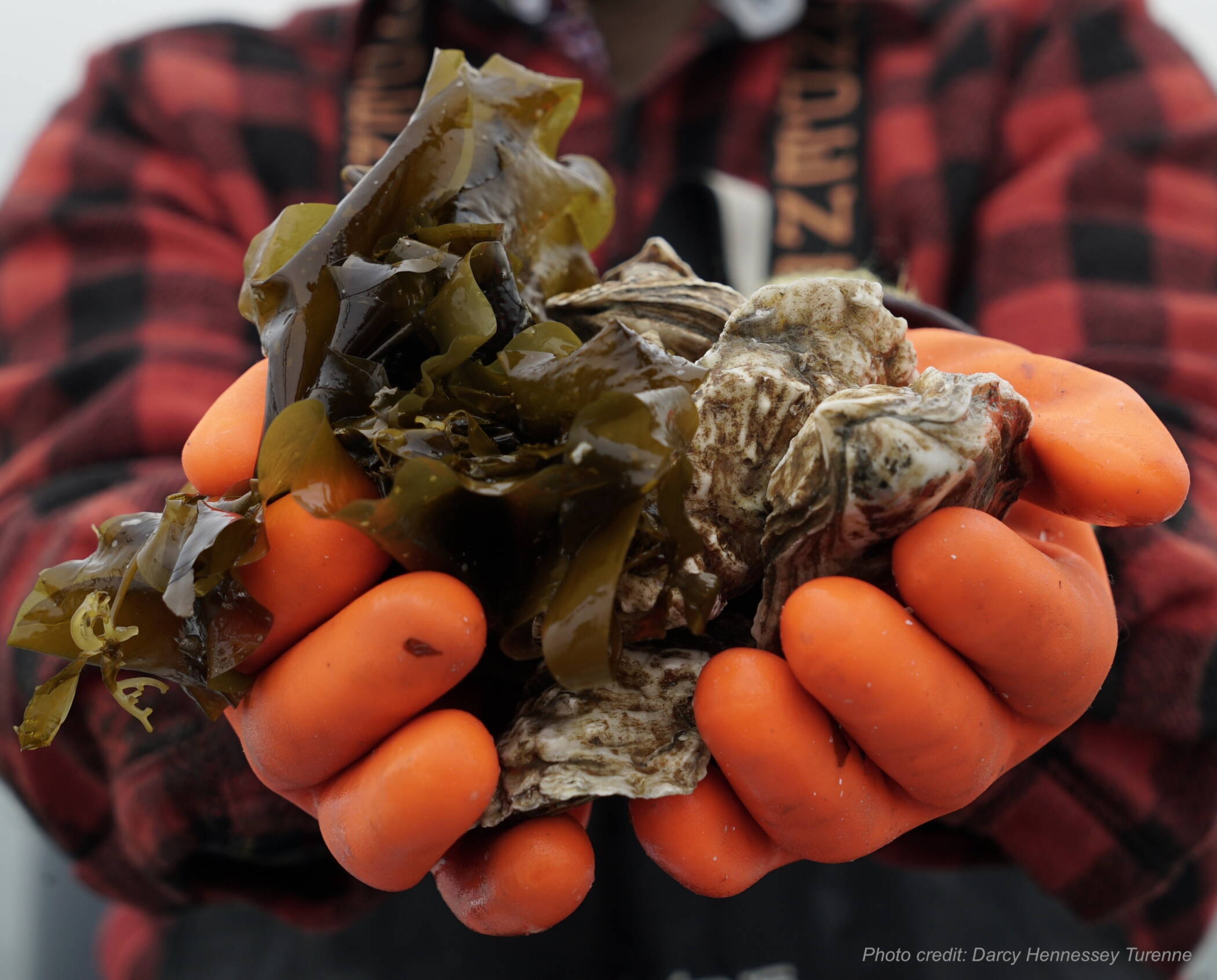
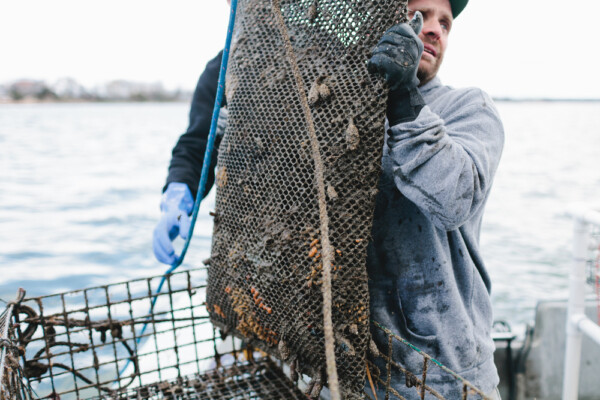
From these surface lines, lush carpets of kelp and other seaweeds cascade downward, shadowing hanging nets filled with scallops and mesh socks cradling mussels. At the benthic zone—the very bottom of the water column—oysters reside in protective cages while clams burrow safely in the sand. Crucially, these shellfish are filter feeders, subsisting entirely on naturally occurring phytoplankton and algae suspended in the water column.
Democratizing Ocean Farming
Since launching its regional training programs in 2017, GreenWave has evolved from an innovative concept into a global movement. The organization utilizes an open-source model, providing a comprehensive toolkit that empowers individuals—requiring essentially just 20 acres of water lease, a boat, and around $30,000 in startup capital—to establish their own regenerative ocean farms.
To date, GreenWave has successfully trained and supported more than 8,500 aquafarmers, nursery operators, and coastal entrepreneurs. By fostering farmer-owned and farmer-run cooperatives in communities where fishing was once the primary economic engine, GreenWave is transforming former hunters of the sea into a new generation of climate stewards.
Supporting Context & Metrics: The Science of Land and Sea Integration
The Ecological Mechanics of Vertical Ocean Farms
The regenerative power of GreenWave’s vertical farm design lies in its polyculture approach, which mimics complex natural ecosystems. Kelp and other seaweeds act as marine lungs and chemical scrubbers; they absorb excess carbon dioxide from the surrounding seawater while releasing vital oxygen.
This biochemical process actively mitigates localized ocean acidification—a growing threat driven by rising global temperatures—ensuring that bivalves can successfully form and maintain thick, protective calcium carbonate shells. In return, the filter-feeding shellfish consume suspended particulates, significantly clarifying the water column. This clarity allows increased sunlight penetration to reach the growing kelp beds below, accelerating their biological development.
The sheer efficiency of these systems is staggering. According to GreenWave’s operational data, a single acre of vertical ocean farm can yield up to 250,000 shellfish and 25 tons of nutrient-rich sea greens every five months. Best of all, these crops require zero fresh water, zero synthetic fertilizers, zero artificial feed, and zero arable land.
The Soil-Sea Nexus
For generations before the advent of synthetic, fossil-fuel-derived agricultural inputs in the mid-20th century, coastal farmers routinely turned to the sea for fertility. Coastal communities harvested drift kelp and discarded shellfish shells, applying them directly to garden beds and crop fields to restore depleted soil vitality.
However, the post-World War II agricultural revolution replaced these time-tested, organic amendments with cheap, petroleum-based chemical fertilizers. While these synthetic inputs initially boosted yields, decades of application have proved disastrous for soil microbiology, stripping land of its natural resilience, polluting waterways with agricultural runoff, and locking farmers into an expensive, unsustainable chemical dependency.
Organic agriculture rejects these synthetic shortcuts, demanding natural amendments that rebuild true soil health from the ground up. This is where the Rodale Institute and GreenWave partnership finds its most profound intersection.
Current Research Trials at Rodale Institute
To scientifically validate the agricultural value of marine inputs, researchers at the Rodale Institute have embarked on an extensive, multi-year scientific investigation. Led by Dr. Dinesh Panday, a prominent soil scientist at the Institute, the research team is evaluating kelp-based biostimulants under rigorous real-world field and controlled greenhouse conditions.
The study is structured around:
- A Two-Year Field Trial: Assessing how varying application rates of GreenWave kelp biostimulant impact specialty crop performance (specifically lettuce and bell peppers) and overall soil health metrics.
- A One-Year Greenhouse Experiment: Providing controlled data on nutrient uptake, root development, and plant stress tolerance.
To establish comparative benchmarks, the kelp biostimulant is being tested alongside biochar—a widely recognized, highly porous organic soil amendment—both independently and in combined application plots.
"Kelp contains a vast array of trace minerals that actively support healthy plant growth," explains Dr. Dinesh Panday. "Through this research, we are quantifying its precise value for specialty crops within regenerative organic farming systems, with comprehensive findings expected to be published by 2027."
Dr. Andrew Smith, Chief Scientific Officer at the Rodale Institute, emphasizes the biological mechanisms at play: "We have long known that products harvested from the sea possess the innate power to promote plant growth and vitality. Kelp functions as a powerful biostimulant, waking up dormant beneficial microbes in the soil, enhancing nutrient uptake efficiency, and shielding plants against environmental stresses like drought."
Official Statements & Perspectives
The partnership represents a philosophical and practical alignment between two of the world’s most influential sustainable agriculture entities.
-
Bren Smith, Cofounder and Co-Executive Director of GreenWave:
"As our global population continues to expand, our food system is inevitably being pushed out to sea. We are going to be eating significantly more food from the ocean, because our wild marine supplies simply cannot support us. By partnering with the Rodale Institute, we are building a healthier, more resilient food supply and directly connecting land and ocean farmers through shared regenerative practices. We knew we needed a technically sophisticated research partner to dig deep into the science. Meeting with Rodale’s team felt like talking farmer-to-farmer—we share the exact same long-term vision."
-
Dr. Andrew Smith, Chief Scientific Officer, Rodale Institute:
"We need credible, peer-reviewed science to fully evaluate kelp’s agricultural benefits and determine how farmers can extract maximum value from it. In a truly regenerative food system, producers across both land and sea must collaborate to protect the natural resources we all depend upon. Rodale is dedicated to supporting the next generation of soil-based organic farmers, and this partnership allows us to expand those horizons into the blue half of our planet."
Future Outlook: A Unified Vision for 2027 and Beyond
As the Rodale Institute’s scientific trials progress toward their projected completion in 2027, the implications of this partnership extend far beyond academic curiosity. If the research successfully demonstrates that ocean-derived kelp biostimulants can match or exceed the performance of traditional soil amendments while enhancing crop nutrient density, it will provide organic farmers with a powerful, locally sourced tool to combat climate stress.
Furthermore, this alliance establishes a scalable economic model for coastal communities worldwide. By establishing direct supply chains between GreenWave’s network of regenerative ocean farmers and Rodale’s vast community of terrestrial organic growers, the agricultural sector can begin to heal the artificial divide between land and water.
For consumers seeking to align their daily dietary choices with planetary health, the path forward is increasingly clear. Programs like the Monterey Bay Aquarium Seafood Watch program feature a dedicated "Super Green List," highlighting nutrient-dense species that require little to no environmental impact to harvest. Prominently featured on this list are the core products of the GreenWave model: mussels, clams, oysters, and kelp.
Ultimately, the partnership between Rodale Institute and GreenWave serves as a beacon of hope in an era of environmental uncertainty. By harmonizing the cultivation of the soil with the stewardship of the sea, these organizations are proving that humanity can transition from being pillagers of nature to active stewards of a flourishing, resilient biosphere.



