

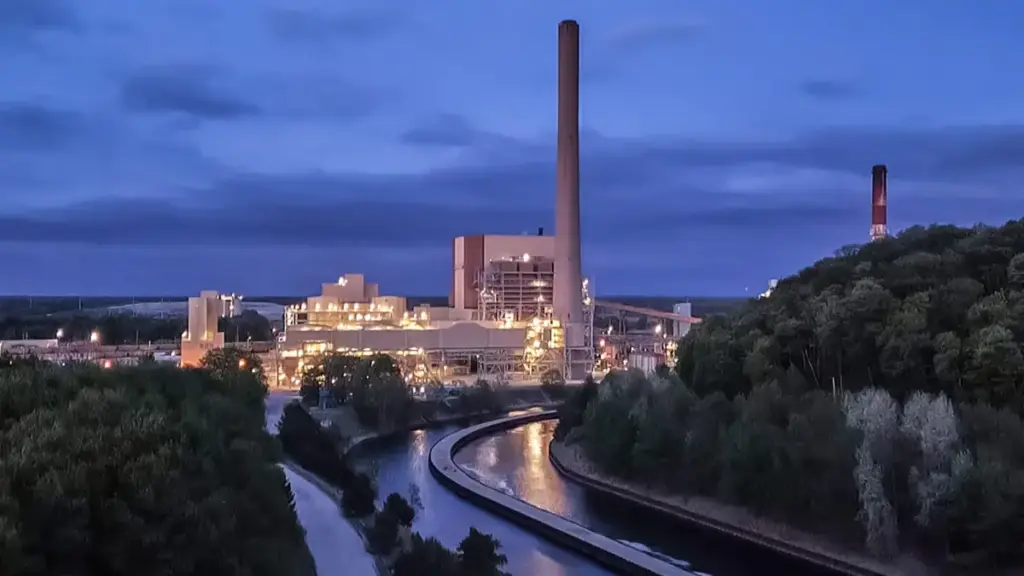
WASHINGTON — In a landmark legal rebuke to executive overreach, a federal appeals court ruled on Friday that the Department of Energy (DOE) overstepped its legal authority when it ordered the forced continuation of operations at an aging, highly polluting coal-fired power plant in Michigan.
The decision by the U.S. Court of Appeals for the D.C. Circuit marks the first major judicial check on the Trump administration’s aggressive use of emergency powers to prop up the fading fossil fuel industry. Writing for the court, Appeals Court Judge Cornelia Pillard delivered a sharp interpretation of the Federal Power Act, ruling that the emergency statute invoked by the administration “is essentially a narrow, last-resort backstop.”
The ruling directly targets the J.H. Campbell generating station in West Olive, Michigan—a 64-year-old facility that was mere days away from a scheduled permanent retirement last May when federal regulators intervened. The DOE justified the eleventh-hour intervention by citing speculative power grid shortages and the surging electricity demands of modern data centers. However, the three-judge panel dismantled these justifications, establishing a crucial legal precedent that executive fiat cannot bypass statutory limits under the guise of an emergency.
Environmental advocates, legal experts, and energy analysts view the decision as a watershed moment. While the ruling does not immediately plunge the sprawling Michigan plant into darkness, it fundamentally undercuts the legal architecture the administration has relied upon to keep at least seven aging fossil fuel infrastructure assets running nationwide, despite their heavy toll on public health, environmental stability, and consumer pocketbooks.
Executive Overview
The legal battle over the J.H. Campbell plant sits at the intersection of energy policy, national security rhetoric, and climate politics. On his first day in office in 2025, President Donald Trump signed an executive order declaring a sweeping “national energy emergency.” This declaration instructed federal agencies to utilize every available emergency statutory mechanism to maximize fossil fuel production and keep existing thermal generation assets online.
Prompted by this mandate, the Department of Energy leaned heavily on Section 202(c) of the Federal Power Act. Traditionally designed to address sudden, unpredictable disruptions—such as extreme weather events, physical attacks, or catastrophic grid failures—the statute was deployed by the administration as a blunt instrument to circumvent local utility plans, environmental phase-outs, and market economics.
The J.H. Campbell plant became the poster child for this strategy. Operated by Consumers Energy Company, the facility was slated to shutter in May of last year as part of a multi-year transition toward cleaner, more cost-effective renewable energy alternatives. Instead, the federal emergency order forced the facility to continue burning coal, sparking a multi-jurisdictional legal battle involving environmental organizations, state stakeholders, and utility consumers.
Friday’s ruling by the D.C. Circuit cuts to the core of the administration’s emergency rationale. The court determined that the administrative record failed to substantiate a genuine, imminent emergency that would justify overriding the statutory parameters of the Federal Power Act. By establishing that executive declarations of emergencies must be anchored in objective reality rather than political preference, the court has thrown open the door for challenges against similar federal orders across the United States.
Detailed Chronology: From Scheduled Retirement to Federal Mandate and Judicial Rejection
To understand the weight of the D.C. Circuit’s decision, it is necessary to trace the rapid escalation of events that transformed a routine utility retirement into a constitutional showdown.
The Road to Retirement
For years, Consumers Energy Company had planned the phased retirement of the J.H. Campbell complex, a massive coal-fired generation station sitting on the shores of Lake Michigan. The utility, alongside regional grid operators and state regulators, mapped out a transition plan designed to replace Campbell’s output with wind, solar, and modern energy storage systems. By early spring, preparations for the May shutdown were in their final phases. Contracts were winding down, staff were transitioning, and local communities were bracing for the economic evolution.
The Emergency Intervention
Just days before the scheduled shutdown, the geopolitical and regulatory landscape shifted dramatically. Citing the administration’s newly minted national energy emergency declaration, the Department of Energy intervened. Regulators issued a unilateral emergency order under Section 202(c) of the Federal Power Act, compelling Consumers Energy Company to keep the facility operational on a mandatory basis. The DOE argued that the regional grid faced looming capacity deficits driven by spiking industrial demand and the rapid proliferation of power-hungry artificial intelligence data centers.
The Legal Counter-Offensive
Recognizing the precedent-setting danger of using emergency powers to halt the energy transition, a coalition of environmental groups—including the Environmental Defense Fund (EDF) and the Natural Resources Defense Council (NRDC)—filed an expedited lawsuit challenging the DOE’s directive. The plaintiffs argued that the administration was manufacturing a crisis to artificially sustain uncompetitive fossil fuel infrastructure.
Throughout late 2025 and early 2026, the case wound its way through the federal court system. While lower courts and administrative bodies weighed initial motions, several other lawsuits targeting similar federal orders across the country were deliberately placed on hold, awaiting the D.C. Circuit’s definitive interpretation of the Federal Power Act.
The D.C. Circuit Court Decision
The culmination of this legal battle arrived on Friday. The D.C. Circuit Court of Appeals issued its decisive opinion, vacating the DOE’s order and ruling that the agency’s invocation of emergency powers was unlawful. The court emphasized that administrative convenience or broad policy preferences cannot substitute for the concrete, statutory requirements of an actual emergency. With this ruling, the legal shield protecting the J.H. Campbell plant has effectively collapsed, setting off immediate scramble among litigants, utilities, and federal attorneys.
Supporting Context & Metrics: Pollution, Public Health, and Financial Toll
While the legal arguments centered on statutory interpretation, the human and economic costs unfolding on the ground in West Olive, Michigan, paint a stark picture of the consequences of the federal mandate.
Environmental Degradation and Public Health Impacts
According to data compiled by the Environmental Defense Fund, the J.H. Campbell plant stands out as the most polluting among the cohort of coal facilities forced to remain open by the Trump administration. Since the federal emergency order went into effect, the 64-year-old plant has poured massive quantities of hazardous air pollutants into the atmosphere.
By the end of June, emissions tracking revealed that the facility had released:
- 1,000 tons of nitrogen oxides ($NO_x$), which contribute to smog and ground-level ozone formation.
- 2,000 tons of sulfur dioxide ($SO_2$), a primary driver of acid rain and respiratory distress.
- 140 tons of fine particulate matter ($PM_2.5$), microscopic pollutants capable of penetrating deep into human lung tissue and the bloodstream.
The demographic footprint surrounding the facility exacerbates these concerns. Approximately 3,000 residents live in close proximity to the plant in West Olive, Michigan. Health impact models utilized by environmental health experts estimate that the toxic cocktail of emissions forced into the local airshed over the past year could contribute to approximately 100 new cases of asthma among local residents, disproportionately affecting vulnerable populations, children, and the elderly.
The Financial Burden on Ratepayers
The cost of maintaining a decaying, uneconomic coal plant is not borne solely by the federal government; it trickles down directly to consumers. Keeping the J.H. Campbell plant online has amassed a staggering bill totaling $259 million since May of last year.
To recoup these expenses, Consumers Energy Company has initiated proceedings to recover the costs from its captive customer base. The financial shock is not restricted to Michigan alone; ratepayers across 10 neighboring states connected to the regional transmission grid face potential cost-allocation impacts. Critics point out the profound economic irony of forcing consumers to pay hundreds of millions of dollars to maintain high-cost, high-pollution electricity generation when cheaper, cleaner alternatives are readily available.
Official Statements and Legal Analysis
Reactions to the D.C. Circuit’s ruling reflect a deep ideological and legal divide over the future of American energy infrastructure. Legal experts involved in the litigation offered measured assessments of both the immediate victory and the hurdles that remain.
Ted Kelly, director and lead counsel for U.S. Clean Energy at the Environmental Defense Fund, emphasized that while the ruling does not magically erase the administration’s rhetorical stance on energy emergencies, it erects an unyielding legal boundary around executive action.
"You can say there’s an ‘energy emergency’ as much as you want—even if you’re the president," Kelly remarked during a post-ruling briefing. "But what you can actually do depends on what the real facts on the ground are and what the law actually lets you do in different situations."
Gavin McCabe, senior litigating counsel at the Natural Resources Defense Council, highlighted the blatant contradiction between the administration’s professed concern over grid reliability and its simultaneous, aggressive sabotage of clean energy alternatives.
"Why would the administration be blocking sources of energy that are ready to come online in favor of keeping online something that has been set to be retired?" McCabe asked. "I mean, there appears to be a pretext that the president wants to help coal industry supporters. And this is one of the ways to attempt to do that."
This contradiction is underscored by federal actions in the renewable energy sector. By mid-August, the administration had successfully committed approximately $4 billion in federal payouts to corporate entities specifically structured to halt, cancel, or dismantle offshore wind energy projects along the East Coast. Analysts note that those canceled wind installations possessed the aggregate generation capacity to power more than 15 million homes—a figure that completely dwarfs the marginal output provided by aging coal plants like J.H. Campbell.
Future Outlook: What Comes Next for Campbell and the National Energy Landscape?
As the dust settles on Friday’s appellate ruling, legal scholars and energy market participants are looking ahead to determine the practical fallout and the next procedural steps.
Immediate Uncertainty in Michigan
The court order does not automatically translate into an immediate, physical shutdown of the J.H. Campbell plant. Operational inertia and regulatory coordination mean that the facility remains active while lawyers digest the mandate. Ted Kelly and other advocates express cautious optimism that the Department of Energy will recognize the futility of further appeals and voluntarily rescind the emergency order. However, given the administration’s aggressive posture on fossil fuels, voluntary compliance is far from guaranteed.
Potential Avenues for Appeal
The Trump administration retains several procedural options to contest the ruling. Gavin McCabe notes that federal attorneys could petition the D.C. Circuit for an en banc rehearing—asking the full bench of judges to review the panel’s decision—or seek an emergency writ of certiorari to take the case directly to the U.S. Supreme Court. Any such moves would likely result in prolonged legal stays, keeping the coal plant operating in legal limbo while drawing out the financial and environmental costs.
Domino Effect on Other Fossil Fuel Cases
Perhaps the most significant consequence of Friday’s ruling is its ripple effect across the country. Throughout the federal judiciary, several parallel lawsuits challenging emergency orders issued to other fossil fuel plants had been intentionally frozen, waiting to see how the D.C. Circuit would handle the Michigan challenge.
Because the legal arguments across these various jurisdictions are nearly identical—focusing on the abuse of Section 202(c) and the fabrication of false grid emergencies—lower courts now have a powerful, persuasive precedent to follow. Legal observers anticipate a wave of rulings invalidating similar emergency directives in other states, potentially paving the way for a synchronized wind-down of the nation’s remaining subsidized legacy coal fleet.
The Broader Energy Transition
Ultimately, the D.C. Circuit’s decision reinforces the fundamental reality that the economic and structural transition of the American power sector cannot be indefinitely arrested by political decree. While the executive branch retains vast administrative levers, the judiciary has signaled that the rule of law still requires verifiable facts, statutory fidelity, and respect for environmental and economic limits. As utility markets continue to prioritize cheap, scalable renewables and advanced storage, rulings like the one handed down on Friday ensure that the path toward a cleaner energy future remains protected by the courts.



