Executive Overview
For generations, the vast boreal expanse and temperate woodlands of Canada have served as one of the Earth’s most formidable biological buffers against climate change. Collectively, these ecosystems functioned as a reliable carbon sink—drawing down massive quantities of atmospheric carbon dioxide ($textCO_2$) through photosynthesis and locking it away in living biomass, forest floor debris, and rich underlying soils. However, a sweeping paradigm shift has fundamentally altered this ecological equation.
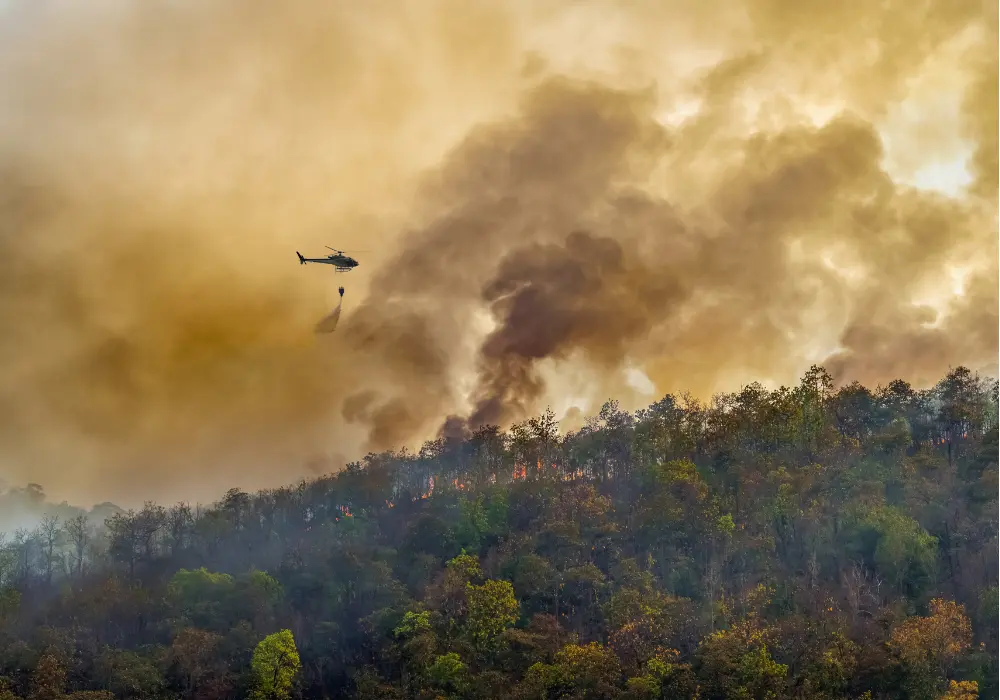
According to a groundbreaking study recently published in Global Change Biology, Canada’s forests have officially crossed a historic ecological threshold, shifting from a net carbon sink to a net carbon source. Driven by an unrelenting surge in high-intensity wildfire activity, the immediate carbon emissions released during forest disturbances now routinely outpace the rate of carbon sequestration achieved through natural forest regrowth and recovery.
The authors of the study report that this structural transition crystallized around 2021, culminating a worrisome trajectory that began in earnest around 2009. Historically, whenever fires or commercial harvesting cleared tracts of woodland, the subsequent decades of ecological succession and forest regeneration allowed the landscape to reabsorb equivalent amounts of carbon, maintaining a long-term balance. Today, however, the sheer scale, frequency, and severity of modern wildfire seasons have overwhelmed the ecosystem’s restorative capacity.
This transformation carries profound implications for global climate stabilization frameworks, international carbon accounting, and domestic climate policy. Because Canada’s national greenhouse gas inventories have traditionally relied on the assumption that domestic forests would continuously mop up anthropogenic emissions, this reversal introduces a volatile new variable. Unprecedented carbon discharges from central Canadian forests threaten to accelerate global warming feedback loops while driving up emergency firefighting expenditures and forestry management costs. As policymakers grapple with these realities, the scientific consensus is clear: the ecological safety net provided by Canada’s northern landscape is fraying under the pressure of a rapidly warming climate.
Detailed Chronology: Reconstructing Centuries of Forest Dynamics
To contextualize the gravity of the recent shift, the research team undertook a massive analytical effort to reconstruct the life cycle of Canada’s forests over nearly three centuries. Spanning a timeline from 1750 to 2023, the study provides a granular historical accounting of carbon fluxes across the country’s forested and unforested landmasses.
The Pre-Industrial and 20th-Century Baseline (1750–2000)
For centuries, Canada’s land-use dynamics maintained a relatively stable equilibrium. Utilizing historical records alongside ecological models, the researchers simulated centuries of natural disturbances, including historical wildfires, insect infestations, and indigenous and industrial timber harvesting. These loss events were continuously balanced against ongoing forest recovery, heterotrophic respiration (the release of $textCO_2$ from microbial decomposition), and "$textCO_2$ fertilization"—a phenomenon where elevated concentrations of atmospheric carbon dioxide temporarily stimulate plant growth rates.
Throughout this extended baseline period, the net balance remained positive. Despite periodic regional devastation from severe fire years, the aggregate expanse of Canada’s woodlands consistently acted as a net carbon sink. Even as industrialization expanded and commercial logging accelerated through the mid-to-late 20th century, the sheer vastness of the boreal forest absorbed more carbon than it relinquished to the atmosphere.
The Tipping Point Unfolds (2001–2009)
The dawn of the 21st century introduced subtle yet ominous signs of stress. Driven by rising temperatures, prolonged droughts, and shortened snow-cover seasons in northern latitudes, the geographic footprint of disturbed forestland began to expand steadily.
While natural regeneration was still largely capable of neutralizing these losses during the early 2000s, the margin of safety began to shrink. The researchers noted that by 2009, the cumulative pressures of landscape disturbance hit a critical inflection point. The immediate pulse of carbon released by catastrophic fires and intensified logging operations began to strain the recovery-driven sink, initiating a subtle erosion of the country’s net carbon balance.
The Acceleration and the Cross-Over (2010–2021)
During the second decade of the 2000s, the degradation of the carbon sink accelerated markedly. Wildfire seasons grew increasingly erratic, regularly shattering historical burn-area records. The research reveals that the carbon lost through combustion and post-fire mortality was no longer being fully compensated for by the growth of surviving or regenerating trees.
This structural deficit compounded year over year until the system ultimately crossed the source-sink transition around 2021. Comparing this turbulent 15-year window against the backdrop of the preceding centuries, the authors concluded that the current trajectory is entirely unprecedented over the last 100 years. Canada’s forests are no longer helping humanity mitigate the climate crisis; instead, they are actively contributing to the atmospheric carbon burden.
Supporting Context & Methodology: The CLASSIC Model and Scientific Rigor
Understanding why this transition occurred—and why previous models failed to capture it with adequate precision—requires a close examination of the scientific tools deployed in the new study.
Bridging the Knowledge Gap with Process-Based Modeling
Past assessments of Canada’s forest carbon balance often relied on generalized global datasets or empirical estimations that struggled to account for the unique geophysical and ecological realities of northern landscapes. To correct these blind spots, the research team utilized the Canadian Land Surface Scheme Including Biogeochemical Cycles (CLASSIC) model.
Unlike observation-driven models that extrapolate future conditions based purely on current trends, CLASSIC is a process-based model. It relies on fundamental physical laws—such as the conservation of energy and mass—alongside robust historical datasets to simulate real-life biochemical and biophysical processes. By tracking how carbon is stored, transformed, and lost across specific soil and vegetation profiles over time, CLASSIC provides what the authors describe as "the first physically coherent wall-to-wall estimates of all major carbon pools and fluxes for Canada."
The Geography of Vulnerability: Central Canadian Forests
The transition from sink to source is not distributed evenly across the nation. The study points out that the modern shift is primarily driven by intense wildfire activity concentrated in central Canadian forests.
These regions face a compounding ecological handicap: lower baseline carbon uptake rates from plant growth slow down the pace of vegetation recovery following a fire. When a forest in central Canada burns, the local climate conditions and soil limitations mean that the post-fire regrowth takes significantly longer to rebuild the lost biomass compared to more temperate or productive coastal ecosystems. Consequently, repeated or overlapping fires in these vulnerable zones create a compounding deficit, locking the landscape into a permanent net-emission state.
A Critical Scientific Caveat: Peatlands
To maintain absolute scientific accuracy, the research team transparently noted an important boundary in their modeling parameters: the study does not explicitly model peatland carbon cycles, subsurface carbon stocks, or the complex role that peatlands play in boreal fire emissions from deep soil combustion.
Boreal peatlands store immense quantities of ancient carbon beneath the surface. When severe fires burn deep into dry peat layers—phenomena that have become increasingly common during extreme drought years—they release massive pulses of ancient carbon that are largely independent of above-ground forest biomass recovery. Because peat soils are excluded from this specific model’s core calculations, the researchers suggest that the overall carbon emissions reported in the study may actually represent a conservative estimate of the true atmospheric burden being generated by Canada’s northern ecosystems.
Official Statements and Expert Perspectives
The publication of the study in Global Change Biology has sparked urgent discussions within the scientific community, prompting leading ecologists and climate modelers to reflect on the broader ramifications for environmental policy.
In their published findings, the study’s authors emphasize the compounding socio-economic and ecological dangers of this new reality, writing that the projected rise in forest disturbances:
“would lead to additional emissions, rising wildfire and forestry management costs, and imperil efforts to manage the carbon sink through sustainable land management practices and fire suppression.”
Independent climate scientists tracking the Canadian boreal zone have echoed these concerns, noting that the traditional pillars of forestry management are facing an existential stress test. For decades, provincial and federal authorities operated under the assumption that aggressive fire suppression and sustainable yield harvesting would keep forest carbon ledgers safely in the black. However, experts point out that modern mega-fires—fueled by extreme weather anomalies linked to anthropogenic climate change—frequently exceed the physical limits of human intervention, rendering traditional containment strategies obsolete and economically unsustainable.
Furthermore, international policy analysts have highlighted the administrative nightmare this transition creates for national reporting under the Paris Agreement. Canada’s nationally determined contributions (NDCs) have historically factored in natural land sinks as a reliable offset against industrial emissions. With the domestic forest estate now functioning as a net carbon source during adverse fire years, achieving national net-zero targets will require even steeper, more aggressive emission reductions across industrial sectors like oil and gas, transportation, and manufacturing to compensate for the lost biological sink.
Future Outlook: Managing a Volatile Horizon
As humanity looks toward the remainder of the 21st century, the trajectory of Canada’s forests serves as a stark warning regarding the unpredictability of climate feedback loops.
Projections from allied climate studies indicate that wildfire risks across Canada are slated to surge dramatically in the coming decades. As global temperatures continue to rise at a rate outpacing the global average in northern latitudes, the length of the fire season will expand, droughts will intensify, and lightning strikes will become more frequent. These conditions create a recipe for recurrent, high-intensity blazes that systematically dismantle mature forest stands before they reach ecological maturity.
Policy and Management Imperatives
Mitigating this crisis will require a fundamental overhaul of how North American governments approach forest and fire management. Moving forward, the scientific community urges a transition away from purely reactive, emergency-response firefighting toward proactive, landscape-scale resilience strategies. These measures include:
- Prescribed Burns and Fuel Management: Strategically reducing accumulated underbrush and deadfall in high-risk zones during safe windows to prevent catastrophic crown fires.
- Ecological Diversification: Facilitating the planting of climate-resilient tree species that can adapt to shifting precipitation patterns and temperature baselines.
- Advanced Monitoring Systems: Deploying next-generation remote sensing and process-based modeling tools—similar to the CLASSIC framework—to track carbon fluxes in real-time and anticipate vulnerable regional tipping points before they are breached.
Ultimately, the revelation that Canada’s forests have crossed from a carbon sink into a carbon source shatters the illusion that natural ecosystems can indefinitely absorb the consequences of unchecked industrial emissions. Without aggressive, immediate global action to curtail the root causes of climate change alongside dedicated regional ecosystem stewardship, the northern crown of the planet risks transforming from a guardian of the global climate into one of its most potent accelerators.