Executive Overview
The global marine ecosystem stands at a precarious crossroads, torn between the revelations of deep history and the compounding pressures of the anthropocene. Recent scientific findings suggest that ancient oceans were once dominated by colossal cephalopods—giant octopuses reaching lengths of up to 19 meters—sitting comfortably at the top of the Late Cretaceous food chain. Today, however, the apex predators and foundational species of our seas face an altogether different kind of dominance: human disruption.
From the accelerating pace of global heating and the invisible creep of toxic microplastics into agricultural soils, to industrial overfishing and the pervasive degradation of marine protected areas, the health of the world’s oceans is deteriorating at an alarming rate. Recent reports highlight catastrophic fishery collapses, localized die-offs driven by extreme heat and deoxygenation, and the severe ecological ripple effects of invasive species on fragile island and reef ecosystems.
Simultaneously, political and economic choices threaten our capacity to understand and respond to these crises. Reductions in public research funding risk sidelining key scientific nations, while frontline communities—from Turkish farmers dealing with exported plastic waste to local fishing groups in British Overseas Territories—grapple with the direct consequences of environmental neglect. As experts warn that humanity has transitioned from waging a war on nature to living inside a climate war zone, the imperative for comprehensive, scientifically backed marine protection has never been more urgent.
Detailed Chronology and Dispatches from the Field
Science and Deep-Time Discoveries
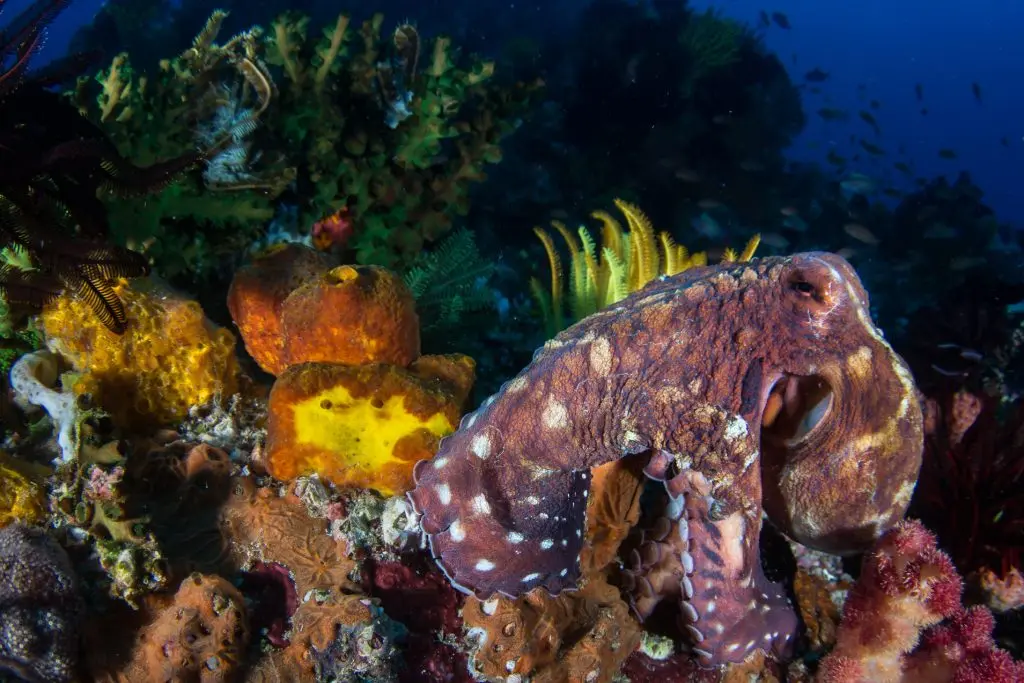
Recent paleontological research has upended traditional understandings of prehistoric marine hierarchies. Evidence unearthed regarding the Late Cretaceous period indicates that ancient oceans were ruled not just by marine reptiles, but by giant octopuses capable of reaching staggering lengths of up to 19 meters. These colossal cephalopods occupied the absolute apex of the marine food chain, serving as dominant top predators in ecosystems long before the rise of modern whales and large sharks.
In contemporary biology, researchers are unlocking the secrets of extreme longevity through the study of unique marine organisms. Investigations into a specialized jellyfish species—renowned for its extraordinary ability to reverse its life cycle—are providing critical insights into cellular renewal, tissue regeneration, and the fundamental biological mechanisms of aging.
However, the future of such vital scientific inquiry faces systemic threats. Leading researchers have cautioned that declining public investment in scientific research within nations like the United Kingdom will severely diminish global standing, restrict international scientific influence, and ultimately stifle the technological and ecological breakthroughs needed to navigate coming environmental emergencies.
Fisheries Under Siege
The industrial exploitation of the world’s oceans continues unchecked across multiple fronts. A sweeping global study has revealed that drifting tuna fishing devices—often referred to as fish-aggregating devices (FADs)—routinely drift into more than half of the planet’s designated marine protected areas (MPAs). This unregulated intrusion threatens vulnerable marine wildlife and destabilizes ecosystems intended to act as sanctuaries for biodiversity.
Concurrently, a comprehensive worldwide analysis underscores that the illicit practice of shark finning continues to exert crushing pressure on global shark populations, reinforcing the critical demand for tighter enforcement, standardized tracking, and more robust management frameworks.
In commercial fisheries, regional collapses are beginning to materialize. Japan’s vital Pacific sardine fishery has suffered a catastrophic collapse after expected fish stocks in the eastern Hokkaido grounds entirely failed to form, sending shockwaves through local seafood markets and coastal economies. In response to rampant gear loss, nations like Norway are dramatically scaling up coastal cleanup initiatives to retrieve abandoned "ghost gear," which continues to trap and kill marine life indiscriminately.
UK Overseas Territories and Remote Ecosystems
The remoteness of island ecosystems and British Overseas Territories no longer shields them from systemic environmental pressures. In the South Atlantic, a sudden oil spill in Tristan da Cunha triggered an emergency rescue and rehabilitation response to save vulnerable penguin populations coated in petrochemical sludge.
In the Caribbean, Bermuda’s local fishing community has stepped forward with an alternative counterproposal to the Bermuda Ocean Prosperity Programme (BOPP), seeking to balance conservation mandates with the socio-economic realities of local fishers. Meanwhile, Canadian aquaculture consultants have completed feasibility assessments regarding the potential establishment of a commercial salmon farming industry in the Falkland Islands, igniting fierce debates over biosecurity and environmental impact.
Polar regions are likewise drawing intense scrutiny. The remote Weddell Sea in Antarctica is experiencing a surge in polar tourism, forcing policymakers and expedition operators to weigh the economic benefits of adventure travel against the imperative of safeguarding pristine, highly sensitive polar habitats. Further north in the tropical Indian Ocean, a troubling study in the Chagos Archipelago revealed that invasive rats are indirectly devastating coral reefs. By wiping out native seabird populations, the rodents disrupt the essential nutrient cycle that transfers marine-derived nitrogen from land to sea, starving the coral ecosystems of vital nourishment.
Marine Protection, Climate Pressures, and Freshwater Crises
Marine conservation efforts are routinely undermined by shifting physical realities. In Antarctica, a massive iceberg grounded near an emperor penguin colony severely disrupted adult foraging routes, preventing parents from securing enough food and resulting in catastrophic chick mortality. In Indonesia, environmental groups have sounded the alarm over persistent mining threats in the Raja Ampat region—often lauded as the "Amazon of the seas"—warning that industrial expansion threatens irreplaceable marine biodiversity. Conversely, in Central America, Panama’s mapping initiatives are finally quantifying the true extent of its carbon-sequestering mangrove forests, laying bare decades of historical habitat loss while highlighting the value of these blue carbon sinks.
On land and in freshwater systems, the climate crisis is biting hard. Global warming has visibly accelerated over the past decade, with atmospheric and oceanic temperatures rising at unprecedented rates. This thermal inflation is squeezing apex predators like great white sharks, whose high metabolic demands and specialized physiologies leave them ill-equipped for rapidly warming waters.
In England, worsening drought conditions have compounded nationwide water quality scandals. A recent comprehensive assessment revealed that every single evaluated waterway in England contains detectable traces of toxic chemical pollutants. The lethal combination of extreme summer heat, low river flows, and polluted agricultural and urban drainage culminated in a devastating fish kill on Norwich’s River Wensum, where hundreds of fish perished in deoxygenated waters.
International supply chains of pollution are also facing renewed scrutiny. Turkish farmers have voiced utter despair, declaring that "nobody cares" as they bear the environmental scars of the United Kingdom’s exported plastic waste. Microplastics and discarded packaging materials are routinely mismanaged, infiltrating foreign agricultural soils, degrading local ecosystems, and poisoning rural livelihoods.
Supporting Context & Metrics
To fully grasp the scale of the unfolding ecological crisis, several key metrics and structural realities must be considered:
- 19 Meters: The estimated maximum length of ancient giant octopuses that ruled Late Cretaceous marine ecosystems, showcasing a historical precedent for cephalopod dominance.
- Over 50%: The proportion of the world’s marine protected areas (MPAs) currently infiltrated by drifting industrial tuna fishing gear and FADs.
- 100%: The percentage of assessed rivers and water bodies in England found to contain harmful chemical pollutants, highlighting systemic regulatory failures in freshwater management.
- Decadal Acceleration: Scientific consensus indicates that global warming rates have visibly steepened over the last ten years, compressing the evolutionary adaptation windows for high-energy marine megafauna such as great white sharks.
Official Statements and Expert Perspectives
The gravity of the current environmental trajectory has prompted stark warnings from scientists, conservationists, and affected workers alike:
- On the Climate Emergency: Reflecting on the compounding frequency of extreme heatwaves and environmental degradation, civil society commentators noted: "We launched a war on nature. Now we are in a climate war zone." This sentiment captures the reality that climate impacts are no longer distant projections, but active disruptions to daily life and global food security.
- On Cross-Border Pollution: Expressing deep frustration over international waste management, Turkish agricultural workers remarked that "nobody cares" about the long-term contamination of their soils by imported European plastics, emphasizing the urgent need for producer accountability.
- On Scientific Infrastructure: British researchers have repeatedly stressed that slashing public science budgets is a self-defeating policy. Diminishing financial support not only undermines domestic innovation but actively compromises the United Kingdom’s capacity to contribute meaningfully to global biodiversity frameworks and ocean governance.
Future Outlook
The trajectory of the world’s oceans over the coming decade will depend entirely on immediate policy corrections and aggressive enforcement of environmental protections. As historical analogues like the apex octopuses of the Cretaceous remind us, marine ecosystems are capable of profound shifts over geological timescales; however, the contemporary rate of human-driven change threatens to outpace the adaptive capacity of marine life entirely.
Looking forward, several priorities must guide international governance:
- Strict Enforcement of Protected Areas: Global bodies must ban or strictly regulate drifting FADs and industrial activity within designated marine reserves to allow populations of sharks, tuna, and seabirds to recover.
- Circular Economy and Waste Accountability: Developed nations must halt the exploitative export of plastic waste to developing agricultural regions, establishing rigorous domestic recycling and reduction frameworks.
- Resilient Freshwater and Coastal Management: Governments must commit to infrastructural overhauls to stop raw sewage and toxic chemicals from entering river networks, mitigating the lethal deoxygenation events seen in places like the River Wensum.
- Defending Scientific Investment: Public funding for ecological and marine research must be treated as a matter of national and global security, ensuring that policymakers are equipped with the empirical data required to navigate the climate war zone.
Without these decisive interventions, the fragile balance sustaining marine life—and by extension, human civilization—will continue to unravel.