Executive Overview
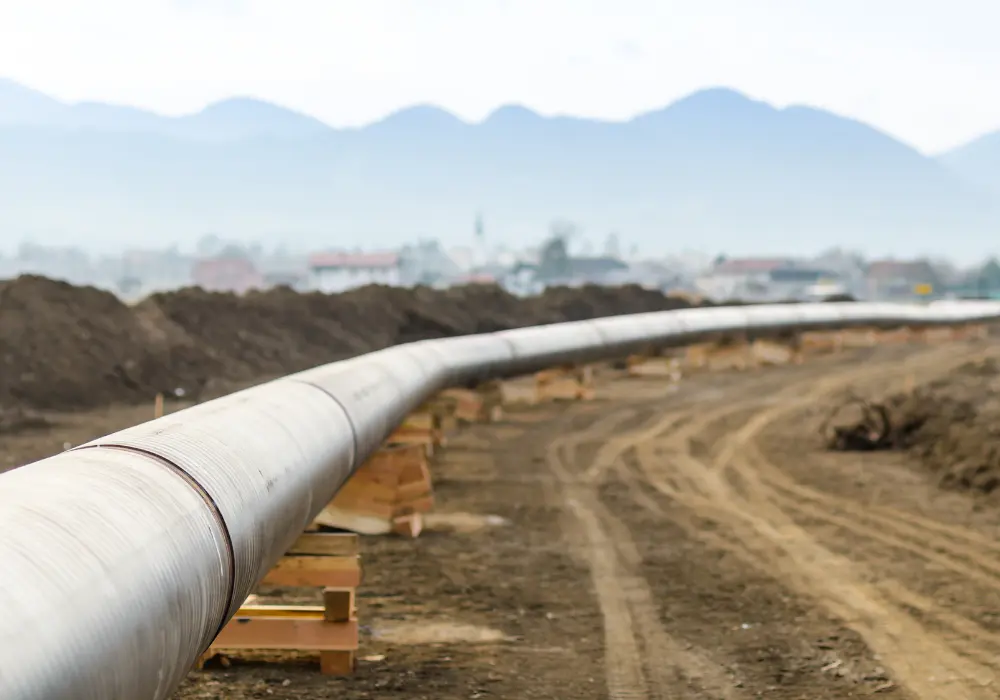
In a striking manifestation of contemporary industrial policy, the federal government under Prime Minister Mark Carney and the provincial government of Alberta under Premier Danielle Smith have anchored Canada’s economic future to an ambitious, highly contentious resource-extraction agenda. At the heart of this strategy is a newly proposed West Coast oil pipeline—a massive infrastructure undertaking designed to traverse Alberta and British Columbia to marine export terminals. Yet, the most revealing aspect of this project is not its sheer scale or engineering complexity, but a singular, defining economic truth: no private oil company is willing to pay for it.
While highly profitable energy corporations decline to absorb the financial exposure, federal and provincial governments are preparing to assume roughly 90 percent of the risk. Developed under the purview of the federally owned Trans Mountain Corporation alongside public partners, this initiative is far more than an isolated infrastructure endeavor. It serves as the cornerstone of a broader, fraught national strategy that pushes resource extraction back to the center of Canada’s economic development.
Coupled with recent legislative and regulatory rollbacks, multi-billion-dollar commitments to liquefied natural gas (LNG), mining, and nuclear projects, and a concerted shift away from aggressive climate targets, this strategy represents a profound bet on a declining global commodity. With international energy markets shifting toward decarbonization and the International Energy Agency (IEA) projecting peak global oil demand by 2030, critics argue that Ottawa and Alberta are committing generations of public wealth to what risks becoming a multi-hundred-billion-dollar stranded asset.
Detailed Chronology: The Summer of Extractive Commitments
The trajectory of Canada’s new economic strategy crystallized over a concentrated series of announcements in mid-2026, revealing a coordinated push by federal and provincial leaders to fast-track heavy industry and resource extraction.
July 2, 2026: The Shift to Resource-Centric Growth
The pivot began in earnest on July 2, when the federal government and the province of British Columbia formally committed billions of dollars in public capital toward liquefied natural gas development, heavy mining operations, and the expansion of the Roberts Bank port terminal located south of Vancouver. This logistics hub was subsequently identified as the designated marine terminus for a major new oil pipeline originating in Alberta.
Later that same day, Prime Minister Mark Carney and Premier Danielle Smith formally announced the joint proposal for the West Coast oil pipeline. Under the initial framework, the federal and provincial governments would hold equal partnership stakes in the venture, utilizing the existing Trans Mountain corridor as a geographic blueprint while shouldering the vast majority of the capital expenditure.
Early July 2026: Interprovincial Expansion and Fast-Tracking
The momentum continued into the following week. Alberta and Ontario proposed a second major pipeline project, similarly lacking a private corporate proponent and widely projected to demand substantial public subsidization.
While the ultimate viability of this second interprovincial line remains an open question, the policy sequence underscores that these are not decentralized, opportunistic infrastructure choices. They form a cohesive, synchronized industrial strategy. To execute this vision, the federal Major Projects Office (MPO) began fast-tracking 23 designated "nation-building" initiatives. Valued at well over $130 billion, this portfolio spans high-capital sectors including LNG, nuclear power, mining, and heavy transportation.
To facilitate this pipeline of projects, Ottawa formally proposed listing the West Coast pipeline as a "project of national interest." Concurrently, federal and provincial regulators moved to dismantle barriers that would otherwise impede projects of this magnitude, cementing a regulatory environment explicitly tailored to accelerate heavy industrial growth.
Supporting Context & Metrics: The Anatomy of a Publicly Financed Gamble
To understand the profound economic and structural implications of the West Coast pipeline, one must examine the staggering financial architecture underpinning the project and the cold market realities that drove private capital away.
The Financial Burden on Taxpayers
According to Alberta’s official submission to the Major Projects Office, the core pipeline carries an estimated price tag ranging from $35.2 billion to $43.7 billion. This baseline figure explicitly excludes cost escalations, financing fees, and potential contingencies, while relying on optimistic assumptions regarding regulatory savings.
The project structure relies on a newly formed corporate entity jointly owned by the Trans Mountain Corporation, the Alberta Petroleum Marketing Commission, and Pembina Pipeline—a Calgary-based firm whose non-binding 10% equity stake represents the sole private participation in the venture. Taxpayers are slated to absorb the remaining 90% of the financial liability, even as a finalized, comprehensive financing plan remains unwritten.
Estimated Public Capital Exposure:
├── West Coast Pipeline Core Cost:  $35.2B – $43.7B
├── Roberts Bank Terminal Expansion: ~$10.0B
├── Pathways Alliance Carbon Capture: $16.5B – $20.0B+
└── Potential Overruns & Contingencies: Substantial
──────────────────────────────────────────────────────────
Total Potential Public Exposure:    > $100 Billion
When accounting for ancillary infrastructure—such as the Roberts Bank marine terminal expansion at roughly $10 billion and the linked Pathways carbon-capture initiative, officially costed at $16.5 billion but projected by market analysts to exceed $20 billion—the total public financial commitment climbs rapidly. Factoring in historical cost overruns of the type witnessed during the original Trans Mountain expansion, market-oriented critics estimate that the ultimate public exposure could easily exceed $100 billion.
The Ghost of Trans Mountain
Canada is treading familiar ground. Ottawa acquired the original Trans Mountain pipeline system in 2018 precisely because private investors balked at mounting regulatory, financial, and legal hurdles. The subsequent expansion project ultimately ballooned to roughly $34 billion—more than six times its initial financial projection. Replicating this dynamic on an even grander scale has alarmed economists and fiscal watchdogs alike.
Market Realities and the Refusal of Private Capital
The reluctance of private oil companies to finance the new West Coast line is rooted in fundamental market economics. Bitumen remains among the highest-cost sources of global crude oil, leaving producers acutely vulnerable to commodity price volatility and structural declines in long-term demand.
The International Energy Agency (IEA) has projected that global oil demand will peak by 2030, with global supply capacity comfortably outpacing consumption thereafter. Because a greenfield pipeline of this magnitude is unlikely to commence full operations before the early-to-mid 2030s, the project carries a profound structural risk of becoming a stranded asset.
Private capital has voted accordingly. Throughout the recent historic commodity price boom, Canada’s four largest oil-sands producers actually reduced capital investment—averaging $15.9 billion annually between 2021 and 2024, down sharply from $27.9 billion annually during the 2011–2014 boom. Rather than plowing capital into risky, long-cycle production expansions, corporations directed massive windfalls toward shareholder returns, executing historic rounds of dividends and share buybacks. If the industry truly believed in the long-term economics of massive pipeline expansion, corporate balance sheets—not public treasuries—would be leading the charge.
Official Statements and Divergent Visions
The ideological and political fault lines dividing Canada’s leadership from economists, environmentalists, and labor advocates are starkly reflected in their public postures.
The Federal-Provincial Narrative: Sovereignty and Prosperity
Proponents of the strategy, led by Prime Minister Carney and Premier Smith, frame these multibillion-dollar commitments as essential exercises in national sovereignty and economic diversification. In joint policy releases, the federal government has argued that strengthening export capacity for natural resources is vital to building "a strong, prosperous, sovereign Canada."
Proponents also point to proposed environmental mitigations—most notably the industrial carbon-capture and storage (CCS) initiatives led by the Pathways Alliance—as proof that Canada can expand fossil fuel production while concurrently pursuing emissions reductions. The narrative emphasizes "decarbonized oil," positioning Canadian hydrocarbons as a stable, ethically produced alternative in a shifting geopolitical landscape.
Critics and Labor Analysts: Profits Without Prosperity
Counter-narratives from economic researchers and labor advocates paint a vastly different picture of who ultimately benefits from resource-driven growth. A comprehensive study published by the Alberta Federation of Labour and Canadians for Tax Fairness shed harsh light on the distribution of wealth generated during the recent oil boom.
The report revealed that between 2021 and 2023, the domestic oil and gas sector raked in $135.2 billion in operating profits while paying out $43 billion in wages—translating to $3.14 in corporate profit for every single dollar paid to workers, a dramatic jump from $0.92 during the previous decade’s boom. Concurrently, the sector’s direct employment footprint remains depressed, supporting roughly 30,000 fewer workers than it did in 2014.
Furthermore, the ownership structure of Canada’s premier energy assets ensures that the vast majority of financial returns leave the country. The report estimates that the top four oil-sands producers are 73% foreign-owned and 60% U.S.-owned, with an estimated $58 billion in dividends and share buybacks funneled directly to foreign equity holders between 2021 and 2024.
Recent Oil-Sands Economic Distribution (2021-2023):
├── Cumulative Operating Profits: $135.2 Billion
├── Cumulative Worker Wages:     $43.0 Billion
├── Profit-to-Wage Ratio:        $3.14 in profit per $1 in wages
└── Foreign Ownership Share:     73% overall (60% U.S.-owned)
Indigenous Rights and Consultation Deficits
The political consensus claimed by Ottawa and the provinces also faces acute resistance from Indigenous communities. While the pipeline proposal includes provisions for an Indigenous equity purchase right—to be drawn from the federal and provincial government shares—details regarding its size, structure, and timing remain vague.
First Nations situated along the southern pipeline corridors maintain that they were neither adequately nor meaningfully consulted prior to the government announcements. Consequently, multiple First Nations bands have mobilized legal challenges against the federal fast-tracking legislation (such as Bill C-5), setting the stage for protracted courtroom battles over constitutional duty-to-consult obligations.
Future Outlook: Economic Lock-In and the Road Not Taken
As Canada charts its course into the latter half of the 2020s, the convergence of industrial policy, environmental rollbacks, and fiscal pressures points toward a series of profound crossroads.
Regulatory Rollbacks and Environmental Trade-Offs
To clear the pathway for these mega-projects, federal and provincial authorities have systematically dismantled or diluted key environmental safeguards. Impact assessment processes have been streamlined via cooperative agreements between Ottawa and Alberta, granting broad regulatory flexibility designed to accommodate heavy industrial expansion.
Over the preceding year, the federal government has notably scrapped, delayed, or weakened several foundational climate policies, including:
- The consumer carbon price framework;
- The planned cap on oil and gas sector emissions;
- Electric vehicle (EV) sales mandates;
- Clean-electricity regulations; and
- Stringent industrial carbon pricing tiers.
These regulatory retreats are not administrative byproducts; they are the fundamental mechanisms enabling the strategy. Yet, the environmental arithmetic of the justification—the Pathways carbon-capture initiative—reveals a stark mathematical mismatch.
The Pathways project aims to capture 16 million tonnes of carbon dioxide annually by 2045 (and 6 million tonnes by 2035). Conversely, the proposed West Coast pipeline is engineered to transport one million barrels of oil per day—equating to 365 million barrels annually, which, when ultimately combusted downstream, releases roughly 157 million tonnes of CO2 per year. Even if every technological and financial target of the carbon-capture scheme is successfully met, the resulting "decarbonized oil" reduces life-cycle emissions by less than 10%. The remaining 90% of emissions—stemming from the combustion of the fuel itself—remain entirely unmitigated.
The Opportunity Cost of Capital
With finite fiscal capacity, the allocation of over $100 billion toward extractive infrastructure, nuclear mega-projects, and rising military obligations will inevitably exert immense pressure on other vital public sectors. Healthcare systems, public education networks, affordable housing initiatives, climate adaptation programs, and the care economy are already facing hiring freezes, infrastructural strain, and service reductions across multiple provinces.
Political capital, too, is a finite resource. By aligning closely with the regional agendas of premiers like Danielle Smith and Doug Ford, federal leaders have smoothed the immediate path for project approvals while foreclosing alternative economic trajectories. Pipelines constructed in the 2030s will require active commercial returns into the 2060s—locking Canada into a high-carbon economic architecture precisely as the global economy accelerates its transition away from fossil fuels.
Conclusion: The Path Not Taken
Canada undeniably requires an ambitious, forward-looking industrial strategy to secure its economic sovereignty, diversify international trade, and foster national prosperity. However, economists and policy analysts argue that the identical quantum of public capital and political will could be mobilized to construct a genuinely modern, resilient economic foundation.
Redirecting billions toward renewable energy generation, a robust national smart grid, large-scale energy storage, deep building retrofits, electrified mass transit, a circular economy, and a just transition for resource-dependent workers would build enduring economic value. Such investments would generate significantly more jobs per capital dollar deployed and remain entirely immune to the structural demand destruction facing fossil fuels.
As Canada prepares to commit another generation of public wealth to the industrial paradigms of the 20th century, the fundamental question facing policymakers remains unanswered: why gamble billions on an industry that private capital has abandoned, rather than investing in the technologies that will define the global economy of the 21st?