

Executive Overview
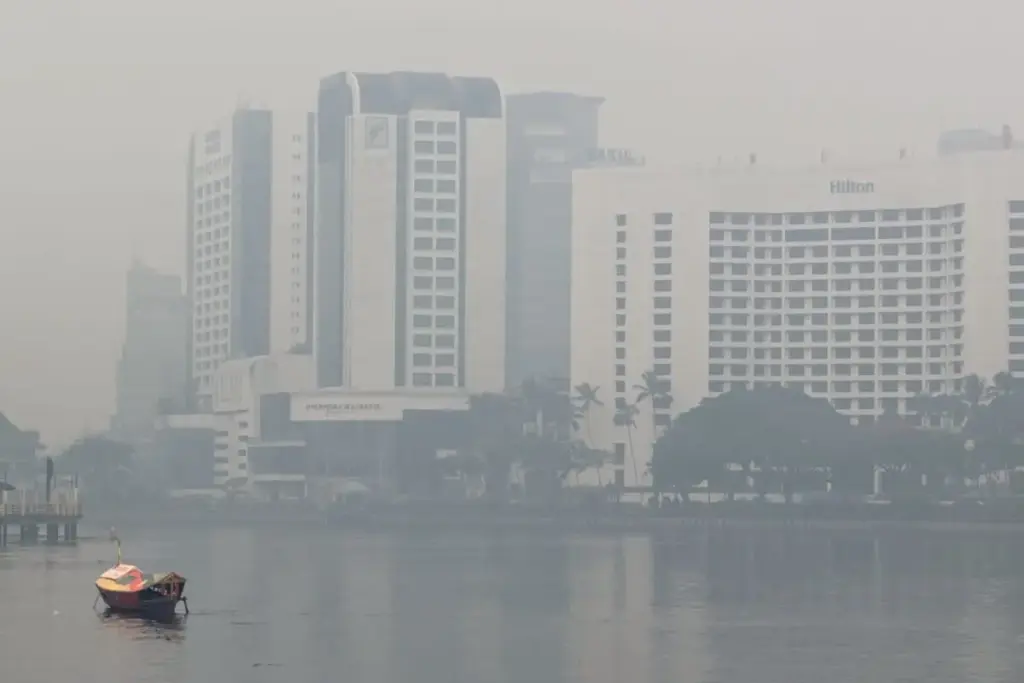
Southeast Asia has once again been plunged into a profound public health and environmental crisis as choking transboundary haze from unyielding Indonesian wildfires sweeps across the region. Spreading far beyond the immediate epicenters of Sumatra and Borneo, the toxic smog has blanketed Malaysia, Brunei, Singapore, and parts of the Philippines, pushing air quality indexes to hazardous, record-breaking extremes.
Driven by the compounding pressures of an intense "super" El Niño weather pattern—which has brought severe, prolonged drought to the maritime continent—the fires are laying bare systemic vulnerabilities in regional land-use governance. Satellite monitoring platforms indicate a staggering proliferation of fire hotspots, many of which are concentrated inside commercial agricultural and timber concessions. Environmental watchdogs and local reports suggest that a significant proportion of these blazes are anthropogenic, deliberately set to clear land for commercial gain with little regard for the ecological or human cost.
The human and environmental toll is rapidly mounting. Millions of citizens across multiple nations are waking up to dystopian, smog-choked skies, with health ministries reporting exponential spikes in acute respiratory infections, asthma cases, and related hospitalizations. Tragically, the crisis has already claimed human lives, including frontline volunteer firefighters. Meanwhile, irreplaceable biodiversity hotspots are going up in smoke, resulting in the tragic loss of vulnerable and endangered wildlife—such as pangolins, snakes, and displaced orangutans succumbing to smoke inhalation. As diplomatic tensions simmer and citizens demand accountability, the recurring crisis underscores an urgent, unmet need for binding regional cooperation, rigorous corporate regulation, and a fundamental overhaul of Indonesia’s agricultural land management policies.
Detailed Chronology of the Crisis
Mid-August 2025: The First Waves of Smoke and Regional Spillover
The early indicators of the impending disaster emerged quietly in mid-August, as prolonged dry spells associated with the strengthening super El Niño began to bake the peatlands and forests of Indonesia. The earliest transboundary effects were recorded in oil-rich Brunei, where hazy conditions began to settle over the small nation, reducing visibility and prompting initial health advisories. Concurrently, parts of the Malaysian state of Sarawak, situated on the island of Borneo, began experiencing rising Air Pollutant Index (API) readings. Malaysia’s health ministry issued early warnings as respiratory illness cases began creeping upward, signaling that the annual dry-season fire cycle was transforming into an acute public health emergency.
Late August: Escalating Respiratory Crises and Corporate Scrutiny
By late August, the situation on the ground in Indonesia and its neighbors deteriorated sharply. Malaysia’s health ministry released alarming statistics revealing that within a single week, cases of asthma had surged by a staggering 259%, while upper respiratory tract infections spiked by 124% compared to seasonal baselines. In Indonesia, health authorities logged more than 50,000 cases of acute respiratory infections (ISPA) directly linked to the haze across July and August alone. Investigative reports from Indonesian media and environmental organizations began mapping the fires back to known corporate concessions, highlighting repeat offenders in Sumatra and Kalimantan—including timber and pulp companies with histories of court-mandated liabilities for previous catastrophic fires.
Early September: Regional Contamination and States of Emergency
The first week of September marked a dramatic escalation, as weather patterns pushed the dense smoke plumes further north and east.
- September 3–4, 2025: Satellite monitoring platform Firewatch detected an unprecedented explosion in fire activity, recording over 444,200 potential hotspots across the Indonesian archipelago—a 4.5-fold increase compared to late July metrics.
- Singapore: On the morning of September 4, Singaporean residents awoke to a heavy, yellowish-gray smog. The Pollutant Standards Index (PSI) in the central region breached the 101 mark, pushing air quality firmly into the "unhealthy" range. By late afternoon, IQAir rankings positioned Singapore as the city with the third-worst air quality globally.
- Malaysia: The Malaysian capital of Sarawak, Kuching, maintained its grim position at the top of global pollution rankings, registering as the world’s most polluted city for consecutive days. The situation in Serawak’s Serian district became so critical that local authorities officially declared a state of emergency on September 4, closing schools and urging vulnerable populations to remain indoors.
- The Philippines: Philippine environmental and health authorities issued sweeping warnings after transboundary haze drifted northward across the South China Sea. Parts of Luzon island (including metropolitan Manila), the Visayas island group, and Mindanao were blanketed by air quality deemed "acutely unhealthy," prompting widespread advisories for citizens to mask up.
- Human and Wildlife Tragedies: Amid the chaos, the human cost turned fatal. Two dedicated volunteers assisting with firefighting efforts in Central Kalimantan passed away after suffering severe breathing difficulties on the front lines. Meanwhile, wildlife rescuers in West Kalimantan pulled a distressed Borneo orangutan (Pongo pygmaeus) from an oil-palm plantation; forestry authorities confirmed days later that the ape perished due to suspected smoke inhalation. Burned carcasses of pangolins and snakes were similarly uncovered by firefighters picking through the charred remnants of once-vibrant ecosystems.
Supporting Context & Metrics: The Anatomy of a Man-Made Disaster
The Super El Niño Driver
While climate phenomena alone do not ignite forests, the current "super" El Niño cycle has created an atmospheric tinderbox. Extended periods of below-average rainfall have desiccated Indonesia’s vast tropical rainforests and, crucially, its carbon-dense peatlands. Peat is composed of partially decayed organic matter accumulated over thousands of years; when dried out, it becomes exceptionally combustible. Unlike surface vegetation fires, peat fires burn underground, smoldering for weeks or even months, resisting standard rainfall, and releasing massive volumes of particulate matter (PM2.5 and PM10) alongside greenhouse gases into the atmosphere.
Satellite Data and Concession Complicity
Data from satellite monitoring frameworks like Firewatch and the Nusantara Atlas reveal the sheer scale of the spatial devastation. The detection of over 444,200 hotspots by early September illustrates a systemic failure in fire prevention.

Investigative journalism and analyses by prominent environmental NGO WALHI (Walhi Wahana Lingkungan Hidup Indonesia) paint a damning picture of corporate complicity:
- Recurrent Hotspots: Spatial analysis published by Kompas demonstrated that wildfires frequently reappear on the exact same plots of land year after year.
- The Palm Oil and Timber Footprint: Approximately 50% of all fire hotspots detected in key provinces such as West and Central Kalimantan this year were located inside commercial oil palm and timber concessions.
- Corporate Accountability Failures: In August, WALHI identified 33 "high-confidence" fire hotspots within a timber concession managed by PT Bumi Mekar Hijau in Sumatra—a firm legally found liable a decade prior by an appellate court for a massive fire that incinerated 20,000 hectares of land. Despite prior legal judgments, systemic enforcement gaps have allowed these operations to persist with apparent impunity.
Official Statements and Institutional Responses
The cross-border nature of the crisis has triggered diplomatic friction, public health warnings, and impassioned rebukes from civil society organizations.
Governmental and Health Agency Responses
- Malaysia and Singapore: Ministries of health across both nations have activated emergency protocols, distributing medical-grade face masks, issuing stay-at-home recommendations for the elderly and children, and expanding hospital triage capacities to manage the influx of respiratory patients. Malaysian officials have repeatedly emphasized the transboundary origin of the smog, implicitly placing pressure on Jakarta to curb domestic agricultural burning.
- The Philippines: The Department of Environment and Natural Resources (DENR) and the Department of Health (DOH) took the rare step of issuing nationwide health advisories covering Luzon, the Visayas, and Mindanao. Officials cautioned that fine particulate matter traveling thousands of kilometers across maritime borders posed severe health risks, particularly to individuals with pre-existing cardiovascular and respiratory conditions.
- Indonesia: Indonesian law enforcement agencies have faced intense scrutiny regarding their enforcement of anti-burning laws. While officials reported charging dozens of individuals and corporate entities over illegal land-clearing practices, civil society groups argue that punitive measures remain reactive, superficial, and largely ineffective at deterring corporate bad actors.
Environmental Advocacy and Expert Commentary
Civil society organizations have pulled no punches in critiquing the systemic governance structures enabling the annual haze crisis.
"Thousands of hotspots continue to be detected in peatland areas, plantations, and timber concessions, indicating that the government maintains a land-use model that increases ecological vulnerability and heightens the risk of wildfires," stated Dana Prima Tarigan, spokesperson for WALHI.
Tarigan and other environmental legal experts argue that until Indonesia’s central government fundamentally reforms its land-use planning, halts the allocation of fragile peatlands to agro-industrial conglomerates, and enforces strict, non-negotiable legal liability against parent corporations, the region will remain trapped in an endless, suffocating cycle of transboundary smoke.
Future Outlook
As the super El Niño cycle persists, the immediate outlook for Southeast Asia remains precarious. Meteorologists warn that atmospheric conditions favoring dry weather and stable wind patterns could prolong the haze season well into the final quarter of the year, threatening regional aviation, tourism, and public health on an unprecedented scale.
Looking toward the medium and long term, the ongoing catastrophe demands a radical reimagining of environmental policy across ASEAN (Association of Southeast Asian Nations) member states. Key structural interventions required to prevent a recurrence of this disaster include:
- Strengthened Transboundary Governance: Revitalizing and endowing the ASEAN Agreement on Transboundary Haze Pollution with enforceable punitive mechanisms to hold member states accountable for cross-border environmental degradation.
- Zero-Burning Enforcement and Corporate Transparency: Implementing real-time supply chain mapping for palm oil, pulp, and paper corporations, ensuring that any concession recording fire activity is immediately suspended, heavily fined, and stripped of operational licenses.
- Peatland Restoration Initiatives: Accelerating large-scale rewetting and ecological restoration programs across drained peat domes in Sumatra and Kalimantan to eliminate the underground fuel sources that sustain catastrophic, long-burning fires.
- Enhanced Regional Early-Warning Networks: Pooling technological resources, satellite analytics, and firefighting assets regionally to suppress fires while they are still in their infancy before they escalate into uncontrollable multi-national crises.
Without decisive political will, systemic corporate reform, and transnational solidarity, Southeast Asia’s annual choking hazard will remain an agonizing testament to the ecological cost of unchecked agricultural expansion in an era of accelerating climate change.



