

Executive Overview
For two decades, the Biodiversity Heritage Library (BHL) has served as the world’s most comprehensive open-access digital archive for life sciences literature, preserving the intellectual heritage of the natural world across more than 64 million digitized pages. As the global repository marks its 20th anniversary, milestone reflections from its community curators bring to light an underlying, sobering narrative embedded within its digital stacks. Beyond rare historical tomes, exquisite botanical plates, and early taxonomic registries, BHL functions as an inadvertent ark for lost biodiversity.
Nowhere is this dual identity—as both a celebration of scientific discovery and a ledger of ecological loss—more pronounced than in the documentation of Australia’s unique fauna. Commemorating Australia’s National Threatened Species Day, BHL curators have underscored how historical literature captures the exact chronological window when isolated, endemic species made their international scientific debuts, only to face devastating declines following European colonization.
From the infamous extinction of the thylacine (Tasmanian tiger) exactly 90 years after its first formal description, to the miraculous Lazarus-like rediscovery of the Leadbeater’s possum, the library’s vast collections provide an indispensable resource. They map out the behavioral nuances, natural abundances, historical perceptions, and early unheeded warnings of species caught in the crosshairs of rapid environmental transformation. This investigative retrospective examines the intersection of historical scientific literature, colonization, and modern conservation, utilizing BHL’s digital archives to trace what we have lost, what we nearly lost, and what we must still protect.
Detailed Chronology: Australia’s Encounter with Evolutionary Divergence
The Shock of the Antipodean Biota
When European naturalists first encountered the island continent of Australia in the late eighteenth century following British colonization in 1788, they were met with an evolutionary theater entirely divorced from the Northern Hemisphere’s familiar ecosystems. Long-term geographical isolation had fostered an array of marsupials and monotremes so bizarre that early taxonomists struggled to integrate them into existing Linnaean classification frameworks.
This intellectual grappling is vividly preserved in foundational scientific literature. In 1799, English naturalist George Shaw published one of the earliest formal descriptions of the platypus (Ornithorhynchus anatinus) in The Naturalist’s Miscellany. Conveying the bewildered awe of early observers, Shaw wrote: "Of all the Mammalia yet known, it seems the most extraordinary…"
However, this era of wonder coincided with a period of rapid and destructive ecological upheaval. Australia’s long-standing insular isolation left its native fauna defenseless against introduced placental predators—most notably red foxes and feral cats—compounded by aggressive habitat clearance, fragmentation, and deliberate acclimatization efforts designed to mirror European landscapes. Consequently, Australia developed the highest rate of mammal extinctions in the modern world.
The Thylacine: From First Light to Total Darkness
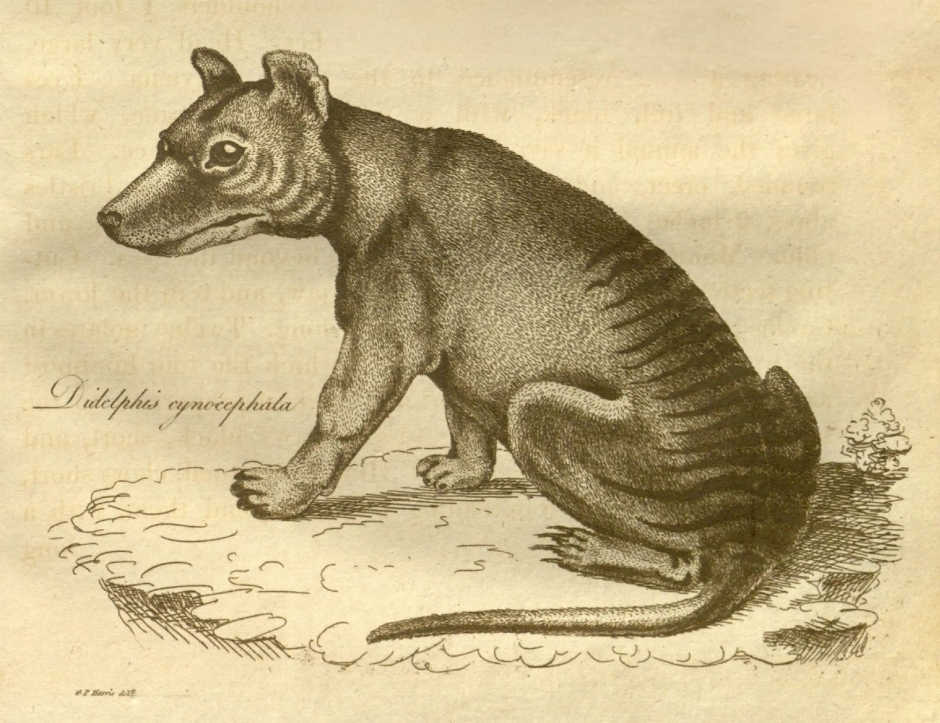
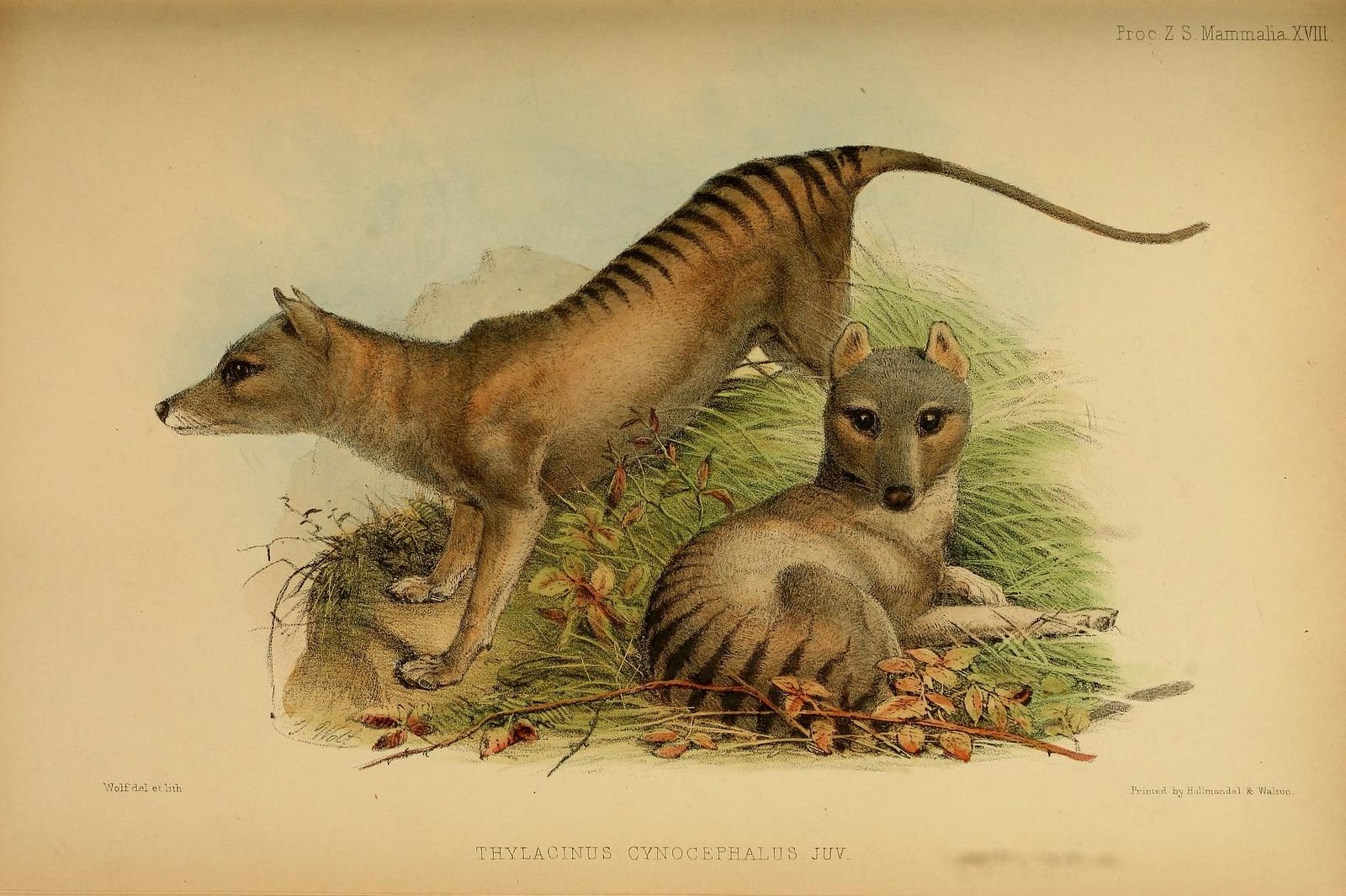
The most poignant and thoroughly documented tragedy within BHL’s archives is the extinction of the thylacine, or Tasmanian tiger (Thylacinus cynocephalus). The first published scientific description and illustration of this apex marsupial carnivore appeared in the Transactions of the Linnean Society of London in 1808. Authored by George Prideaux Robert Harris, the paper named the animal Didelphis cynocephala (the "dog-headed opossum") and described its large, dark eyes as giving it a "savage and malicious appearance," drawing hasty comparisons to wolves and hyenas.
These early characterizations fueled decades of hostile public perception. In 1838, Tasmanian naturalist Ronald Campbell Gunn noted that thylacines raided sheepfolds at night and possessed such strength that packs of dogs refused to engage them. By the late nineteenth century, prominent zoologists such as Johan Ludwig Gerhard Krefft labeled the species "a dangerous creature" and the most ferocious mammal in Australia.
Modern ecological research has since revealed that the thylacine was structurally ill-equipped to prey on adult sheep, rendering its reputation as an unmitigated livestock menace a tragic misconception. Driven by both private and government bounty systems, relentless persecution reduced the species to the brink of extinction. The final known thylacine drew its last breath in captivity at the Beaumaris Zoo in Hobart on September 7, 1936—mere months after the Tasmanian government belatedly granted the species legal protection.
Supporting Context & Metrics: Historical Warnings in the Scientific Record
While museum osteological specimens and genetic samples offer profound insights into the anatomy, diet, and evolutionary lineages of extinct animals, historical literature preserves qualitative dimensions that bones alone cannot convey: animal behavior, micro-habitats, shifting human perceptions, and urgent environmental warnings.
BHL preserves the sobering scientific trail of the thylacine, illustrating how early naturalists tracked its downward spiral. Among the hostile accounts were prescient warnings from preeminent zoologists and artists:
- 1850 (Proceedings of the Zoological Society of London): Zoological artist Joseph Wolf illustrated the first living thylacines ever exhibited in a zoological garden, observed at the London Zoo. Accompanying notes by Philip Lutley Sclater warned that the species’ shift toward sheep predation due to native prey depletion would invite perpetual war from shepherds, "whose determined persecution must eventually lead to its extinction."
- 1863 (The Mammals of Australia): John Gould published Henry Constantine Richter’s iconic illustration of the thylacine alongside a chilling prediction: "When the comparatively small island of Tasmania becomes more densely populated… extermination will have its full sway, and it will then, like the Wolf in England and Scotland, be recorded as an animal of the past."
Despite these explicit forecasts, industrial expansion and agricultural defense triumphed over conservation foresight, transforming a living apex predator into a historical phantom in just over seven decades following Gould’s publication.
Official Statements and Institutional Perspectives
Reflecting on the dual mission of the Biodiversity Heritage Library, BHL Australia Manager and Museums Victoria Senior Staff highlighted the profound emotional and scientific resonance of these digital archives:
"Coordinating this celebration of treasures chosen by our BHL community has been one of the most rewarding projects in my time as BHL’s Communications Director. My favorite treasures in BHL are the very first scientific descriptions of new species… I like to think of these descriptions as a species’ international debut in the literature," shared the BHL Communications team.
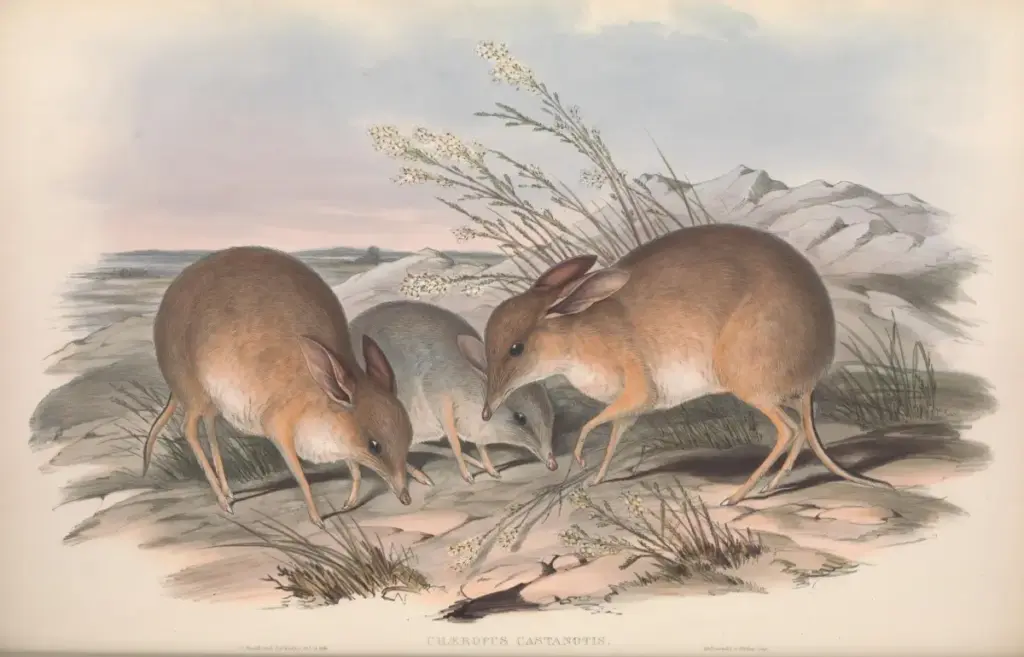
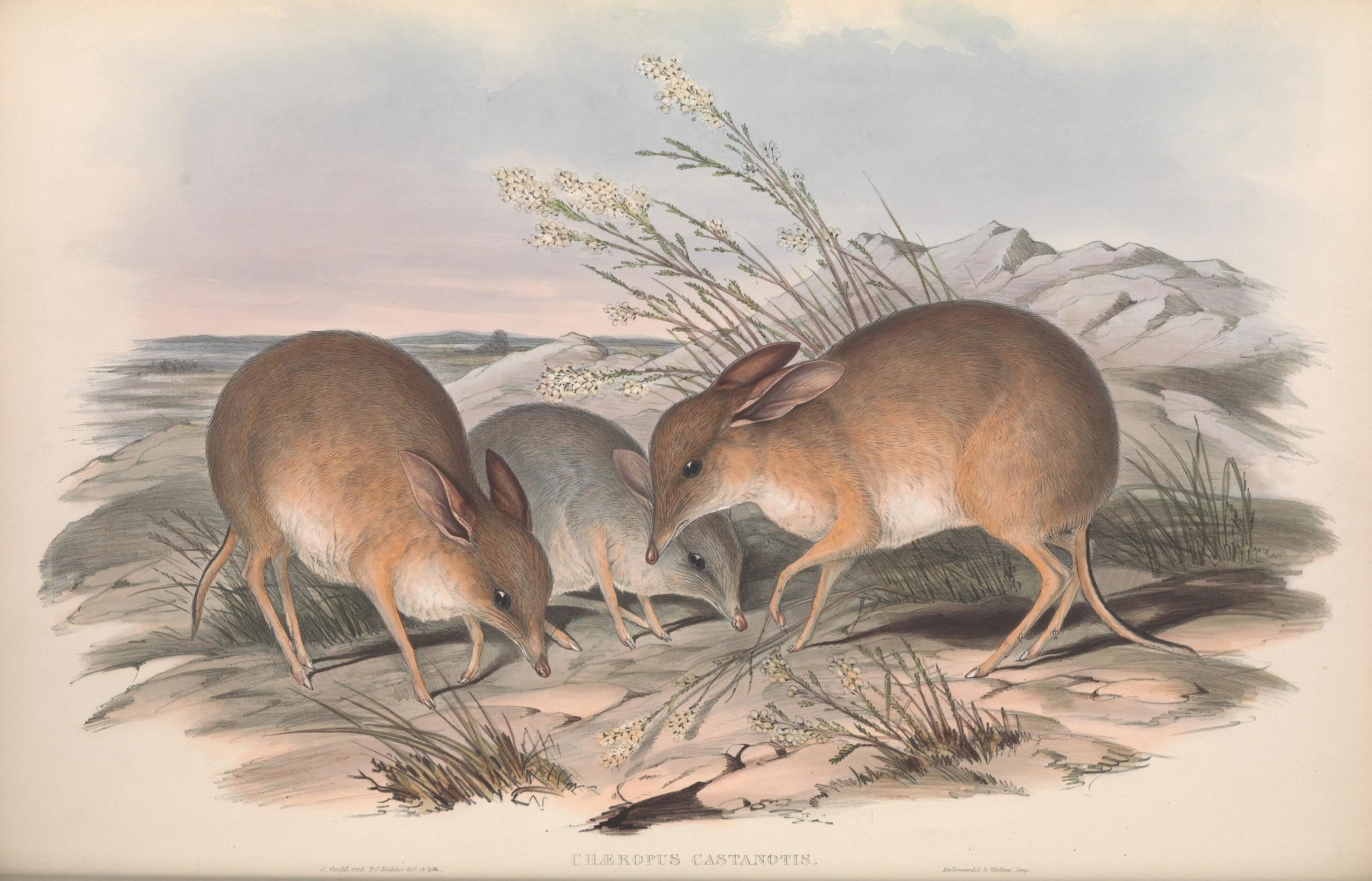
Reflecting on the loss of Australia’s endemic mammals, curators noted: "Scattered throughout BHL are descriptions, field observations, and illustrations of Australian species that have since disappeared: the Pig-footed Bandicoot, Lesser Bilby, and Crescent Nail-tail Wallaby… It is our hope that by making this historic literature accessible and discoverable, we may learn from the past, and help prevent more species from becoming records of what has been lost."
Highlighting a rare narrative of ecological redemption, institutions emphasized the history of the Leadbeater’s possum (Gymnobelideus leadbeateri), also known as the fairy possum:
"Only a handful of Leadbeater’s possums were recorded over the next few decades, and when no sightings were made across a period of 50 years, the species was presumed extinct. Then, in 1961, a small colony was rediscovered near Marysville… BHL provides a window into the point in history when each species entered the scientific record. The thylacine reminds us what happens when those warnings are ignored. The Leadbeater’s possum is an urgent reminder that sometimes we have a second chance."
Future Outlook: Guarding the Next Generation of Biodiversity
As the Biodiversity Heritage Library enters its third decade of operation, its institutional focus has evolved from simple digitization to active conservation enablement. With over 64 million pages of biodiversity literature freely accessible to researchers, policymakers, and conservationists globally, BHL bridges the gap between historical baselines and contemporary ecological strategy.
The lessons encoded within BHL’s collections—exemplified by the tragic loss of the thylacine and the precarious, hard-fought survival of species like the Leadbeater’s possum—serve as an urgent call to action. Modern conservationists face unprecedented extinction rates driven by climate change, habitat fragmentation, and invasive species pressures. By analyzing how nineteenth- and twentieth-century scientists documented ecological decline, contemporary researchers can better identify early warning signs in vulnerable ecosystems today.
The overarching mandate for the next twenty years is clear: the knowledge preserved across global digital libraries must not be used merely as an epitaph for what has vanished, but as an operational intelligence network to protect the irreplaceable biodiversity that remains.



