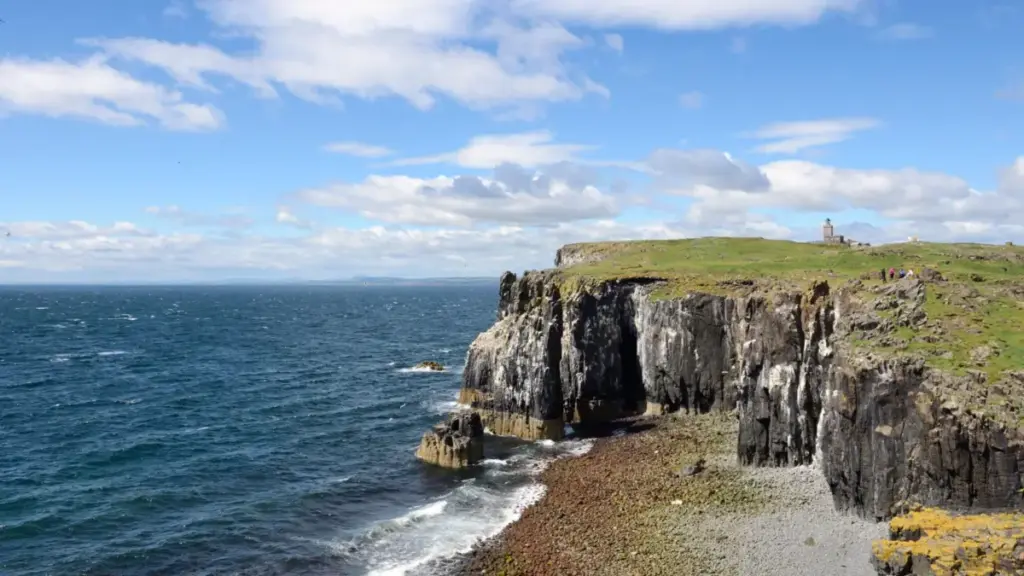
In a stark warning that underscores the deepening crisis facing marine ecosystems, conservation scientists have revealed that puffin populations at one of the United Kingdom’s premier seabird colonies have plummeted by 30% over a rapid two-year window. According to a comprehensive survey conducted by NatureScot in partnership with the UK Centre for Ecology & Hydrology (UKCEH), the number of active puffin burrows on the Isle of May—situated in the picturesque Firth of Forth off the coast of Fife, Scotland—dropped from an estimated 52,000 in 2024 to just 36,500 during the recent summer monitoring cycle.
This alarming contraction is not an isolated incident; rather, it serves as a bellwether for the escalating pressures of climate change on vulnerable marine species. Researchers point to a devastating nexus of rising ocean temperatures, which have crippled populations of sand eels—the foundational dietary staple for puffins—and an increase in the frequency and severity of violent winter storms. These extreme weather phenomena have directly compromised adult survival rates and juvenile recruitment.
While the Isle of May has historically demonstrated ecological resilience, including a recovery from a similar dip recorded in the early 2000s, environmental experts warn that the compounding velocity of modern climate change threatens to outpace the natural adaptive capacity of these iconic, charismatic seabirds. The findings have ignited renewed calls for stringent marine protections, cross-sector conservation funding, and global commitments to curb greenhouse gas emissions before iconic species like the Atlantic puffin (Fratercula arctica) face irreversible regional declines.
Detailed Chronology and Survey Methodology
The stark reality of the Isle of May’s avian crisis came to light following a rigorous, six-day scientific census executed over the summer months. To arrive at the 30% reduction figure, specialized field researchers and conservation ecologists meticulously swept back and forth across the rugged, predator-free island terrain. Every accessible burrow was physically inspected and cross-referenced against historical mapping data to determine whether it was actively occupied by nesting puffins or, alternatively, shared or commandeered by the island’s rabbit population.
The methodology utilized by NatureScot and UKCEH represents the gold standard in long-term seabird population monitoring. By comparing the newly tallied total of 36,500 active burrows against the 52,000 documented during the baseline survey in 2024, scientists uncovered a staggering loss of 15,500 breeding pairs in just 24 months.
This dramatic downward shift shatters a period of relative stability and cautious optimism that followed the recovery of the colony in the 2010s. The timeline of this collapse highlights a terrifying acceleration in environmental stress factors. According to marine ecologists, three of the past five winters have featured anomalous, high-intensity marine heatwaves coupled with ferocious meteorological gales that battered the North Sea. These extreme weather windows coincide precisely with the periods when puffins are most vulnerable—wheeling across open, storm-churned waters far from the relative shelter of their terrestrial nesting grounds.
Supporting Context & Ecological Metrics
To fully comprehend the gravity of the Isle of May’s population crash, one must examine the unique ecological significance of the island itself and the fragile trophic webs that sustain its wildlife. Designated as a National Nature Reserve (NNR) as far back as 1956, the Isle of May is situated roughly 4.9 miles (8 km) off the coast of Fife. Spanning a modest geographic footprint, the island acts as a vital sanctuary for nearly 300 distinct bird species, flourishing largely due to the historic absence of mammalian predators like rats and foxes.
The Sand Eel Crisis
At the heart of the puffins’ dietary woes is the silver sand eel (Ammodytes). These small, shoaling fish are exceptionally rich in the lipids and nutrients necessary for adult puffins to sustain themselves and, crucially, to provision their single chick—affectionately known as a "puffling"—each summer.
However, warming ocean waters driven by global climate change have disrupted the delicate thermal thresholds of sand eels. As sea surface temperatures in the North Sea continue to rise faster than the global average, phytoplankton and zooplankton blooms—upon which larval sand eels feed—have shifted temporally and spatially. The resulting mismatch in the marine food web has led to catastrophic recruitment failures for sand eels. Without an abundant, reliable supply of these silver fish, adult puffins spend exhaustive hours foraging over vast oceanic distances, burning more calories than they consume, ultimately leading to lower breeding success and diminished body condition heading into the harsh winter months.
A Multi-Species Haven Under Threat
While puffins have dominated recent headlines, the ecological ramifications extend across the entire Isle of May ecosystem. The island is also a stronghold for:
Common Guillemots: Large colonies nesting tightly on sheer cliff ledges, also reliant on pelagic fish stocks.
Northern Fulmars: Pelagic tube-noses sensitive to oceanic shifts and marine plastic pollution.
Arctic and Common Terns: Ground-nesting seabirds vulnerable to both predatory gulls and extreme weather flooding.
Grey Seals (Halichoerus grypus): Thousands of which haul out onto the rocky shores and beaches during the autumn and winter months to bear and nurse their pups.
Migratory Stopover Species: Approximately 250 species of migratory birds utilize the island as a crucial refueling station during seasonal transits.
The intersection of marine heatwaves, collapsing forage fish stocks, and terrestrial weather anomalies creates a multi-front war of attrition for these populations.
Official Statements and Expert Perspectives
The release of the survey data has prompted grave concern from the custodians of the reserve, who emphasize that immediate localized protections must be paired with macro-level climate action.
David Steel, the manager of the Isle of May National Nature Reserve, contextualized the findings by drawing parallels to past historical fluctuations while sounding a distinct alarm regarding the modern velocity of change.
"The decrease appears to be linked to a combination of ongoing pressures on seabird food supplies, poor winter survival, and increasingly extreme weather conditions," Steel stated. "This drop is somewhat reminiscent of the early 2000s when we saw numbers dip before a subsequent recovery in the 2010s. However, the intensity of the current pressures is deeply concerning. All of this underlines the importance of continued monitoring and conservation work at sites like the Isle of May NNR, where data and research are playing a vital role in helping us to understand these trends and respond."
Echoing these sentiments, Mark Newell, field manager for the UK Centre for Ecology & Hydrology on the Isle of May, highlighted the terrifying predictability of future climatic shocks. Newell’s research points directly to the compounding nature of sequential environmental disasters.
"We believe that the puffin population has recently suffered from a series of extreme climate events, including marine heatwaves and intense storms affecting survival in three of the last five winters," Newell explained. "The ultimate concern for puffins and other seabirds is that climate scientists are predicting an exponential increase in both the frequency and the severity of these extreme meteorological and oceanic events in the decades ahead."
Conservation biologists and policymakers agree that while managing local stressors—such as restricting commercial industrial fishing of sand eels in regional waters—can provide a buffer, the ultimate fate of the Atlantic puffin remains inextricably linked to global decarbonization efforts.
Future Outlook: Can the Puffin Adapt in Time?
The 30% drop in active burrows on the Isle of May serves as an urgent ecological wake-up call. As the United Kingdom and the broader international community grapple with the realities of a rapidly warming planet, the North Sea is transforming into a bellwether for climate-induced ecological regime shifts.
Looking ahead, conservationists, ornithologists, and government bodies face a daunting roadmap. Key priorities moving forward include:
Enhanced Marine Protected Areas (MPAs): Expanding and strictly enforcing no-take zones around critical seabird foraging grounds to safeguard remaining sand eel stocks from industrial overexploitation.
Advanced Telemetry and Monitoring: Utilizing cutting-edge GPS geolocators and micro-tagging technologies to track puffin movement patterns during their secretive winter pelagic phase, identifying precisely where mortality events occur at sea.
Adaptive Management Frameworks: Developing rapid-response conservation protocols that can be deployed if subsequent surveys indicate a deepening spiral or a failure of the colony to rebound.
The Atlantic puffin, with its comical gait, striking colorful bill, and immense cultural and ecological value, has long captured the public imagination. Yet, as the guardians of the Isle of May continue their tireless monitoring work amidst the windswept cliffs of the Firth of Forth, the margin for error is shrinking. Without decisive, systemic action to stabilize ocean temperatures and protect vital marine food webs, the characteristic clatter of puffin wings returning each spring risk becoming a fading memory along Britain’s storied coasts.