In a landmark policy consolidation, the Chinese government has officially issued its dedicated 15th Five-Year Plan for National Response to Climate Change (2026–2030). Released jointly by the Ministry of Ecology and Environment (MEE) alongside 18 key federal departments—including the National Development and Reform Commission (NDRC) and the National Energy Administration (NEA)—the directive represents the most structurally integrated climate blueprint in the nation’s history.
Rather than imposing radically new macro-level numerical targets, the document serves a critical institutional purpose: it consolidates, standardizes, and operationalizes existing high-level climate commitments into a single, binding national governance system. The framework aggregates previous directives—such as the "Beautiful China" action plans, the development of a "new-type energy system," industrial decarbonization strategies, and renewable energy mandates—into an overarching policy architecture designed to guide China through the vital 2026–2030 transition window.
Crucially, the plan introduces groundbreaking systemic focus areas. It codifies a comprehensive target system covering all climate policy domains for the first time within a five-year plan framework, establishes dedicated mandates for non-CO2 greenhouse gases (including methane and sulphur hexafluoride), sets out explicit guidelines for carbon market expansion, and signals a bolder, more proactive stance in shaping global climate governance. As China approaches its self-imposed deadline to peak carbon emissions before 2030, this plan provides the operational engine meant to secure domestic implementation while elevating Beijing’s international influence.
Detailed Chronology & Policy Evolution
China’s climate policymaking has evolved from fragmented sector-specific initiatives into a unified top-level strategic framework. Understanding the trajectory of this five-year plan requires tracking the key regulatory and political milestones over the past decade:
+-----------------------------------------------------------------------------------+
| CHRONOLOGY OF CHINA'S CLIMATE POLICY EVOLUTION                                     |
+-----------------------------------------------------------------------------------+
| 2014           | NDRC issues standalone National Climate Strategy (2014–2020),      |
|                | unaligned with formal five-year planning cycles.                 |
+----------------+------------------------------------------------------------------+
| Sept 2020      | President Xi Jinping announces "Dual Carbon" targets to UN:       |
|                | Carbon peaking before 2030; Carbon neutrality before 2060.       |
+----------------+------------------------------------------------------------------+
| 2021–2025      | 14th Five-Year Plan establishes energy intensity and carbon      |
|                | intensity reduction targets; rollout of national carbon ETS.     |
+----------------+------------------------------------------------------------------+
| 2024–2025      | Announcement of updated 2035 NDC targets (7–10% emission cuts    |
|                | below peak); rollout of "Beautiful China" directives.             |
+----------------+------------------------------------------------------------------+
| Late July 2026 | MEE & 18 ministries jointly publish 15th Five-Year Climate Response|
|                | Plan (2026–2030), inaugurating an integrated climate architecture.|
+----------------+------------------------------------------------------------------+
Historically, dedicated climate change response documents were rare and decoupled from China’s central economic planning framework. In 2014, the NDRC published an early climate plan running through 2020, but it lacked direct synchronization with five-year planning horizons. The release of the 15th Five-Year Climate Plan marks the first time that climate response has been elevated into a fully standardized, multi-departmental five-year policy vehicle. By securing the endorsement of 19 distinct state organs, the document ensures that climate imperatives are embedded directly into financial planning, industrial policy, and energy management nationwide.
Supporting Context & Key Metrics
While reaffirming China’s core headline goals—peaking carbon emissions before 2030, achieving carbon neutrality before 2060, and cutting carbon intensity (CO2 emissions per unit of GDP) by more than 65% from 2005 levels by 2030—the plan provides a deep technical focus on super-pollutants and carbon pricing mechanisms.
Non-CO2 Greenhouse Gas Mitigation targets
One of the most significant technical dimensions of the plan is its explicit roadmap for non-CO2 greenhouse gases (GHGs). Historically, mitigation efforts centered almost exclusively on carbon dioxide from power generation and heavy industry. However, non-CO2 gases account for a substantial portion of China’s total warming impact.
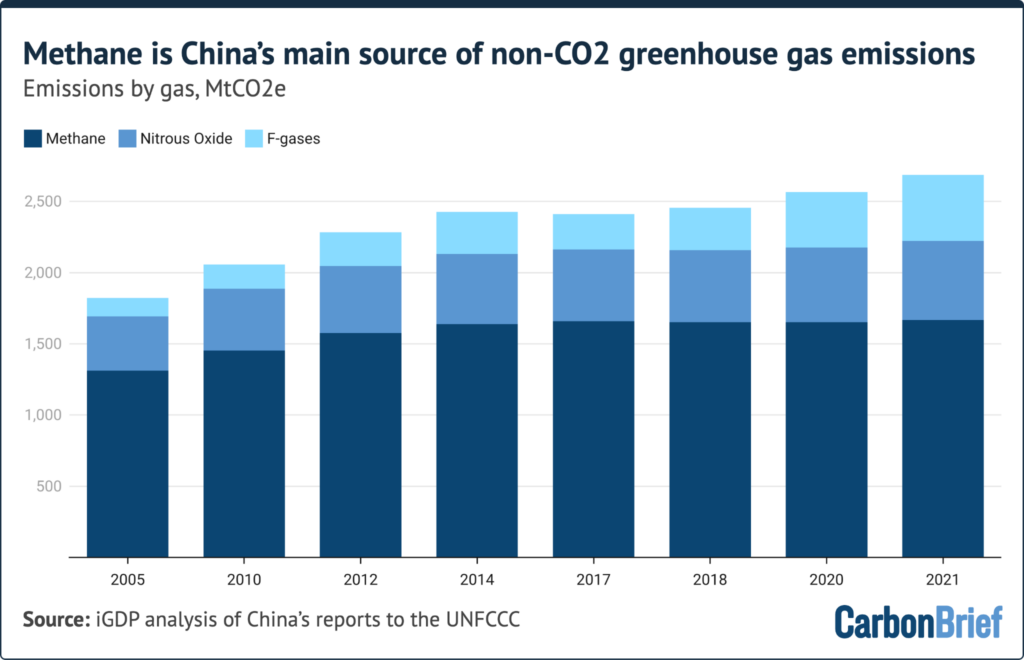
Based on official inventory submissions to the UNFCCC, China emitted approximately 14,000 million tonnes of CO2 equivalent (MtCO2e) in 2021 (excluding land use, land-use change, and forestry). Non-CO2 gases comprised 19% of this total (around 2,700 MtCO2e), dominated overwhelmingly by methane from coal mining and agriculture, followed by nitrous oxide (N2O) and fluorinated gases (F-gases).
CHINA'S NON-CO2 GHG EMISSIONS BREAKDOWN (2021 Baseline)
Total Non-CO2 Volume: ~2,700 MtCO2e (19% of National Total)
  ├── Methane (CH4): Largest Share (~Coal mining, agriculture, waste)
  ├── Nitrous Oxide (N2O): (~Industrial chemical production, agriculture)
  └── F-Gases / HFCs / SF6: (~Refrigeration, power equipment switchgear)
To curb these potent gases, the 15th Five-Year Climate Plan targets an emissions "reduction capacity" of 30 MtCO2e by 2030. Technical strategies outlined in the document focus on four key operational areas:
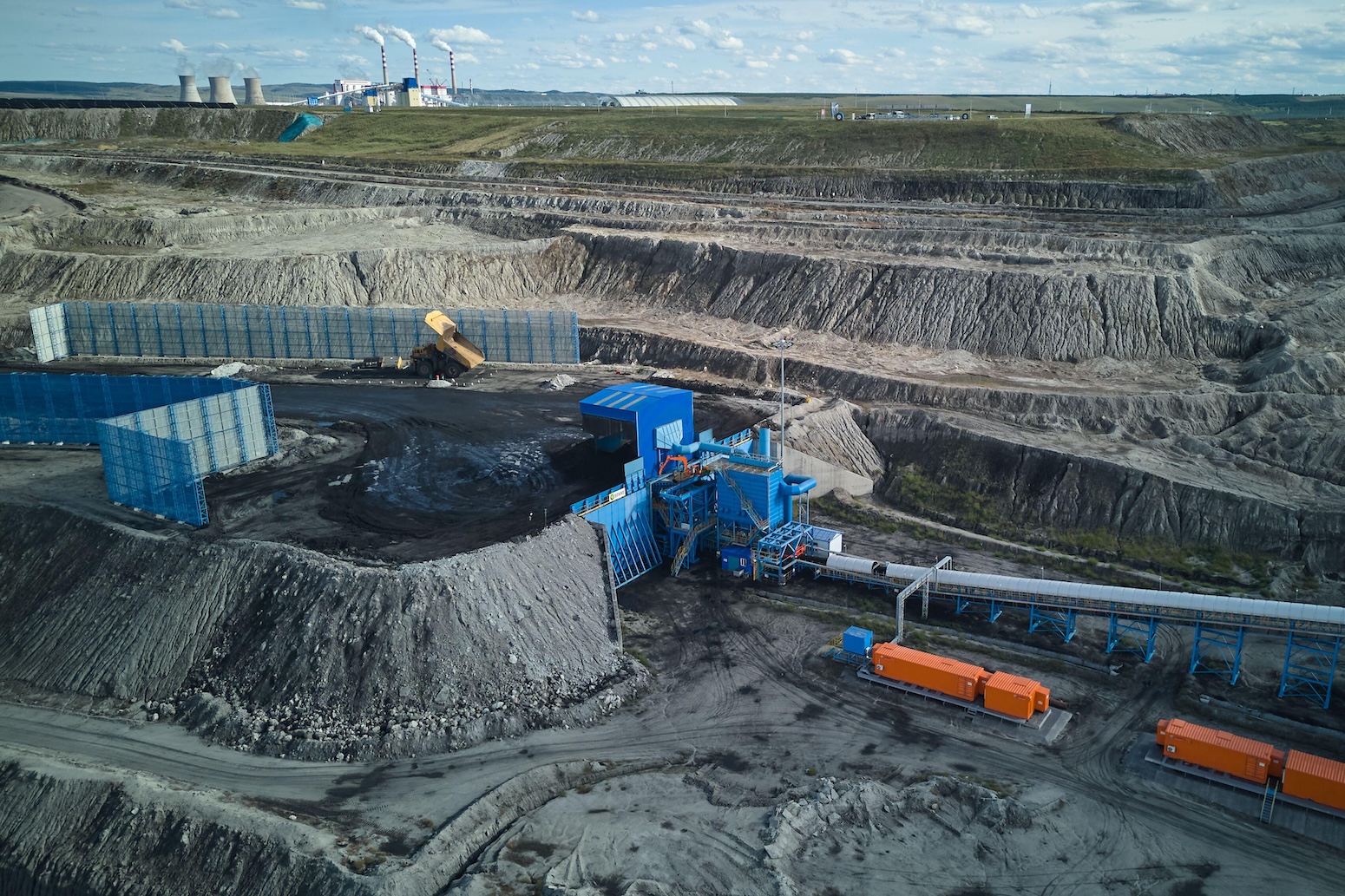
Coal Mine Methane (CMM) & Ventilation Air Methane (VAM): Accelerating capture and utilization projects. Projects targeting low-concentration methane (under 8% concentration) are estimated to deliver up to 20 MtCO2e in annual reductions by 2030.
China Certified Emission Reduction (CCER): Expanding China’s voluntary credit market methodology to incentivize offset projects utilizing low-concentration coal-mine gas, currently estimated to generate around 4.5 MtCO2e annually.
Industrial Nitrous Oxide (N2O) & HFCs: Deploying catalytic reduction technologies in chemical processing plants and end-of-pipe destruction facilities for hydrofluorocarbons.
Sulphur Hexafluoride (SF6) Management: Regulating the power transmission sector by mandating the recovery, recycling, and substitution of SF6—a gas with a global warming potential 23,500 times greater than CO2—in high-voltage switchgear.
Official Statements & Expert Analysis
The publication of the plan drew widespread analysis from domestic regulatory figures, economic analysts, and international policy experts.
Institutional Integration and Governance
In an official Q&A released alongside the policy document, representatives from the Ministry of Ecology and Environment (MEE) emphasized the structural transformation embedded in the plan:
"For the first time at the five-year plan level, this document establishes a comprehensive target system covering all areas of climate policy. It serves as the main policy instrument for advancing China’s climate action during the 2026–2030 period."
Economic researchers at CIB Research, an analytical organ affiliated with Industrial Bank, noted that the framework signifies a fundamental shift in institutional capability:
"The plan marks a new phase in China’s climate policy. It represents a broad effort to strengthen China’s climate-governance system, implementation mechanisms, and underlying institutional capacity rather than relying solely on top-down emission metrics."
Strategic Carbon Market Expansion
Commenting on the market implications, Qin Yan, Principal Analyst at ClearBlue Markets, emphasized that China’s climate strategy has achieved an unprecedented level of strategic alignment:
"The plan shows that China’s climate governance has reached an unprecedented strategic level. It creates an all-encompassing target system to support China’s Paris Agreement climate pledges for 2030 and 2035."
"As its domestic energy transition progresses, China could eventually become the world’s largest carbon offset buyer. Consequently, Beijing stands to benefit significantly from actively shaping global rules under the Paris Agreement’s Article 6 framework."
Technical Non-CO2 Breakthroughs
Chen Meian, Programme Director and Senior Analyst at the Institute for Global Decarbonization Progress (iGDP), pointed to the specific targeting of industrial gases like SF6 as a major regulatory evolution:
"The plan’s focus on sulphur hexafluoride (SF6) control is particularly noteworthy. The gas is finally receiving targeted policy attention. Proactive action here is timely and will help avoid massive future emissions growth as China’s power grid continues to expand exponentially."
Rhetorical Pivots in Global Leadership
From an international relations perspective, Prof. Thomas Hale, Professor of Public Policy at the University of Oxford’s Blavatnik School of Government, observed a clear shift in diplomatic posture:
"The plan marks a major rhetorical shift towards China being increasingly willing to lead and shape global climate action, rather than merely reacting to international negotiations."
Future Outlook & Global Climate Governance
Beyond domestic implementation, the 15th Five-Year Climate Plan signals a distinct shift in China’s foreign policy posture regarding international environmental architecture. The document explicitly outlines an objective for Beijing to markedly enhance its "influence, guiding power, shaping power, and moral appeal" in global climate governance by 2030.
+-----------------------------------------------------------------------------------+
| THREE PILLARS OF CHINA'S GLOBAL CLIMATE STRATEGY THROUGH 2030                      |
+-----------------------------------------------------------------------------------+
| 1. Institutional Governance | Aligning climate initiatives with the broader        |
|                            | Global Governance Initiative to reform global system. |
+----------------------------+------------------------------------------------------+
| 2. Carbon Market Alliances | Expanding international carbon market influences     |
|                            | via coalitions with the EU, Brazil, and Article 6.   |
+----------------------------+------------------------------------------------------+
| 3. Narrative Leadership    | Establishing a "new narrative on climate governance" |
|                            | centered on South-South cooperation and equity.      |
+----------------------------+------------------------------------------------------+
Expanding Global Carbon Market Influence
A central vector for this international outreach is carbon market integration. China plans to leverage its vast national Emissions Trading Scheme (ETS) and restarted voluntary CCER scheme to project regulatory standards globally. Specific international measures slated for the 2026–2030 window include:
International Carbon Coalitions: Solidifying the newly launched open coalition on compliance carbon markets alongside the European Union and Brazil, aimed at enhancing carbon market integrity and interoperability.
Hosting Diplomatic Platforms: Leveraging the annual China Carbon Market Conference as a premier global platform to establish technical standards and trading methodologies.
Article 6 Harmonization: Playing a central role in framing international carbon offset rules under Article 6 of the Paris Agreement, ensuring that Chinese offset methodologies gain global recognition.
Conclusion
While the 15th Five-Year Plan for Climate Change Response does not announce drastic new macro-emissions reduction figures, its structural importance cannot be overstated. By unifying 19 state departments under a standardized regulatory architecture, prioritizing super-pollutants like methane and SF6, expanding carbon market mechanisms, and asserting a proactive stance in international governance, China has established the foundational machinery required to navigate its high-stakes transition from carbon peaking to deep decarbonization.