Executive Overview
A seismic shift is underway in the global automotive landscape. According to a comprehensive report published by Bloomberg, conventional hybrid electric vehicles (HEVs)—utilizing a technology popularized nearly three decades ago by the pioneering Toyota Prius—have officially captured the crown as the hottest segment in the worldwide new car market.
This development has generated intense debate, particularly among dedicated champions of zero-emission mobility. Publications like CleanTechnica have long championed battery electric vehicles (BEVs) as the definitive answer to the escalating crisis of a rapidly warming planet. To many purists, traditional hybrids have historically been dismissed as a stopgap measure, an incremental half-step insufficient for the monumental task of decarbonizing global transport.
Yet, the market data tells an undeniable story. Consumers across diverse geographies are flocking to hybrids in record numbers. Driven by a complex matrix of fluctuating fuel prices, persistent consumer anxieties regarding public charging infrastructure, and a narrowing yet still formidable price gap between internal combustion engine (ICE) vehicles and fully electric alternatives, hybrids are experiencing an unexpected renaissance. This report provides an exhaustive, authoritative examination of the global hybrid surge, dissecting the market drivers, the technological nuances separating HEVs from plug-in hybrids (PHEVs) and BEVs, and the long-term outlook for the automotive sector as it navigates this pivotal transition.
Detailed Chronology & Market Evolution
To understand how the automotive market arrived at this juncture, it is necessary to trace the trajectory of propulsion technologies over the last quarter-century.
The Turn of the Century: The Genesis of Efficiency
When Toyota introduced the Prius to the global market around the turn of the millennium, hybrids were widely viewed as an expensive, eccentric novelty. They appealed primarily to early adopters and environmentally conscious consumers willing to pay a premium for reduced emissions and novel fuel economy numbers. For nearly twenty years, hybrids occupied a niche corner of the automotive market, serving as a transitional bridge while automakers poured billions of dollars into research and development for all-electric platforms.
The EV Surge and the Infrastructure Bottleneck
Throughout the early 2020s, the narrative was dominated by the meteoric rise of battery electric vehicles. Governments enacted aggressive mandates, legacy automakers pledged total electrification, and startups proliferated. However, as the initial wave of early adopters saturated the market, automakers encountered a broader, more pragmatic consumer base.
By the mid-2020s, global EV sales growth began to moderate. Consumers outside of optimal early-adopter markets—such as Norway, where battery electric cars account for nearly all new sales—balked at steep upfront purchase prices and encountered spotty, unreliable public charging infrastructure. In regions like the United States, macroeconomic pressures compounded these issues, intersecting with regulatory resistance and targeted political maneuvering designed to protect fossil fuel interests.
The Tipping Point: 2024–2026
By 2026, the market recalibration became impossible to ignore. According to Bloomberg, hybrids accounted for approximately 1 in 7 new cars sold in the United States—a dramatic ascent from less than 3 percent in 2020. International markets demonstrated an even more aggressive appetite: hybrids make up nearly half of all new vehicle deliveries in Spain and over half in Japan.
Crucially, major legacy manufacturers responded by fundamentally altering their product strategies. Toyota’s pivot serves as a prime case study. Having ceased production of gasoline-only variants for key models like the Sienna minivan and the RAV4 compact crossover in specific markets, the company adopted a baseline assumption that new core models should be hybridized by default. By mid-2026, hybrid registrations in regions like California even managed to temporarily eclipse those of pure EVs, signaling that consumer fatigue with high EV price tags and charging friction had reached a critical threshold.
Supporting Context & Metrics: Global Trends and Technology
The global resurgence of hybrids is not a monolith; it is shaped by distinct regional dynamics, intricate supply chain economics, and fundamental misunderstandings regarding vehicle classifications.
Parsing the Categorization: HEVs vs. PHEVs vs. BEVs
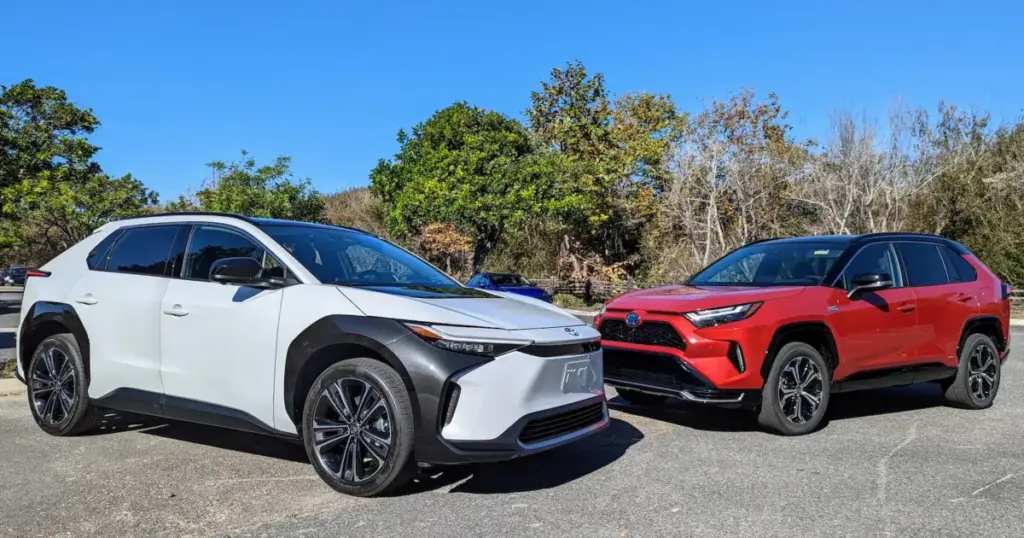
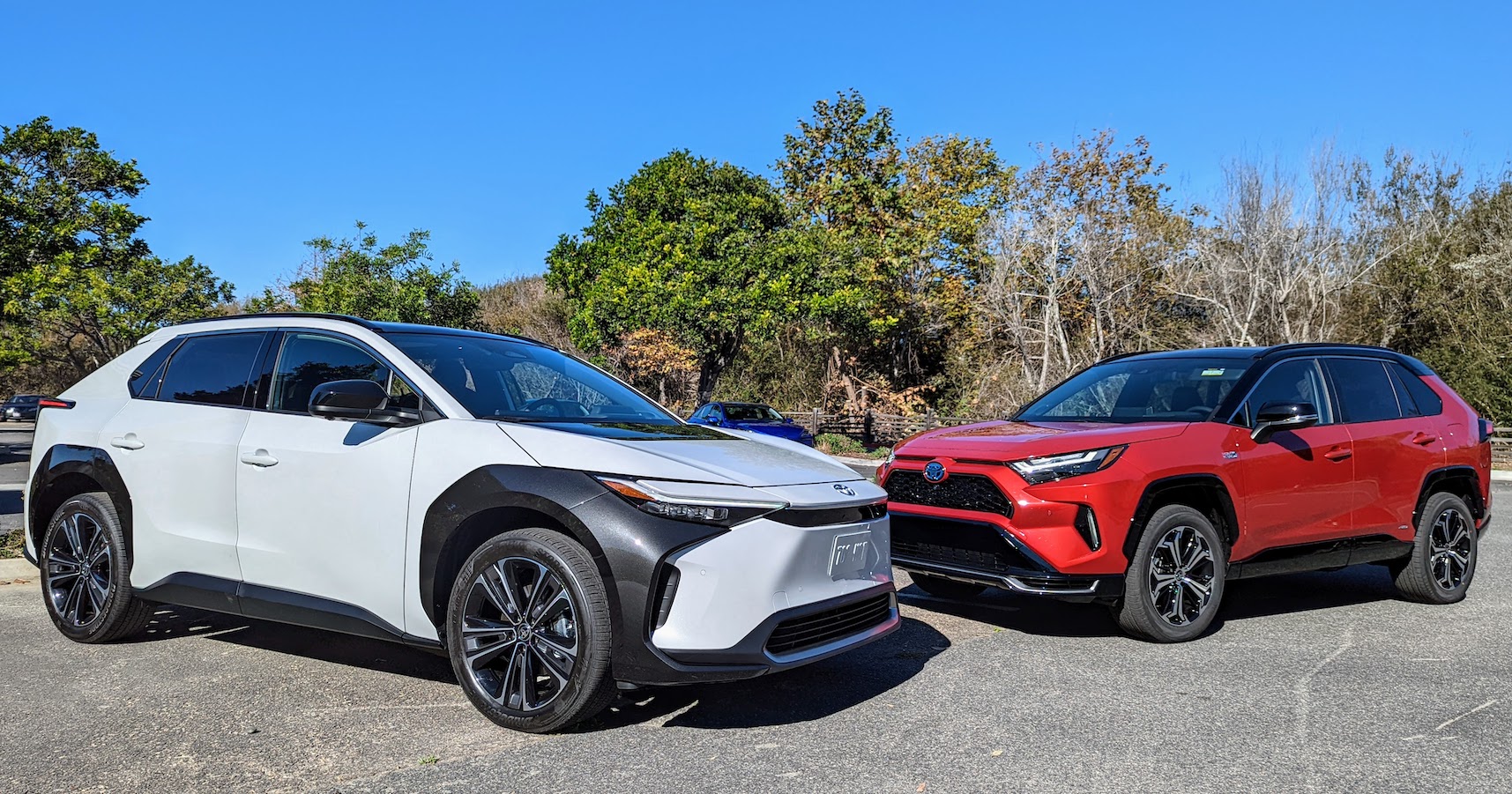
A persistent flaw in mainstream financial reporting is the tendency to lump all electrified vehicles—excluding pure BEVs—into a single category. Traditional hybrids (HEVs), such as the standard Toyota RAV4 Hybrid, utilize a self-charging internal combustion engine paired with a small battery that recaptures energy via regenerative braking. They cannot be plugged into an external power source.
Conversely, plug-in hybrid electric vehicles (PHEVs), such as the Toyota RAV4 Prime, bridge the gap between HEVs and BEVs. Featuring significantly larger battery packs, modern PHEVs can travel upwards of 50 miles on battery power alone. For an average commuter, a PHEV can effectively eliminate gasoline consumption for weeks at a time, provided the owner plugs the vehicle in overnight. Yet, this capability comes at a cost: PHEVs typically command a $5,000 premium over standard gas models, whereas traditional hybrids add a more modest $1,500 to $3,000 to the sticker price.
Global Growth Vectors
Research compiled by GlobalData projects that India, South America, and Southeast Asia will emerge as the fastest-growing automotive markets for hybrids through 2035. Even in China, where state policy heavily favors pure EVs, hybrid sales continue to climb.
In Mexico, government data revealed a staggering 44 percent year-over-year increase in hybrid sales during the first half of 2026. Analysts attribute this surge to aggressive market penetration by Chinese automakers such as BYD and Geely, which have flooded the region with diverse, competitively priced electrified models. Dealership reports indicate that when shoppers enter showrooms inclined to purchase a conventional gasoline vehicle, approximately 70 percent pivot to a hybrid once presented with a side-by-side fuel savings comparison.
Geopolitical Pressures and Fuel Economics
Macroeconomic headwinds have further fortified the hybrid case. The geopolitical instability in the Middle East—highlighted by disruptions around critical trade arteries like the Strait of Hormuz—has driven global crude oil prices upward.
Industry leaders note that high oil prices are structural, not merely transient. Song Ho-sung, CEO of Kia, noted in interviews with Bloomberg that high oil prices are expected to persist long after active regional conflicts subside, continuously stimulating consumer demand for fuel-efficient alternatives across both hybrid and electric spectra.
Engineering Breakthroughs in Hybrid Efficiency
To meet surging demand, automakers have refined the manufacturing and engineering of hybrid powertrains. Toyota’s latest generation of hybrid systems are markedly smaller and lighter. Engineers have achieved this by fusing multiple electrical and mechanical components into single, highly integrated units.
Furthermore, supply chain efficiencies and mass production have driven down battery costs. Notably, Toyota has streamlined its internal electrical architecture—effectively the vehicle’s central nervous system—reducing copper utilization by 20 percent. These cumulative engineering triumphs have made hybrids cheaper to produce and more profitable for automakers, cementing their place in long-term corporate strategies.
Official Statements & Industry Perspectives
The rapid pivot toward hybrids has elicited candid reflections from top automotive executives, illuminating the internal corporate calculations that drove this transition.
-
David Christ (Head of the Toyota Brand, North America):
Summarizing the consumer consensus, Christ stated to Bloomberg: "The consumer has spoken, and hybrids are a hit. We’re just going to keep building more." The overwhelming demand for models like the RAV4 Hybrid has pushed residual values so high that some pre-owned models command prices matching or exceeding their original MSRPs.
-
Cooper Ericksen (Head of Product Planning, Toyota Motor North America):
Ericksen revealed the internal anxiety and eventual vindication the company experienced when rolling out its all-hybrid strategy. Reflecting on the decision to eliminate gasoline-only options for the Sienna minivan six years ago, he noted: "What happened with Sienna, honestly, surprised us a bit, because it was super popular — even after we raised the price. That gave us the confidence to start re-looking at our product lines. I cannot tell you the amount of hand wringing we had inside the company about that." Ericksen added a definitive corporate decree for future vehicle development: "For all of the vehicles we are developing, the base assumption right now is that it should be 100 percent hybrid." -
Song Ho-sung (CEO, Kia):
Addressing the macroeconomic environment, Song emphasized that persistent geopolitical tensions and volatile energy markets will permanently alter consumer psychology. According to Kia’s leadership, the imperative to shield household budgets from fluctuating fuel costs will sustain elevated demand for both hybrids and EVs for decades to come.
Future Outlook: The Ultimate Horizon
As the automotive industry looks toward 2030 and beyond, market analysts project that hybrids could account for up to 40 percent of global vehicle production, sustaining growth trajectories well into the 2050s. However, a critical question remains: Is the hybrid a permanent fixture of modern mobility, or merely a lucrative stepping stone on the inevitable road to total electrification?
The Inefficiency Paradox of Dual Powertrains
While hybrids offer an immediate remedy to high fuel prices, fundamental thermodynamic realities dictate their long-term limitations. Hybrids inherently rely on two complex, distinct propulsion systems: an internal combustion engine and an electric motor. This dual-powertrain configuration increases mechanical complexity, manufacturing cost, and vehicle weight.
Furthermore, internal combustion technology has reached a point of diminishing returns. After more than a century of intensive optimization, engineers acknowledge that extracting further efficiency gains from burning fossil fuels is nearly impossible. While electric motors routinely achieve operating efficiencies exceeding 95 percent, even the most advanced internal combustion engines struggle to convert more than 25 percent of the energy stored in fuel into forward motion. The remaining 75 percent is lost primarily as waste heat.
The Superiority of Pure Electric Propulsion
From a purely economic and operational standpoint, pure electric vehicles retain a profound structural advantage. While a conventional hybrid might achieve an impressive 40 miles per gallon (mpg), a typical BEV operates at an energy equivalent exceeding 120 mpg. More importantly, the foundational consumer hurdle often overlooked by automotive marketing departments is the simplicity of home charging.
Drivers frequently fail to realize that an electric vehicle does not require an expensive, dedicated Level 2 home charging station or a costly electrical panel upgrade. Any BEV can be plugged into a standard 120-volt household wall outlet overnight, effectively turning a residential garage into a personal fueling station.
As public charging infrastructure continues its inevitable expansion, and as battery manufacturing costs decline further, the economic equation will continue to tilt in favor of pure electric mobility. For now, hybrids serve as a pragmatic bridge for consumers navigating a turbulent energy market. Yet, the ultimate mathematical and environmental endgame remains unchanged: eliminating the fuel pump entirely is the only true pathway to frictionless, sustainable transport. No pump, no fuel costs, zero emissions.