

Executive Overview
For decades, the global climate conversation has been dominated by a singular, towering villain: carbon dioxide ($CO_2$). While $CO_2$ remains the undisputed long-term driver of anthropogenic climate change, atmospheric scientists and policy experts are increasingly sounding the alarm on a second, far more volatile force—methane ($CH_4$).
Methane is the second-largest contributor to global warming, possessing a heat-trapping potency in the atmosphere that vastly eclipses $CO_2$ over a short-term horizon. Yet, because its atmospheric lifespan is measured in decades rather than centuries, methane offers humanity a unique, high-leverage opportunity: aggressive, near-term emission cuts can pull down global temperatures faster than any immediate decarbonization effort alone.
Despite this physical reality, mainstream climate models and national net-zero strategies have long buried the distinct challenge of methane. Most frameworks bundle all greenhouse gases into a single, homogenized metric known as "$CO_2$ equivalent." According to a landmark study recently published in Communications Earth & Environment by researchers Konstantin Weber, Prof. Reto Knutti, and Dr. Cyril Brunner from ETH Zurich, this aggregating approach obscures the unique behavior of methane, making its mitigation vulnerable to shifting modeling choices and convenient accounting tricks.
The researchers propose a radical departure from traditional methodologies: decoupling $CO_2$ and methane reductions entirely. By setting hard caps on peak global warming as the foundational starting point—rather than relying on cost-optimized integrated assessment models (IAMs)—countries and corporations can precisely calculate the mandatory methane cuts required to meet international temperature targets.
The findings are stark. Even under the most ambitious existing national net-zero targets, a failure to aggressively curb methane emissions guarantees that peak global warming will exceed 1.85°C above pre-industrial levels. To secure a future "well below 2°C"—let alone keep the elusive 1.5°C threshold alive—net-zero $CO_2$ pathways must be immediately and stringently coupled with aggressive methane mitigation strategies.
Detailed Chronology & Scientific Evolution
The Blind Spots of Integrated Assessment Models (IAMs)
Historically, the trajectory of global emissions has been charted using Integrated Assessment Models. These complex computational tools map out future energy systems, economic growth, and atmospheric interactions to project climate outcomes. However, IAMs operate primarily under economic cost-efficiency assumptions. They weigh the cost of mitigating a tonne of $CO_2$ against a tonne of methane using conversion metrics that fail to reflect the messy, real-world realities of global policy.
Because IAMs conflate gases into a single $CO_2$-equivalent ($CO_2e$) metric, the direct impact of methane-specific emission cuts is nearly impossible to isolate. This methodological flaw masks the reality that methane and $CO_2$ behave entirely differently in the Earth’s atmosphere. Furthermore, very few sovereign nations—notably exceptions like Japan, Mexico, and South Korea—have explicitly codified standalone methane reduction targets into their Nationally Determined Contributions (NDCs). Instead, the vast majority rely on economy-wide net-zero targets that assume methane will naturally decline or remain safely managed under broader industrial overhauls.
Moving Beyond the "$CO_2$ Equivalent" Fallacy
To understand the limitation of current climate accounting, the ETH Zurich research team invokes a simple analogy: asking how many tonnes of methane correspond to a tonne of $CO_2$ is akin to asking, "How much spaghetti equals a chicken?"
One can compare the two meals based on protein content, caloric density, or market cost. While each metric serves a specific transactional purpose, no objective conversion makes spaghetti chemically or functionally identical to a chicken.
The same applies to greenhouse gas conversions. Because methane traps heat with brutal efficiency during its initial decades in the atmosphere, any conversion metric (such as Global Warming Potential over a 100-year horizon, or GWP100) is entirely dependent on arbitrary time horizons and policy baselines. Depending on how these calculations are structured, methane mitigation can be made to look like an urgent, existential emergency—or dismissed as nearly irrelevant.
To bypass this analytical quagmire, Weber and his co-authors discarded the traditional conversion metric approach. Instead, their study established a new methodological framework:
- Define Peak Warming Limits: Establish a definitive ceiling for maximum global temperature rise (e.g., 1.7°C, 1.8°C, or 2.0°C).
- Treat Gases Independently: Separate $CO_2$ and methane emission trajectories, mapping them as independent variables from a 2025 baseline.
- Determine Minimum Methane Cuts: Back-calculate the precise, non-negotiable methane reductions required to ensure peak warming does not breach the predetermined temperature ceiling, factoring in the specific year a nation or organization achieves net-zero $CO_2$.
Supporting Context & Metrics
The empirical data generated by Weber et al. (2026) offers a sobering wake-up call for policymakers relying solely on standard net-zero carbon pledges. Using a simplified climate model, the researchers simulated thousands of combined mitigation pathways starting in 2025 to track peak warming probabilities through 2100.
The 1.7°C Imperative and Net-Zero Timelines
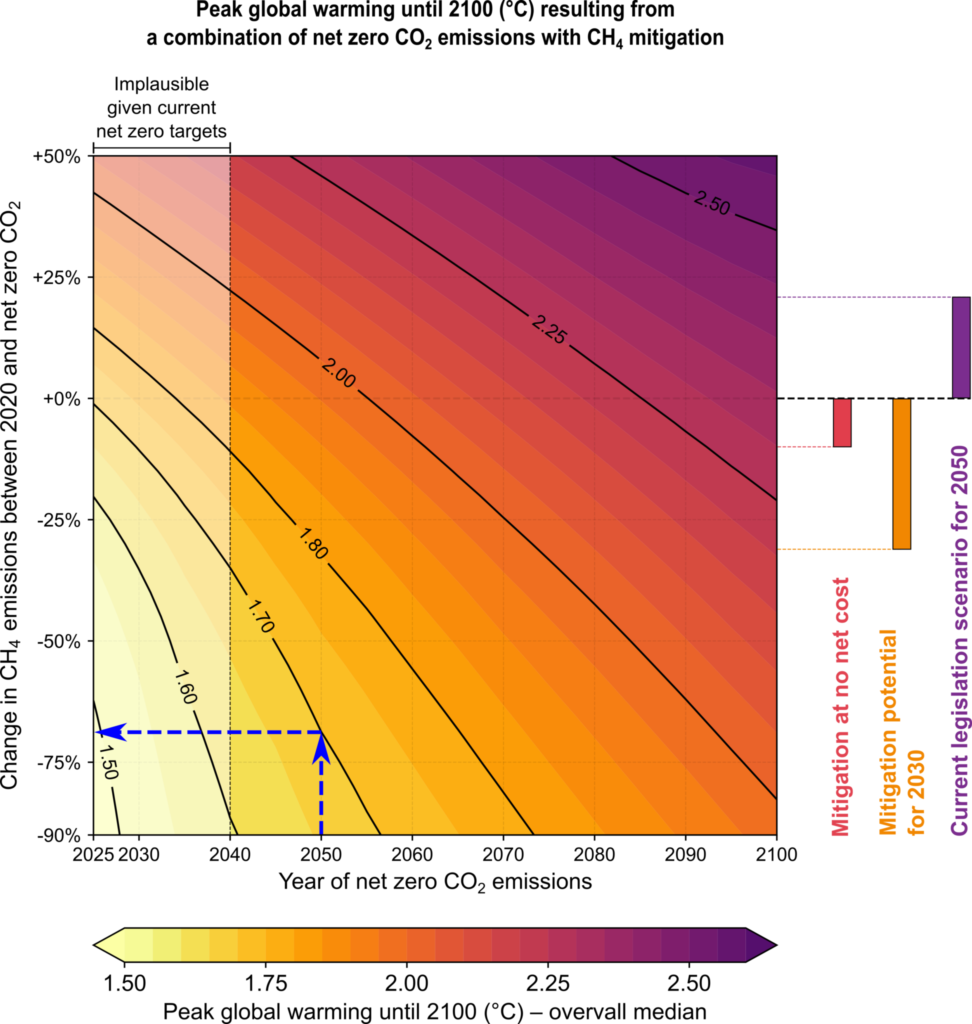
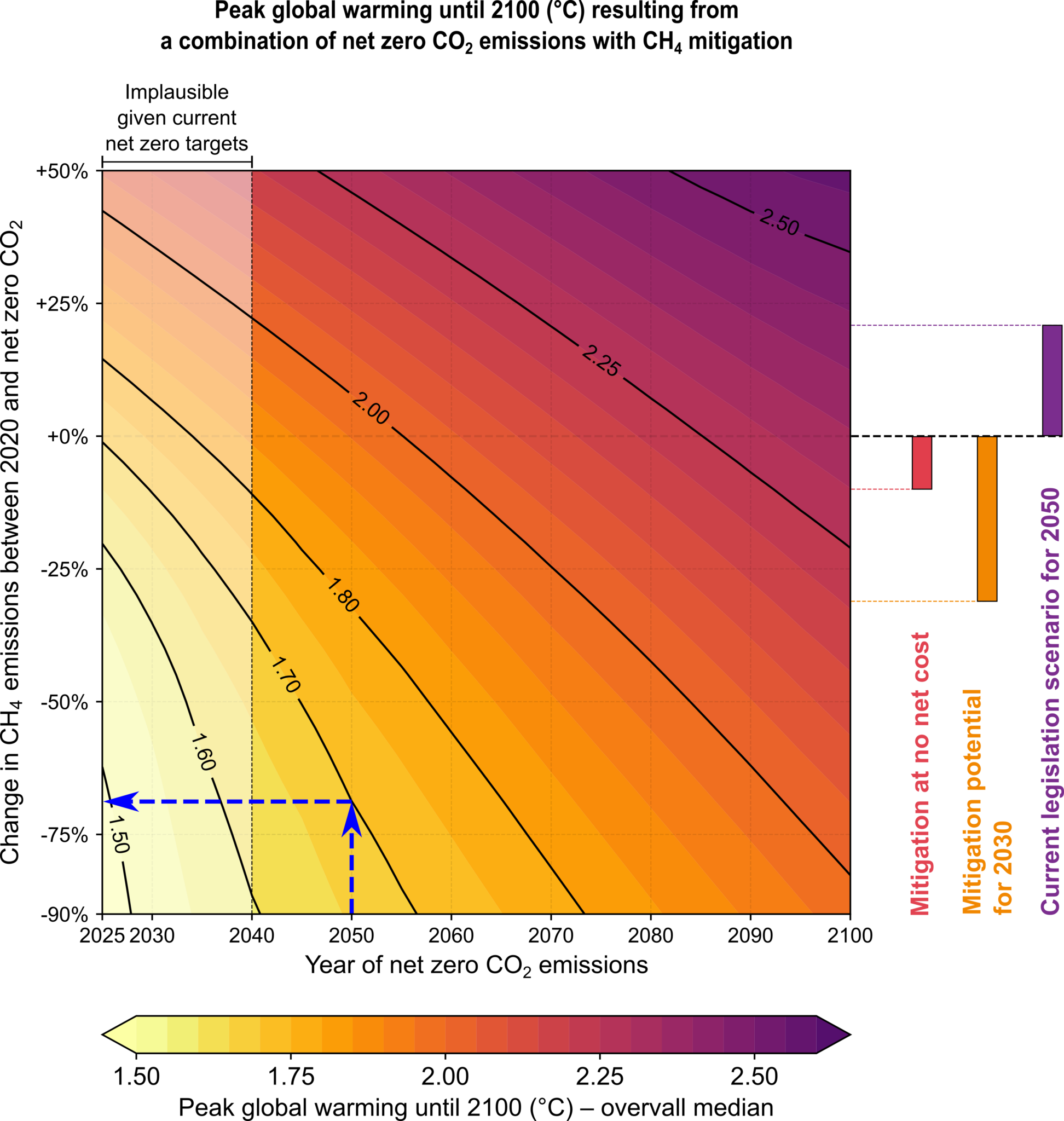
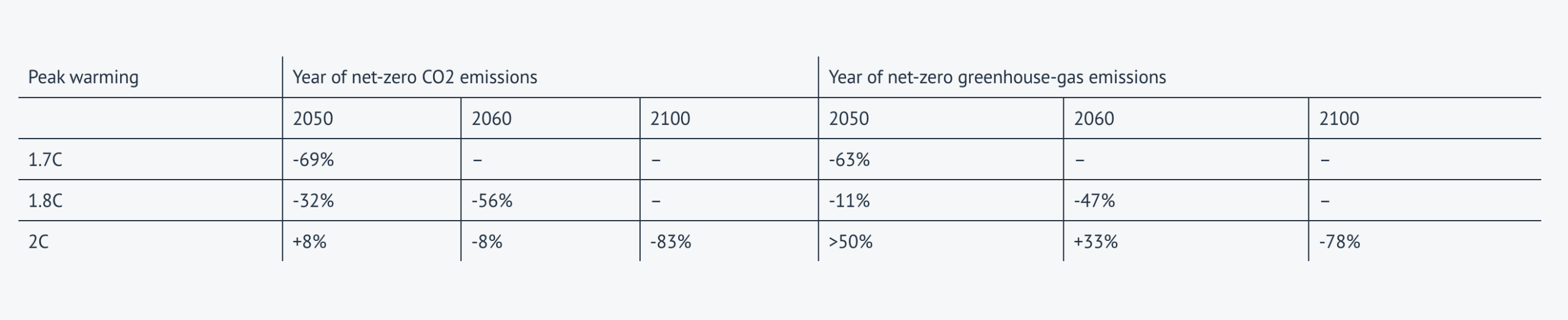
The research demonstrates that under a standard 2050 net-zero $CO_2$ scenario, limiting global temperature rise to 1.7°C requires global methane emissions to plummet by at least 69% by 2050 relative to 2020 levels. If an entity’s net-zero target encompasses all greenhouse gases rather than $CO_2$ alone, the required methane reduction shifts slightly to 63%—though this assumes rigorous, linear reductions from day one.
Conversely, under current global policies and trajectory projections, methane emissions are actually expected to increase by approximately 20% by 2050 relative to 2020. The study proves that even if the world successfully achieves net-zero $CO_2$ emissions by 2050, allowing methane emissions to follow this current legislative pathway will drive peak global warming above 2.0°C.
The Danger of Inaction
If global methane emissions are held flat at 2020 levels while net-zero $CO_2$ is delayed until 2040 or later, peak warming will inevitably breach 1.85°C. This level exceeds the scientific consensus for maintaining consistency with the Paris Agreement’s "well below 2°C" mandate.
| Peak Warming Target (50% Likelihood) | Minimum Methane Reduction Required (2020 to Net-Zero $CO_2$ Year) | Minimum Methane Reduction Required (Comprehensive GHG Net-Zero Year) |
|---|---|---|
| 1.7°C | 69% (by 2050) | 63% (by 2050) |
| 1.8°C | 45% (by 2050) | 38% (by 2050) |
| 2.0°C | — (Compatible without deep cuts if CO2 net-zero is rapid) | — |
Note: For certain ambitious net-zero timelines combined with strict warming limits, baseline projections require mitigation velocities that exceed current technological deployment models, highlighting the narrow window for intervention.
The Power of the Global Methane Pledge
The study also validates the immense near-term value of existing international agreements, such as the Global Methane Pledge, which aims to cut global methane emissions by 30% by 2030 relative to 2020 levels.
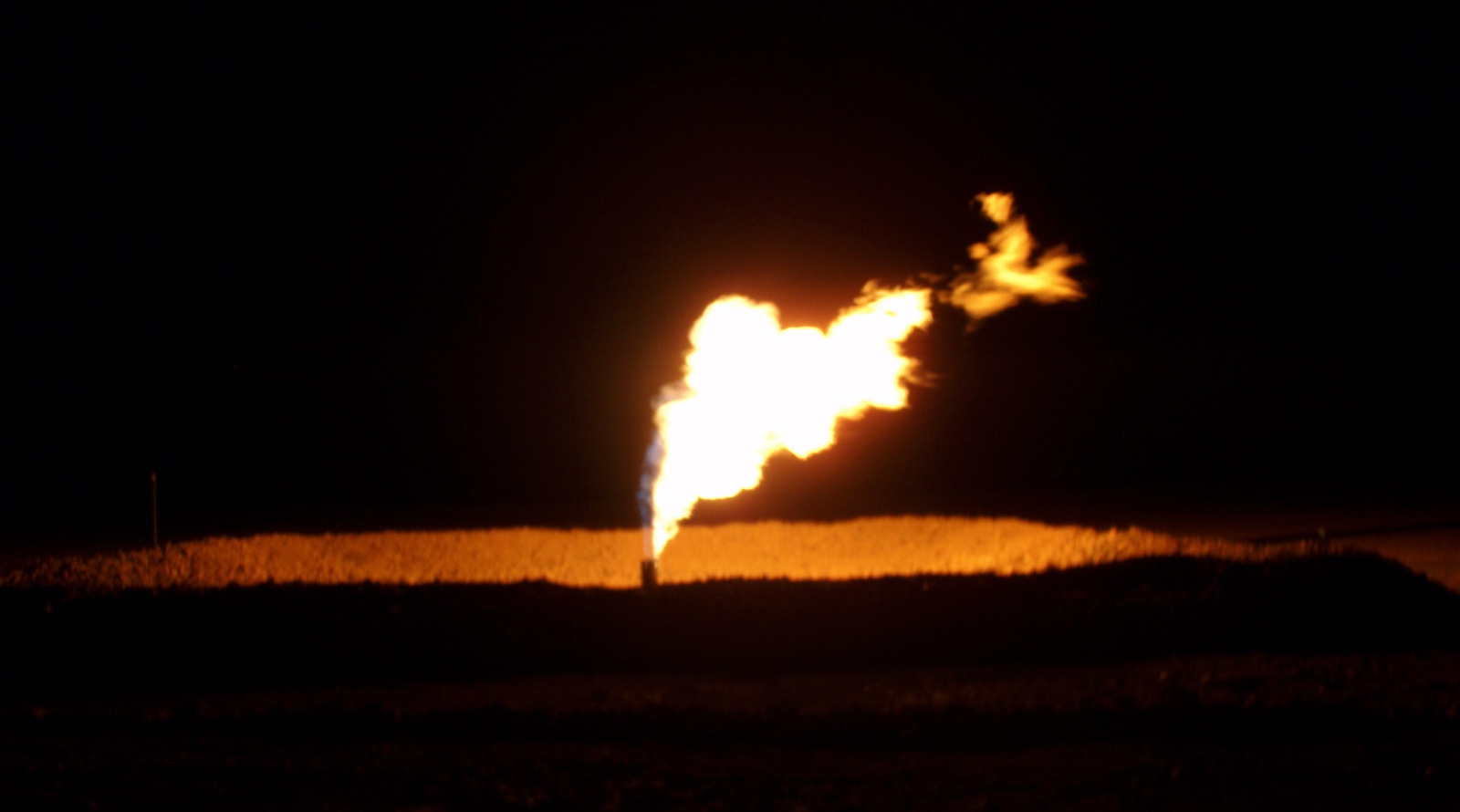
The researchers found that hitting this one-third reduction target by 2030 would reduce peak global warming by 0.15°C. Crucially, one-third of that cooling effect (0.05°C) can be achieved via interventions that come at zero net cost, primarily by capturing fugitive methane leaks from oil and gas infrastructure, upgrading antiquated pipeline networks, and stopping routine venting and flaring.
Re-evaluating the Remaining Carbon Budget
The global carbon budget—the cumulative amount of $CO_2$ humanity can emit before breaching a specific temperature threshold—is fundamentally dependent on assumptions made about non-$CO_2$ gases.
According to IPCC Sixth Assessment Report benchmarks and subsequent 2023 studies, the remaining carbon budget to hold warming to 2.0°C by 2025 is estimated at 1,000 to 1,150 gigatonnes of $CO_2$ ($GtCO_2$). However, Weber et al. emphasize that these carbon budgets are explicitly predicated on the silent assumption that methane emissions will autonomously drop by 27% to 35% by 2050.
If the world adopts the GWP metric—where methane is managed merely to prevent additional* warming rather than actively drawn down—the remaining carbon budget shrinks dramatically. Under this constraint, the best estimate for a 2.0°C carbon budget contracts by roughly 30%, plunging to approximately $750 GtCO_2$. Most alarmingly, the study reveals that if future methane emissions are left entirely uncurbed, the remaining carbon budget for a 1.7°C warming limit has effectively already been exhausted.
Official Statements & Expert Perspectives
The publication of this research has ignited fresh discussions within the international scientific community regarding how climate policies are framed, monitored, and enforced.
Lead author Konstantin Weber emphasized the necessity of moving beyond blunt instruments in corporate and governmental climate accounting:
"When climate targets lump all greenhouse gases together into a single carbon-equivalent number, they hide the immense leverage we have over short-lived pollutants like methane. By decoupling $CO_2$ and methane in our models, we expose a dangerous blind spot: net-zero carbon pledges alone are a hollow victory if runaway methane emissions push peak temperatures past irreversible thresholds before the century is out."
Co-author Prof. Reto Knutti underscored the policy implications for nations currently drafting updated Nationally Determined Contributions under the Paris Agreement:
"The math is unforgiving. You cannot negotiate with physics. If countries continue to treat agricultural, waste, and fossil fuel methane as secondary externalities while racing toward 2050 carbon targets, they are aiming at the wrong target. Stringent methane cuts are not an optional bonus; they are the shock absorbers that keep the entire global warming limit from flying off the rails."
Independent climate analysts reviewing the Communications Earth & Environment paper have pointed out that the findings place immediate pressure on major agricultural economies and oil-producing states—many of which have signed voluntary pledges but lagged in binding regulatory implementation.
Future Outlook: A Dual-Track Climate Strategy
The findings of Weber et al. mark a paradigm shift in how future climate scenarios must be constructed. Moving forward, the global climate architecture can no longer afford to treat methane as a flexible variable tucked away inside opaque economic models.

1. Mandatory Standalone Methane Targets
Governments must transition away from economy-wide greenhouse gas targets that obscure gas-specific trajectories. Every major emitting nation must establish legally binding, standalone methane reduction targets codified into national law, targeting a minimum 45% to 70% reduction in methane emissions by mid-century depending on their chosen temperature guardrails.
2. Capitalizing on "No-Net-Cost" Abatement
Because a significant portion of methane mitigation—particularly in the fossil fuel sector—can be achieved at zero net cost through leak detection and repair (LDAR) technologies, regulatory bodies must immediately implement zero-tolerance policies for venting and flaring. Energy companies must be held directly accountable for fugitive emissions across the entire supply chain.
3. Rewriting Corporate Net-Zero Standards
For the private sector, corporate sustainability reporting standards (such as the Science Based Targets initiative) must mandate the explicit separation of $CO_2$ and methane reduction milestones. Companies in agriculture, waste management, and energy can no longer offset lagging methane mitigation by purchasing distant carbon offsets; they must tackle short-lived climate pollutants at the source.
Conclusion
The atmosphere does not care about accounting convenience. While achieving net-zero carbon dioxide emissions remains the ultimate destination for stabilizing the Earth’s climate system, methane is the emergency brake. Without stringent, independent, and immediate cuts to methane emissions, the world risks overshooting safe temperature limits within decades—rendering long-term carbon targets a pyrrhic achievement.



