

Executive Overview
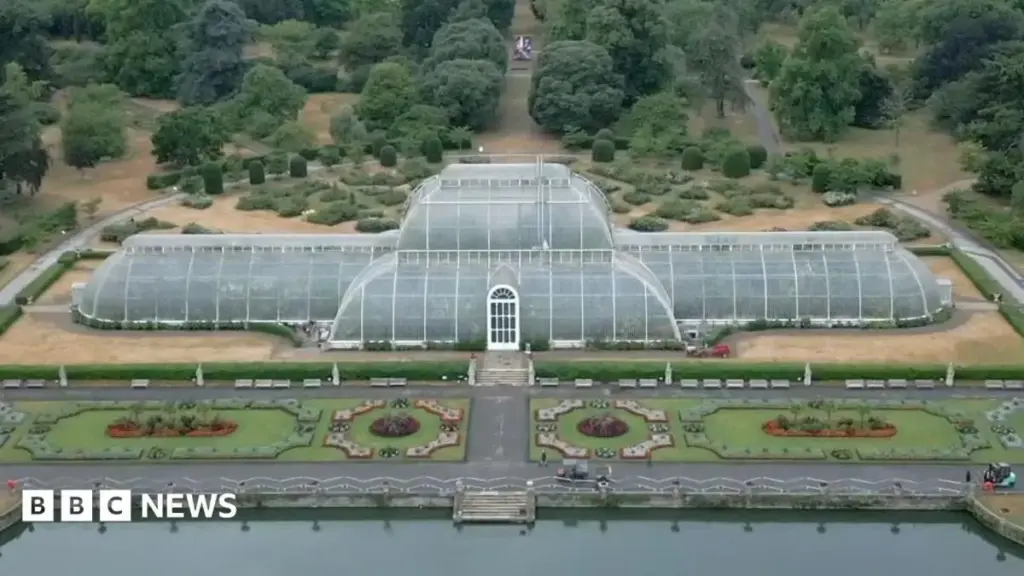
London’s Royal Botanic Gardens, Kew, is preparing for one of the most complex, delicate, and high-stakes conservation engineering projects of the 21st century. The world-famous Palm House—an architectural and horticultural masterpiece of the Victorian era—is slated for a comprehensive, £66 million structural and environmental overhaul beginning in the autumn of 2027. This monumental undertaking is driven by necessity. Decades of maintaining the punishingly hot, hyper-humid interior climate required to sustain tropical flora have severely degraded the building’s historic wrought iron framework and single-pane glass panels.
When the doors officially close ahead of the construction phase, the botanical sanctuary will enter a dormant period lasting up to four years. However, before a single scaffolding pole can be erected or a single pane of glass replaced, horticulturists, arborists, and logistics specialists face an unprecedented logistical nightmare: the total evacuation of approximately 1,300 tropical plants and trees. Among these residents are some of the world’s rarest, oldest, and most historically significant specimens, including the world’s oldest potted plant—a magnificent 250-year-old Eastern Cape giant cycad (Encephalartos altensteinii) that has called Kew home since 1775.
This investigative report examines the multifaceted dimensions of the Palm House restoration. We explore the architectural history of Decimus Burton and Richard Turner’s iron-and-glass cathedral, the corrosive chemical realities of indoor tropical meteorology, the staggering operational hurdles of mass-relocating a rainforest, and the long-term strategic vision for Kew as it safeguards its living library for future generations.
Detailed Chronology: From Blueprint to Reopening
To understand the scale of the upcoming 2027 intervention, one must retrace the historical milestones of the Palm House and map out the precise timeline of its impending transformation.
1844–1848: The Birth of a Victorian Vision
Conceived during the height of the British Empire’s botanical expansion, the Palm House was designed to display exotic flora brought back by global plant hunters. Architect Decimus Burton and ironmaster Richard Turner collaborated to create a structure that mirrored the upturned hull of a ship, utilizing innovative wrought-iron techniques pioneered in railway station and shipbuilding architecture. Completed in 1848, it became an instant engineering marvel, though its internal climate control has presented maintenance challenges ever since.
The Late 20th Century: The 1980s Overhaul
The upcoming project is not the Palm House’s first brush with structural salvation. Between 1984 and 1988, the building underwent a major restoration program. During this period, the entire structure was meticulously dismantled, piece by piece, down to its foundations. Ironwork was treated, glass was replaced, and the heating systems were modernized. Yet, nearly four decades later, the relentless chemical assault of moisture and heat has once again brought the building to the brink of structural vulnerability.
2023–2026: Preliminary Assessment and Engineering Surveys
In the years leading up to the 2027 closure, Kew’s conservation architects, structural engineers, and heritage consultants have conducted exhaustive non-destructive testing (NDT) on the building. Laser scanning, thermal imaging, and metallurgical assays have mapped the exact locations of micro-fractures, rust-jacking, and load-bearing fatigue across thousands of individual iron components.
Autumn 2027: The Closure and Evacuation Phase
The formal commencement of the project in late 2027 will trigger a carefully timed exodus. The 1,300 plants within the Palm House must be cataloged, pruned, propagated as insurance policies, and moved either to state-of-the-art temporary off-site glasshouses or carefully integrated into other climate-controlled zones within Kew’s sprawling 300-acre estate.
2027–2031: The Restoration Works (Estimated Four-Year Window)
Once stripped bare, the Palm House will be wrapped in specialized scaffolding and environmental containment sheeting. Conservators will manually strip away layers of historical paint, assess every structural rib, replace compromised iron with historically sympathetic metallurgy, and install modern, energy-efficient glass panels designed to mimic the optical qualities of Victorian float glass while vastly improving thermal retention.
2031 and Beyond: Repatriation and Reopening
The final phase will reverse the mass migration. Returning 1,300 mature tropical trees and palms—some weighing multiple tons and towering dozens of feet into the air—will require a synchronized ballet of cranes, structural modifications to the newly built framework, and delicate horticultural aftercare as the plants re-acclimate to their renewed home.
Supporting Context & Metrics: The Anatomy of Decay and Scale
The sheer numbers surrounding the Palm House restoration illustrate the staggering proportions of the enterprise. Every metric reflects an intricate balance between heritage preservation and modern environmental engineering.
+-----------------------------------------------------------------+
|              PALM HOUSE RESTORATION METRICS & DATA              |
+------------------------------+----------------------------------+
| Total Project Budget         | £66 Million                      |
| Estimated Closure Duration   | Up to 4 Years (Beginning 2027)   |
| Total Plant Specimens        | ~1,300 Tropical Trees and Palms  |
| Age of Oldest Specimen       | 250 Years (Encephalartos)        |
| Original Completion Date     | 1848                             |
| Principal Architects         | Decimus Burton & Richard Turner  |
+------------------------------+----------------------------------+
The Microclimatic Enemy: Humidity, Condensation, and Corrosion
The primary driver behind the £66 million price tag is an invisible, relentless chemical reaction. To maintain a rainforest environment in the temperately variable climate of southwest London, the Palm House must sustain high ambient temperatures and near-saturation humidity levels year-round.
This environment creates constant condensation on the interior surfaces of the glass and ironwork. Over nearly four decades since the last major overhaul, moisture has found its way into microscopic fissures in the protective coatings of the wrought iron. As iron oxidizes, it expands—a process known as rust-jacking—which exerts immense internal pressure on adjacent joints, distorting frames, cracking historic glass panes, and compromising the structural load capacity of the building’s skeletal frame.
The Horticultural Challenge: Moving a Living Museum
Managing 1,300 tropical specimens is far more complex than emptying a traditional museum or art gallery. Many of the trees inside the Palm House are permanently planted in deep, nutrient-rich soil beds rather than pots, meaning horticulturists must execute radical root-pruning regimens years in advance to encourage root-ball compaction.
Furthermore, many tropical species cannot survive the shock of standard outdoor British weather. Kew’s behind-the-scenes nursery infrastructure is currently undergoing capacity upgrades to house these displaced giants. For specimens too massive to move safely without destroying them, specialist propagation teams are taking cuttings and cloning material to ensure that genetic lineages survive even if a parent plant fails to weather the transition.
Official Statements and Expert Perspectives
The gravity of the Palm House project has elicited strong responses from leadership, conservationists, and botanical experts alike.
Richard Deverell, Director of the Royal Botanic Gardens, Kew, emphasized the cultural and ecological weight of the upcoming closure:
"The Palm House is not merely a historic building; it is a beating heart for plant conservation and a masterpiece of Victorian engineering. For generations, it has inspired millions of visitors to marvel at the breathtaking diversity of the tropical world. However, the relentless forces of humidity and time have caught up with it. This £66 million restoration is an absolute necessity to ensure that this magnificent cathedral of glass and iron survives for our children and grandchildren. We do not enter into this closure lightly, but the scale of the engineering required leaves us no alternative."
Dr. Martina Vanecek, Lead Structural Heritage Engineer overseeing the diagnostic phase, highlighted the unique technical hurdles of working with 19th-century wrought iron:
"Working on a structure designed by Richard Turner is a humbling experience. The ingenuity of the ironwork is extraordinary, but materials science has advanced significantly since the 1840s. Our challenge is to honor the heritage fabric of the building—repairing rather than replacing wherever humanly possible—while introducing modern metallurgical treatments and smart sealing technologies that will dramatically extend the lifespan of the iron framework against aggressive condensation."
Head of Horticulture Toni Woods detailed the meticulous planning underway for the plant collection:
"Moving 1,300 tropical plants out of a rainforest environment into temporary quarters is arguably the most daunting horticultural operation attempted in modern times. Every single tree, fern, and vine has its own unique physiological tolerance thresholds. Our team is spending years planning the exact extraction sequence, monitoring root health, and preparing surrogate environments that mimic their home within the Palm House down to the last degree of humidity and light wavelength."
Future Outlook: A 21st-Century Legacy for Victorian Engineering
When the Palm House reopens its doors in the early 2030s, visitors will encounter a structure that looks authentically Victorian on the exterior but functions with 21st-century environmental efficiency.
Sustainability and Energy Performance
Historically, maintaining the Palm House’s climate has demanded substantial energy inputs, relying heavily on fossil fuel boilers to generate the necessary heat. While exact specifications for the new environmental control systems are being finalized as part of the £66 million investment, Kew’s overarching institutional commitment to net-zero carbon operations strongly influences the engineering brief. Modernized, highly efficient biomass or low-carbon heat pump technologies, coupled with smart thermal-glazing technologies, will significantly reduce the carbon footprint of heating a tropical glasshouse in London.
Educational and Conservation Impact
Beyond structural preservation, the closure provides a vital opportunity to redesign the interior interpretation schemes. Kew plans to update the educational exhibits housed within the Palm House, aligning them more closely with contemporary global crises: climate change, habitat destruction, and the urgent need for tropical forest conservation. By telling the stories of these plants through a modern ecological lens, the restored Palm House will transition from a passive Victorian showcase into an active hub for global botanical advocacy.
A Masterclass in Heritage Conservation
Ultimately, the restoration of the Palm House at Kew Gardens serves as a global benchmark for how cultural institutions can manage aging heritage infrastructure. It demonstrates that preserving historical architecture does not mean freezing it in time, but rather actively investing in its physical renewal so that it may continue to fulfill its original living purpose. As the scaffolding rises in autumn 2027, the world will watch as London’s great glass cathedral undergoes its greatest metamorphosis yet—ensuring that the green heart of Kew continues to beat long into the future.



