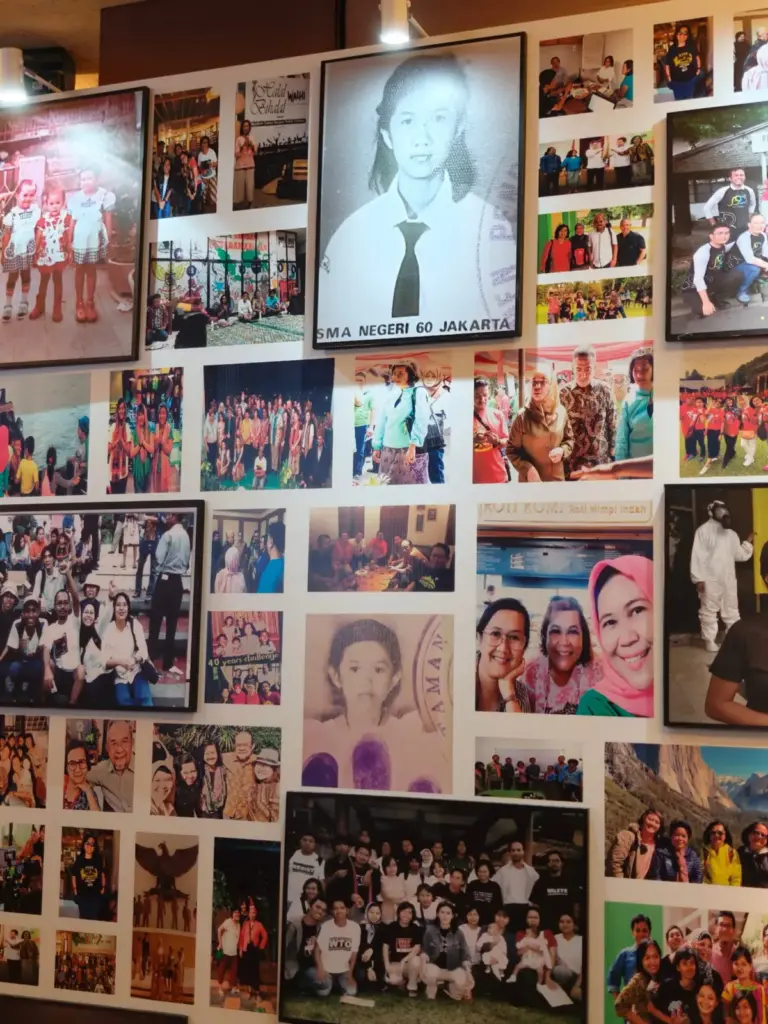
In the heart of Jakarta, amidst the bustling capital of an archipelago grappling with immense ecological and social pressures, civil society leaders gathered on August 14 to honor a legacy that refuses to fade. Exactly 648 days after the passing of Nur Hidayati—an iconic Indonesian environmentalist universally known as Yaya or Mbak Yaya—colleagues, allies, and grassroots changemakers marked what would have been her 53rd birthday with the official launch of the Yaya Leadership Initiative (YLI).
Far from a conventional memorial, the YLI is conceived as a dynamic incubator for a new generation of community leaders. It explicitly targets women, young people, Indigenous populations, and grassroots organizers who form the vanguard of Indonesia’s socio-environmental movements. Facilitated by the Indonesian Forum for the Environment (Walhi)—the nation’s largest green NGO—alongside powerhouse coalitions like the Indigenous Peoples’ Alliance of the Archipelago (AMAN), the Consortium for Agrarian Reform (KPA), and the Indonesian Union of Traditional Fisherfolk (KNTI), the initiative seeks to knit together disparate advocacy networks.
Anchored in four cardinal principles that defined Yaya’s decades-long career—solidarity, equality, environmentalism, and diversity—the YLI represents a profound philosophical shift in how leadership is cultivated in the Global South. Rather than focusing on charismatic individuals or consolidating institutional power, the initiative operationalizes Yaya’s unique blueprint: a style of leadership centered on empathy, shared authority, and the deliberate empowerment of others.
As Indonesian civil society navigates an increasingly hostile climate marked by shrinking civic space, criminalization, and rising threats against defenders, the YLI arrives as both a vital lifeline and an urgent structural intervention to safeguard the future of the nation’s socio-environmental movements.
Detailed Chronology: From Grassroots Icon to Institutional Legacy
Nur Hidayati’s journey within Indonesia’s vibrant and often perilous civil society landscape spanned over two decades, characterized by an unyielding commitment to the intersection of environmental justice, human rights, and structural equity.
Yaya’s career trajectory is a testament to institutional stewardship rooted in grassroots empathy. Between 2009 and 2012, she served as the executive director of Greenpeace Indonesia, guiding the organization through critical national campaigns against deforestation and fossil fuel expansion. Following her tenure, rather than ascending to a lucrative international posting—a path readily open to leaders of her stature—she deliberately chose to return to the domestic trenches. She stepped into the role of campaign department head at Walhi before ascending to its executive directorship from 2016 to 2020.
During her leadership at Walhi, Yaya institutionalized her vision for activist longevity. In 2019, she established the Walhi Training Center, creating a dedicated hub for ongoing environmental education. Simultaneously, she spearheaded internal gender policies designed to dismantle patriarchal barriers within the NGO sector, ensuring that safe spaces and institutional support systems existed for women and marginalized groups.
Her untimely death from cancer left a palpable void across Indonesia’s activist networks. Yet, the 648 days following her passing were not merely a period of mourning; they became a gestation period for the YLI. Conceived by her closest peers—including Rukka Sombolinggi of AMAN, Zenzi Suhadi of Walhi, Dani Setiawan of KNTI, and Dewi Kartika of KPA—the initiative is designed to immortalize her methodology. By establishing fellowships, cross-movement networks, and mentorship pipelines, the YLI translates Yaya’s life work into an enduring institutional framework.
Supporting Context & Metrics: A Movement Under Siege
The urgency underpinning the launch of the Yaya Leadership Initiative cannot be overstated. Environmental and human rights defenders in Indonesia are operating in an increasingly volatile environment characterized by institutional pushback, corporate land grabs, and systemic intimidation.
Recent empirical data paints a grim picture of the realities faced by frontline activists. According to a comprehensive report released in May by Indonesian NGOs Satya Bumi and Protection International, 64 distinct cases of threats and attacks against environmental human rights defenders (EHRDs) were recorded across the archipelago in 2025. This alarming figure represents a near-doubling of the 33 cases documented in 2024.
The 2025 metrics highlight the pervasive dangers inherent in defending natural resources:
Victim Impact: The attacks directly affected 259 individuals and 15 distinct communities.
Criminalization: Judicial harassment remains the weapon of choice for corporate and state actors, with 35 recorded cases of criminalization netting a staggering 191 individual victims.
Demographic Vulnerability: Indigenous peoples constitute the largest category of individual victims, followed closely by local community members, agrarian reformers, and small-scale farmers.
Severity of Tactics: Beyond legal persecution, reports document escalating instances of physical violence, arbitrary intimidation, surveillance, and severe restrictions on fundamental civic freedoms.
Compounding these external threats is an internal structural vulnerability within civil society itself: fragmentation and polarization. Movements fighting for Indigenous rights, agrarian reform, labor, gender equality, and traditional fisheries often operate in isolation. This systemic silo effect diminishes their collective bargaining power against well-resourced corporate and political adversaries.
Furthermore, Indonesia’s environmental movement has long excelled at producing "frontline activists"—brave individuals willing to put their bodies on the line during direct actions—while struggling to build sustainable support systems, institutional depth, and intergenerational continuity. The YLI seeks to bridge these exact gaps by fostering cross-movement solidarity and institutionalizing care as a prerequisite for activist survival.
Official Statements: Voices of the Movement
At the inaugural launch event in Jakarta on August 14, prominent civil society leaders took the stage to reflect on Yaya’s indelible impact and the vital mission of the YLI.
Rukka Sombolinggi, secretary-general of AMAN, reflected on the emotional weight of the milestone:
"It makes me sad… I counted every one of those 648 days. But although she has gone, there are legacies, ideas, and actions she left behind that we can still benefit from. Seeing this initiative launched… gives us another way to think about the loss. If young leaders are not emerging, then we have failed."
Zenzi Suhadi, former executive director of Walhi, emphasized the necessity of ideological continuity:
"Everyone will inevitably leave this world, but the core principles and ideas must not disappear; they have to be passed on. Yaya taught us to understand movements through three interconnected components: the frontline, the grassroots base that sustains it, and the wider supporting system around it. The YLI will make sure that the seeds, seedlings, and potential cadres that may not have emerged yet are given a hand, protected, and nurtured."
Khalisah Khalid, public engagement manager at Greenpeace Indonesia and a close protégé of Yaya, highlighted the unique intersection of empathy and leadership:
"During the time Mbak Yaya led, there weren’t many leaders who could do that—lead with empathy and care. For me and the women staff at Walhi, Mbak Yaya understood us deeply and could become a support system. She doesn’t want to grow on her own, but brings others along so that they can grow together. She supported every decision I made." Khalisah recalled an instance when Yaya insisted that organizational budgets accommodate mothers traveling with young children, proving that institutional values must be matched by logistical and financial commitment.
Dani Setiawan, head of the traditional fishers’ union KNTI, underscored Yaya’s role as an unifier:
"She became a connector, a solidarity maker, and someone whose expertise was strengthening the movements that existed in Indonesia. She understood fundamentally that environmental problems could never be separated from social, political, and economic structures."
Dewi Kartika, secretary-general of the Consortium for Agrarian Reform (KPA), addressed the imperative of mutual aid and gender equity in activism:
"We didn’t always have the same understanding as Yaya, but our experience together made us realize that social movements that don’t take care of one another will become fragile. Social expectations, limited access, and family responsibilities often prevent women from developing their leadership potential. Hopefully, the YLI can become an extended hand for women with potential."
Future Outlook: Growing the Next Generation
As the Yaya Leadership Initiative rolls out its foundational programs, its primary focus centers on targeted fellowships designed to unearth and cultivate grassroots talent. Among the inaugural fellowship recipients is Puan Maharani, a young activist hailing from the Blitar Farmers’ Association in East Java and an active member of the regional KPA chapter. Puan exemplifies the demographic the YLI aims to champion: young women rooted in agrarian communities who possess deep local knowledge and unyielding commitment, yet face systemic barriers to higher-level advocacy and legal education.
The YLI’s programmatic architecture goes beyond traditional capacity-building workshops. By deliberately forging horizontal networks between fisherfolk, agrarian reformers, Indigenous guardians, and urban environmentalists, the initiative acts as an antidote to the fragmentation plaguing civil society.
Organizers emphasize that true leadership, in the mold of Nur Hidayati, is not about creating figureheads to command protests or deliver soundbites. It is about building resilient ecosystems where individuals can become leaders, remain leaders safely, support one another through state and corporate repression, and consciously pass the torch to those who follow.
As young activists like Riswan noted during the launch, the integration of youth into policy-making and strategic movement-building is non-negotiable, particularly as Indonesia’s younger generations confront the compounding crises of accelerated climate breakdown and shrinking civic liberties.
Ultimately, the Yaya Leadership Initiative transforms profound grief into a permanent engine for justice. By institutionalizing empathy, solidarity, and shared power, the YLI ensures that Mbak Yaya’s revolutionary vision of leadership—one that builds up others rather than consolidating authority—will continue to guide Indonesia’s environmental and human rights movements for decades to come.