The annual IAA Transportation trade show in Hannover, Germany, has long served as a bellwether for the heavy-duty logistics and commercial vehicle sector. However, the 2026 iteration of the exhibition has unfolded against a backdrop of unprecedented macro-environmental pressures. Across Europe, fleet operators are grappling with stubbornly high diesel fuel costs and the compounding operational realities of severe, climate-induced summer heatwaves. These conditions make the economic and environmental case for fleet electrification more urgent than ever. Yet, even as component manufacturers showcase staggering technological leaps—such as 1,000-kilometer battery packs and 1.4-megawatt charging systems—a fierce political and economic tug-of-war has broken out.
On one side of the debate, Europe’s legacy heavy-duty truck manufacturers are lobbying for a three-year delay to stringent upcoming European Union CO2 emissions targets, citing infrastructure deficits and high electricity costs. On the other side, clean-transport advocates, environmental economists, and forward-thinking tech suppliers argue that rolling back regulations will surrender the European market to aggressive international competitors—particularly from China and the United States—while exacerbating the global climate crisis.
This comprehensive report examines the pivotal hardware breakthroughs unveiled at IAA Transportation 2026, the intensifying controversy surrounding EU emissions mandates, and the existential choice facing Europe’s transport sector as it stands at a critical crossroads.
Detailed Chronology & Technological Breakthroughs at IAA Transportation 2026
The exhibition floor in Hannover offered a sharp contrast between incremental improvements and radical innovation. While high-profile international market entrants, such as Tesla, brought modified versions of their vehicles to the European theater, component and infrastructure suppliers dramatically outpaced them, showcasing next-generation systems designed to eliminate range anxiety and charging bottlenecks once and for all.
Tesla’s European Push Meets Immediate Competitor Pressure
Tesla utilized the Hannover trade show to place its Tesla Semi in the spotlight, highlighting a vehicle slightly modified from its North American specifications to cater to European regulatory and spatial requirements. The Standard Range Semi on display is engineered to deliver up to 550 kilometers (approximately 340 miles) of operational range on a single battery charge, supported by an 800-volt charging architecture capable of accepting up to 800 kW of charging power.
While these figures represent a formidable capability for regional distribution, industry observers and trade attendees quickly pointed out that such specifications are rapidly becoming baseline standards in the fast-evolving European heavy-duty market. Indeed, announcements made concurrently at the show by Asian and European tech firms immediately eclipsed Tesla’s benchmark figures.
CATL’s Tectrans II: Redefining Commercial Range and Durability
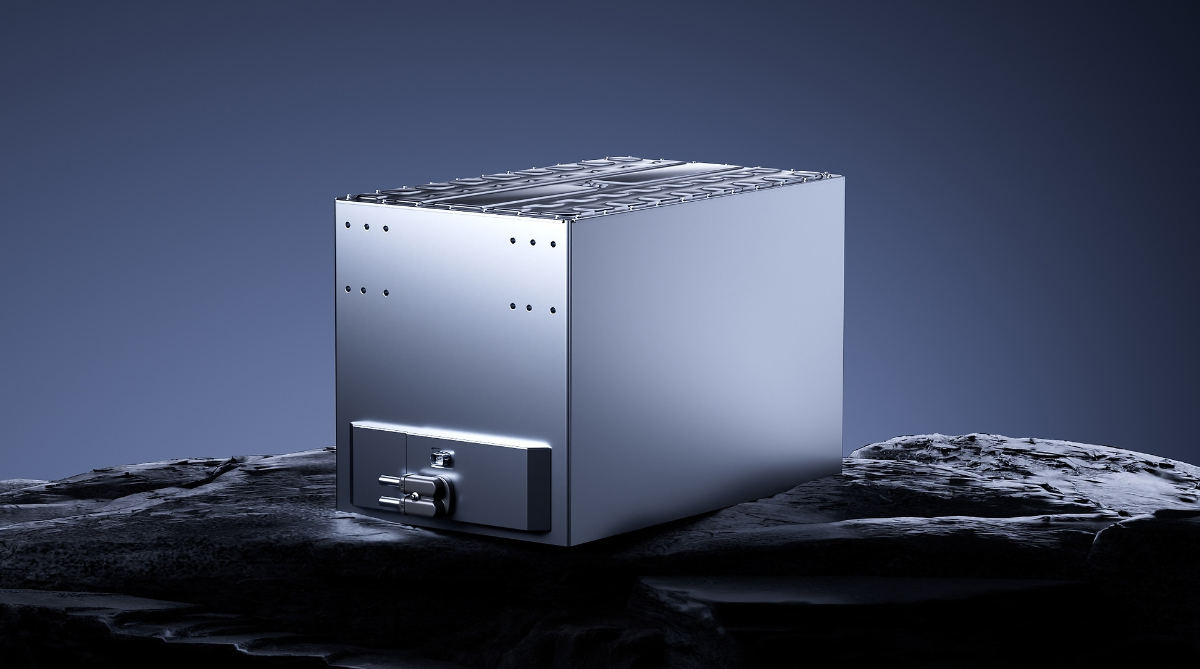
Battery titan CATL made waves at IAA Transportation with the official launch of its Tectrans II commercial vehicle battery system. Engineered specifically to shatter traditional heavy-duty limitations, the Tectrans II promises a staggering driving range of up to 1,000 kilometers (621 miles) on a single charge. Furthermore, the system incorporates advanced megawatt fast-charging compatibility, allowing the battery pack to replenish from zero to 80 percent capacity in just 25 minutes.
The engineering design of the Tectrans II focuses heavily on spatial versatility. The battery packs are modularly constructed so they can be integrated seamlessly anywhere along the chassis of medium- and heavy-duty commercial vehicles, including roof-mounted configurations tailored for electric buses. In a parallel strategic move, CATL announced a collaboration with Octopus Energy to promote comprehensive battery-swapping solutions designed to drastically reduce vehicle downtime for logistics operators.
From a materials and longevity standpoint, the Tectrans II achieves a gravimetric energy density of 170 Wh/kg—a figure CATL reports is roughly 13 percent higher than the current industry average. More impressively, the battery is engineered to endure a rigorous service life of 12 years and an astonishing 1.5 million kilometers of operation while maintaining 70 percent of its original energy storage capacity.
Cementing its commercial intent in Hannover, CATL signed a high-profile Letter of Intent (LOI) with the DHL Group. The partnership aims to develop green freight corridors across Europe, deploying advanced energy storage systems and intelligent energy management platforms across DHL’s primary logistics parks. The initiative will heavily emphasize pilot deployments of battery-swapping, ultra-fast charging architectures, and next-generation electric commercial vehicles.
Zerova’s 1440 kW Megawatt Dispenser
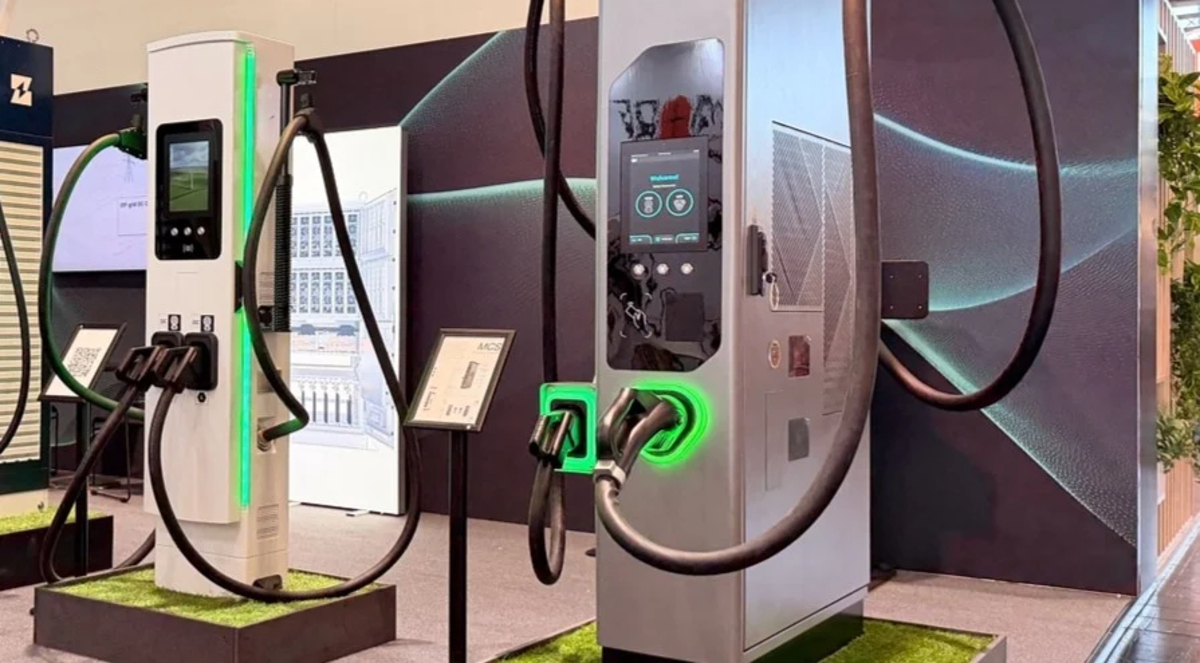
Addressing the infrastructure side of the equation, high-power charging equipment manufacturer Zerova debuted a product that fundamentally redefines high-capacity replenishment: a commercial vehicle charging system capable of delivering up to 1,440 kW (1.44 MW) of power.
While various industry players—including Tesla—colloquially market 800 kW systems as "megawatt chargers," true megawatt capability requires crossing the 1,000 kW threshold. Zerova’s new Megawatt Charging System (MCS) dispenser nearly doubles the power output of traditional high-end commercial chargers, providing direct support for long-haul freight and heavy transit applications.
Speaking to press and industry leaders at the event, Brian Huang, Managing Director of Zerova UK, emphasized that the hardware aligns directly with current market trajectories. Depot operators and logistics fleets across Europe are actively demanding scalable, high-capacity charging infrastructure that can be deployed immediately and expanded modularly as fleets scale.
Judy Hung, Director of Business Operations for Zerova, echoed this sentiment, noting that the system acts as a satellite fleet-charging platform built to evolve in tandem with the maturation of the official European MCS standard.
Supporting Context & Regulatory Metrics: The Push for 2030 and Beyond
While the technological hardware required to electrify commercial transport is visibly maturing on the exhibition floor, the legislative and regulatory framework governing its adoption is facing an unprecedented political challenge.
The EU CO2 Standards Framework
Under current European Union regulations, heavy-duty vehicle (HDV) manufacturers are legally bound to achieve significant reductions in fleet-wide CO2 emissions compared to a 2025 baseline:
2030 Target: A 43 percent reduction in CO2 emissions from new heavy-duty vehicles.
2035 Target: A 64 percent reduction.
2040 Target: A 90 percent reduction.
Manufacturers failing to meet these milestones face substantial financial penalties. Yet, according to data from the European Automobile Manufacturers’ Association (ACEA), zero-emission vehicles currently account for only 2.4 percent of new heavy-duty vehicle registrations—a figure that detractors argue falls dangerously short of the trajectory required to meet the 2030 mandate.
The Legacy Manufacturers’ Pushback
Citing this gap between regulatory ambitions and ground-level realities, the CEOs of Europe’s seven leading truck and bus manufacturers—including prominent industry heavyweights such as Daimler Truck, DAF Trucks, Iveco, and Scania—petitioned the European Union through Reuters to delay the 2030 CO2 targets by three years.
The executives argue that a severe lack of public charging infrastructure, prohibitively high grid connection costs, and elevated industrial electricity prices mean that zero-emission commercial vehicles do not yet make sound business sense for many end-users. They contend that policymakers must first accelerate the rollout of public charging stations, streamline grid connections, expand carbon-dioxide-based road toll systems, and directly reinvest carbon trading revenues into infrastructure development before enforcing strict compliance fines.
The Counter-Argument: Defending European Competitiveness
This call for regulatory relief triggered an immediate and heated backlash from clean-transport advocates, environmental economists, and industry analysts. Prominent voices—such as Rustam Kocher (formerly of Daimler Truck) and Stef Cornelis of Transport & Environment—warned that watering down the standards will deliver a self-inflicted blow to European industrial jobs, stall technological innovation, and hand a decisive structural advantage to foreign competitors, particularly Chinese manufacturers.
Campaigners emphasize that the existing emissions standards are, in fact, working. European truck makers achieved the EU’s interim 2025 CO2 reduction target of 15 percent a full year ahead of schedule. Furthermore, electric truck registrations across Europe surged by more than 50 percent immediately following the implementation of the initial standards, demonstrating that regulatory certainty directly stimulates market demand.
Economic analyses suggest that maintaining the 2030 targets could yield monumental benefits for the European economy:
Fossil Fuel Reductions: Transitioning away from internal combustion could eliminate the sale of roughly 60,000 new diesel trucks, avoiding exhaust pollution equivalent to removing two million passenger cars from the road.
Energy Security: Scaled adoption of electric trucks could slash European oil imports by up to 22 percent by 2035.
Operational Savings: Fleet operators could save approximately €1,800 per month in fuel and operational costs per vehicle, translating to a cumulative macroeconomic savings for the EU of roughly €28 billion.
Official Statements & Industry Perspectives
The philosophical divide between legacy industrial leadership and modern clean-tech advocates was sharply highlighted by statements released during the Hannover summit.
Zhu Lingbo, Chief Technology Officer for CATL’s Global Business Unit:
"Commercial vehicle electrification will unfold over more than a decade. With our deep technological expertise and long-term commitment, CATL is ready to be the most reliable partner for customers worldwide and for the global electrification of freight transport."
Stef Cornelis, Transport & Environment:
"Europe’s truck makers are market leaders today, but they are failing to invest fast enough to defend that position. Chinese and US manufacturers could take more than a quarter of Europe’s electric truck market by 2030. The CO2 standards are the main force pushing manufacturers to invest and compete; weakening them would reward inaction."
Brian Huang, Managing Director of Zerova UK:
"This launch reflects where the market is heading. Depot operators and logistics fleets across Europe are asking for megawatt-class charging they can deploy today and expand tomorrow, and that’s exactly what our MCS dispenser delivers."
Eoin Dubsky, Campaigner for Ekål:
"Weakening the standards again would come at a cost Europe cannot afford. Europe has already delivered the policy certainty manufacturers asked for. Now it’s time for them to deliver the trucks. We cannot keep stalling climate action every time that big polluters ask. Manufacturers asked for flexibility and got it. The time for renegotiation is over."
Future Outlook: A Critical Juncture for Global Freight
The events at IAA Transportation 2026 underscore a fundamental truth: the hardware and technological ecosystems required to fully electrify global commercial transport are no longer theoretical. Innovations like CATL’s Tectrans II batteries—offering 1,000-kilometer ranges and 25-minute megawatt recharges—coupled with ultra-high-power infrastructure solutions like Zerova’s 1,440 kW chargers, decisively dismantle the technical excuses that have historically hindered commercial fleet transition.
However, the reluctance of legacy truck manufacturers to fully commit to regulatory timelines reveals a deeper systemic hesitation. As diesel fuel costs remain volatile and climate-driven disruptions intensify across the continent, the economic imperative for decarbonization grows starker by the day.
If European policymakers succumb to lobbying efforts and dilute the 2030 emissions standards, they risk ceding the future of global logistics to international competitors who are moving with far greater speed and conviction. The path forward demands resolute political courage and accountability. The batteries are ready, the chargers are built, and the economic benefits are quantified. For the European commercial transport sector, the time for hesitation has officially expired; the future requires immediate, decisive execution.