Published: August 31, 2026 Author: Jacob Wallace (Enriched & Expanded Edition)
Executive Overview
The waste and recycling sector is undergoing a quiet, yet radical, transformation. As municipalities, corporations, and institutional campuses face mounting pressure to divert organic waste from landfills, equipment providers are scrambling to offer comprehensive, scalable solutions. In a definitive move that underscores this industry-wide evolution, equipment provider Viably—formerly known as Komptech Americas—has officially acquired the Irish digester company Harp.
Announced as part of Viably’s broader post-rebrand expansion strategy, the acquisition signals a clear shift: equipment suppliers are no longer satisfied with specializing in a single niche. Instead, they are rapidly evolving into holistic platform providers capable of addressing every link in the organics recycling chain.
According to Viably CEO Brandon Lapsys, the integration of Harp’s rapid aerobic digester technology is just the beginning. By marrying Harp’s modular, high-efficiency systems with Viably’s robust existing portfolio—which includes Turbo Separator food waste depackagers and industrial windrow turners—the company is positioning itself to capitalize on an exploding North American organics market. Driven by an intricate patchwork of state-level landfill bans and zero-waste mandates, the waste management industry is recognizing that there is no single "silver bullet" for food waste diversion. Through strategic acquisitions, deep equipment integration, and a focus on municipal solid waste (MSW) processing, Viably is building an ecosystem designed to turn waste management challenges into high-value environmental commodities.
Detailed Chronology: From Komptech Americas to Viably
To understand the strategic gravity of the Harp acquisition, one must examine the trajectory of Viably over the past several years. The roots of the company stretch deep into the distribution of heavy-duty environmental machinery. For years, operating under the name Komptech Americas, the organization established itself as a trusted master distributor for Komptech’s sophisticated mechanical biological treatment (MBT) and waste-processing technologies across the United States and Canada.
By 2023, the company had successfully installed Komptech machinery at more than 800 operational sites across North America. However, the leadership team recognized that the market was outgrowing pure-play distribution. Clients—ranging from private waste haulers to large-scale municipal composting facilities—were increasingly demanding end-to-end design, installation, and integrated processing capabilities.
This realization catalyzed a pivotal corporate evolution. In late 2023, Komptech Americas officially rebranded as Viably. This was not merely a cosmetic name change; it was a foundational pivot designed to liberate the company from the constraints of a single-brand identity. While Viably maintained its critical status as the master distributor for Komptech technology in North America, the rebrand unlocked new strategic freedoms. It empowered the company to distribute equipment from other premier manufacturers, pursue aggressive mergers and acquisitions, and conceptualize, design, and build its own proprietary in-house product lines.
The acquisition of Harp represents the first major milestone of this post-rebrand era. By bringing an established international digester technology into the Viably fold, the company has proven that its new platform model is operational, aggressive, and laser-focused on the fast-growing organics sector.
Supporting Context & Metrics: The Mechanics of Rapid Aerobic Digestion
At the heart of Viably’s latest acquisition is Harp’s proprietary aerobic digestion technology, a system designed to circumvent the traditionally lengthy timelines associated with organic waste breakdown.
How Harp’s Digesters Operate
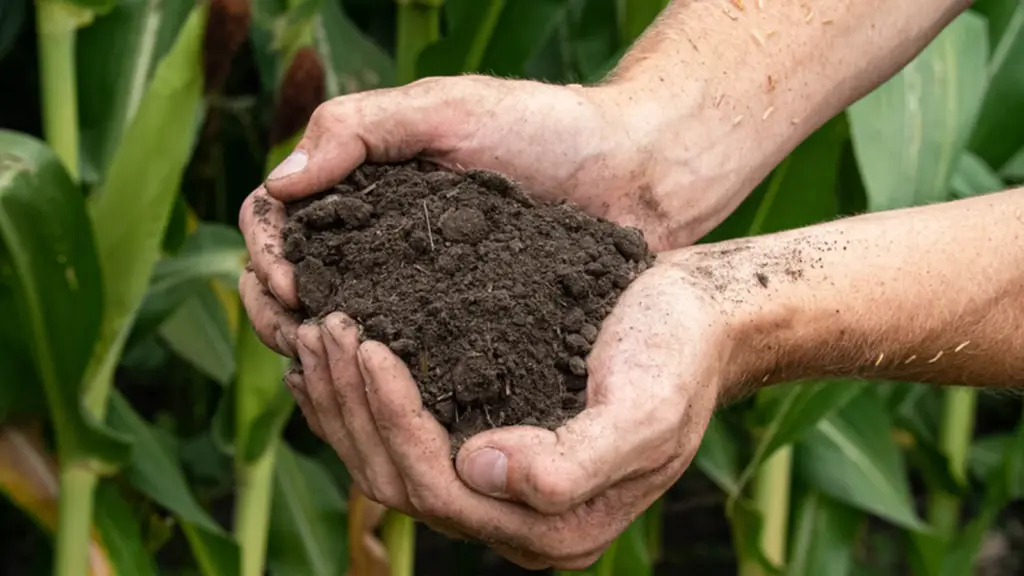
Unlike anaerobic digestion facilities—which typically require massive capital outlays, months of planning, complex regulatory permitting, and large plots of land to produce biogas—Harp’s systems utilize a rapid aerobic process. Organic material, including food scraps and putrescible waste, is broken down into a nutrient-rich soil amendment in a remarkably brief window of 24 hours.
The units are engineered with a modular footprint, making them highly versatile across diverse operational settings. The hardware scales efficiently to meet variable volume demands:
Small-Scale Units: Designed for tight spaces or lower-volume generators, the smallest Harp digesters can handle roughly 250 pounds of organic material per day.
Large-Scale Industrial Units: Capable of processing up to 20,000 pounds of material daily, satisfying the rigorous demands of large institutions and industrial campuses.
Versatile Deployment Footprint
Because of their modularity and speed, Harp machines have already carved out a specialized niche across a variety of sectors internationally. According to CEO Brandon Lapsys, the technology has been successfully deployed at:
Corporate Campuses: Helping major tech and financial headquarters achieve zero-waste operational goals.
Zoos and Aquariums: Managing high volumes of animal waste and food scraps on-site.
Hospitals and Healthcare Facilities: Handling localized cafeteria waste efficiently without the odor and vector issues associated with traditional dumpsters.
Universities: Educating students while dramatically reducing campus-generated methane emissions.
Rendering Plants: Providing pre-treatment and volume reduction for high-strength organic streams.
Synergies with Viably’s Existing Portfolio
The addition of Harp does not occur in a vacuum; it fits neatly into an already comprehensive suite of environmental equipment. Viably’s existing arsenal includes the Turbo Separator, a high-efficiency food waste depackaging machine that strips packaging from expired or spoiled grocery products, and windrow turning machines utilized by commercial composters to aerate organic windrows.
Furthermore, Viably maintains deep distribution channels for recyclers and construction and demolition (C&D) material processors. By adding an on-site, rapid digestion solution to this mix, Viably can now offer clients a continuum of care: from initial material separation and depackaging to complete biological breakdown and soil amendment production.
Official Statements: Navigating the "No Silver Bullet" Market
The strategic rationale behind the acquisition is deeply rooted in the current realities of North American waste economics. According to CEO Brandon Lapsys, the market demand for organics processing solutions is experiencing unprecedented diversification.
"We’ve seen the market demand more and more solutions of all shapes and sizes when it comes to food waste and organics. There is no silver bullet," Lapsys emphasized during discussions surrounding the merger.
While Harp enjoys a rich legacy customer base in its home country of Ireland, as well as throughout central Europe, the United Kingdom, and Australia, bringing the technology to North America represents a massive growth vector. North American organics management is currently navigating a complex, decentralized landscape. State-level legislative mandates—such as California’s SB 1383, which requires severe reductions in the disposal of organic waste—have created a patchwork of regulatory compliance drivers. In this environment, waste generators cannot rely on a single methodology. A university may require an on-site aerobic digester like Harp to handle cafeteria waste locally, while a major metropolitan area may require massive windrow composting or anaerobic digestion facilities. By offering a multi-pronged portfolio, Viably positions itself as a consultative partner rather than a single-product vendor.
Future Outlook: MSW Processing, Hauler Partnerships, and 2027 Projections
Looking beyond the immediate integration of Harp’s technology, Viably is actively laying the groundwork for the next generation of waste and organics management infrastructure. Company leadership has identified several key areas for expansion over the next five to ten years.
Integrated Facilities and Municipal Solid Waste (MSW)
One of the most promising frontiers for Viably lies in the realm of integrated facility design. Lapsys notes that the company can seamlessly combine Harp’s digesters with front-end material pre-treatment systems and back-end post-treatment machinery. This setup screens, cleans, and purifies the final organic stream, stripping out persistent contaminants like plastics, glass, and heavy metals.
This integrated approach is expected to play a critical role in the processing of Municipal Solid Waste (MSW).
"We have in the last 24 months had more inquiries for MSW processing plants than we’ve ever had, and most MSW waste streams have 20 to 30 plus percent organics," Lapsys noted.
By deploying front-end separation technology followed by rapid digestion, mixed waste processing facilities can extract and valorize a massive fraction of waste that would otherwise be destined for landfills.
Novel Partnerships with Major Haulers
Viably is also pioneering operational models that bridge the gap between waste generators and commercial hauling companies. The company is currently exploring partnerships with major waste haulers to deploy Harp machines directly to high-volume commercial customers. In this symbiotic model, haulers pivot from transporting heavy, wet, putrescible raw organic waste to collecting stabilized, processed material. This drastically reduces transportation weight, cuts fuel costs, eliminates foul odors during transit, and mitigates the risk of leachate spills on public roadways.
Five-Year Growth Targets and the Pipeline for 2027
Ambition is the defining characteristic of Viably’s post-rebrand identity. Lapsys has set a clear, aggressive benchmark: to grow the number of deployed Harp units by three to four times over the next five years.
Achieving this scale will require both organic growth within traditional markets and continued inorganic expansion through targeted mergers and acquisitions. Lapsys hints that the Harp transaction is merely the opening salvo of a broader corporate strategy.
"We saw a lot of our customers asking for more, needing more," Lapsys reflected. "We have a number of other exciting opportunities and forthcoming transactions in the hopper in 2027."
As the North American environmental services sector matures, companies that successfully transition from equipment suppliers into comprehensive system integrators will dictate the pace of the circular economy. Through its strategic acquisition of Harp, Viably has signaled that it does not just intend to participate in this future—it intends to build it.