

Executive Overview
In a resilient display of domestic industrial reinvention, a new player has emerged from stealth mode to breathe fresh life into a cornerstone of America’s critical mineral supply chain. R3 Lithium has officially acquired and restarted operations at a state-of-the-art battery recycling facility in Covington, Georgia—the very same site previously operated by Ascend Elements, which filed for Chapter 11 bankruptcy earlier this year.
Supported by a newly closed $15 million Series A funding round and boasting over $1 billion in pre-existing offtake agreements, R3 Lithium enters the market with a clean balance sheet, unencumbered by the financial legacy of its predecessor. By inheriting a facility built with an estimated $150 million in prior capital investments—and retaining the veteran leadership team that achieved commercial-scale production in 2025—R3 Lithium is positioned to reset the economics of domestic battery recycling.
As geopolitical tensions, fluctuating global commodity prices, and evolving federal policies threaten supply chain security, R3 Lithium’s localized model aims to deliver up to half of the United States’ total domestic supply of battery-grade lithium carbonate. By turning end-of-life electric vehicle (EV) batteries and production scrap directly into high-purity battery materials without relying on overseas refiners or primary mining, the company is charting a vital course for North American electrification.
Detailed Chronology: The Fall of Ascend Elements and the Rise of R3 Lithium
To understand the strategic significance of R3 Lithium’s market entry, one must examine the turbulent landscape that preceded it. The journey of the Covington, Georgia facility is a microcosm of the broader shifts impacting the clean technology sector amid changing macroeconomic conditions and shifting federal administrations.
The Ascend Elements Collapse
Ascend Elements was long touted as a pioneer in domestic circular supply chains, utilizing its patented Hydro-to-Cathode® process to manufacture sustainable battery materials. However, a combination of external shocks and internal pressures dismantled the company’s expansion plans.
According to analytics firm Bondoro, Ascend Elements filed for Chapter 11 bankruptcy following a compounding series of crises: construction disputes at its flagship Kentucky plant, abrupt cancellations of federal clean energy grants under the Trump administration’s policy shifts, and a sharp global collapse in lithium prices.
In April, Linh Austin, then-President and CEO of Ascend Elements, addressed the restructuring in a public statement, pointing out that "longstanding financial issues and outstanding liabilities" predated his tenure. Despite achieving a historic milestone in 2025—making the Covington plant the first commercial-scale U.S. facility to produce 99%-plus pure lithium carbonate from end-of-life batteries—the heavy debt burden and halted federal subsidies proved insurmountable outside of a court-supervised restructuring framework.
The R3 Lithium Takeover
Rather than letting a premier technological asset languish, strategic investors and key architects of the original plant orchestrated a clean break. On July 26, R3 Lithium acquired the Covington facility entirely free of prior liabilities.
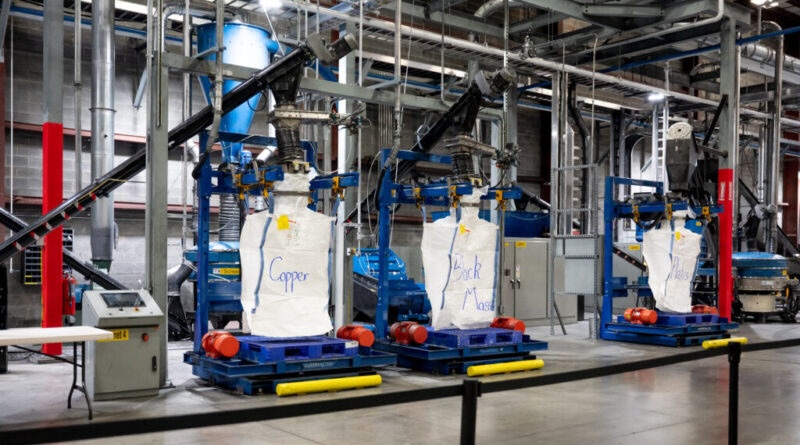
The transaction fundamentally alters the unit economics of the plant. While a previous owner poured roughly $150 million into capital expenditures to bring the site online, R3 Lithium acquired the operational infrastructure debt-free.
Crucially, continuity has been preserved at the executive and operational levels. Linh Austin has transitioned to lead R3 Lithium as CEO, while Ascend Elements co-founder Dr. Eric Gratz has joined as Chief Technology Officer. Gratz brings additional industry clout through his service on the Technology Committee of the U.S. Department of Energy’s Li-Bridge public-private partnership, hosted by Argonne National Laboratory.
Backed by $15 million in Series A funding from prominent venture firms—including Integral GlobalTech Partners, TDK Ventures, and Axial Partners—R3 Lithium is currently upgrading its processing lines to scale production toward full capacity by next year.
Supporting Context & Metrics: Inside the Covington Facility and the Domestic Lithium Market
The macroeconomic debate surrounding lithium availability often hinges on polarized narratives. While widespread EV adoption in the early 2020s sparked fears of an unyielding supply bottleneck, the domestic market in the U.S. has experienced fluctuating demand curves following legislative adjustments, such as the elimination of key federal EV tax credits under the Trump administration’s "OBBA" tax bill.
Globally, however, the long-term calculus remains unchanged: as electric vehicles saturate the transportation market and aging packs roll into scrap yards, recycling will become the primary mechanism to insulate Western supply chains from foreign dominance.
Operational Footprint and Processing Capabilities
R3 Lithium’s Covington facility is designed for maximum efficiency, localized processing, and high yield. The technical specifications of the site highlight its industrial scale:
- Shredding Capacity: 30,000 metric tons of annual shredding capacity to process black mass from spent batteries and manufacturing scrap.
- Lithium Production Line: A 2,500-metric-ton annual lithium carbonate production line, with physical plant space already allocated for an identical, modular 2,500-metric-ton expansion line.
- Purity Standards: Capable of producing 99%-plus pure battery-grade lithium carbonate derived entirely from 100% recycled content at commercial scale.
- Valuable Byproducts: Beyond lithium, the chemical extraction process yields a high-value, concentrated metal oxide stream composed of nickel, cobalt, manganese, and graphite—often generating byproduct revenues that offset input feedstock acquisition costs.
The Offtake Advantage
Unlike early-stage startups that burn capital while searching for customers, R3 Lithium entered the market with over $1 billion in pre-existing offtake agreements. This includes a landmark take-or-pay contract with global commodities giant Trafigura. These secure, binding contracts provide the revenue visibility necessary to attract institutional investment and aggressively execute modular expansion strategies.
Official Statements and Industry Perspective
The transition from Ascend Elements to R3 Lithium represents a maturation of the domestic green tech sector—shifting away from heavily subsidized, debt-laden expansions toward lean, financially disciplined operations underpinned by guaranteed market demand.

In an official briefing shared with CleanTechnica, R3 Lithium emphasized the distinct advantage of its localized closed-loop model:
"R3 Lithium will recover, refine, and return lithium carbonate to the domestic battery supply chain through a calciner-based crystallization and water-based precipitation process that extracts lithium directly from recycled black mass on a single site, without primary mining or non-domestic refining."
By eliminating overseas transport, foreign chemical refining steps, and environmentally taxing primary mining operations, R3 Lithium’s process addresses both national security concerns and carbon footprint metrics.
Furthermore, despite a volatile political climate in Washington regarding federal energy grants, critical public-private initiatives like the DOE’s Li-Bridge program have proven resilient. Analysts note that national defense applications and the surging demand for domestic stationary energy storage systems (BESS) have created a bipartisan imperative to secure domestic critical mineral supply chains, insulating key industrial projects from complete federal policy whiplash.
Future Outlook: A Modular Blueprint for North America and Europe
Looking ahead, R3 Lithium’s ambitions extend far beyond its flagship Georgia footprint. The company is employing a disciplined, modular expansion strategy designed to mitigate financial risk.
Rather than building speculative giga-scale facilities, R3 Lithium’s growth roadmap calls for a distributed network of lithium carbonate and black mass shredding facilities across North America and Europe. Each future plant will be engineered in standardized, modular 5,000-metric-ton-per-annum units—and crucially, will not break ground until binding, long-term offtake agreements are fully secured.
As the stationary battery energy storage systems (BESS) market booms alongside the eventual mass retirement of early-generation EV batteries, the feedstock supply is projected to grow exponentially. By pairing robust technological infrastructure with disciplined fiscal management, R3 Lithium has transformed a bankruptcy restructuring into a launchpad for a cleaner, self-reliant Western battery economy.
With the formal public launch slated for September 10, all eyes will be on the Covington facility as it works toward full-volume operations, poised to supply over half of the United States’ domestic lithium carbonate needs and redefine what sustainable industrial recycling looks like in the 21st century.



