Executive Overview
For generations, modern medicine and industrial agriculture operated in distinct, disconnected silos. The healthcare system focused downstream—managing chronic illnesses with pharmaceuticals, surgeries, and reactive interventions—while the agricultural sector concentrated upstream, prioritizing sheer volume and crop yields over nutritional integrity. Today, this dichotomy is undergoing a radical paradigm shift. A growing coalition of lifestyle medicine practitioners, nutritional scientists, and agricultural researchers are spearheading a revolutionary movement known as regenerative healthcare.
At its core, regenerative healthcare posits a simple yet profound truth: human vitality is inextricably linked to the biological vitality of the soil. Rather than merely advising patients to eat better, forward-thinking medical professionals are beginning to treat chronic ailments by prescribing nutrient-dense, chemical-free, regenerative organic crops. This emerging field treats food not just as sustenance, but as the foundational medicine envisioned by Hippocrates over two millennia ago.
Driven by alarming public health statistics regarding obesity, the proliferation of ultra-processed foods, and the measurable decline of mineral and vitamin concentrations in conventional produce, the medical community is turning back to nature. Organizations like the Rodale Institute are at the vanguard of this transformation, proving through rigorous scientific study and groundbreaking healthcare partnerships that healing the planet and healing humanity are, in fact, the exact same mission.
Detailed Chronology: The Evolution of Industrial Agriculture and the Rise of Regenerative Medicine
To understand how food became a medical intervention, it is necessary to examine the historical trajectory of the American food system and the concurrent rise of lifestyle-related chronic diseases.
1950–1999: The Great Nutritional Dilution
During the latter half of the 20th century, industrial agriculture underwent a massive technological and chemical transformation. Driven by post-war advancements in synthetic fertilizers, pesticides, and mono-cropping, the primary objective of farming shifted away from quality and toward high-yield commodity production—predominantly corn, soybeans, and wheat.
A landmark historical analysis of USDA nutrient content data spanning from 1950 to 1999 revealed an unintended casualty of this industrial pivot: nutrient loss. Across 43 different garden crops and vegetables, researchers recorded statistically significant declines in key nutritional concentrations, including protein, calcium, iron, riboflavin, and vitamin C. During this exact window, grain yields more than doubled, but the actual nutritional value packed into each serving plummeted. The industrial food system was successfully feeding more people in terms of caloric quantity while slowly starving them of micronutrients.
2014: Breaking Ground Between Healthcare and Agriculture
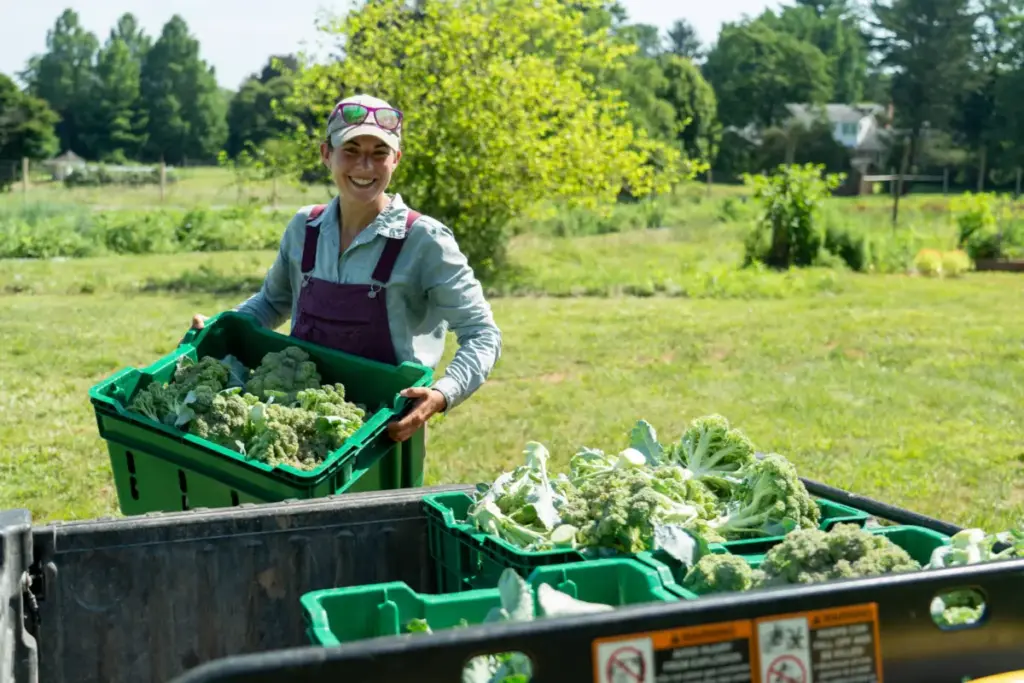
The practical integration of regenerative farming into clinical healthcare environments began to take shape in 2014 with a pioneering collaboration in Pennsylvania. The St. Luke’s–Rodale Institute Organic Farm was established to directly supply fresh, certified organic produce to the patients, staff, and visitors of St. Luke’s University Health Network’s Anderson Campus in Easton. This initiative marked one of the first institutional models where a major hospital network actively integrated a working organic farm into its wellness and nutritional recovery framework, setting a precedent for farm-to-hospital systems nationwide.
2020: Defining the Movement
As clinical evidence mounted, institutional frameworks began to formalize. In 2020, the Rodale Institute published its seminal report, The Power of the Plate: Regenerative Organic Agriculture. This document formally crystallized the concept of regenerative healthcare, defining it as a model that "aims to prevent disease and regenerate life through an organic, whole-foods, plant-forward diet that begins on farms that work in harmony with nature." The report provided the theoretical and practical roadmap for bridging the gap between agronomy and clinical practice.
2023–2025: Expanding the Model to Vulnerable Populations
The momentum of institutional farm partnerships accelerated significantly into the 2020s.
- 2023: The Cornwall Manor–Rodale Institute Trailside Organic Farm launched in Lebanon, Pennsylvania, producing a staggering 9,150 pounds of fresh food during its very first full growing season to nourish the residents of the retirement community.
- April 2025: A critical wake-up call for public health arrived with a study published in the American Journal of Preventive Medicine, estimating that ultra-processed foods are directly responsible for 124,000 premature deaths annually in the United States.
- 2025: Building on these successes, a new strategic partnership was forged with Phoebe Ministries at Rodale Institute’s Founders Farm in Allentown, Pennsylvania. Designed specifically to serve senior living populations, this initiative ensures that elderly citizens—a demographic deeply vulnerable to nutritional deficiencies—receive high-end, toxin-free organic produce tailored to their health needs.
Supporting Context & Metrics: The Crisis of Modern Diets and Industrial Food
The urgent need for a regenerative approach to healthcare is underscored by stark epidemiological and ecological data. The American healthcare crisis is not merely a consequence of aging populations or genetics; it is fundamentally driven by what is—and what isn’t—on our plates.
The Obesity Epidemic and Food Insecurity
According to data compiled by the Centers for Disease Control and Prevention (CDC), approximately 40 percent of American adults are overweight enough to be classified as obese. Obesity serves as a primary gateway and critical risk factor for a cascade of debilitating chronic conditions, including type 2 diabetes, cardiovascular disease, and numerous forms of cancer.
Crucially, public health data dispels the myth that obesity is solely a byproduct of personal overindulgence or an abundance of wealth. Food insecurity in the United States is paradoxically linked to higher rates of obesity. Low-income households frequently lack access to affordable, fresh, whole foods, forcing reliance on cheap, calorie-dense, nutrient-poor alternatives.
The Danger of Ultra-Processed Foods
The modern American diet is heavily dominated by industrial output. The primary agricultural commodities of the US—corn, soybeans, and wheat—rarely enter the kitchen in their whole forms. Instead, they are routed through industrial processing plants to be transformed into high-fructose corn syrup, hydrogenated oils, refined flours, and chemical additives.
These ultra-processed foods now account for more than 50 percent of the average American’s daily caloric intake. They provide empty calories that trigger satiety signals without delivering the complex array of vitamins, minerals, and phytochemicals required for biological homeostasis.
The consequences are fatal. The April 2025 study from the American Journal of Preventive Medicine highlights that ultra-processed foods inflict their catastrophic toll on human health through a dual mechanism: the direct toxicological and metabolic impacts of the additives and processing methods themselves, and the displacement of nutrient-dense whole foods that are crowded out of the daily diet.
The Promise of the "Optimal Diet"
While the American Standard Diet (appropriately acronymed as SAD) shortens lives, shifting toward a regenerative whole-foods diet yields staggering longevity dividends. Citing research derived from the landmark 2019 Global Burden of Disease study, lifestyle medicine experts project profound gains in life expectancy through dietary optimization:
- For Young Adults: Adopting an optimal diet (characterized by high consumption of whole grains, legumes, fish, fruits, vegetables, and nuts, paired with minimal red/processed meats and refined sugars) starting at age 20 and sustained over a lifetime can increase life expectancy by 10.7 years for women and 13 years for men.
- For Older Adults: Transitioning to an optimal diet at age 60 still yields an impressive 8 additional years of life expectancy, proving that it is never too late for nutritional intervention to reverse or halt disease progression.
Official Statements and Expert Perspectives
The intersection of soil science and clinical medicine has drawn vocal champions from across the medical and agricultural landscapes, uniting doctors, researchers, and advocates behind a single vision.
The Medical Perspective on Lifestyle Interventions
Dr. Meagan Grega, a Pennsylvania-based physician certified in lifestyle medicine and a prominent speaker at the Rodale Institute Regenerative Healthcare Conference, emphasizes the systemic nature of dietary illness.
"Ultra-processed foods increase our risk of morbidity [illness] and mortality [death] through two mechanisms: the impact of the foods themselves and the loss of benefits from other more nutritious foods that they replace in our diet," Dr. Grega explains.
By framing food choices as powerful clinical prescriptions, physicians like Dr. Grega are advocating for a system where health insurance and medical practices actively support access to clean, organic agriculture.
The Agronomic Perspective on Soil Health and Bioactivity
Scientists at the Rodale Institute are actively quantifying how farming practices alter the biochemical makeup of what we eat. Through initiatives like the ongoing Vegetable Systems Trial (VST), researchers are comparing the long-term impacts of organic versus conventional farming methods on soil and crop quality.
The scientific hypothesis driving the VST is rooted in soil biology. Organically managed soils—which rely on cover crops, diverse crop rotations, and compost rather than synthetic nitrogen fertilizers and chemical pesticides—foster vastly superior levels of microbial diversity. This subterranean ecosystem is vital: soil microbes help plants synthesize higher concentrations of bioactive phytochemicals and antioxidants, such as the anticancer flavonoids discovered in organic tomatoes during a 10-year comparative study at the University of California, Davis.
When soils are alive and biologically active, they function as a digestive tract for the plant, unlocking trace minerals and complex nutrients that conventional, chemically shocked soils simply cannot deliver.
Future Outlook: Gathering Force and Reimagining the Healthcare Paradigm
As the movement for regenerative healthcare gains momentum, its structures are rapidly scaling from localized pilot projects into a national blueprint for systemic health reform.
The annual Rodale Institute Regenerative Healthcare Conference has become the central nexus for this evolution. By convening medical doctors, clinical researchers, organic farmers, and consumer advocates under one roof, the conference serves as a collaborative incubator to break down historical barriers between agriculture and medicine.
The core message of these gatherings is clear: reactive healthcare—waiting until a patient is chronically ill before prescribing symptom-suppressing pharmaceuticals—is economically and humanely unsustainable. True healthcare reform must begin upstream, at the molecular level of the soil.
Through scalable institutional models like the St. Luke’s, Cornwall Manor, and Phoebe Ministries farm partnerships, the blueprint is already proven. Hospitals, retirement communities, and healthcare networks are learning that provisioning their patients with food grown on regenerative organic farms is not an eccentric luxury, but a clinical imperative.
By embracing Hippocrates’ timeless mandate to "Let food be thy medicine and medicine be thy food," regenerative healthcare offers a profound promise for the future: a society where healing the earth automatically heals its people, reversing the tide of chronic disease and restoring vitality from the ground up.