In an era defined by compounding ecological crises and sluggish legislative responses, grassroots mobilization and direct environmental intervention remain vital counterweights. Over the past week, Greenpeace and its global network of allies have orchestrated a powerful wave of direct action, policy challenges, and community-led transitions spanning four continents. From the fragile marine ecosystems of the Black Sea to the bureaucratic boardrooms of European courts, and from the deep ocean trenches of American Samoa to the urban heat islands of Jakarta, environmental defenders are drawing a hard line against corporate exploitation and ecological degradation.
This comprehensive report examines a week of multifaceted resistance. It details high-seas confrontations against fossil fuel expansion, legal challenges demanding corporate accountability for toxic "forever chemicals," community-driven renewable energy rollouts, and indigenous-led defense of oceanic commons. Through a meticulous breakdown of these international actions, this piece explores how modern photo-activism and localized campaigns are shaping the trajectory of global environmental policy.
Detailed Chronology: A Week of Global Environmental Action
The past seven days have demonstrated the breadth of the global environmental movement. Activists have targeted distinct yet interconnected ecological threats, utilizing tools ranging from civil disobedience to legal filings and youth empowerment programs.
1. Europe: Challenging Fossil Fuels and Toxic Industrial Discharges
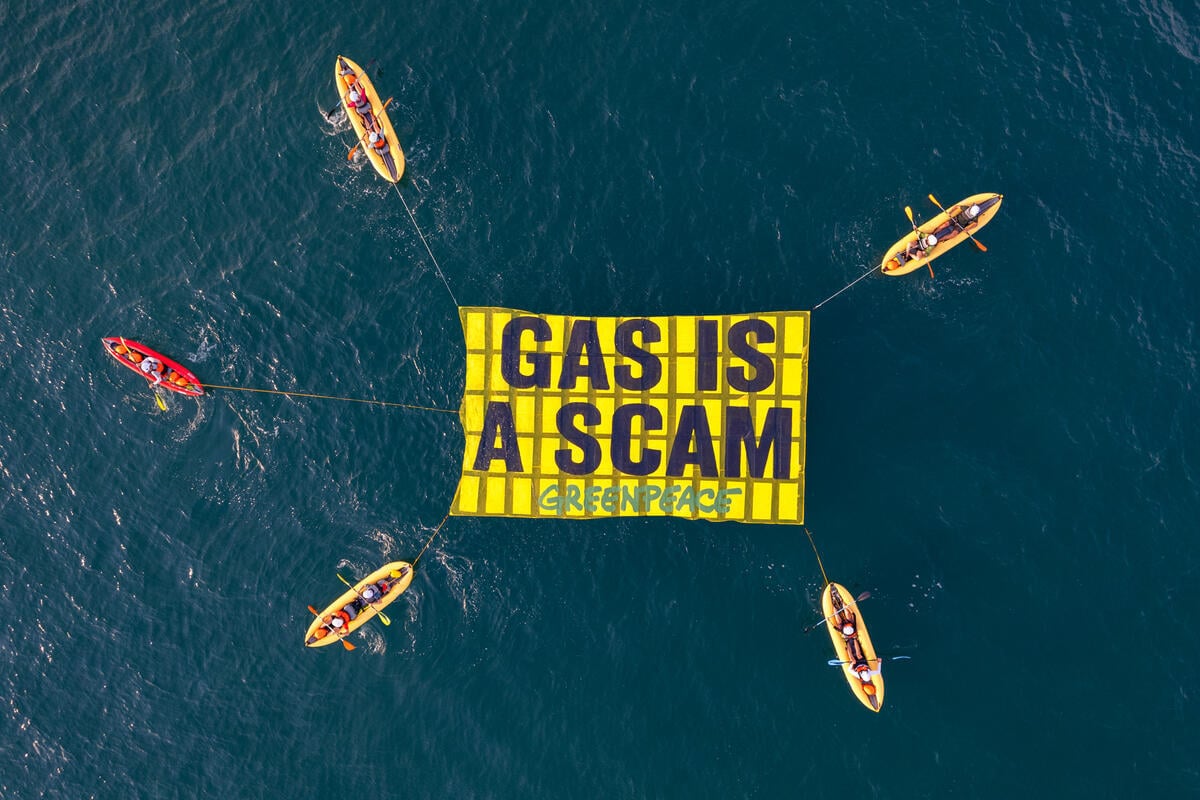
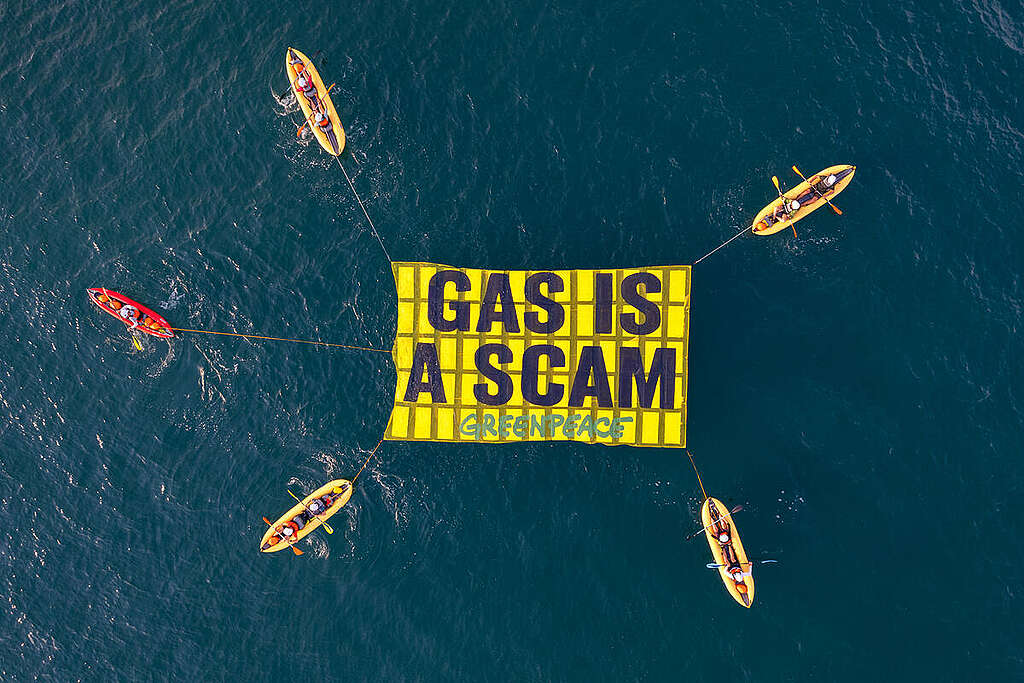
The Black Sea (Bulgaria): Operating against the backdrop of an impending oil and gas exploration project in the Khan Tervel block—situated squarely within Bulgaria’s exclusive economic zone—Greenpeace activists took to the water. Aided by the iconic flagship Arctic Sunrise, demonstrators aboard kayaks unfurled a massive banner declaring “GAS IS A SCAM” off the Bulgarian coast. The protest specifically called out major multinational energy corporations, including Shell and OMV-Petrom, highlighting the acute dangers of fossil fuel lock-in, climate acceleration, and the direct threat posed to vulnerable marine life, including native Black Sea dolphin populations.
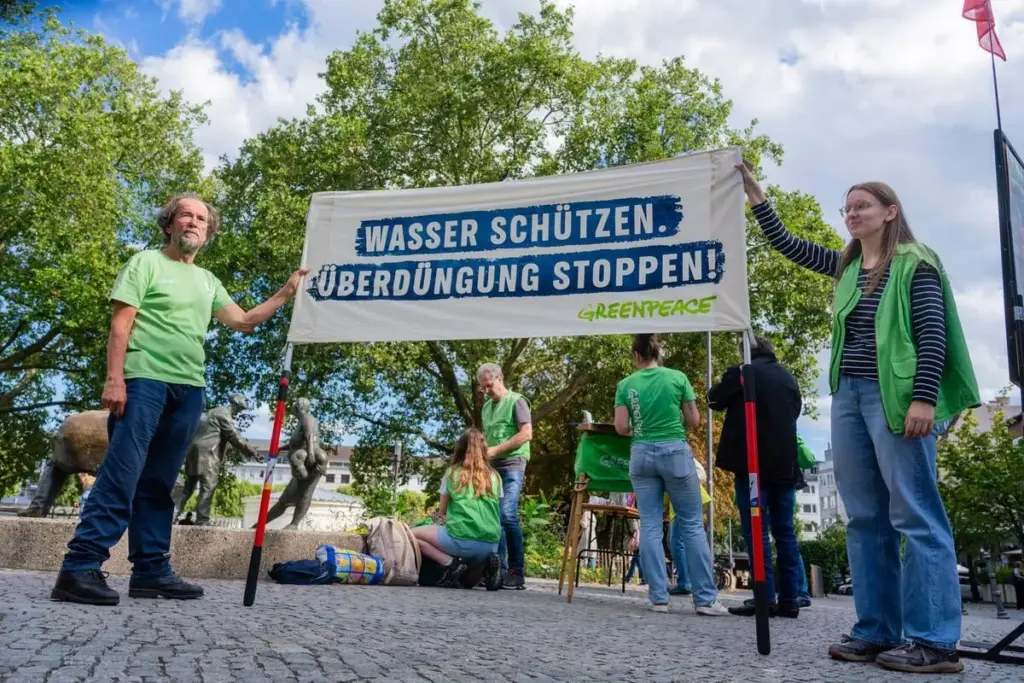
Aachen (Germany): In a coordinated national day of action, German Greenpeace groups targeted the pervasive issue of agricultural over-fertilization, which continues to taint rivers, lakes, and vital drinking water sources with dangerous levels of nitrates. Operating a symbolic "drink station" complete with a wheel of fortune, activists engaged the public in Aachen, handing out specialized test kits. This launch of a new "crowd research" initiative invites citizens to monitor local wells, streams, and rivers independently, thereby building a decentralized dataset to pressure regulators into stricter agricultural enforcement.
The Netherlands: Escalating its ongoing campaign for chemical safety, Greenpeace Netherlands officially filed a formal enforcement request targeting the chemical manufacturing giant Chemours. The action addresses persistent, illegal discharges of per- and polyfluoroalkyl substances (PFAS)—toxic "forever chemicals" that have been documented accumulating at alarming rates within ecosystems and human biology, including detection in everyday food sources and breast milk. Compounding the crisis, Chemours has sought to legalize the toxic degradation byproduct TFA via new permit applications. With government oversight lagging, Greenpeace, alongside local residents and prominent environmental attorney Benedicte Ficq, has initiated independent air, water, and soil testing to halt the pollution through judicial channels.
2. Africa: Youth Empowerment and Urban Eco-Action
Nairobi (Kenya): Shifting the paradigm from resistance to empowerment, Nairobi played host to a vibrant celebration marking the launch of a new phase of the Ubunifu Hub Youth Program, backed by the Greenpeace Environmental Foundation. The launch served as a collaborative nexus, bringing together young leaders, community partners, and stakeholders to foster environmental innovation. The program provides a platform for Kenya’s youth to learn, create, connect, and mobilize around grassroots ecological challenges.
Yaoundé (Cameroon): In Central Africa, grassroots action took a physical and educational form. Fifteen dedicated volunteers from Yaoundé teamed up with the National Advisory Committee for Environment and Sustainable Development (CNEDD) association to execute an ecological march. Combining fitness with activism, participants engaged in "eco-jogging"—simultaneously clearing plastic waste from urban corridors while drawing public attention to the plastic pollution crisis. The march culminated in an open-air public forum and debate centered on reducing plastic consumption and strengthening waste management frameworks.
3. Asia-Pacific: Defending the Deep Sea and Accelerating Urban Solar
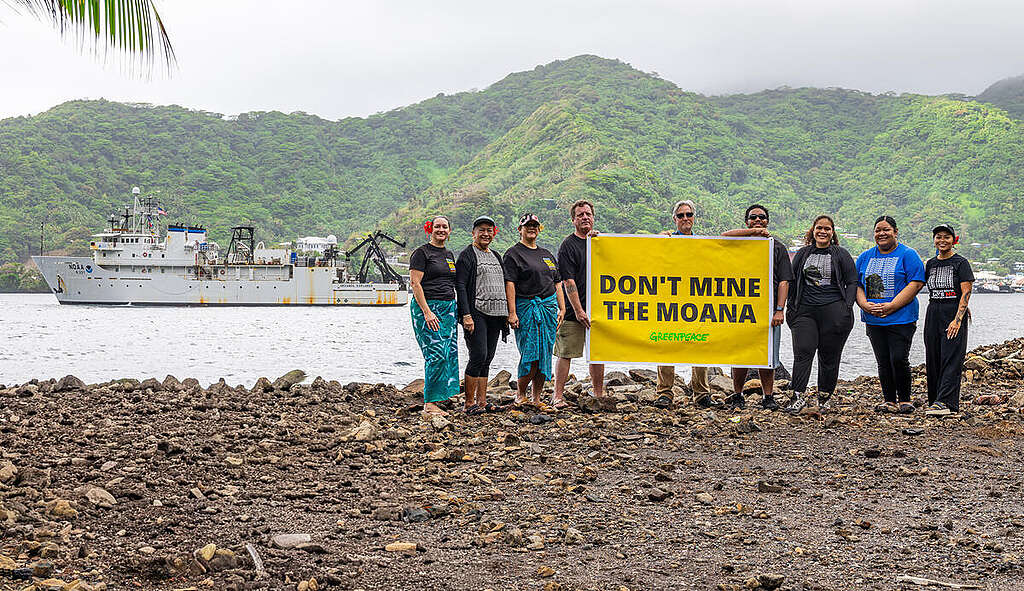
Pago Pago Harbor (American Samoa): In the Pacific, resistance reached a critical maritime juncture. Activists representing the indigenous group Finafinau, Greenpeace USA, and the broader American Samoan community confronted the NOAA research vessel Okeanos Explorer in Pago Pago Harbor. As the ship conducted crew-change operations, protestors unfurled banners reading “Don’t Mine the Moana,” “Stop Deep Sea Mining,” and “Protect the Pacific.” The vessel’s mission to map and quantify deep-sea minerals coincides directly with a controversial U.S. Interior Department Marine Minerals Administration lease sale proposal encompassing roughly 31.4 million acres (approx. 48,000 to 50,000+ square miles) for commercial deep-sea mining. Scheduled for late November 2026, this lease represents an unprecedented threat: the first-ever domestic deep-sea mining lease in U.S. waters, potentially greenlighting the world’s inaugural commercial deep-sea extraction operation.
Koror (Palau): As geopolitical leaders convened for the Pacific Islands Forum (PIF) in Koror, Palau, a broad coalition of Civil Society Organisations (CSOs) projected an unmistakable message via aerial-documented banners. The coalition demanded that regional leaders keep the existential priorities of climate and ocean preservation at the absolute center of diplomatic negotiations. Central to their advocacy is the insistence that limiting global temperature rise to 1.5°C is not merely a political preference, but a binding legal and moral imperative reinforced by advisory opinions from the International Court of Justice.
Jakarta (Indonesia): In the densely populated urban landscape of North Jakarta, an operational milestone for local energy equity was achieved in the Kampung Muka neighborhood. Through a strategic partnership uniting Greenpeace Indonesia, the Urban Poor Consortium (UPC), and Jaringan Rakyat Miskin Kota (JRMK), community-scale rooftop solar panels were actively installed. This initiative bypasses slow state-level energy transitions by directly decentralizing power generation, lowering energy poverty, and expanding clean power access within vulnerable urban communities.
Supporting Context, Data, and Metrics
To properly contextualize the scope of these interventions, it is necessary to examine the underlying systemic data driving each campaign:
The Black Sea Threat: The Khan Tervel exploration block sits within an enclosed sea already suffering from extreme anthropogenic pressures, overfishing, and climate-induced warming. Marine biologists note that seismic testing and subsequent gas extraction generate intense acoustic pollution and toxic discharge, directly threatening endemic cetacean species like the Black Sea bottlenose dolphin, common dolphin, and harbor porpoise.
The American Samoa Deep-Sea Leasing Scale: The 31.4 million acres targeted by the U.S. Marine Minerals Administration proposal spans pristine benthic ecosystems home to thousands of undescribed species, fragile coral gardens, and critical carbon-sink sediments. Industrial mining in these abyssal plains risks causing irreversible damage to the marine food web and releasing sequestered carbon back into the water column.
The European PFAS Crisis: According to independent monitoring cited in Greenpeace Netherlands’ legal filings, cumulative PFAS and TFA concentrations in the Lower Rhine-Meuse delta have reached critical thresholds. The persistence of these synthetic carbon-fluorine bonds means they bioaccumulate up the trophic scale, posing proven carcinogenic, endocrine-disruptive, and developmental risks to human populations.
Agricultural Nitrates in Germany: German water authorities have long struggled to meet European Union water framework directives due to excessive synthetic fertilizer and liquid manure application in intensive livestock regions. The "crowd research" initiative fills crucial data gaps by empowering citizens to map localized contamination that official bureaucratic monitoring networks frequently overlook.
Official Statements and Stakeholder Perspectives
The diverse array of actions this week elicited strong statements from frontline defenders, legal experts, and organizational leaders:
"The fossil gas industry attempts to brand itself as a ‘bridge fuel,’ but projects like the one planned in the Khan Tervel block are a direct bridge to climate catastrophe. Gas is a scam designed to lock future generations into fossil fuel dependency while corporations like Shell and OMV-Petrom rake in obscene profits at the expense of our oceans."
— Greenpeace Black Sea Campaign Spokesperson
"We are not just protesting a ship; we are defending our cultural identity, our marine sovereignty, and the health of the Moana. If the United States government pushes through with this 31.4-million-acre lease sale, they are opening the floodgates to global ecocide in the Pacific. We will not stand by and watch our ocean floor be industrialized."
— Finafinau Activist Collective Statement, American Samoa
“Chemours is attempting a legal sleight of hand—trying to normalize the un-normalizable by securing permits for TFA. When governments fail to protect public health and the environment from toxic chemical accumulation, citizens and environmental defenders have no choice but to step into the courtroom and enforce the law ourselves.”
— Benedicte Ficq, Environmental Lawyer representing local residents against Chemours
Future Outlook: The Road Ahead
As the global community approaches the close of 2026, the convergence of grassroots resistance and systemic legal battles underscores a pivotal transformation in environmental activism. The actions documented this week—ranging from localized community solar arrays in Jakarta and youth mobilization in Nairobi, to high-stakes legal challenges in the Netherlands and high-seas blockades in the Pacific—prove that the environmental movement is operating on multiple fronts simultaneously.
Looking forward, several key milestones will define the success of these ongoing campaigns:
Judicial Outcomes in Europe: The legal pressure applied to Chemours in the Netherlands could establish a vital precedent across the European Union regarding corporate liability for TFA and PFAS pollution, potentially forcing sweeping revisions to industrial permitting laws.
The Pacific Deep-Sea Mining Battle: With the looming U.S. lease sale date, international opposition led by groups like Finafinau and Greenpeace USA will likely intensify, mobilizing global diplomatic pressure against the industrialization of the ocean floor.
Decentralized Energy Transitions: Grassroots models such as the rooftop solar initiative in Kampung Muka, Jakarta, offer a scalable blueprint for urban climate resilience, proving that energy democracy can be built from the ground up irrespective of sluggish national decarbonization policies.
For more than half a century, Greenpeace has remained a steadfast pioneer of photo-activism and direct witness. By capturing and distributing uncompromising imagery of environmental degradation and community-led resistance, the organization continues to strip away corporate greenwashing and lay bare the realities of the climate emergency.
To explore more photo and video documentation from these and other global actions, visit the official Greenpeace Media Library.