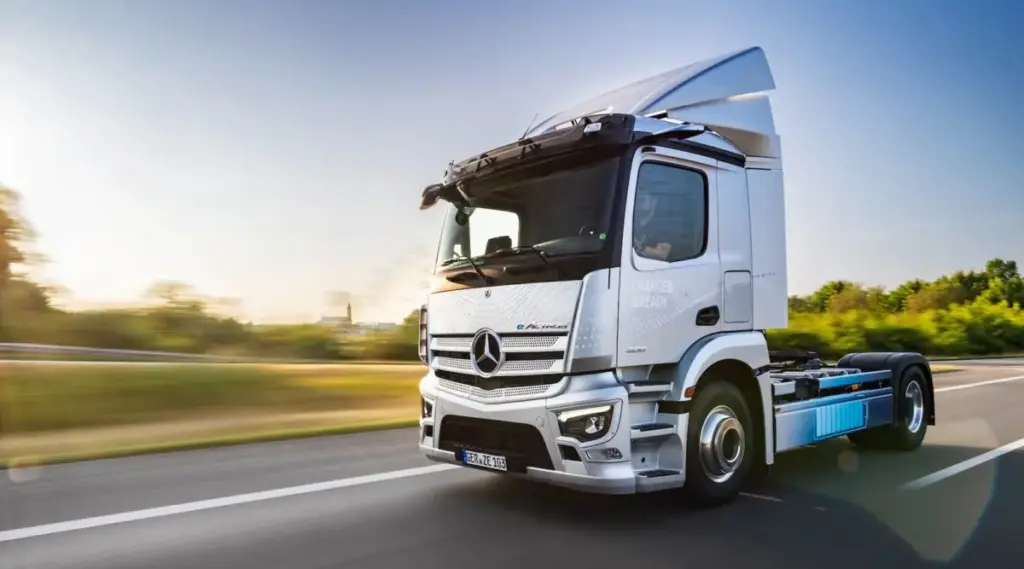
Change in global industry rarely happens because of abstract altruism or high-minded environmental anxieties. Historically, structural transformation is driven by a much more pragmatic force: self-interest, predominantly anchored in the pursuit of bottom-line operational savings. Today, this dynamic is playing out on a massive scale across Europe. Amid crippling volatility and skyrocketing prices for traditional diesel fuel, a powerful coalition of major corporate giants—including home-furnishing titan IKEA, French utility leader EDF, logistics giant Geopost, and Northern European transport powerhouse DFDS—has taken a definitive stand.
In a formal petition directed to the European Commission, these corporations have strongly urged regulators to stay the course. They are actively pushing back against heavy-truck manufacturers who are lobbying to weaken or delay Europe’s landmark carbon dioxide emissions standards for commercial vehicles.
At the heart of this confrontation is a fundamental disagreement over the readiness of Europe’s transition to zero-emission freight. While major transport buyers argue that predictable, stringent regulations are essential to unlock investments, curb long-term fuel expenditures, and combat climate change, truck manufacturers point to sluggish market adoption, infrastructure bottlenecks, and an underdeveloped charging ecosystem. They are demanding a three-year grace period to dodge multi-billion-euro regulatory penalties. As Brussels weighs its options, this high-stakes regulatory battle exposes a deep rift between the companies buying the trucks and the companies building them—with the future of European climate policy hanging in the balance.
Detailed Chronology of the Regulatory Showdown
The friction between European truck buyers, manufacturers, and regulators did not materialize overnight. It is the result of a carefully calculated regulatory timeline crashing into the harsh economic and logistical realities of the mid-2020s.
The Baseline Framework: The European Union established stringent decarbonization benchmarks for heavy-duty vehicles (HDVs), requiring fleet operators and manufacturers to achieve a 43 percent reduction in carbon dioxide emissions from 2019 levels by 2030. This escalates further to a 64 percent reduction by 2035, and a staggering 90 percent reduction by 2040. Meeting these targets fundamentally requires a mass migration away from internal combustion engines toward electric and hydrogen alternatives.
September 2026 (The IAA Transportation Show): Tensions boiled over into public view during the IAA Transportation show in Hannover, Germany. Executives representing Europe’s heavyweights—including DAF Trucks, Daimler Truck, Ford Otosan, Iveco Group, MAN Truck & Bus, Scania Group, and Volvo Group—sounded the alarm. They characterized the transition to zero-emission commercial vehicles as heavily impeded by an "alarming delay" in supporting conditions. Consequently, they formally requested a three-year delay on the 2030 CO2 compliance targets to avert potential financial penalties exceeding €2 billion.
October 1, 2026 (The Counter-Petition): Prompted by the manufacturers’ aggressive lobbying efforts to water down the standards, members of the Climate Group’s EV100 coalition struck back. In a high-stakes joint letter addressed to European Commission President Ursula von der Leyen, corporate leaders from IKEA, EDF, Geopost, DFDS, and others implored Brussels to maintain the existing exhaust emissions timeline. They argued that certainty and regulatory stability are far more valuable to commercial planning than shifting goalposts, emphasizing that current rules are necessary to stimulate market demand and accelerate infrastructural buildouts.
Supporting Context & Metrics: The Cost Analysis and the Charging Gap
To truly understand why corporate fleet operators are willing to lock horns with the continent’s premier vehicle manufacturers, one must look at the underlying economics and current market penetration metrics.
Electric vs. Diesel: The Economics of Fleet Electrification
While electric medium- and heavy-duty trucks carry a substantially higher upfront purchase price than their diesel-powered counterparts, the total cost of ownership (TCO) paints a vastly different picture. EV100 members have run the financial simulations and concluded that the long-term operational savings—driven by dramatically lower electricity costs compared to volatile diesel prices, alongside reduced maintenance requirements—more than offset the initial capital expenditure.
In an era where diesel price spikes routinely devastate operating margins, fleet managers view complete electrification not as an environmental checkbox, but as an essential long-term hedge against energy market instability.
Market Realities and Infrastructure Bottlenecks
Conversely, the manufacturers’ plea for more time is rooted in sobering market statistics. As of late 2026, electric heavy-duty trucks account for a meager 2.4 percent market share across the European Union. Adoption rates vary wildly by nation:
Germany: Leads the pack with a modest 4.3 percent market share.
France: Sits at 2.4 percent.
Poland, Spain, and Italy: Lag significantly behind, with market shares lingering below 1 percent.
Manufacturers argue that pushing for a 43 percent carbon reduction by 2030 against this backdrop is an impossible mandate. Karin Rådström, CEO of Daimler Truck, highlighted that while sustainable vehicles are physically manufactured and available for purchase, the wider commercial ecosystem is lagging. Specifically, the rollout of high-capacity megawatt charging stations required to turnaround commercial fleets efficiently is moving at a snail’s pace. Connecting such heavy-duty chargers to the electrical grid often takes years of bureaucratic and infrastructural maneuvering. Furthermore, manufacturers point out that the EU Commission has been agonizingly slow in updating vehicle weight and dimension regulations to compensate for the heavy payload penalties inherent to battery-electric trucks.
Official Statements and Industry Perspectives
The philosophical divide between transport buyers and automotive executives is perhaps best understood through the direct words of their leadership.
Dominic Phinn, Head of Transportation at Climate Group, emphasized the absolute necessity of regulatory consistency:
"The demand for zero-emission trucks is strong and growing every day. Businesses, including EV100 members, have made significant investment in electric fleets on the understanding that Europe would provide a stable and ambitious regulatory framework for the transition. What companies need now is certainty, not a weakening of the rules that underpin investment decisions. Europe has established itself as a global leader in the shift to zero-emission transport and should build on this momentum by maintaining ambitious HDV CO2 standards…"
Echoing the perspective of progressive utility providers supporting the infrastructure shift, Marion Labatut of EDF noted:
"Businesses are already taking action to electrify their heavy duty fleets, and EDF is helping them make it possible, while energy systems are investing in the infrastructure to support them. We are seeing steady progress on HDVs and maintaining ambitious and stable CO2 standards will give companies the confidence to continue investing at scale, while helping ensure Europe remains competitive in the transition to zero-emission freight."
On the other side of the aisle, Karin Rådström of Daimler Truck defended the manufacturers’ stance on commercial viability:
"We are fully committed to sustainable transport. The investments have been made, and a wide range of CO2-free vehicles is available today. But making them commercially viable at scale also depends on the wider ecosystem that is clearly delayed and not yet developing fast enough. This means two things—doubling down on the enabling conditions fast, and for the EU to delay the 2030 compliance timeline by three years, to prevent penalties for manufacturers."
Future Outlook: The Human Cost and the Path Forward
This regulatory tug-of-war presents the European Commission with a classic governance dilemma. On one hand, truck manufacturers present a legitimate, friction-laden operational reality: building zero-emission trucks is only half the battle; the charging networks, grid upgrades, and regulatory exemptions must keep pace. On the other hand, the manufacturers’ credibility is occasionally undermined by their broader global lobbying efforts—such as opposing similar clean-truck standards and mandates in North America, particularly in California.
Beyond corporate balance sheets and legislative penalties, there is a profound human and environmental dimension that transcends boardroom strategy. Climate scientists and public health advocates frequently remind policymakers that delayed climate action carries a devastating human toll. During the extreme heatwaves of recent summers, tens of thousands of premature deaths were recorded across Europe due to severe thermal stress. Furthermore, accelerating geopolitical instability and migration crises are deeply tied to regional droughts and the broader overheating of the planet. When viewed through this lens, delaying transport decarbonization is not merely a bureaucratic adjustment for automotive margins; it has direct, real-world consequences for global stability and human survival.
Ultimately, the European Commission must resist the temptation to dilute its vision. Instead of lowering the bar for compliance, Brussels must aggressively step up efforts to clear the bottlenecks—forcing member states to fast-track grid connections, subsidize infrastructure deployment, and align weight exemptions. For corporations investing billions into the future, the message to regulators is simple: set the rules, stick to them, and let the market work.